The AI Music Briefing #27: Universal wants AI paid less, and it signed Spotify's $4 to $5 AI remix tool
The week of October 31 to November 6, 2026, when Universal said AI music should be paid less while signing Spotify's $4 to $5 AI remix tool, Suno started songs from MIDI files, Splice shipped its first DAW, and a judge dropped the direct claim against Anthropic's CEO.

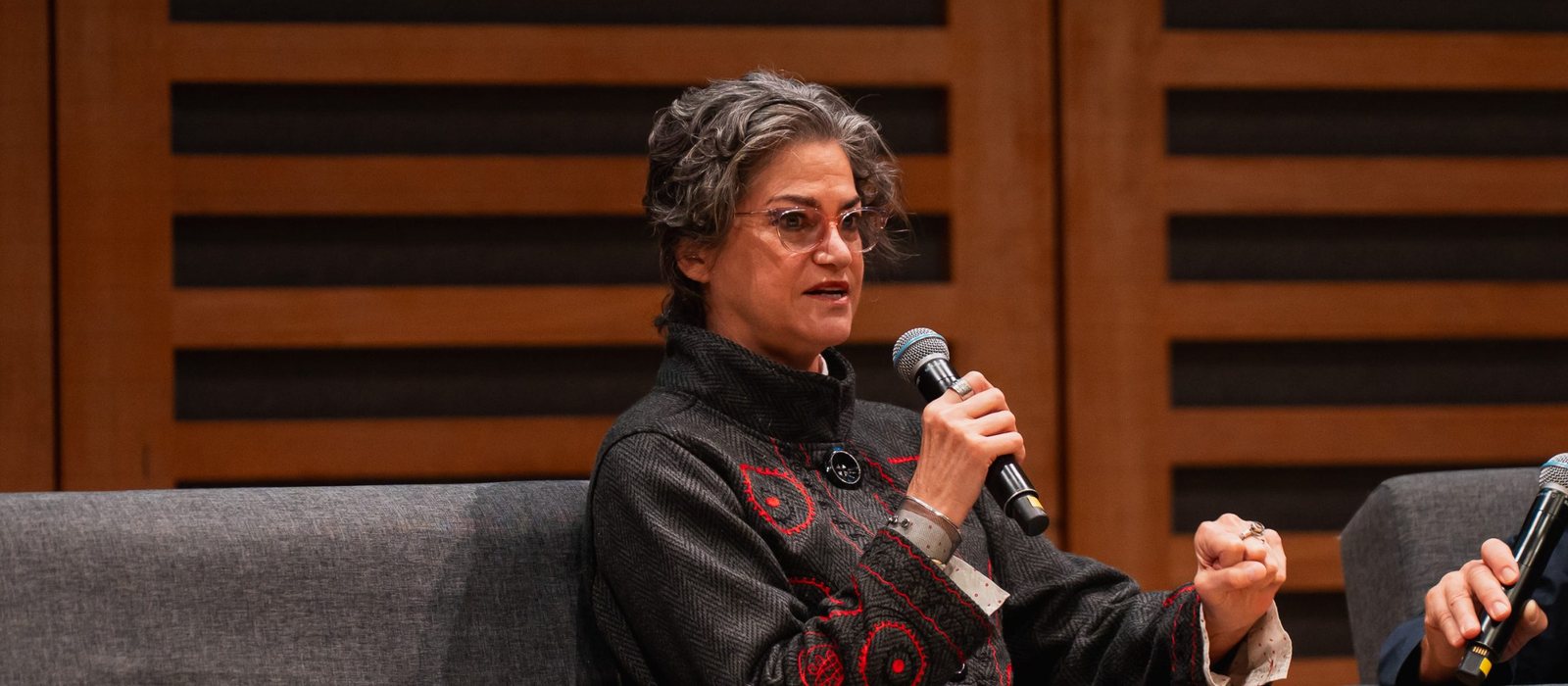
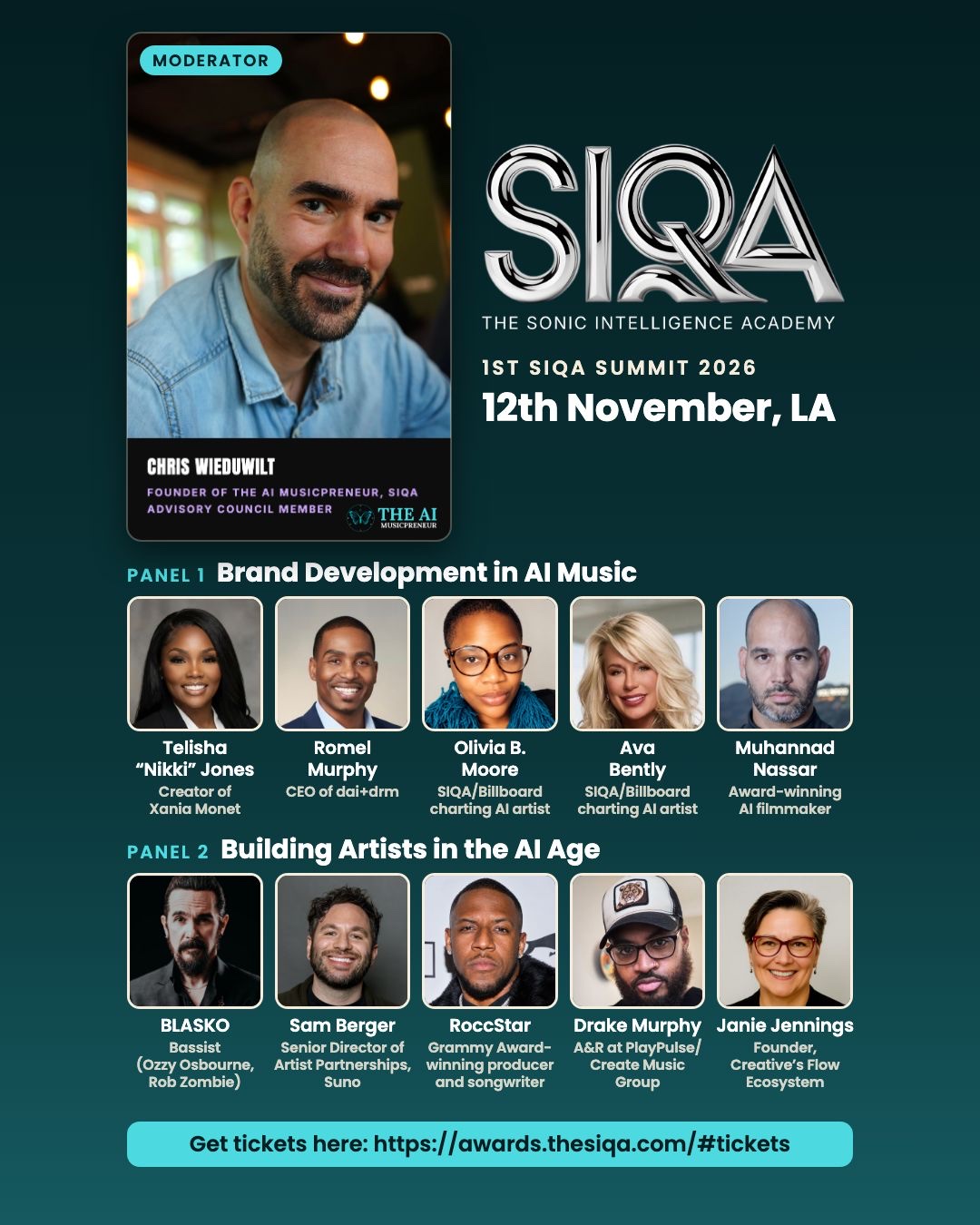
SIQA Summit, LA, 12th November 2026 Ozzy Osbourne's former bassist is sharing a stage with Suno. I'm moderating:
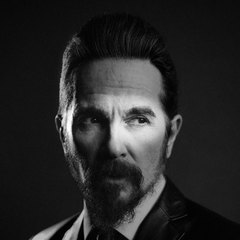
Blasko
Bassist (Ozzy Osbourne, Rob Zombie)

Sam Berger
Artist Partnerships at Suno

RoccStar
Grammy Award-winning producer and songwriter

Drake Murphy
A&R at PlayPulse / Create Music Group

Janie Jennings
Founder, Creative's Flow Ecosystem

Chris Wieduwilt
Moderator
Limited capacity only
Issue #27 · the week of October 31 to November 6, 2026 · ~7 min read. The Friday read for music industry professionals working at the intersection of AI and the traditional music business. Curated by Christopher Wieduwilt.
What’s in store:
- Top Story: Universal wants AI paid less, and it signed Spotify’s AI remix tool
- Suno now starts songs from your MIDI files
- Splice built a DAW, and Logic’s AI assistant went behind a subscription
- A detector said a 1982 song was made with ElevenLabs
- A judge dropped the direct claim against Anthropic’s CEO
SIQA Summit: I’m moderating 2 panels on building AI music artists in Downtown Los Angeles
Ozzy Osbourne’s former bassist is sharing a stage with Suno.
And I’m moderating it in LA next week.
The people who built artists before AI and the people building them now belong in the same room.
So on November 12, I’m moderating 2 panels at the first SIQA Summit in Downtown Los Angeles, the day before the AI Music Awards:
- Brand Development in AI Music: Romel Murphy (CEO of dai+drm), Telisha “Nikki” Jones (creator of Xania Monet), Olivia B. Moore and Ava Bently (SIQA and Billboard charting AI artists) and Muhannad Nassar (award-winning AI filmmaker)
- Building Artists in the AI Age: BLASKO (bassist for Ozzy Osbourne and Rob Zombie, artist manager), RoccStar (Grammy-winning producer and songwriter), Sam Berger (Senior Director of Artist Partnerships at Suno), Drake Murphy (A&R at PlayPulse/Create Music Group) and Janie Jennings (founder of Creative’s Flow Ecosystem)
There’s also a fireside chat with a very special guest. I can’t tell you who, but I’m pretty sure I’ll be super cringe, totally starstruck and have no idea what to say in case I get a chance to talk to that person :)
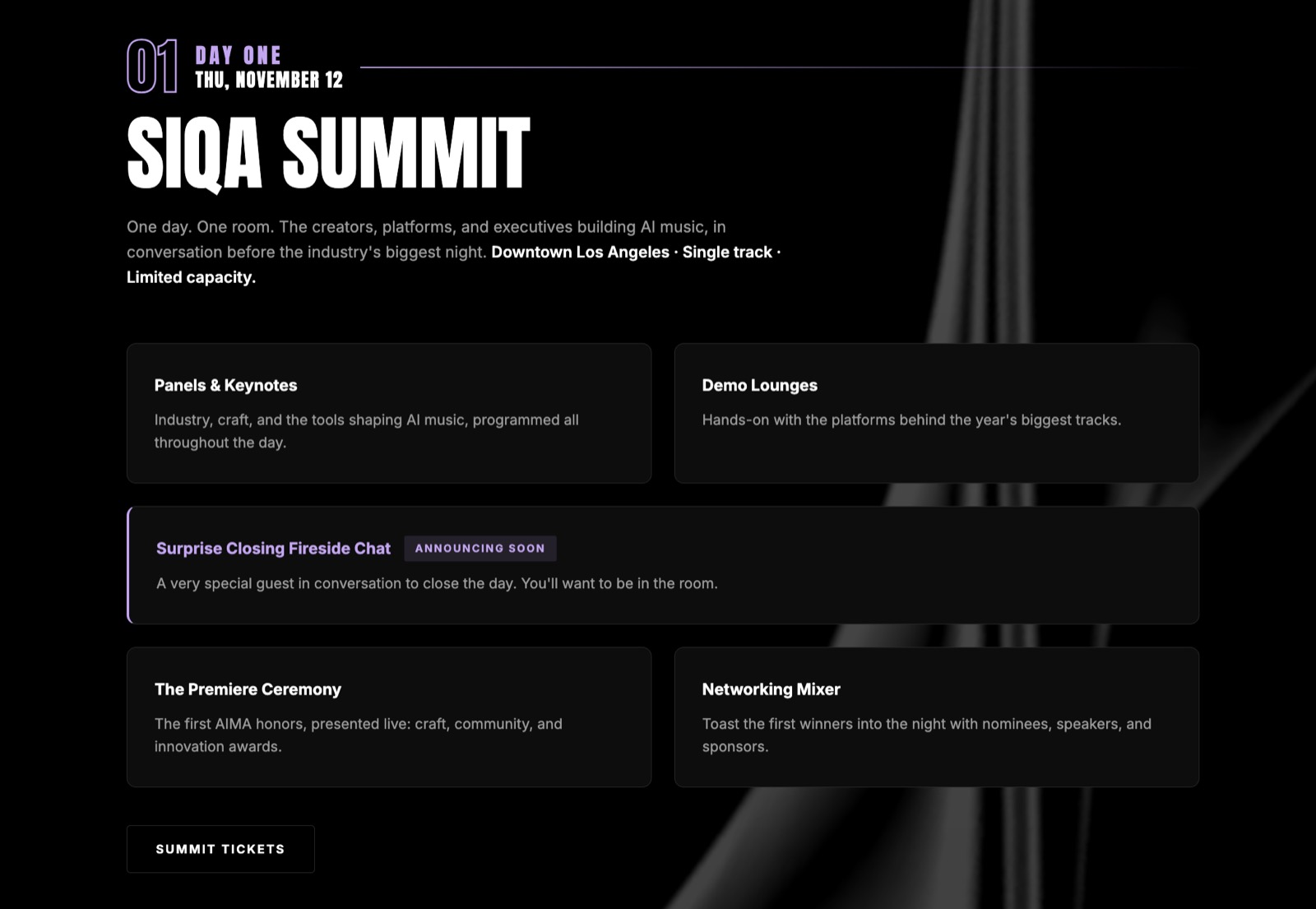
There are still tickets*, and it’d be great to meet. And what’s the 1 question you want me to ask these panels? Just send it to me.
*Affiliate link
This week in AI music: Suno took your MIDI files, and Splice built a whole DAW
Suno now starts a song from your own MIDI file, and Splice shipped its first DAW. Logic’s AI assistant landed behind a subscription, while Pro Tools made stems free.
Also, a detector decided a 1982 song was made with ElevenLabs.
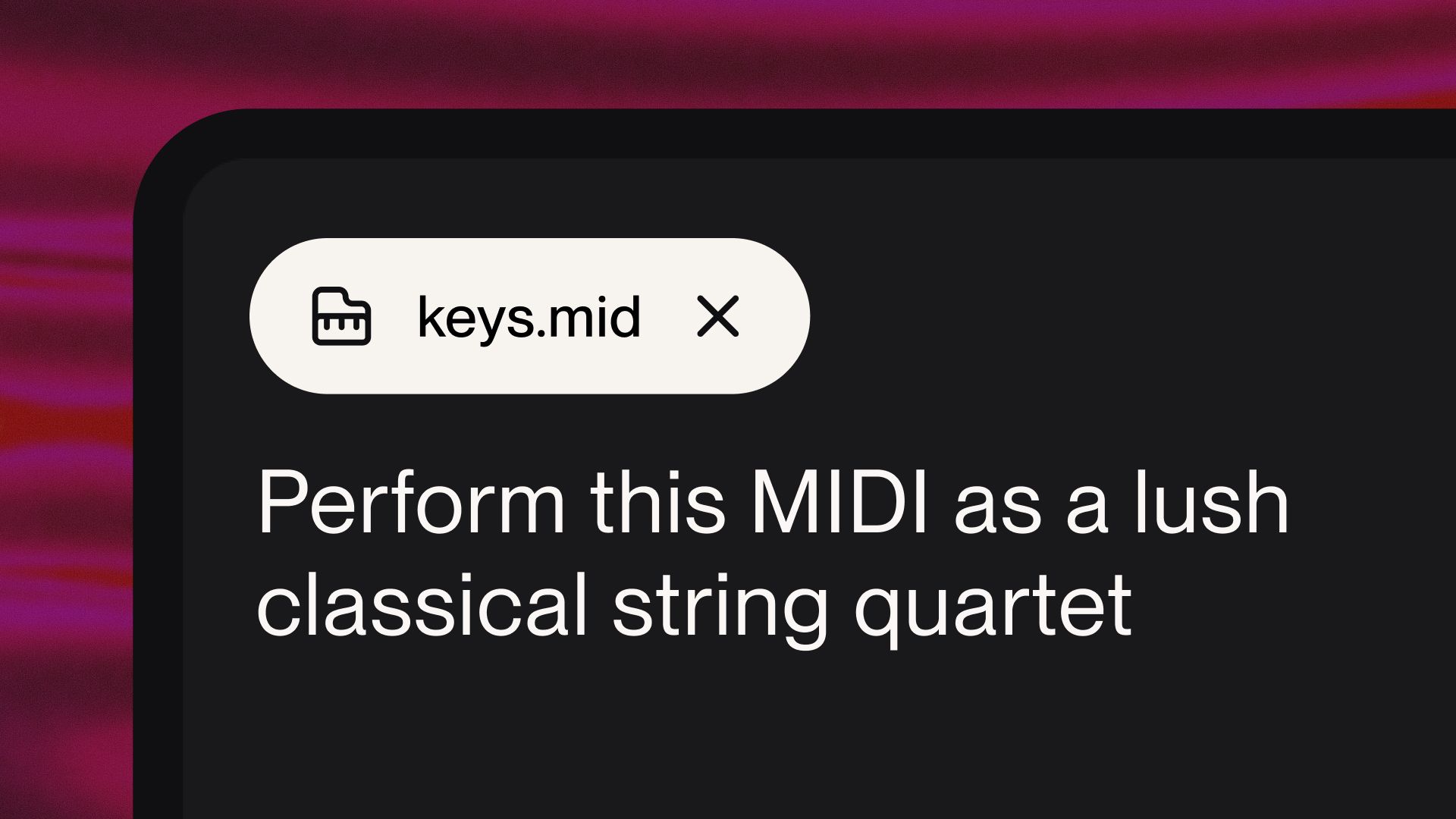
Suno adds MIDI uploads to Create, so a song can start from your own notes on the $8 Pro plan
Suno added MIDI uploads to Create on November 4, so you can start a song from your own notes on the $8 Pro plan, no Suno Studio needed. It’s desktop web only for now, and I’ll show you how it works in Wednesday’s newsletter.
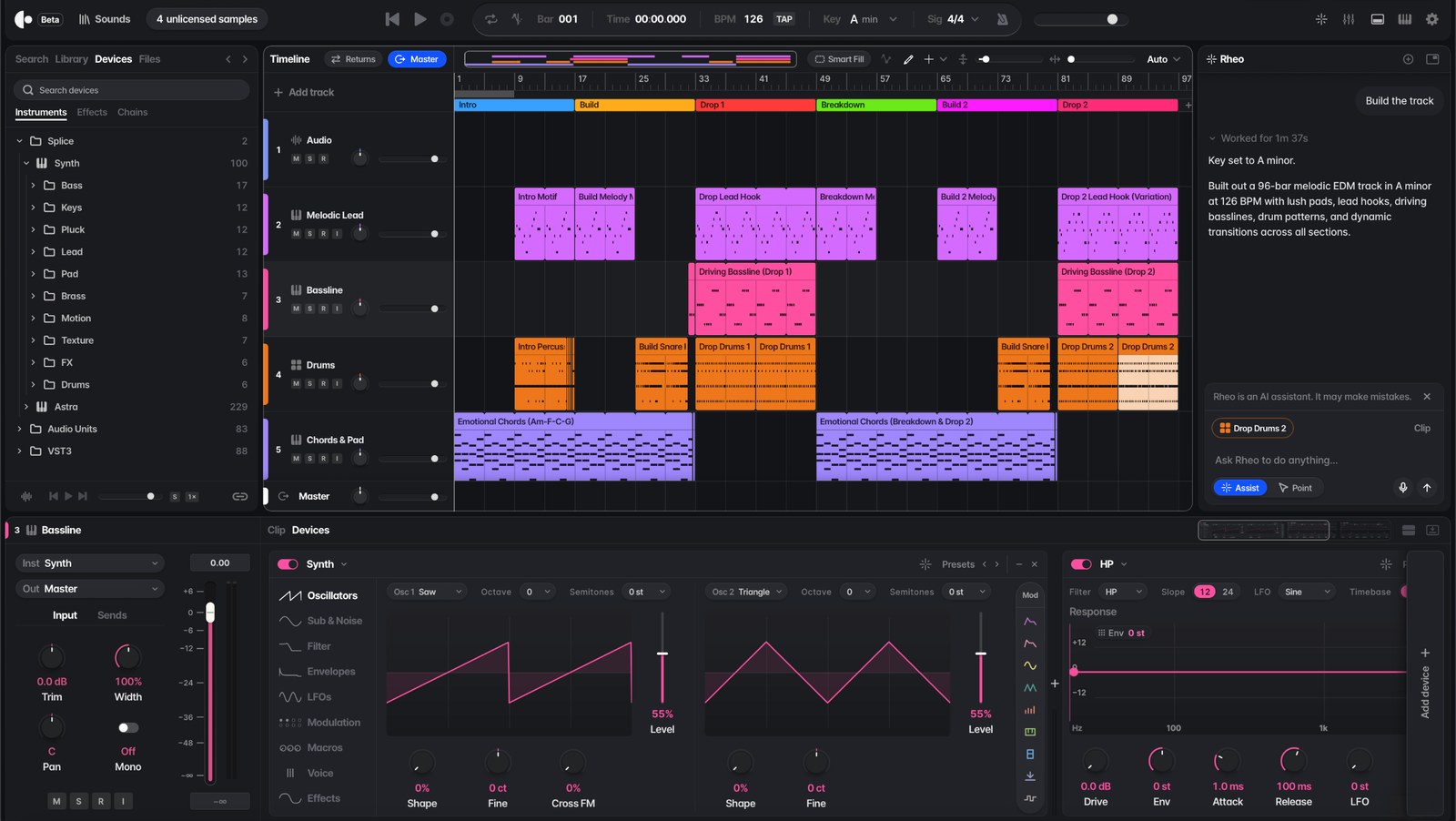
Splice releases Create, its first DAW, with the Rheo AI assistant as a free Mac beta
Splice released Create, its first DAW, as a free Mac beta on November 5. Its AI assistant Rheo writes MIDI and picks samples, and Splice says it doesn’t generate new sounds. Exports start at $9.99 a month.
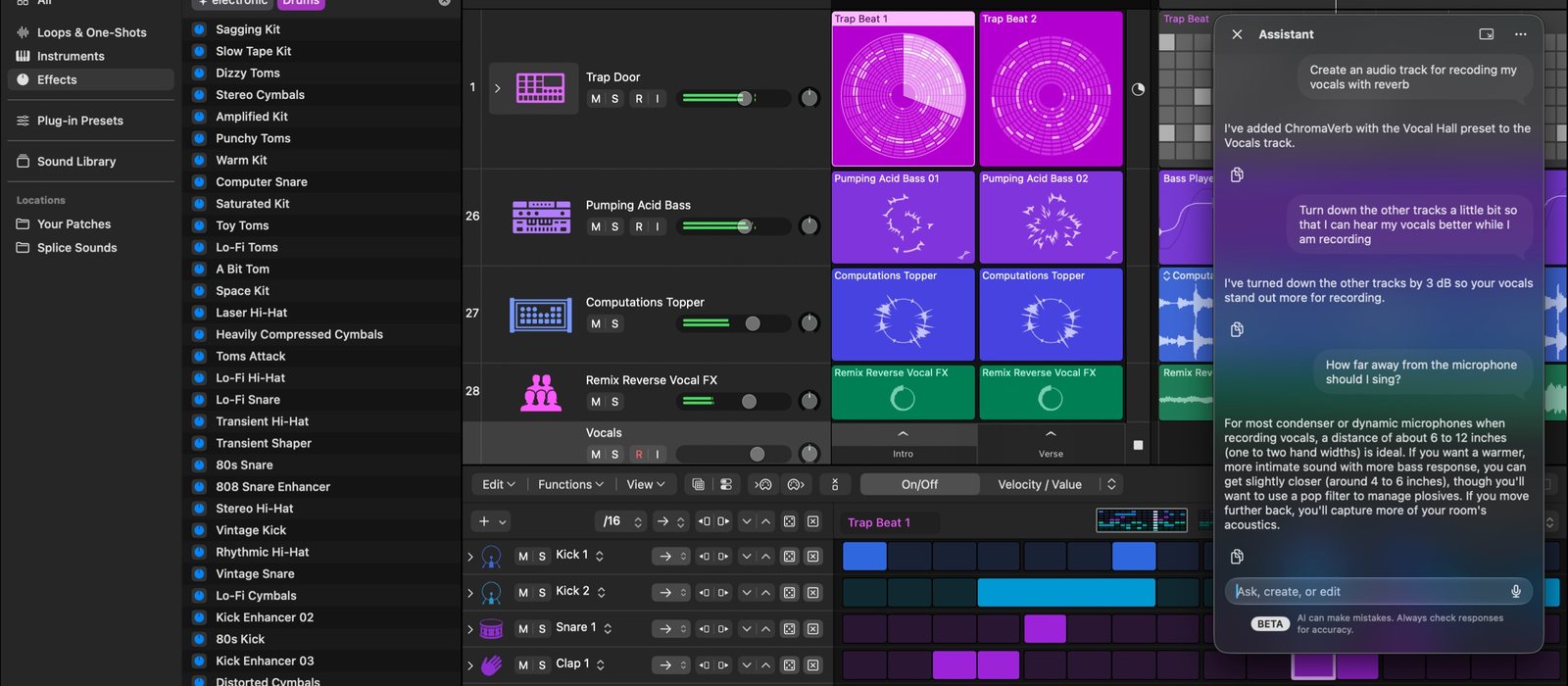
Apple’s Logic Pro 13 AI assistant needs a $12.99 a month Creator Studio plan
Apple shipped Logic Pro 13 on November 5, and its AI assistant needs a $12.99 a month Creator Studio plan, so people who paid $199.99 don’t get it. Apple’s support page says Google Gemini powers it.
Avid adds a Stem Separator to every Pro Tools tier, including the free Intro
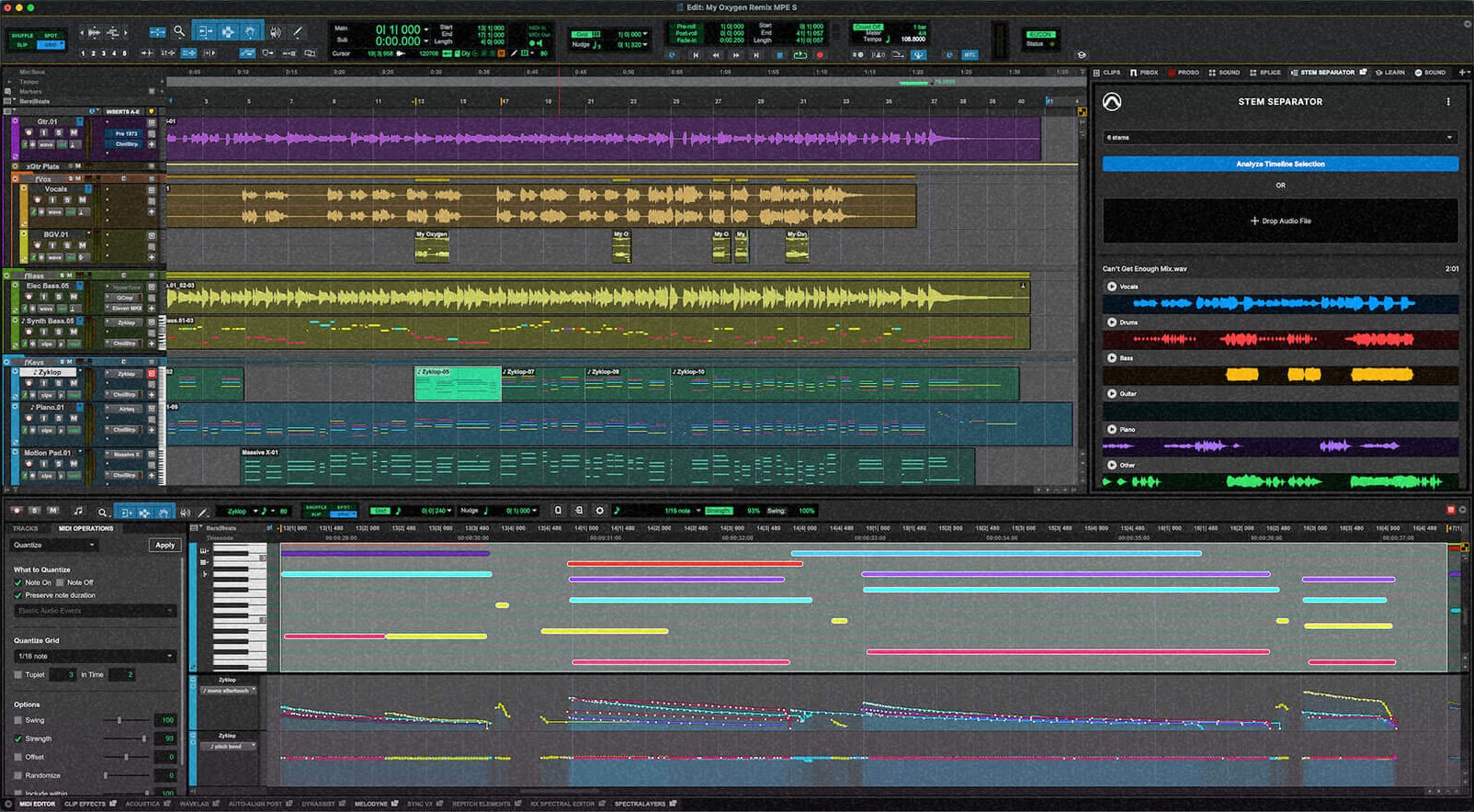
Avid added a Stem Separator to Pro Tools that splits a mix into 6 stems on your own computer, in all 4 tiers including free Intro. The same day, iZotope launched its stem and cleanup app Photon at $349.
GEMA’s Kai Welp makes paying songwriters for AI output GEMA’s top AI priority
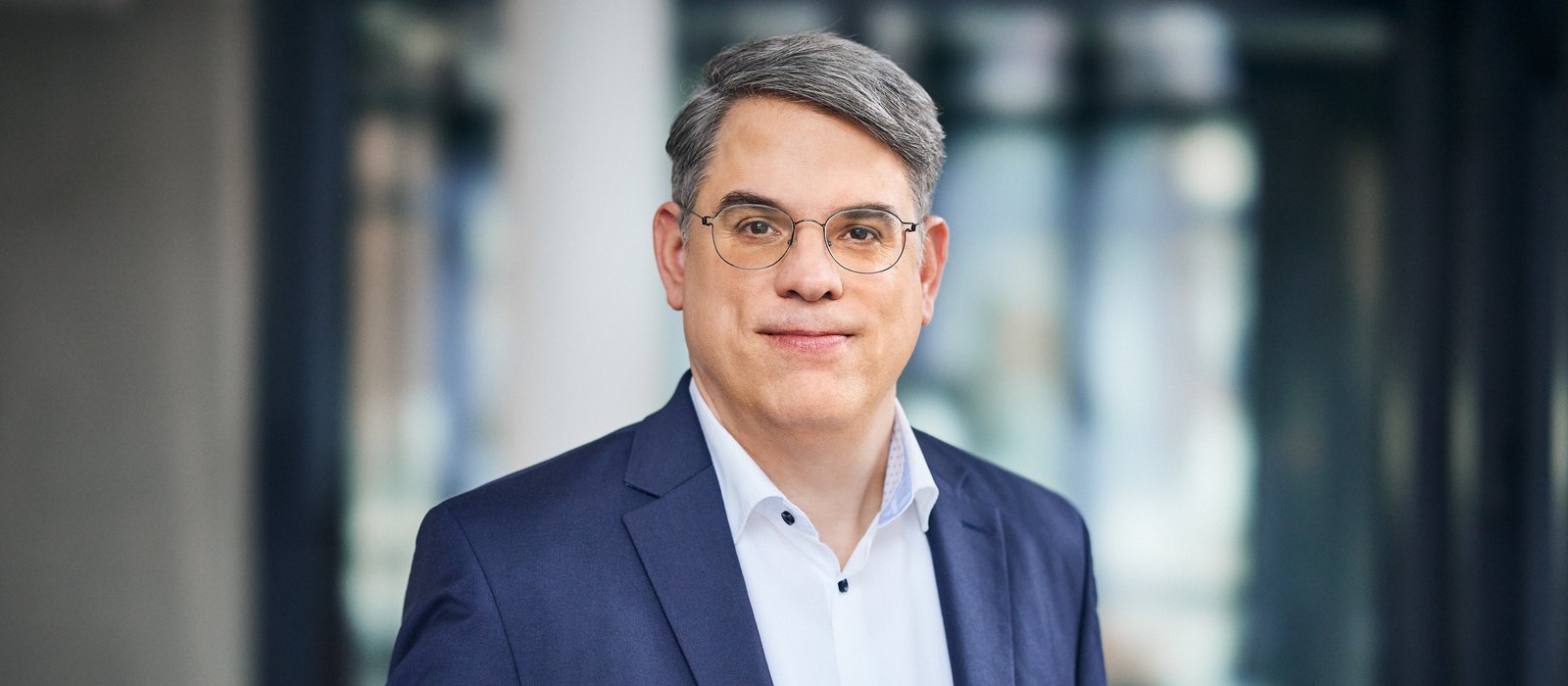
GEMA’s general counsel Kai Welp said getting songwriters paid for AI output is now GEMA’s top AI priority, through a collective claim on AI companies and on the services that play the music.
RIAA, NMPA, ASCAP and BMI ask a judge to reject OpenAI’s fair use defense, and Trevor Lawrence Jr. sides with OpenAI
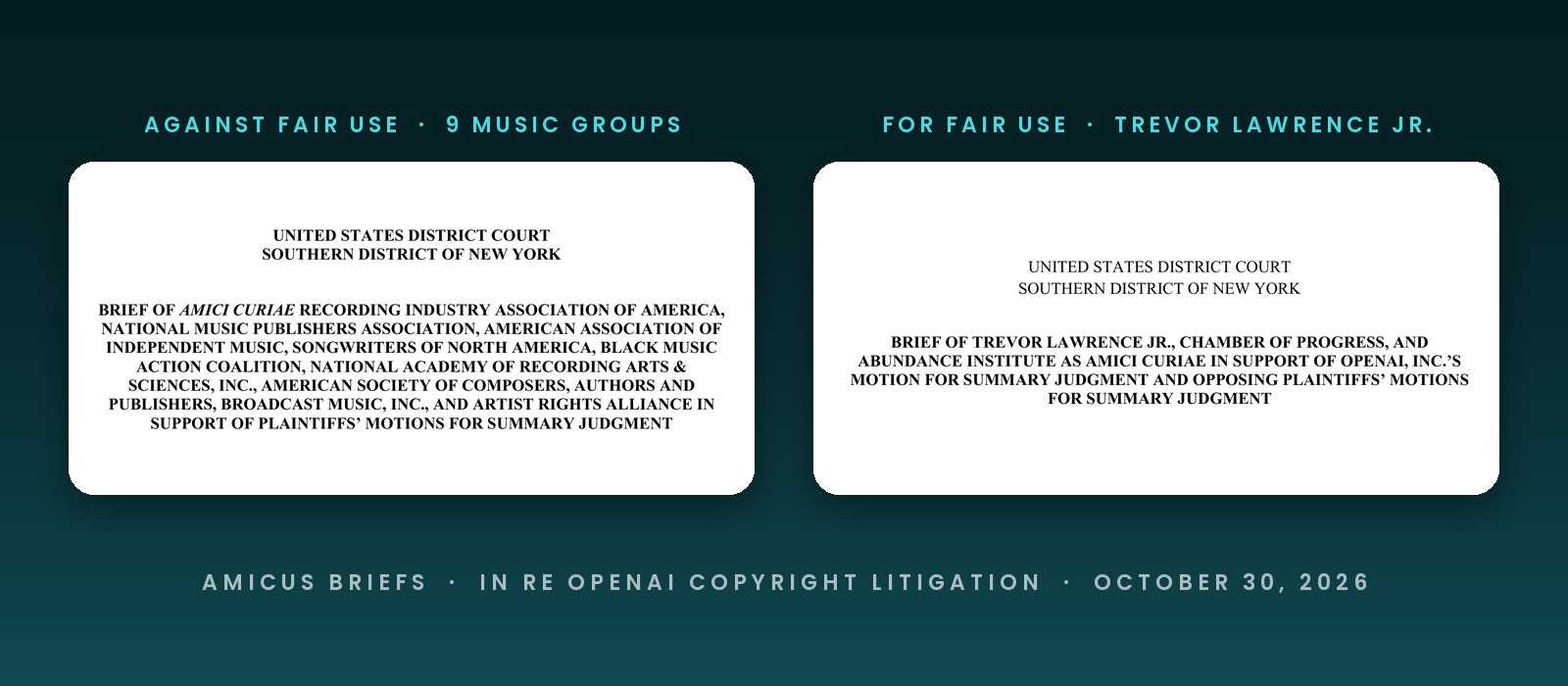
The RIAA, NMPA, ASCAP, BMI and 5 other music groups asked a New York judge on October 30 to reject OpenAI’s fair use defense. Grammy-winning drummer Trevor Lawrence Jr. filed on OpenAI’s side, with Chamber of Progress, which lists Suno among its partners.
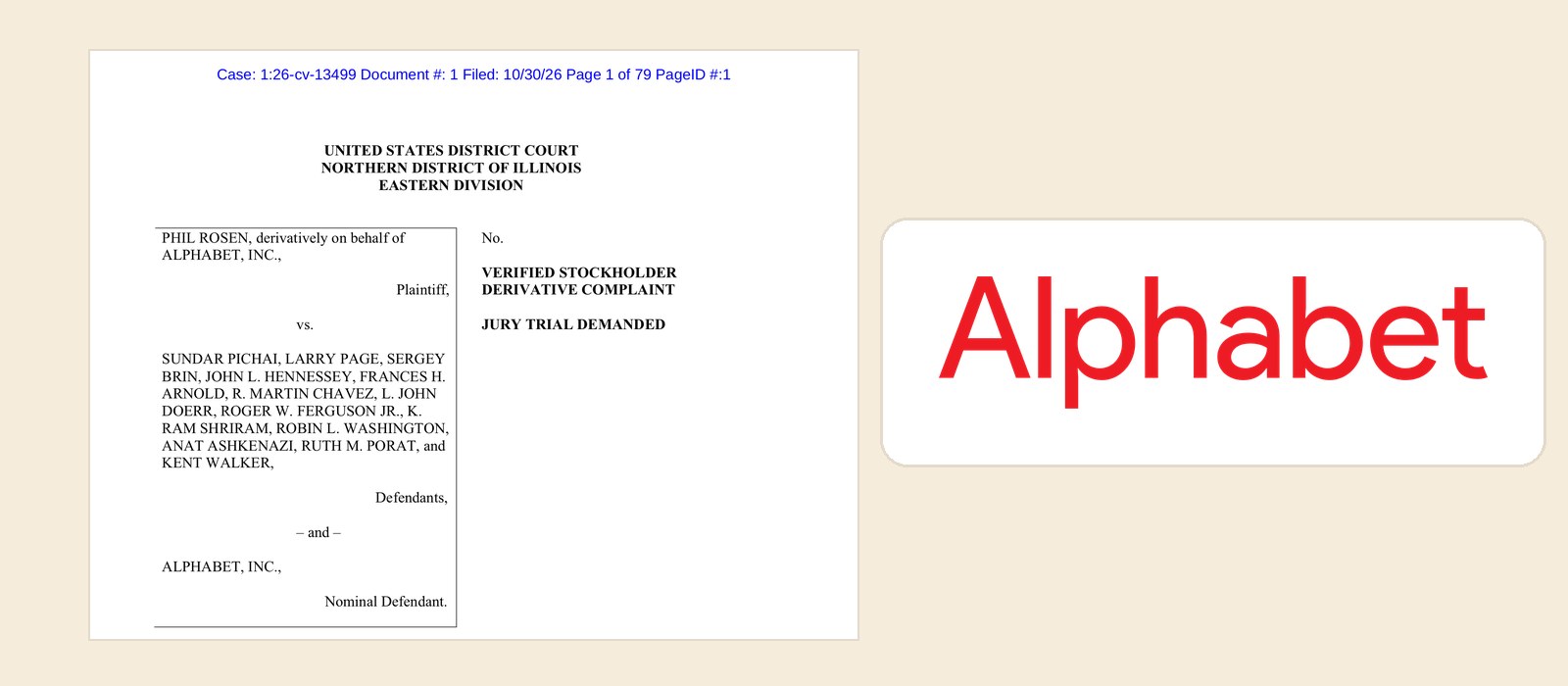
Alphabet shareholder Phil Rosen sues Sundar Pichai and Google’s founders over Lyria’s training data
Alphabet shareholder Phil Rosen sued Sundar Pichai, Larry Page, Sergey Brin and 10 others on October 30, saying Google trained Lyria on copyrighted music taken from YouTube. Any damages would go to Alphabet, and none of it has been tested in court.
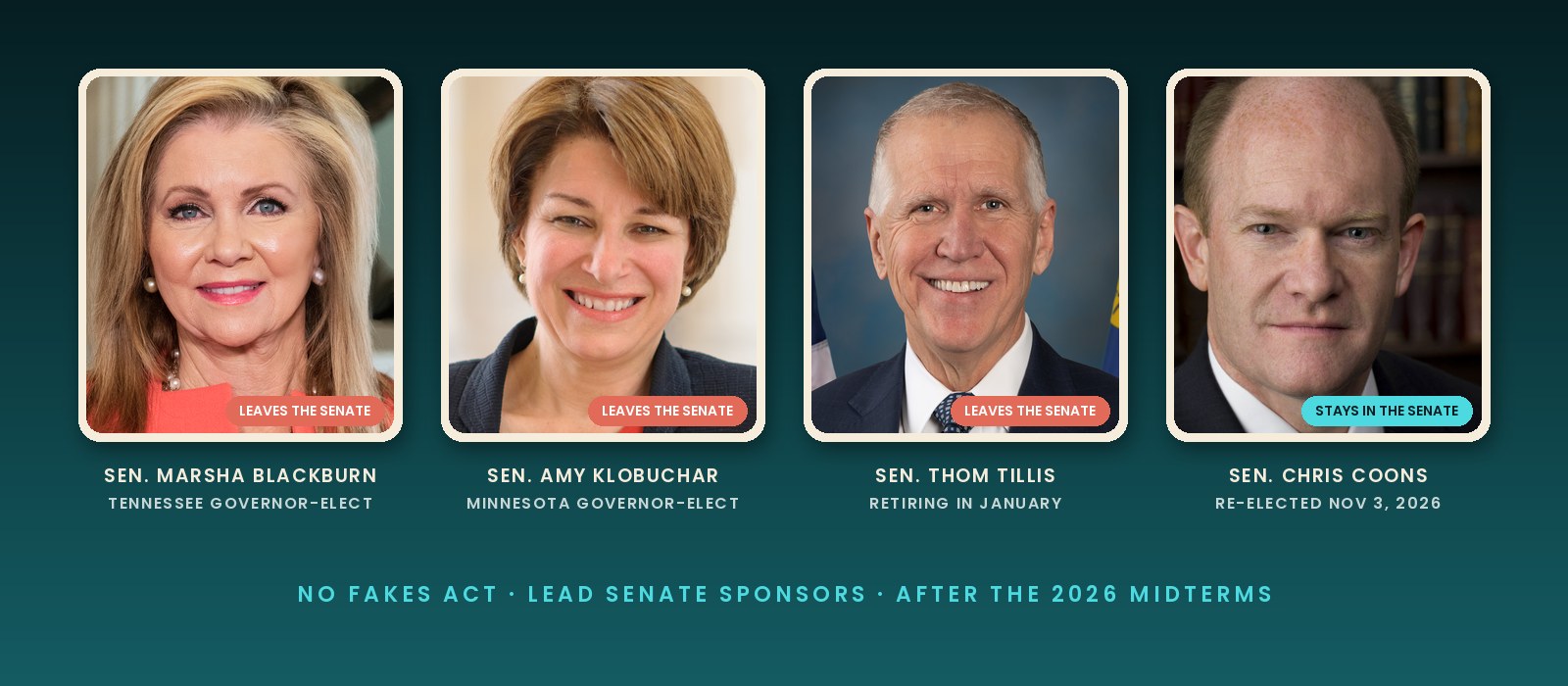
The NO FAKES Act loses 3 of its 4 lead Senate sponsors after the midterms
The NO FAKES Act loses 3 of its 4 lead Senate sponsors in January after the midterms, which leaves only Chris Coons. Any AI music bill that hasn’t passed by January 3 has to be introduced again.
ElevenMusic publishes straight to SoundCloud with a disclosure on every track
ElevenMusic now publishes straight to SoundCloud, and each track carries a disclosure naming ElevenMusic as its source. Neither company has said how those tracks earn money. The same day, ElevenLabs joined DDEX, the group finishing the AI disclosure standard due in early 2027.
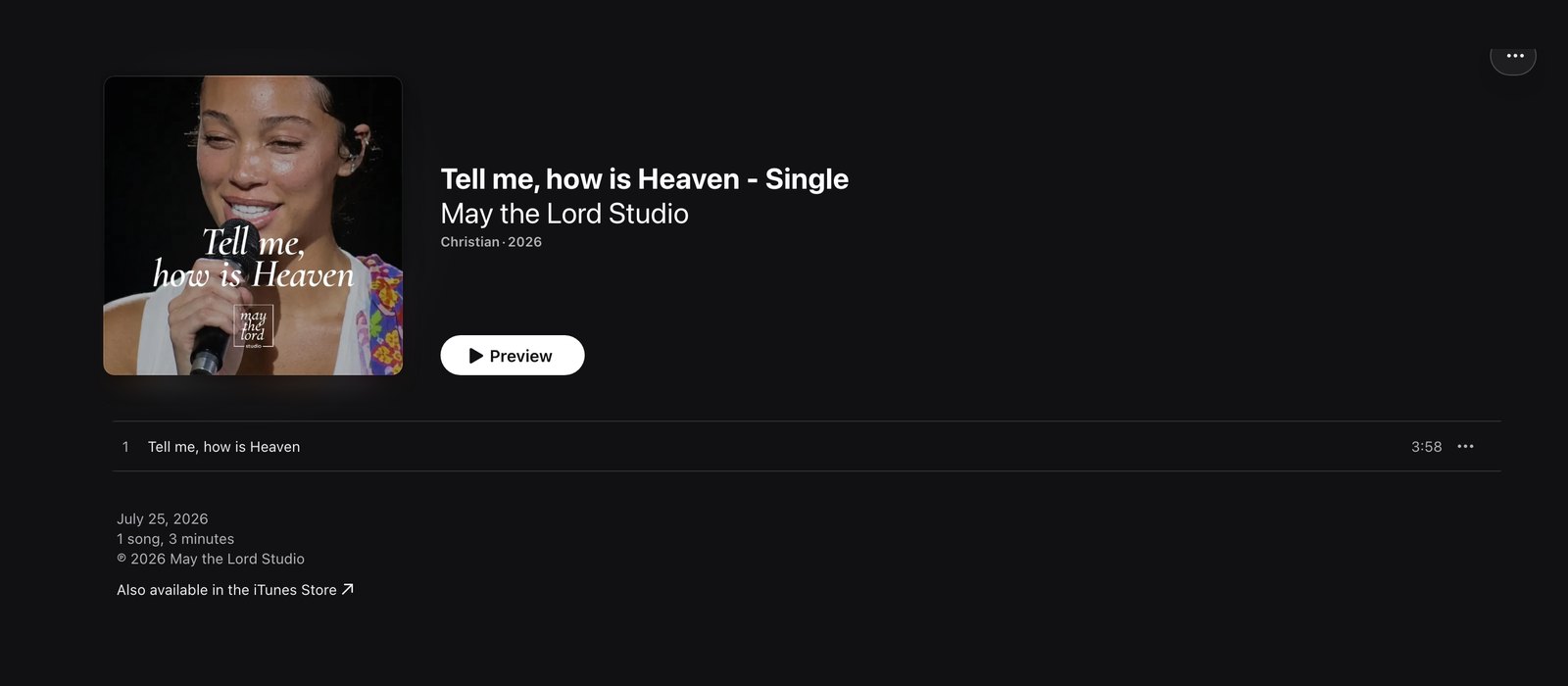
May the Lord Studio, a gospel act that says it uses AI, hits No. 1 on US iTunes
May the Lord Studio, a gospel act that says it uses AI, hit No. 1 on US iTunes on November 3 with a song about grief. Its website mentions AI, but the Apple Music page and the official video don’t.
SubmitHub’s AI detector flags Coloured Tears’ handmade covers and matches a 1982 song to ElevenLabs
SubmitHub flagged all 23 of Coloured Tears’ handmade Twice a Man covers as possible AI, then 7 of the 1980s originals too. It matched a 1982 song to ElevenLabs Music, which launched in August 2025.
CISAC counts a record €15.5bn in 2025 creator royalties and calls AI its “largest test”
CISAC counted a record €15.5bn in creator royalties for 2025, up 11.3%. Without The MLC, counted for the first time, growth was 5.3%, and its board chair calls AI its “largest test”.

Top Story: Universal wants AI paid less, and it also signed Spotify’s $4 to $5 AI remix tool
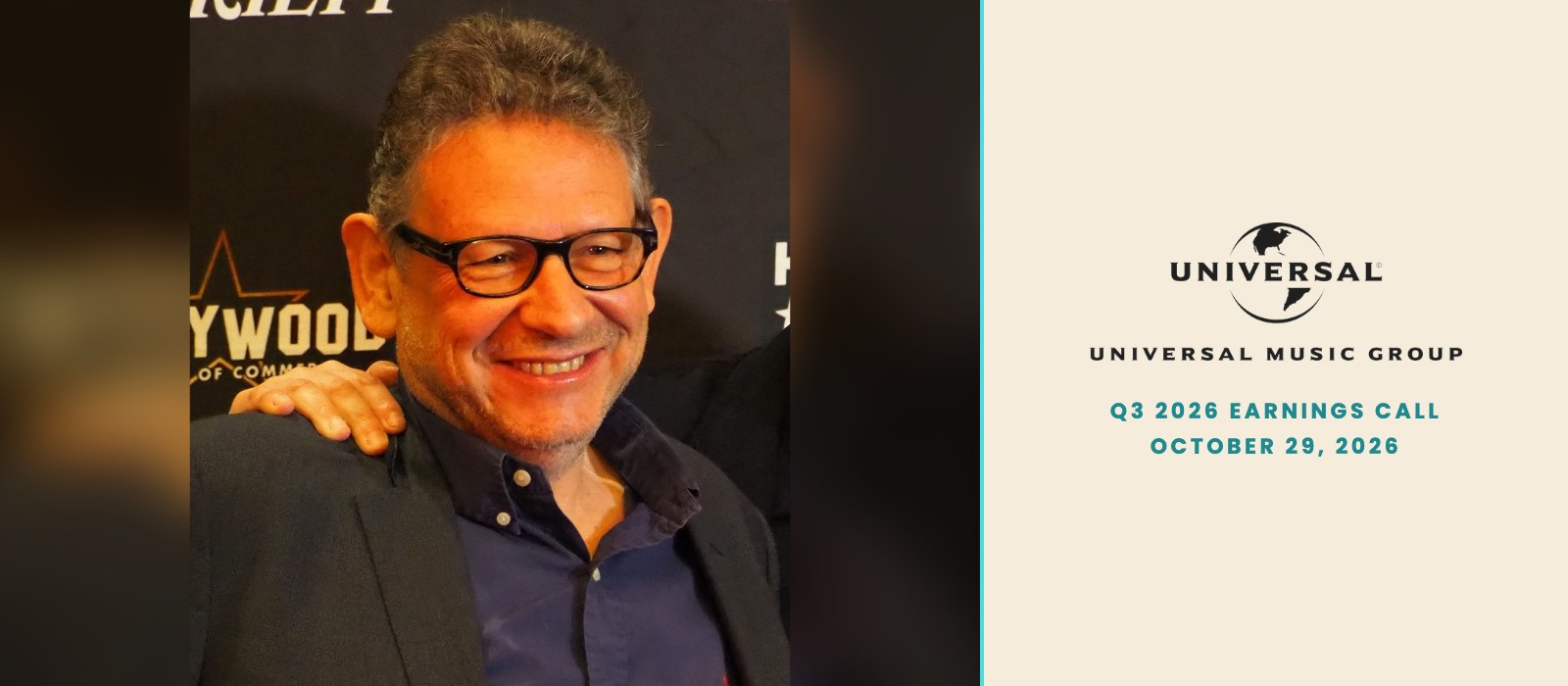
On October 29, the head of the world’s biggest music company told investors that streaming treats “AI slop as the same as the greatest songs in the world”.
Lucian Grainge says Universal’s deals with streaming services have to change.
Honestly, he has a point. Close to 90,000 fully AI tracks reach Deezer every day, and nobody wants to share a pot with a farm.
But the very next day, the Financial Times reported that Spotify plans to launch an AI remix tool in early 2027, at $4 to $5 a month.
Guess who signed first.
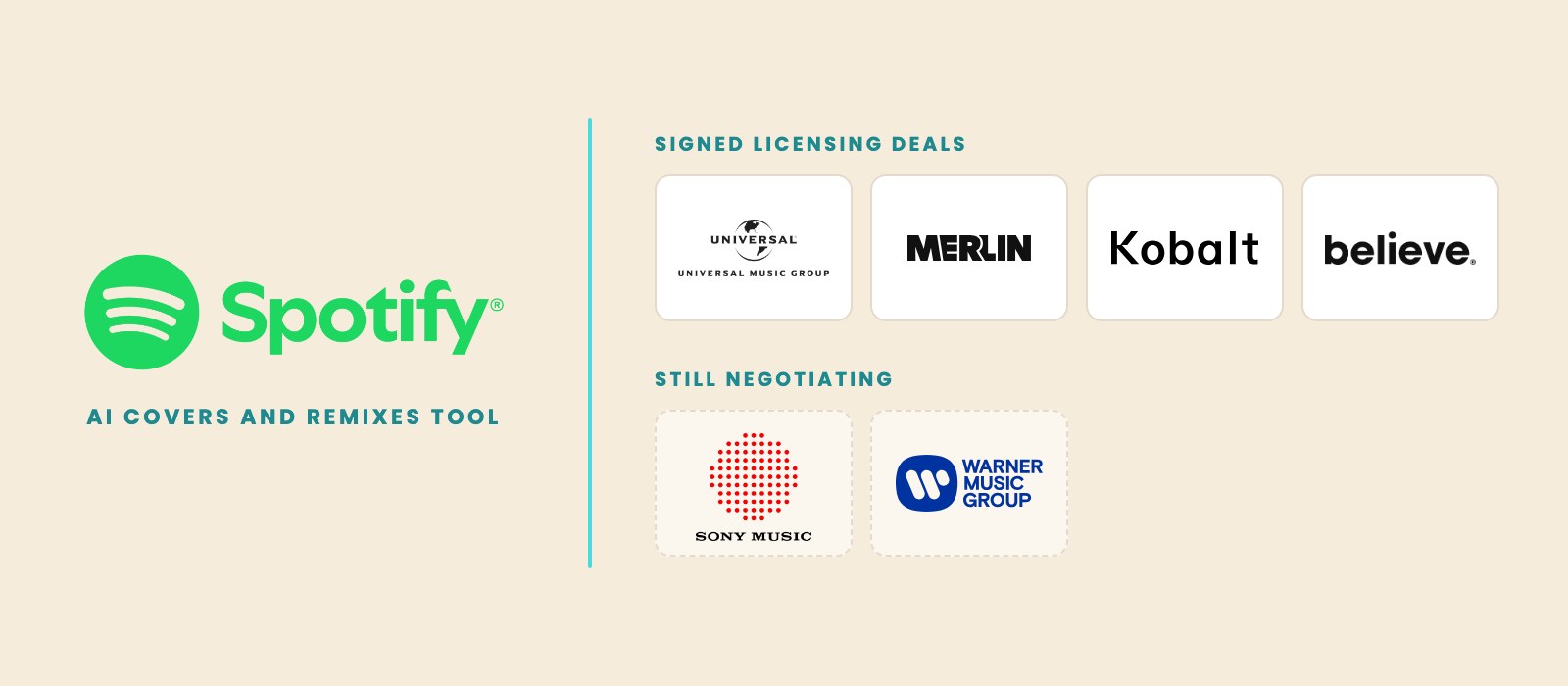
Universal. Back in May. It’s also building AI platforms with Udio and ElevenLabs, and it expects those deals to earn from fiscal 2027.
To be fair, those deals are licensed, and Grainge said “unethically generated”.
It still made me laugh. From the outside, it looks like Universal is fine with AI music, as long as Universal gets paid on it.
Then I read a LinkedIn post by Antony Demekhin, who runs Tuney. He says he predicted this proxy war between Spotify and the majors almost a year ago. (Tuney builds AI music tools, so he has a stake.)
His read: AI diluting the royalty pool is good for Spotify “because they want to shrink their major label payouts as those are the most expensive rates they pay out.”
Nobody has really counted that yet. Goldman Sachs’ last estimate had AI at 0.1% of the pool, in June 2025.
But look at the calendar. Spotify’s deals with Universal and Warner reach their 2-year mark in Q1 2027, the same quarter as the remix tool.
Fans get a price. Labels get a deal. Artists get a yes or no.
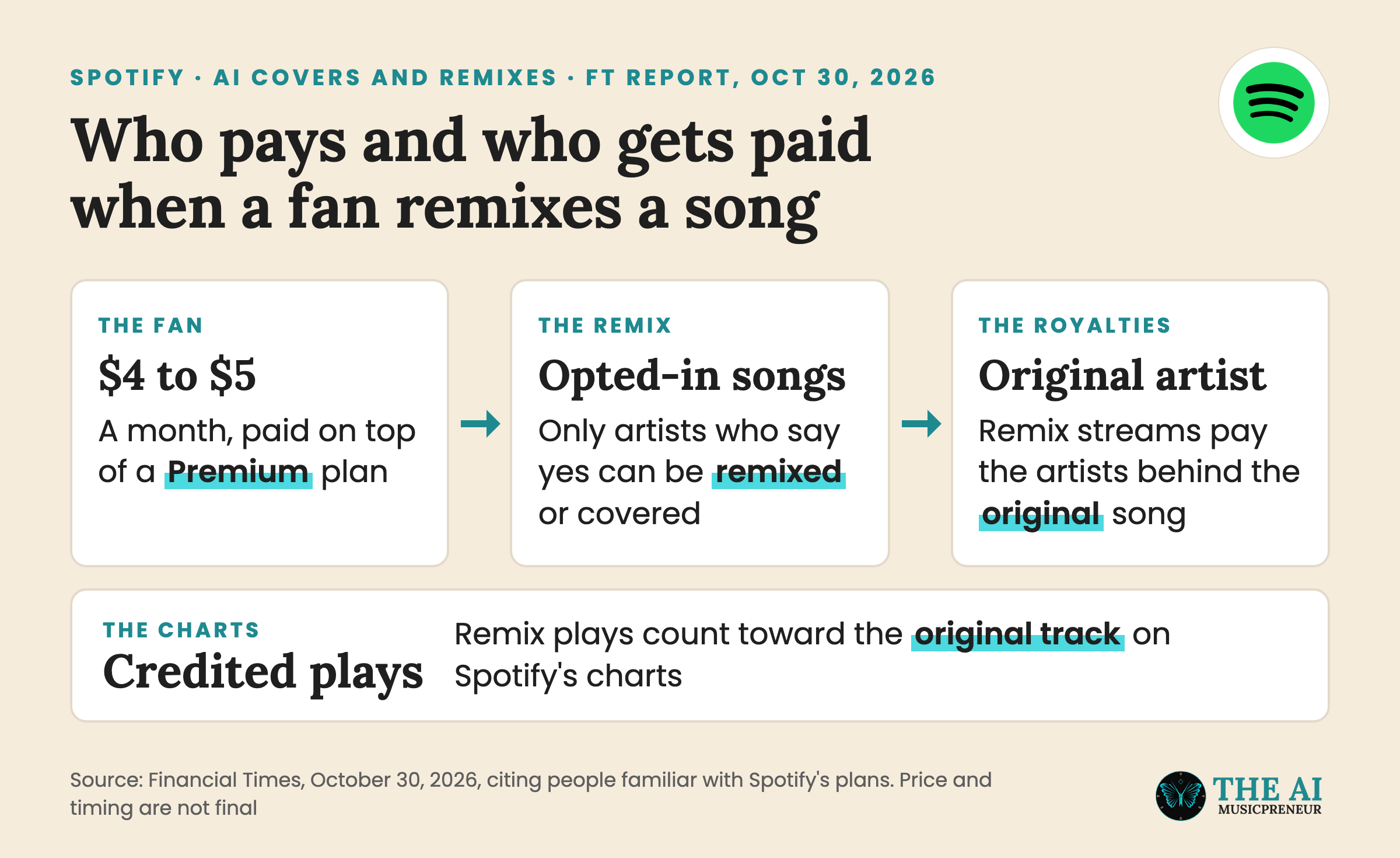
Now picture you’re an artist on Merlin or Believe. An email asks if fans can remix your songs with AI, and it says the royalties go to you.
Great. How much?
Nobody can tell you. 4 rights holders have signed, and none of the deals publishes a rate. I think a remix costs Spotify less than a normal stream. I might be wrong, and that’s the problem: nobody outside those rooms can check.
Sure, artists opt in one by one, and that’s a real protection. But no announcement says you can pick which songs go in.
Jermaine Dupri asked for exactly that on October 31. And it’s doable: Universal’s own deal with Hook already lets artists choose song by song.
I’m not in those negotiations, and this money might stay small. But I’d expect the first rate to set the bar for every deal after it.
So here’s my ask. If you release through Universal, Merlin, Kobalt, Believe or TuneCore, ask your rep before you say yes:
- What does a remix pay compared with a normal stream?
- Can I pick which songs go in?
- Can I leave later?
You might miss the launch if you wait. I’d still ask.
Fans will know what a remix costs them. You should know what it pays you.
AI Music Lawsuit Tracker: a judge dropped the direct claim against Anthropic’s CEO, and Suno’s Apple fight moved to Boston
4 cases moved this week. The other 10 on my tracker, including UMG & Sony v. Suno (v6), GEMA v. Suno and UMG v. DistroKid, did not.
Here’s what changed:
Concord v. Anthropic: judge dismisses the direct infringement claim against CEO Dario Amodei
Judge Eumi Lee dismissed the direct infringement claim against CEO Dario Amodei on November 4, saying “every CEO for any small startup would be liable”. The publishers can rewrite it, and he still faces the claim that he contributed to the infringement. She also questioned where their list of 20,517 works came from.
Lowery v. Suno: Suno asks a Boston court to dismiss Jason Isbell and David Lowery’s identity class action
Suno asked a Boston court to throw out Jason Isbell and David Lowery’s identity class action, arguing that using an artist’s name to describe a style is free speech. The musicians reply next.
RIAA v. Suno: Apple’s fight over Suno’s subpoena moves to Boston
Apple’s fight over Suno’s subpoena moved to Boston on November 4, so the December 1 San Jose hearing I mentioned last week looks off. No new date is out. Apple says Suno wants it to reveal its bargaining positions to Universal and Sony.
RIAA v. Udio: The MLC says Udio’s streaming data subpoena would take 2 to 3 weeks of staff time
The MLC told a Nashville court that Udio’s subpoena for streaming data would take 2 to 3 weeks of staff time at $150 to $315 an hour. In July, its own lawyer had passed on a vendor estimate of about $5,000.
→ Full case files and timelines
About The AI Music Briefing
The AI Music Briefing is a weekly Friday read for music industry professionals working at the intersection of AI and the traditional music business. Curated and written by Christopher Wieduwilt, founder of The AI Musicpreneur. Browse every issue of the briefing.
Got a tip, a story, or a partnership idea? Reach out any time. Every message lands directly in my inbox.
— Christopher
About the author
Covering AI music tools, industry shifts, and news for music creators and professionals. Twice-weekly newsletter at aimusicpreneur.com.