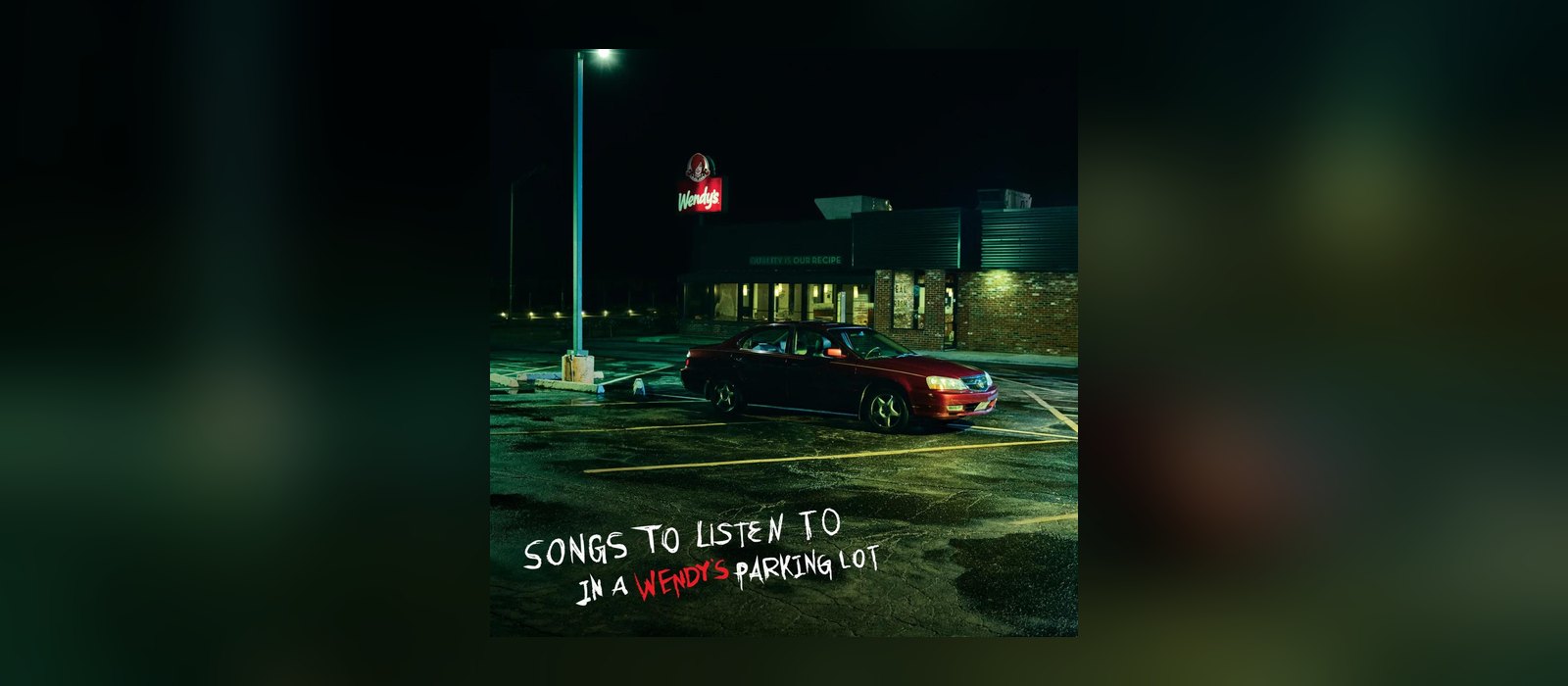
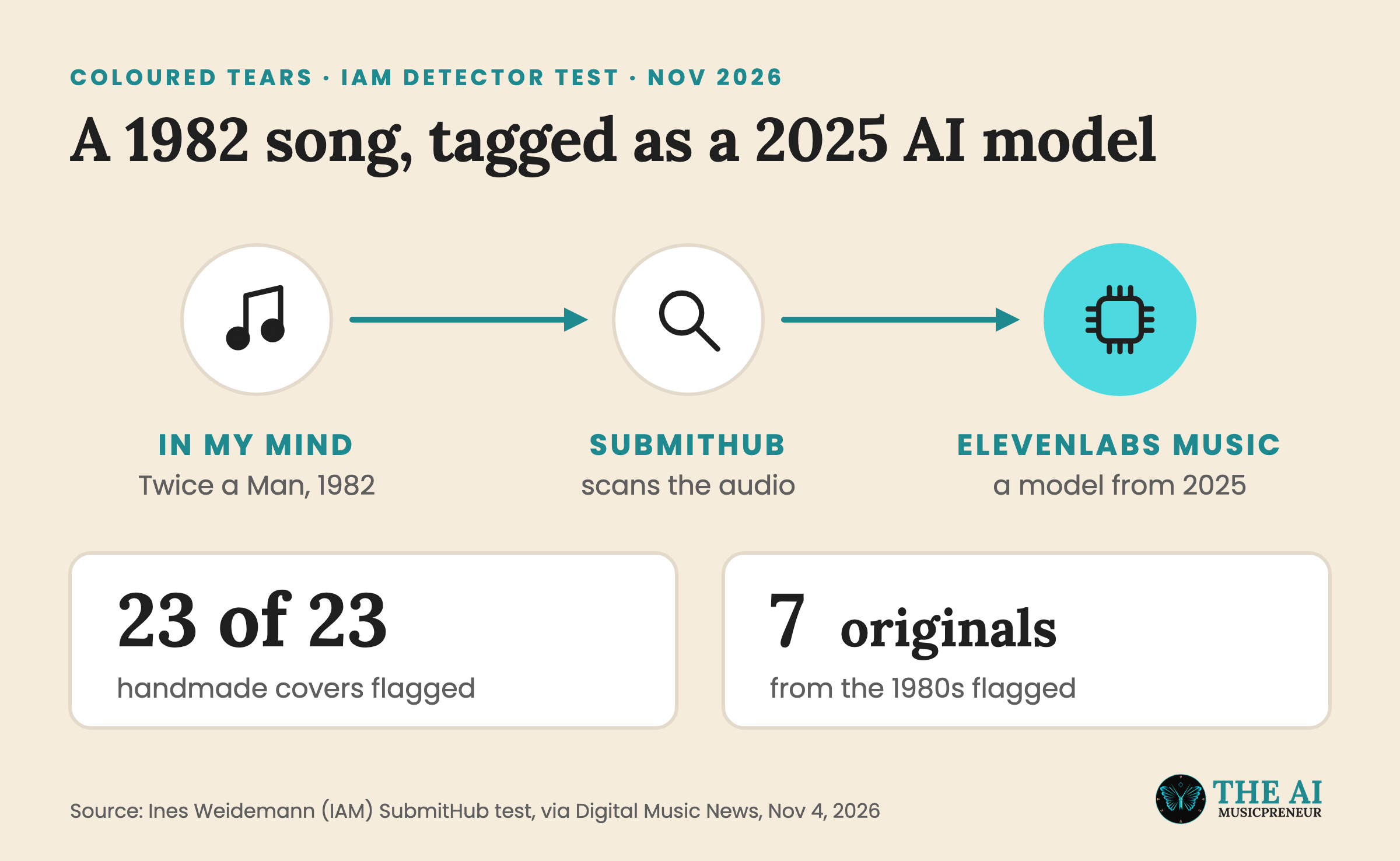
Coloured Tears made 23 Twice a Man covers by hand. SubmitHub flagged all 23, and 7 of the 1980s originals

My stack My fav 6 tools for AI music after testing 70+
-
 ElevenMusic · Music generation
-
 Moises · Stem separation
-
 Controlla · Voice swap & cloning
-
 Cryo Mix · Mixing + mastering
-
 Neural Frames · Music videos
-
 ONCE · Distribution
Some links are affiliate links — I earn a commission at no cost to you. Every tool here is one I run myself and truly believe in. This stack is proven.
SubmitHub listened to “In My Mind,” a song the Swedish synth band Twice a Man released in 1982, and said it was made with ElevenLabs Music. ElevenLabs didn’t launch a music model until August 2025.
That result came out of a test by Ines Weidemann of International Artist Marketing (IAM), which handles press for Hamburg musician André Grafert. Grafert records as Coloured Tears, and on June 26, 2026, he released 23 handmade Twice a Man covers. SubmitHub rated all 23 as potentially AI-generated, Digital Music News reported on November 4.
So Weidemann ran the originals too. SubmitHub flagged 7 of Twice a Man’s own 1980s recordings as “possible AI/hybrid.”
How André Grafert made the Coloured Tears tribute albums by hand
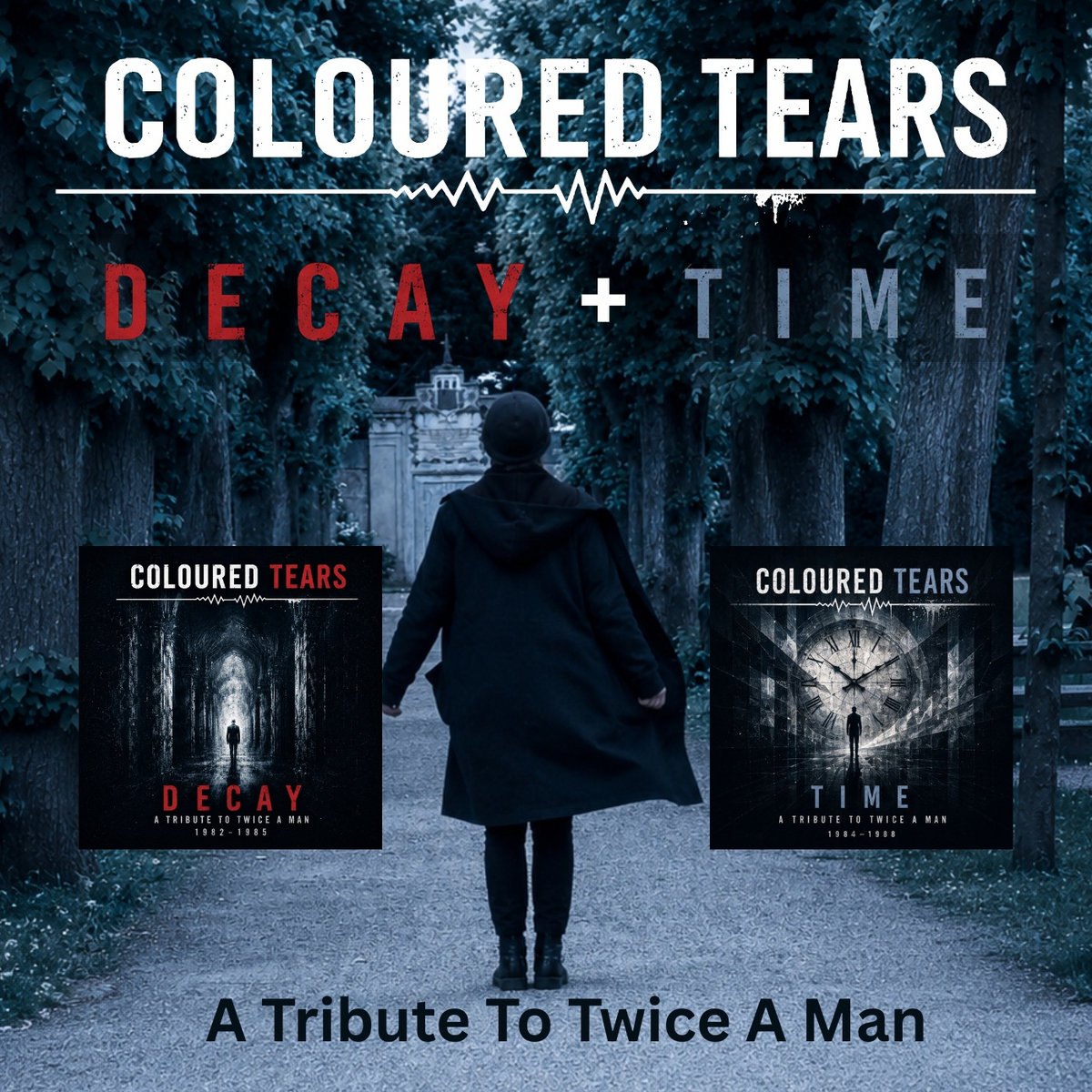
The project came out as 2 albums on the same day. DECAY has 12 songs from Twice a Man’s early years, 1982 to 1985, and TIME has 11 from 1984 to 1988. Cold War Night Life announced both for June 26, and both sell only on Bandcamp.
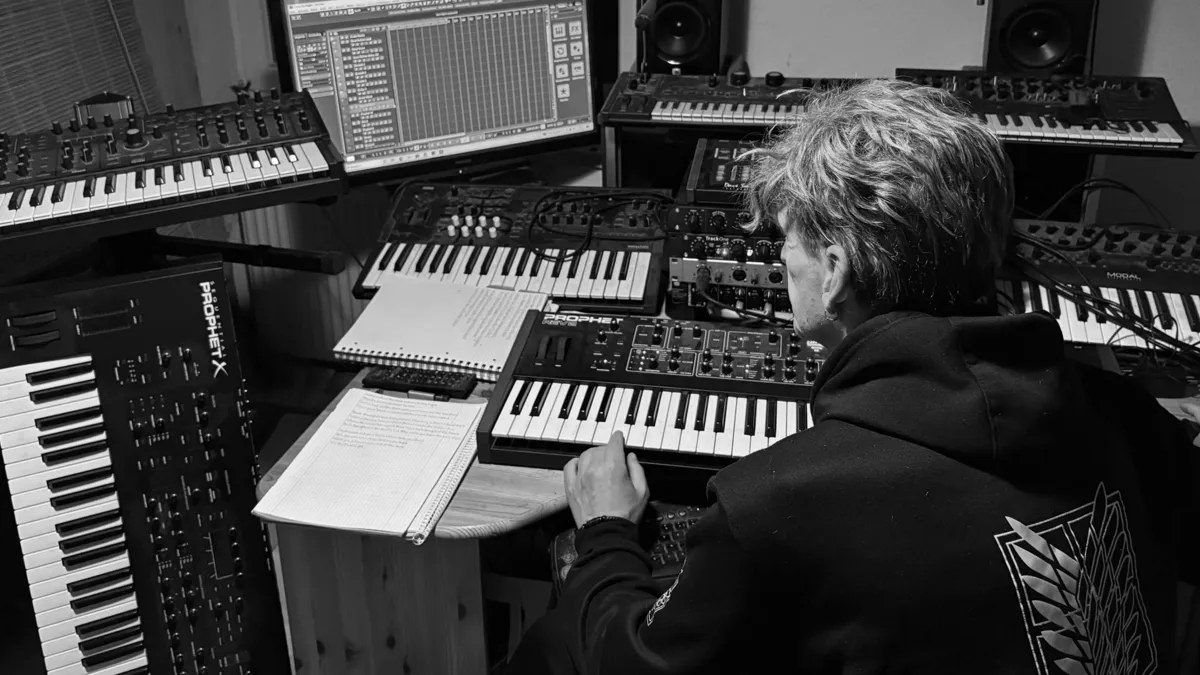
Grafert says he played, programmed, sang and produced every track himself, with no generative AI. In a statement quoted by DMN, he described the setup like this:
“With me there are no text prompts, but real electricity and passion. My sound is created note by note by hand in Cubase and driven through my Sequential arsenal.”
That arsenal is a Prophet X, a Prophet 12, a Pro 3 and a Rev2, plus Native Instruments Kontakt and his own vocals. Soon after the albums came out, Grafert started facing public accusations that he had used AI, which is what sent Weidemann to the detectors.
SubmitHub flagged Twice a Man’s original 1980s recordings as AI
Twice a Man is a Gothenburg duo, Dan Söderqvist and Karl Gasleben, who took that name in 1981. Their first album came out in 1982, and they built their sound on synthesizers and electronic effects, adding samplers from 1984, according to their Wikipedia entry.
Weidemann put those original recordings through SubmitHub. 7 came back as “possible AI/hybrid,” and 2 were matched to a named AI model:
- “In My Mind” from 1982 was tagged as ElevenLabs Music, which went live in August 2025.
- “Across the Ocean,” a 1984 single, was tagged as “Treblo_v3,” a version of Treblo, the AI platform whose own detector scored Fenix Flexin’s “Rubberz” as very likely Treblo.
On the covers, SubmitHub flagged all 23, and the other detectors Weidemann spot-checked mostly rated them as AI too. DMN names SubmitHub, Let’s Submit, TrackVerifier and ACRCloud among the detectors that have classified tracks with this kind of sound as “possibly artificially generated.”
Why AI music detectors misread darkwave, EBM and post-punk synths
An AI music detector doesn’t check how a song was made. It looks for statistical patterns in the audio and estimates the odds, a bit like a spam filter guessing from the words in an email.
The trouble is which patterns. DMN lists the features that get handmade tracks flagged: machine drums, precise sequencers, synthetic soundscapes and altered voices. Those have been the sound of EBM, electro, darkwave and post-punk since the early 1980s, when Twice a Man started out.
DMN also cites research warning that detectors can lean on incidental details like sample rate and bitrate. The AI Music Arms Race, a study published in TISMIR, put a number on how often a commercial detector gets human music wrong when it tested IRCAM Amplify.
The same study fooled a commercial detector entirely by resampling audio to 22.05 kHz. I went through what that means for producers calling out AI by ear, and the IRCAM Amplify detector page has the vendor’s own figures.
What a false AI flag costs an artist on SubmitHub and Bandcamp
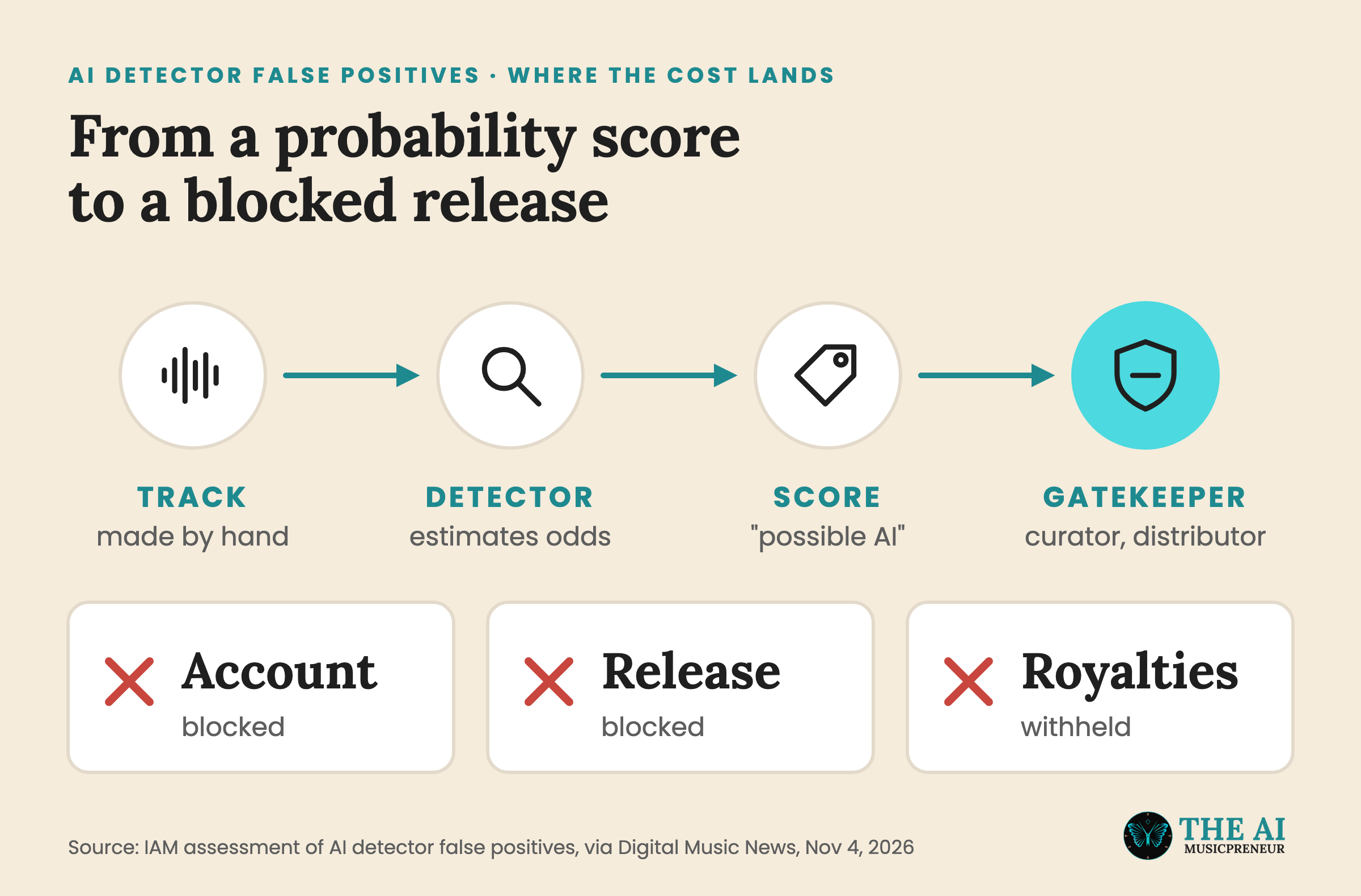
A score becomes a problem when someone acts on it. IAM’s assessment is that false positives end in blocked accounts, blocked releases and withheld royalties, and that independent artists take most of the damage.
SubmitHub has blocked any submission its detector scores at 85% or higher likely AI since September, and founder Jason Grishkoff says a third party measured the detector at 99.4% accurate. DMN’s report doesn’t give the scores for the Coloured Tears tracks, so I can’t tell you whether any of them would have crossed that line.
Bandcamp is the bigger exposure for Grafert, because it’s the only place he sells. Its “Keeping Bandcamp Human” policy bans music generated wholly or in substantial part by AI and lets Bandcamp remove tracks on suspicion alone. Nothing reported so far says Bandcamp has acted on DECAY or TIME.
It cannot be right that newcomer bands today have to prove with individual tracks that they are real people, while no one would ever doubt the big, established acts.
Platforms filter because the volume is huge. Fully AI-generated music passed 50% of Deezer’s daily uploads in June 2026. The industry’s labeling standard, backed by the IFPI, the RIAA and A2IM, relies on labels and distributors disclosing AI use themselves, and DMN reports that independent artists on DIY distributors are the ones running into the automated filters.
What to do if an AI detector flags your handmade track
Grafert has said he won’t prove his songs one by one: “I am not going down this path of mistrust.” If you do want to push back on a flag, these are the facts on your side:
- Ask which detector made the call and what the score was. On SubmitHub, a score under 85% doesn’t block a submission.
- Keep your session files, stems and MIDI. A score is an estimate, and the project that made the song is a record of how it was made.
- Disclose any AI use yourself through your distributor’s AI tags, since the labeling standard runs on self-disclosure.
- Don’t take one detector’s output as the answer. Even the independent test above had IRCAM Amplify calling 4.7% of human recordings AI.
My guide on how to tell if a song is AI-generated covers what detectors can and can’t see. DMN’s report ends on the same problem: until filters and appeal procedures are clarified, releasing modern independent music is “an algorithmic game of chance.” For Twice a Man, that game started more than 40 years after the songs did.
Frequently asked questions
Where and when did Coloured Tears release DECAY and TIME?
Coloured Tears released both albums on Bandcamp on June 26, 2026. DECAY has 12 Twice a Man songs from 1982 to 1985, and TIME has 11 from 1984 to 1988. The project sells only on Bandcamp, so fans own the music and pay the artist directly, according to the album page.
Who are Twice a Man, the Swedish band Coloured Tears covered?
Twice a Man is an electronic group from Gothenburg, Sweden, built around Dan Söderqvist and Karl Gasleben. The pair started out in 1978 as Cosmic Overdose, took the Twice a Man name in 1981 and released their first album, Music for Girls, in 1982. They have always built their sound on synthesizers and electronic effects, and added samplers in 1984.
What did Dan Söderqvist of Twice a Man say about the Coloured Tears tribute albums?
Söderqvist said the new versions are very attractive and that the production feels modern without losing the melancholic edge of the originals. He named Early Morning, Lapwing Territory and Waterland as his favourites. His statement is printed on the DECAY album page on Bandcamp.
Has Bandcamp removed Coloured Tears' Twice a Man tribute albums?
No report says so. The DECAY album page was still live on Bandcamp when I checked it on November 5, 2026. Bandcamp's policy allows removal on suspicion of AI use, which matters for an artist who sells only there.
About the author
Covering AI music tools, industry shifts, and news for music creators and professionals. Twice-weekly newsletter at aimusicpreneur.com.