The AI Music Briefing #22: "Sounds like AI" isn't evidence, from THE MOTEL to Taylor Swift
The week of September 26 to October 2, 2026, when prosecutors asked for 46 months for AI streaming fraudster Michael Smith, the Third Circuit rejected fair use for AI training, and THE MOTEL and Taylor Swift both got called AI with no evidence.
My stack My fav 6 tools for AI music after testing 70+
-
 ElevenMusic · Music generation
 -
 Moises · Stem separation
 -
 Controlla · Voice swap & cloning
 -
 Cryo Mix · Mixing + mastering
 -
 Neural Frames · Music videos
 -
 ONCE · Distribution
Some links are affiliate links — I earn a commission at no cost to you. Every tool here is one I run myself and truly believe in. This stack is proven.
Issue #22 · the week of September 26 to October 2, 2026 · ~7 min read. The Friday read for music industry professionals working at the intersection of AI and the traditional music business. Curated by Christopher Wieduwilt.
What’s in store:
- Top Story: “Sounds like AI” isn’t evidence, and Taylor Swift just got the same verdict as a band from Japan
- Prosecutors want 46 months for the AI streaming fraudster, and he’s sentenced Tuesday
- The first US appeals ruling on AI training says no to fair use
- Indie publishers want the song paid at least as much as the recording
- A Tokyo court says a voice is protected the same way a face is
This week in AI music: an appeals court said no to AI training, and prosecutors want 46 months for Michael Smith
The first US appeals ruling on AI training went against the AI company, in a circuit where none of the music cases sit. Prosecutors put a number on streaming fraud, and indie publishers put one on the song.
Also, a $770 sampler on Kickstarter comes with knobs to break its own AI.
Prosecutors want at least 46 months for Michael Smith’s $8 million AI streaming fraud
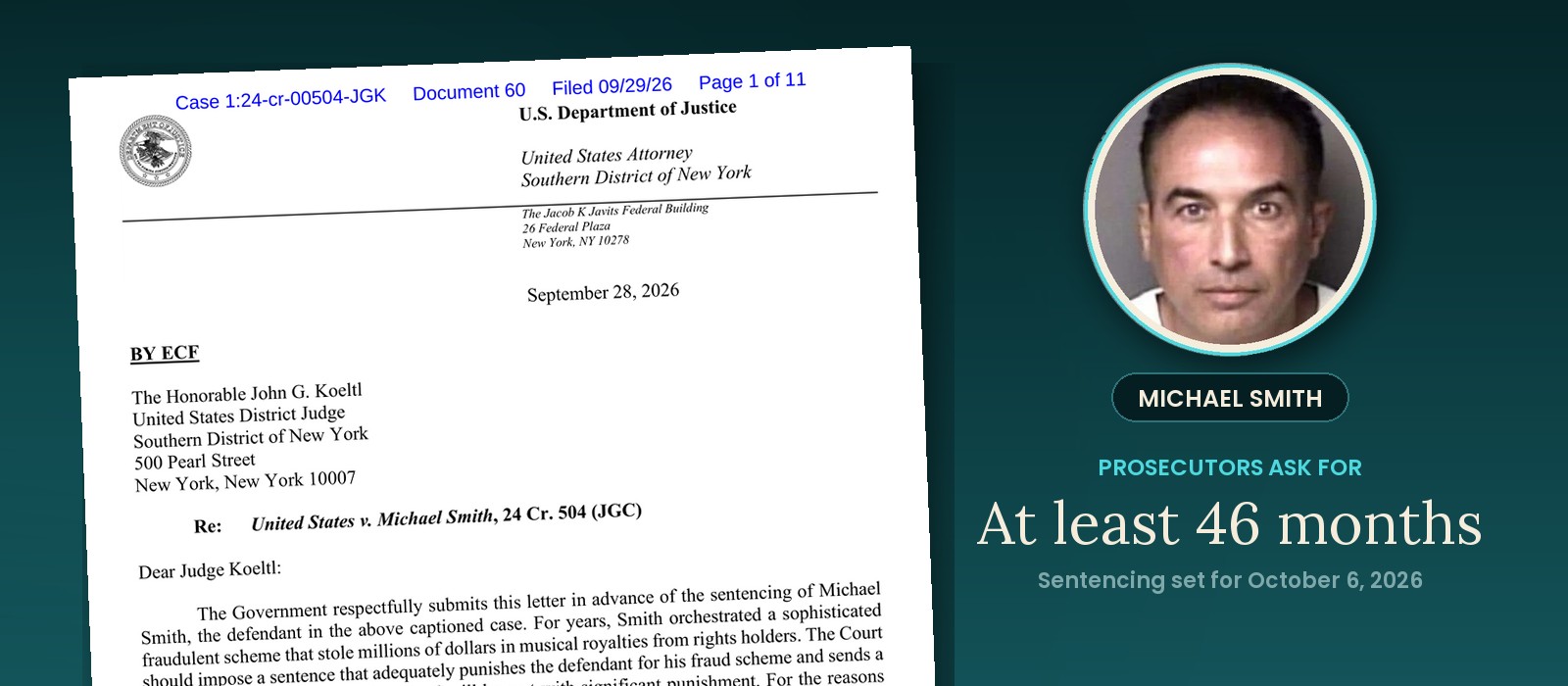
Federal prosecutors want at least 46 months in prison for Michael Smith’s $8 million AI streaming fraud. In April 2023 his catalog drew 80.9 million YouTube Music family-plan streams, against 9.3 million for Taylor Swift’s entire catalog. He’s sentenced on Tuesday, October 6.
Thomson Reuters v. ROSS: the Third Circuit rejects fair use for AI training
The Third Circuit ruled that ROSS Intelligence training its AI on 2,243 Westlaw headnotes wasn’t fair use, the first US appeals ruling on AI training. The RIAA and NMPA backed the winner, but the ruling binds none of the courts hearing Suno, Udio or Anthropic.
IMPF and IMPEL say AI deals must value the song at least equally with the recording
IMPF and IMPEL, the indie publishers’ trade body and their licensing collective, published 7 AI licensing principles. The one they call non-negotiable: AI deals value the song at least equally with the recording. In UK streaming in 2021, recordings took 53% and songs took 15%.
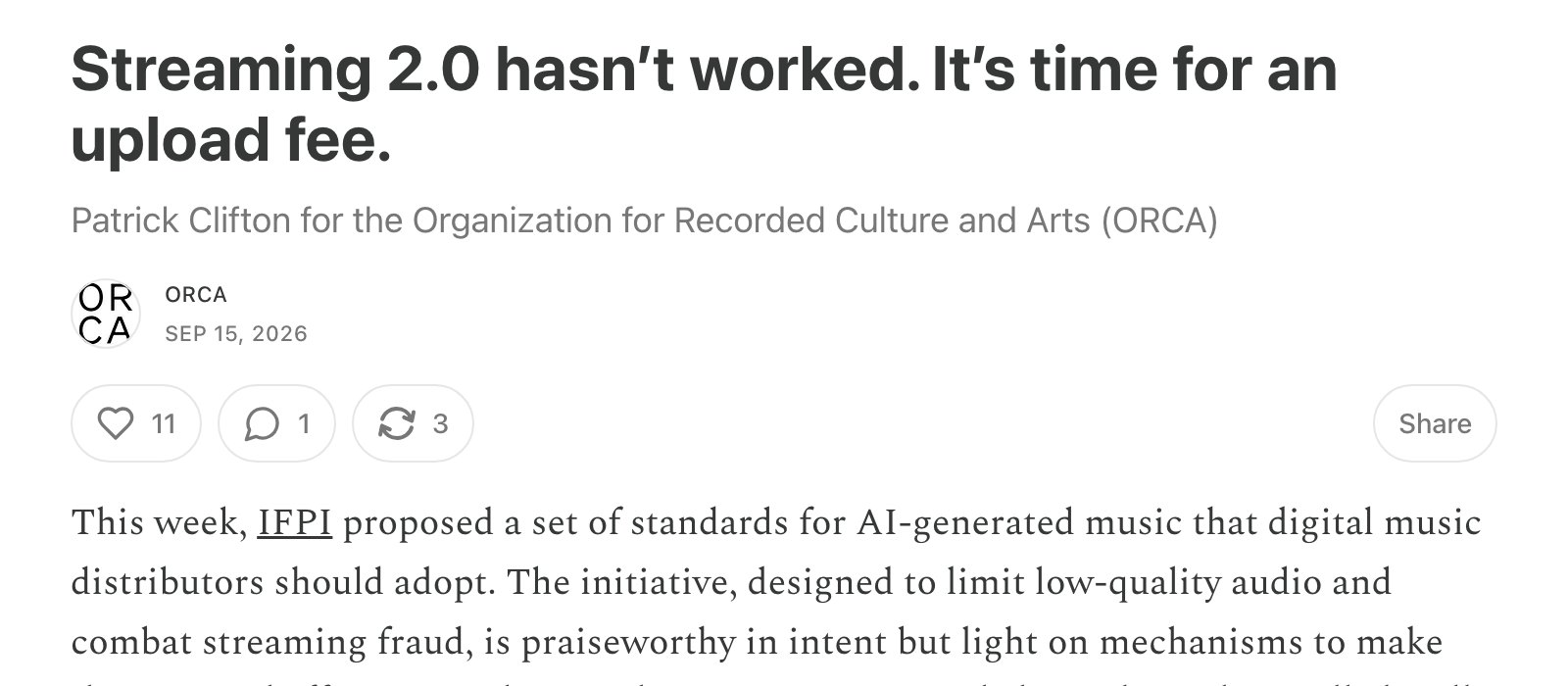
ORCA wants a per-track upload fee paid into the streaming royalty pool
ORCA, a think tank set up by indie labels including Beggars Group, wants streaming services to charge a fee on every uploaded track, paid into the royalty pool. Human-made music that passes trust checks would pay less or nothing. ORCA hasn’t said how the fee reaches artists on a distributor.
A Tokyo court rules a voice is a publicity right in Kenjiro Tsuda’s AI voice case
A Tokyo court ruled for the first time in Japan that a voice is protected by the publicity right, the same way a face is. Voice actor Kenjiro Tsuda still lost, because the 188 AI-narrated TikTok videos were gone before the verdict.

THE MOTEL tops Japan’s iTunes Alternative chart with “NO” and won’t say how it was made
Japanese band THE MOTEL topped Japan’s iTunes Alternative chart with “NO”, and had 7 songs in its top 31 on September 25. The band still hasn’t said how the music was made, which is where this week’s Top Story starts.

Modulate raises $25 million, and its AI music detector costs $0.07 per hour of audio
Modulate raised $25 million led by Future Ventures, $60 million in total. Its AI music detector costs $0.07 per hour of audio and scores vocals and instrumentals separately. Modulate hasn’t named a music customer yet.

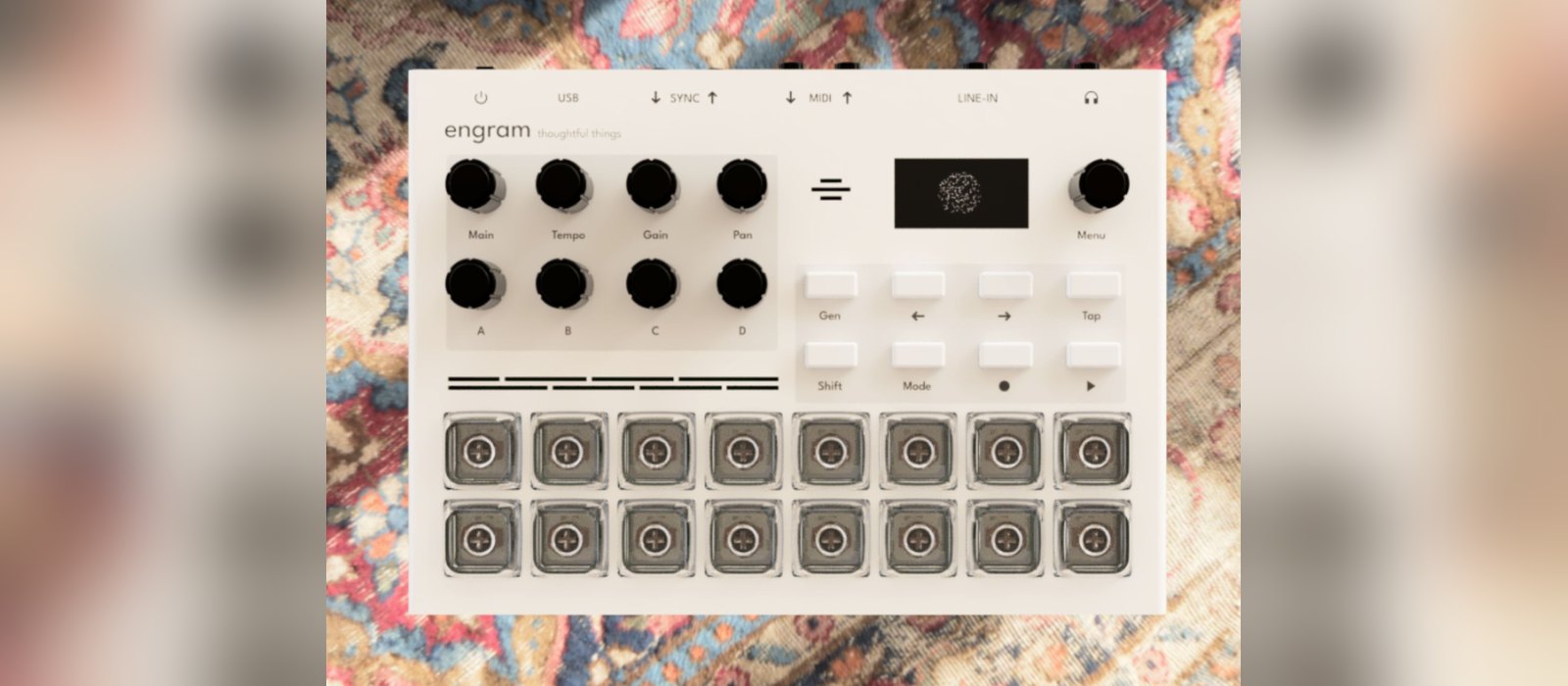
Thoughtful Things puts Engram, a $770 offline AI sampler, on Kickstarter
Thoughtful Things put Engram on Kickstarter: a $770 sampler that runs small AI audio models offline, with knobs that break the model on purpose. It says its models train only on audio licensed for commercial use, and it ships May 2027 if it reaches $10,600 by October 28.
Caleb Flynn’s murder trial jury hears 2 AI-generated love songs made with ElevenLabs
Prosecutors at Caleb Flynn’s Ohio murder trial played 2 AI-generated love songs from his iPhone to the jury. In his texts, he said he recorded the song on piano and used ElevenLabs to pick an AI voice to sing it. He has pleaded not guilty.

Top Story: “Sounds like AI” isn’t evidence, from THE MOTEL to Taylor Swift

I don’t think artists owe anyone their process. But once someone says your song sounds like AI, you either tell the story yourself or someone tells it for you.
This week that someone was Mino. In a September 24 video, the Japanese music commentator said THE MOTEL are miming to a Suno song. He put the chance at 99.99%, and promised 100 melons if he’s wrong.
He has a point. The band hadn’t played a show as of August 31, and their only answer is a YouTube Short titled “The AI broke”.
His call rests on 2 beliefs: you can hear AI in the finished file, and a song is either AI or human.
Listeners flagged Taylor Swift’s Max Martin record “Patient Zero” as AI
Taylor Swift released “Patient Zero” on September 25.
Days later, people on Threads said it sounded like the viral AI song about how trains carry steel coils.
“I’ve never said this before and will never say this again, but the AI is better. I feel gross now,” a Threads user wrote, quoted by Soap Central.
Swift wrote and produced it with Max Martin and Shellback. Nothing links it to any AI tool.
If the ear can flag a Max Martin record, it can’t be the test for THE MOTEL either.

Suno Voices means one record can be both AI and human
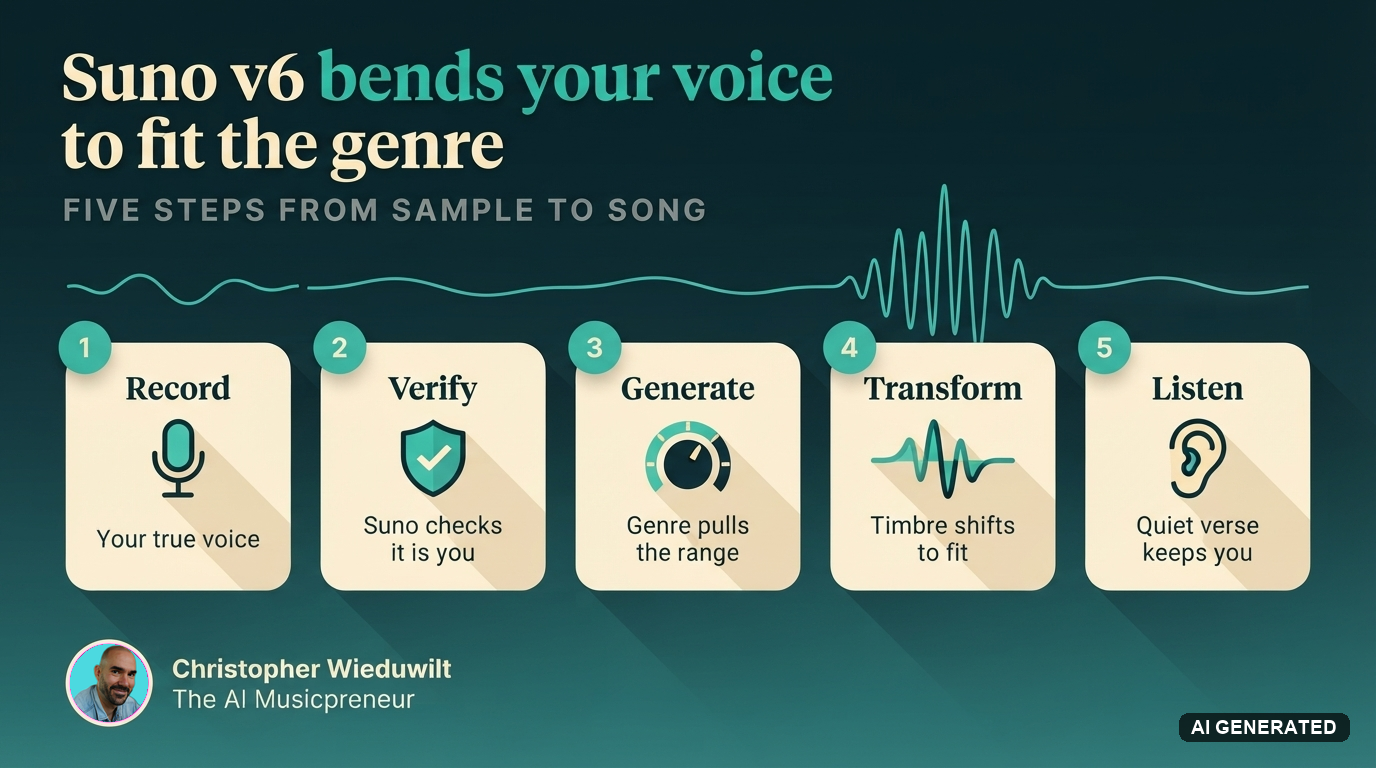
Suno’s Voices feature, added in March, builds a voice profile from your own singing and sings new songs with it.
So a generated track can still sound like the singer, and the singer can sound different live.
That’s the gap fans flagged on THE MOTEL’s acoustic Short.
That makes “AI or human” the wrong question for a lot of records.
SIQA’s framework even gives cloning your own voice its own tier, Human + AI Hybrid.
Modulate’s 95% precision shows AI music detectors report half the answer
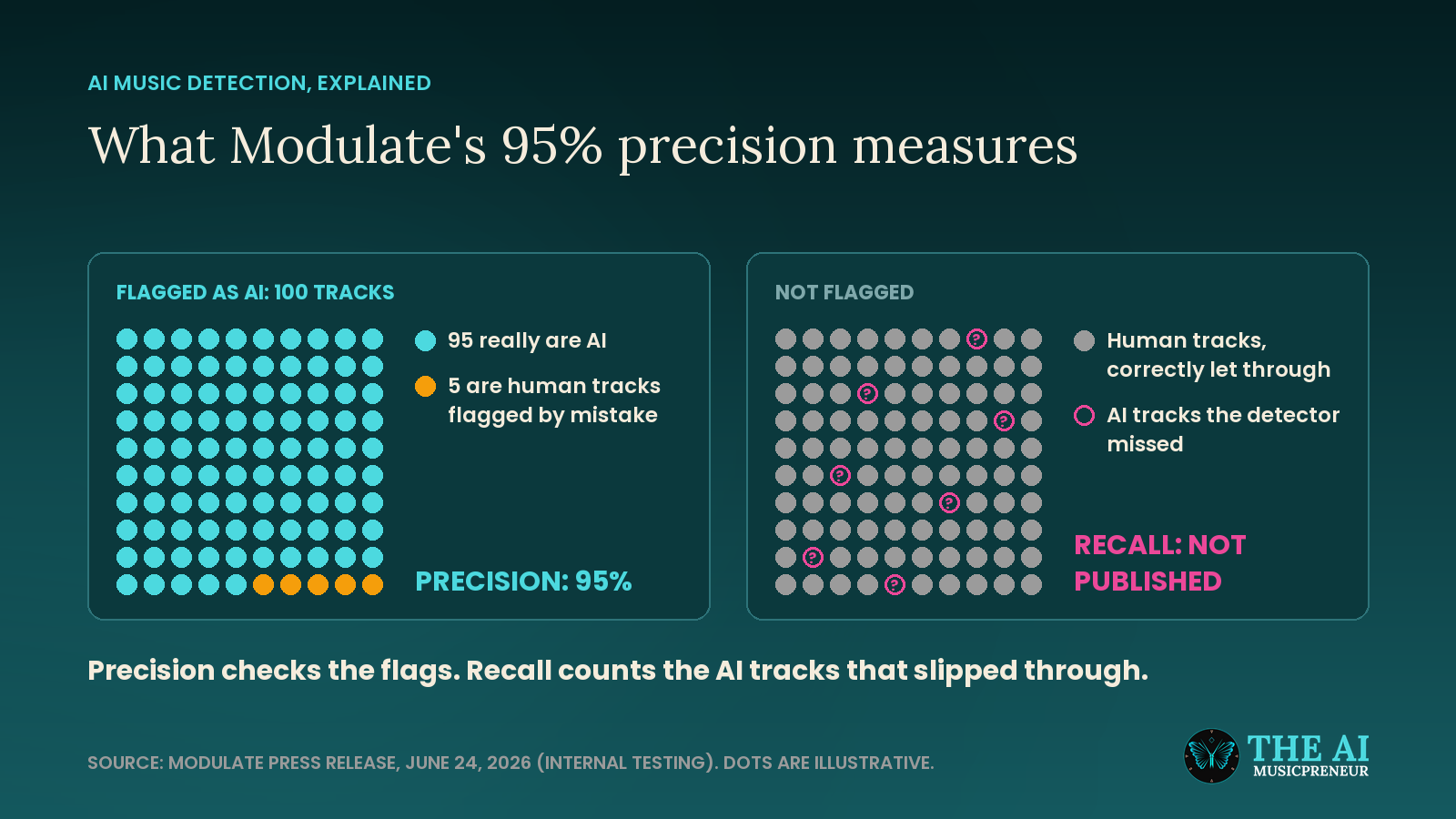
Modulate’s AI music detector reports 95% precision across 76 genres in its own tests: when it flags a track, it’s right 95 times out of 100. Modulate hasn’t published how many AI tracks it misses. Mino’s 99.99% has no method at all.
The SIQA Verified Registry puts the answer on record before anyone asks
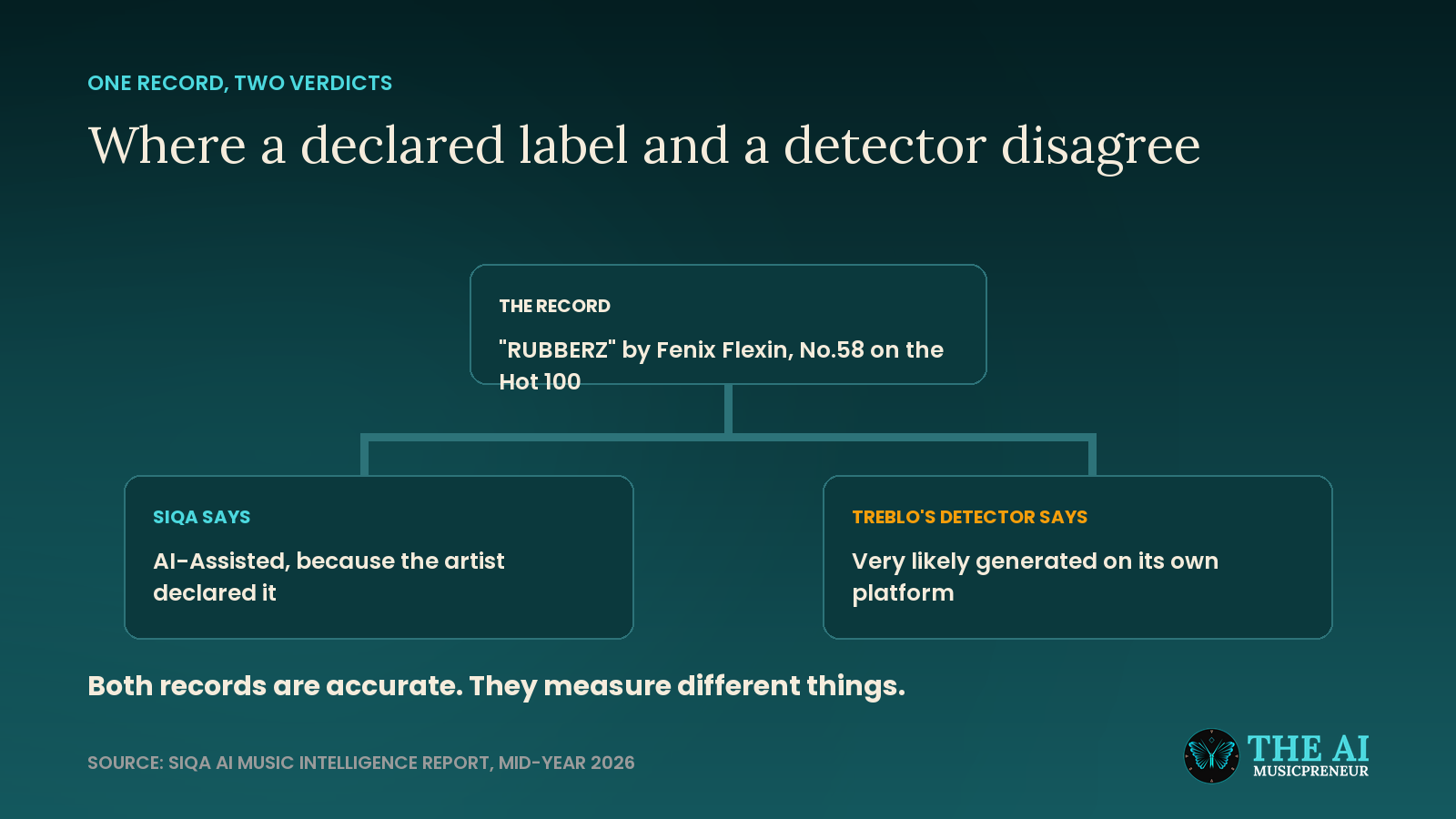
SIQA’s Verified Registry flips the order, under the line “To verify, not flag”.
The artist declares how AI was used, SIQA’s team reviews it, and anyone can check it at registry.thesiqa.com or scan the song with the SIQA Verified app. (I sit on SIQA’s Creative Advisory Council.)
- Say who wrote it, who sang it and what the AI did.
- Pick the tier: AI-Assisted, Human + AI Hybrid or Fully AI-Generated.
- Answer your distributor’s AI question. TuneCore Japan asks every uploader.
Nashville songwriter Chris Gray already works this way.
He writes every song, his AI singer Vance Drake sings them, and every monthly release says so.
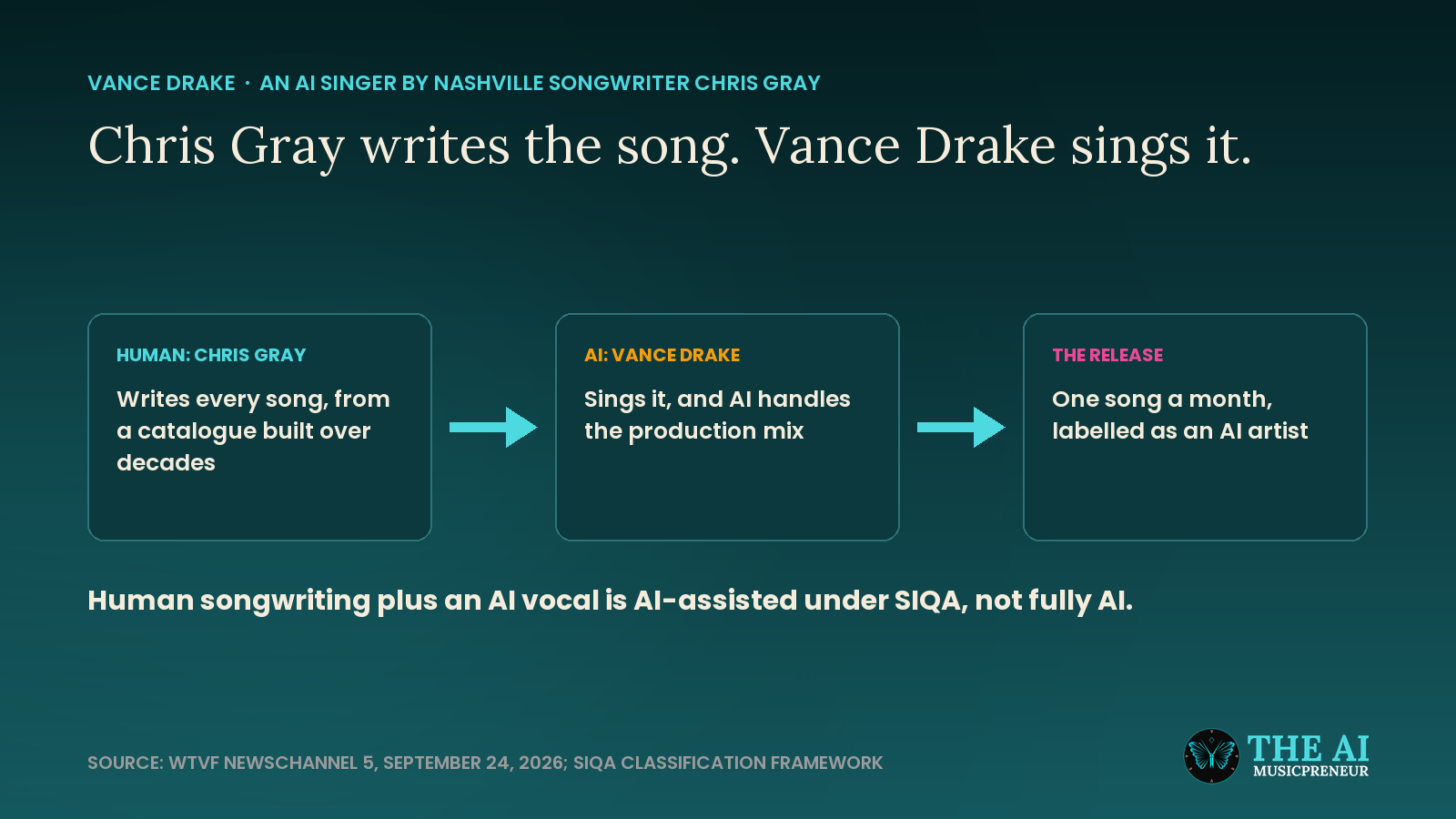
My rule has a cost. Disclose, and a flat “AI” sticker can still put Gray’s decades of songwriting in the same bucket as a prompt-and-publish track.
And the registry only knows what artists put in.
Tell it yourself, or someone tells it for you.
AI Music Lawsuit Tracker: no AI music case moved this week
0 cases moved this week. RIAA v. Suno, UMG and Sony v. Suno (v6), RIAA v. Udio, GEMA v. Suno, the AFM case, UMG v. DistroKid, Concord v. Anthropic, SOCAN v. Suno, Lowery v. Suno, Round Hill, the artist class action and the Sony and Warner Chappell suit against Anthropic did not.
The appeals ruling in Thomson Reuters v. ROSS sits in the news block above, because it isn’t one of these cases.
→ Full case files and timelines
One thing to do this weekend: register one release in the SIQA Verified Registry
Pick one track you made with AI and submit it at registry.thesiqa.com. Sign in, submit the song from your dashboard, and say what the AI did: the vocal, the production, the lyrics, or all of it. SIQA’s team reviews it, and only artist-declared tracks can get a numbered Verification Certificate. Then scan the song with the SIQA Verified iOS app and see what a listener sees. The next person who asks how you made it gets your answer.
About The AI Music Briefing
The AI Music Briefing is a weekly Friday read for music industry professionals working at the intersection of AI and the traditional music business. Curated and written by Christopher Wieduwilt, founder of The AI Musicpreneur. Browse every issue of the briefing.
Got a tip, a story, or a partnership idea? Reach out any time. Every message lands directly in my inbox.
— Christopher
About the author

Covering AI music tools, industry shifts, and news for music creators and professionals. Twice-weekly newsletter at aimusicpreneur.com.