Engram launches on Kickstarter as a $770 offline AI sampler built for model bending
My stack My fav 6 tools for AI music after testing 70+
-
 ElevenMusic · Music generation
 -
 Moises · Stem separation
 -
 Controlla · Voice swap & cloning
 -
 Cryo Mix · Mixing + mastering
 -
 Neural Frames · Music videos
 -
 ONCE · Distribution
Some links are affiliate links — I earn a commission at no cost to you. Every tool here is one I run myself and truly believe in. This stack is proven.
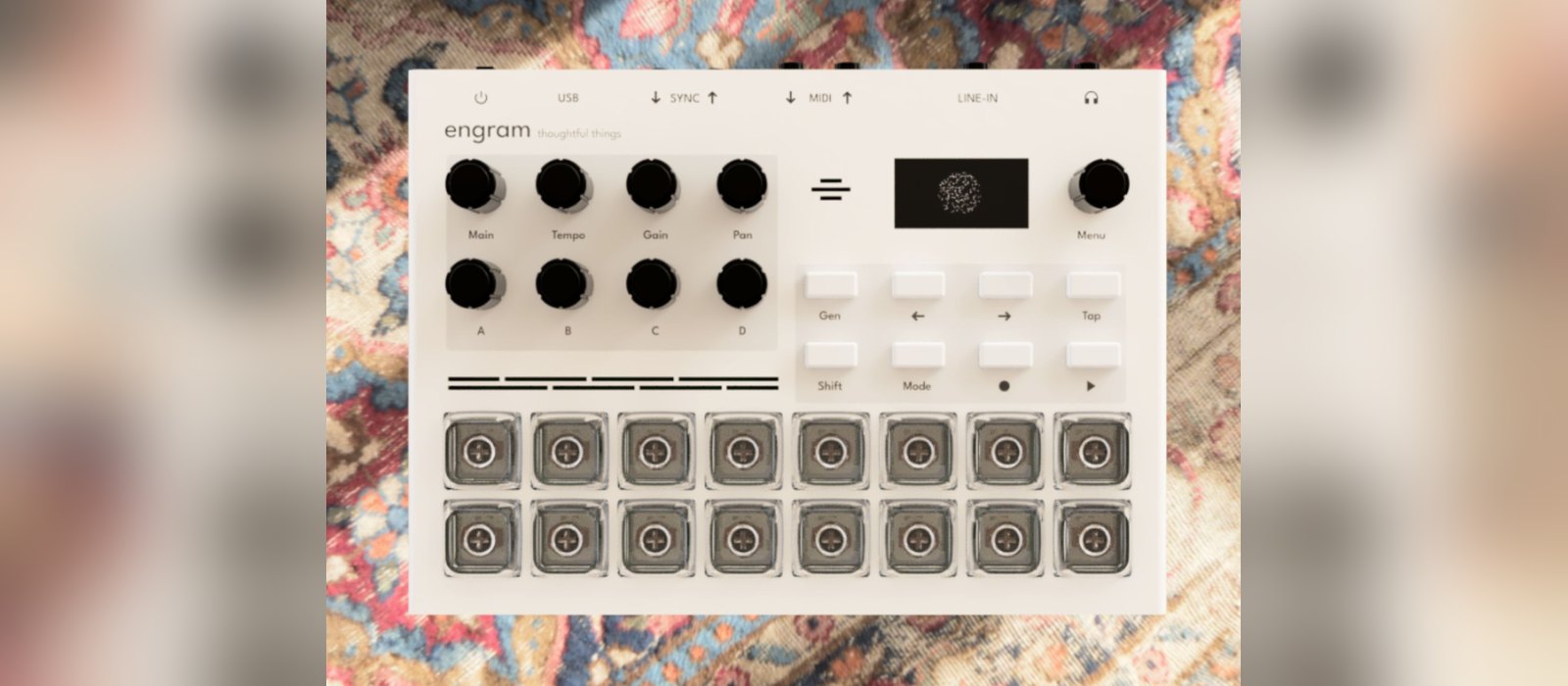
Engram is a sampler with a tiny AI model inside it, and the whole point is to break the model.
Los Angeles startup Thoughtful Things put Engram on Kickstarter on September 26, 2026. It generates short bursts of sound on the device, warps your own recordings through a neural audio codec, and gives you knobs that push the model into glitches on purpose.
No internet connection, app or subscription. Everything runs on the hardware.
By September 29, the campaign had about 72% of its $10,600 goal from 11 backers, according to Kicktraq. 40 units are left at $770, with delivery estimated for May 2027.
What Engram does that a normal sampler doesn’t
Founder Evan King describes it as “a bit like wandering through latent space with a field recorder, discovering and manipulating the new kinds of audio that you discover there.”
There are 4 AI features on top of the sampler:
- Sample generation. Ask for a sound and Engram creates a short burst of audio you can sample and glitch. In the campaign video, King asks it for “piano” by voice, The Verge reports, and gets something glitchy and vaguely piano-like back.
- Neural audio processing. Run your own recordings through an embedded neural audio codec to stretch, meld and extend them.
- Model bending. Knobs that deliberately break the model’s audio output, named after circuit bending.
- Plug-in audio models. Load new models trained on different sound datasets, or train your own, like swapping ROMpler cartridges.
The rest is a regular groovebox: sample and pattern storage, MIDI in and out, CV sync and gate in and out, a stereo line input for sampling, a headphone output, and an on-board mic for lo-fi sampling and voice control.
This is what that sounds like, from Thoughtful Things’ own demo:
That’s a different job from most AI sample generators. FL Studio’s ElevenLabs sample generator and Waves’ ILLUGEN aim for clean, usable sounds from a text prompt. Engram is built for the weird ones.
New tools need to be explorable, tweakable, and most importantly breakable – the less prescriptive they are about their use, the more they can be shaped by an artist's personal touch and experimentation.
What Engram’s AI models are trained on
Thoughtful Things answers the training-data question directly on its campaign page, the same question Fairly Trained certifies AI models on.
“We’ve trained our audio models on open datasets that only contain audio licensed for commercial use (CC-BY or similar),” it says. “We have not trained and will never train our models on non-commercial, pirated, or otherwise stolen data.”
There’s a history behind that line. The Engram product page says the project grew out of a hobby build using Meta’s MusicGen models, which were released for research only. The commercial Engram ships with in-house models trained from scratch on data that permits commercial use and derivative works.
King is an applied scientist who works on small AI that runs on the device. The voice control in his earlier prototype write-up runs on Moonshine, an edge speech recognition model he worked on.
Here’s where the Kickstarter money goes, per the campaign:
- A metal enclosure to replace the current 3D-printed prototype, plus a carbon pill keypad for the transport buttons.
- Hardware changes for manufacturing, and certification for sale in the US and other markets.
The campaign lists 2 risks: RAM prices, though Thoughtful Things says it has pre-secured the RAM for the first run, and tariffs that could raise costs and delay shipping.
It’s all or nothing. If Engram doesn’t reach $10,600 by October 28, 2026, nobody gets charged and nobody gets a unit.
Frequently asked questions
When does the Engram sampler ship to Kickstarter backers?
Thoughtful Things estimates delivery for May 2027, shipping anywhere in the world. The Kickstarter is all or nothing, so backers are only charged if the campaign reaches its $10,600 goal by October 28, 2026.
Can you load your own AI models into the Engram sampler?
Yes. Engram supports plug-in audio models that you can create, share and swap, which Thoughtful Things compares to old-school ROMpler cartridges. The company also plans to open up Engram's firmware so others can contribute and modify it.
Who is Evan King, the founder of Thoughtful Things?
Evan King is an applied scientist and engineer with a PhD who works on human-centered and on-device machine learning for audio and language. He is based in Los Angeles, has been developing Engram since fall 2025, and previously worked on the Moonshine edge speech recognition project.
What will the Engram sampler cost at retail?
Thoughtful Things hasn't announced a retail price. The $675 early-bird pledge was listed as a 30% discount, which The Verge estimated points to a retail price between $850 and $900.
About the author

Covering AI music tools, industry shifts, and news for music creators and professionals. Twice-weekly newsletter at aimusicpreneur.com.