
Google opens SynthID Detector to everyone, and it can check a song for Lyria's watermark but not Suno's
My stack My fav 6 tools for AI music after testing 70+
-
 ElevenMusic · Music generation
 -
 Moises · Stem separation
 -
 Controlla · Voice swap & cloning
 -
 Cryo Mix · Mixing + mastering
 -
 Neural Frames · Music videos
 -
 ONCE · Distribution
Some links are affiliate links — I earn a commission at no cost to you. Every tool here is one I run myself and truly believe in. This stack is proven.
Google says 240,000 years of audio now carry its SynthID watermark. Back in May, that number was 60,000 years.
On October 7, 2026, Google opened SynthID Detector to everyone. It’s a free web tool at synthid.com, live worldwide in English, and it checks images, video and audio for the invisible watermark Google puts on what its AI makes, including music from Lyria.
So you can now upload a song and get one of two answers: watermark detected, or not detected. The first answer tells you something real. For a Suno track, the second one tells you nothing.
What Google’s SynthID Detector checks on synthid.com
SynthID Detector answers one question: does this file carry a SynthID watermark? You sign in with a Google, OpenAI or Apple account, according to TechTimes, upload an image, video or audio file, and it tells you whether the mark is there.
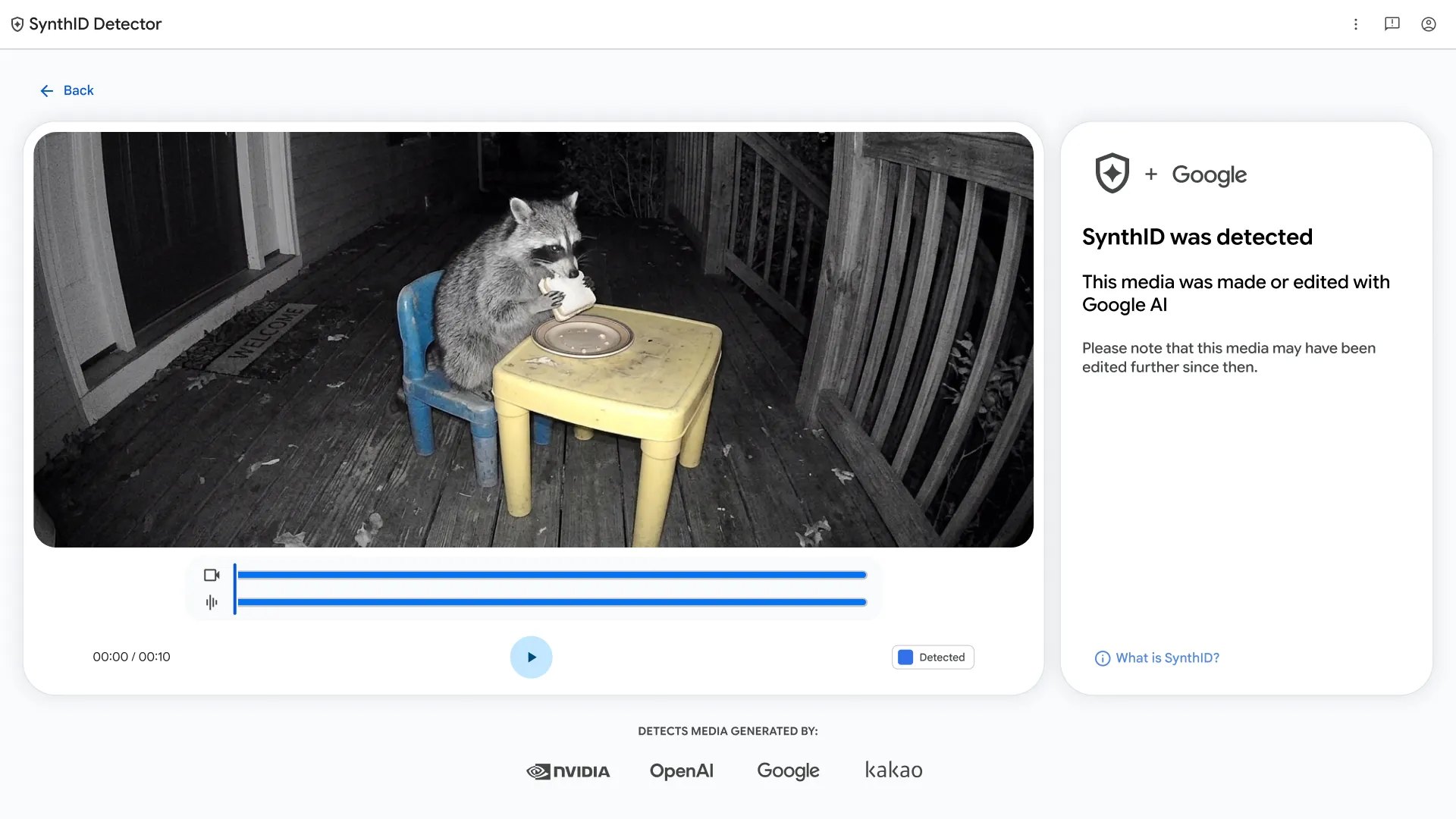
In Google’s own demo, the result screen splits a clip into its picture and its audio track and marks the watermarked stretches of each in blue. The verdict reads “made or edited with Google AI”, so it can’t tell you whether a model wrote the whole song or only touched it up.
An early version has existed since May 2025, but only journalists and researchers could use it. Google says the same checks inside Search, the Gemini app and Chrome already handle more than 1 million requests a day.
One practical catch for labels and distributors: synthid.com opens on a terms screen that bans scripts and automated submissions. It’s built for checking one file at a time, by hand.
With the new SynthID Detector, anyone can easily check if an image, video, or audio file was made with AI from Google or our partners, including OpenAI, NVIDIA, Kakao, and soon, Apple.
That partner list decides how useful this is for music, because the detector can only find a watermark somebody put there. So which songs actually carry one?
Which AI songs carry a SynthID watermark in October 2026
Google’s own music, first. Every track from Lyria carries SynthID, whether you made it with Lyria 3.5 in the Gemini app, in Flow Music or through the API. Google DeepMind says the same mark goes into the podcasts NotebookLM generates.
That’s also why 240,000 years doesn’t mean 240,000 years of songs. Google counts all of its watermarked audio in one number, and it doesn’t say how much of it is music.
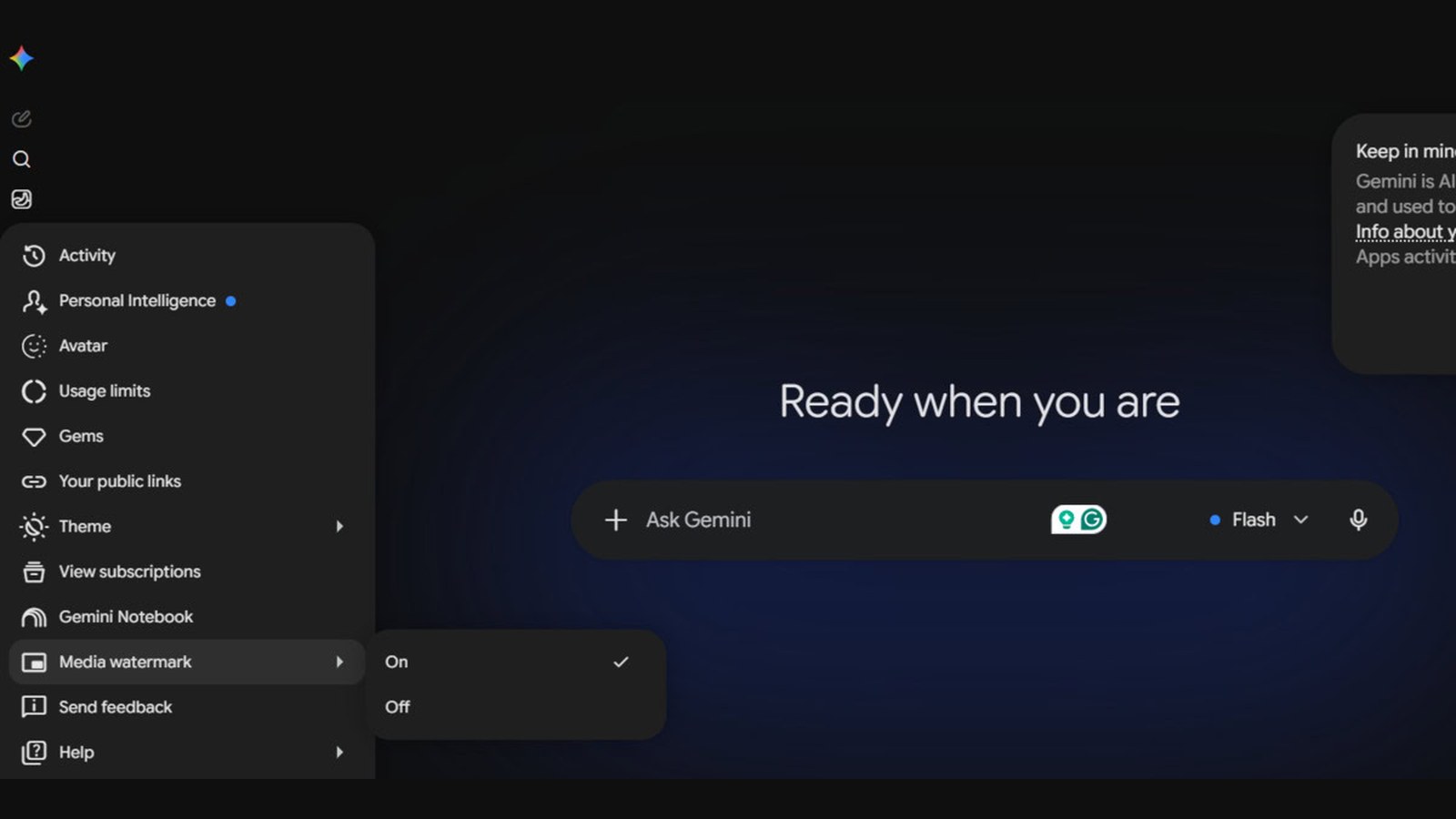
The mark also stays put. Since August 14, 2026, Gemini lets you switch off the visible AI label on a song, and the SynthID inside the file doesn’t move. Google says the audio watermark is inaudible and built to survive added noise, MP3 compression and speed changes.
Outside Google, the music side is thin. OpenAI’s SynthID rollout starts with images from ChatGPT, Codex and its API. NVIDIA watermarks video from its Cosmos models, Kakao is on board, and Apple’s images are next.
ElevenLabs is the interesting gap. At Google I/O on May 19, 2026, Google named ElevenLabs among the companies bringing SynthID to their content. The October partner list doesn’t mention ElevenLabs at all.
Can Google’s SynthID Detector tell if a song was made with Suno?
No. Suno isn’t on Google’s partner list, and neither is Udio. SynthID Detector only looks for SynthID, so a Suno song comes back “not detected”.
Suno announced its own watermarking and fingerprinting on August 6, 2026, so its songs can be identified on other platforms. None of that shows up on synthid.com while Suno stays off Google’s partner list.
Now the part people will misread. A song you recorded yourself, with no AI anywhere near it, also comes back “not detected”. The answer looks identical for a Suno track and for a band in a room.
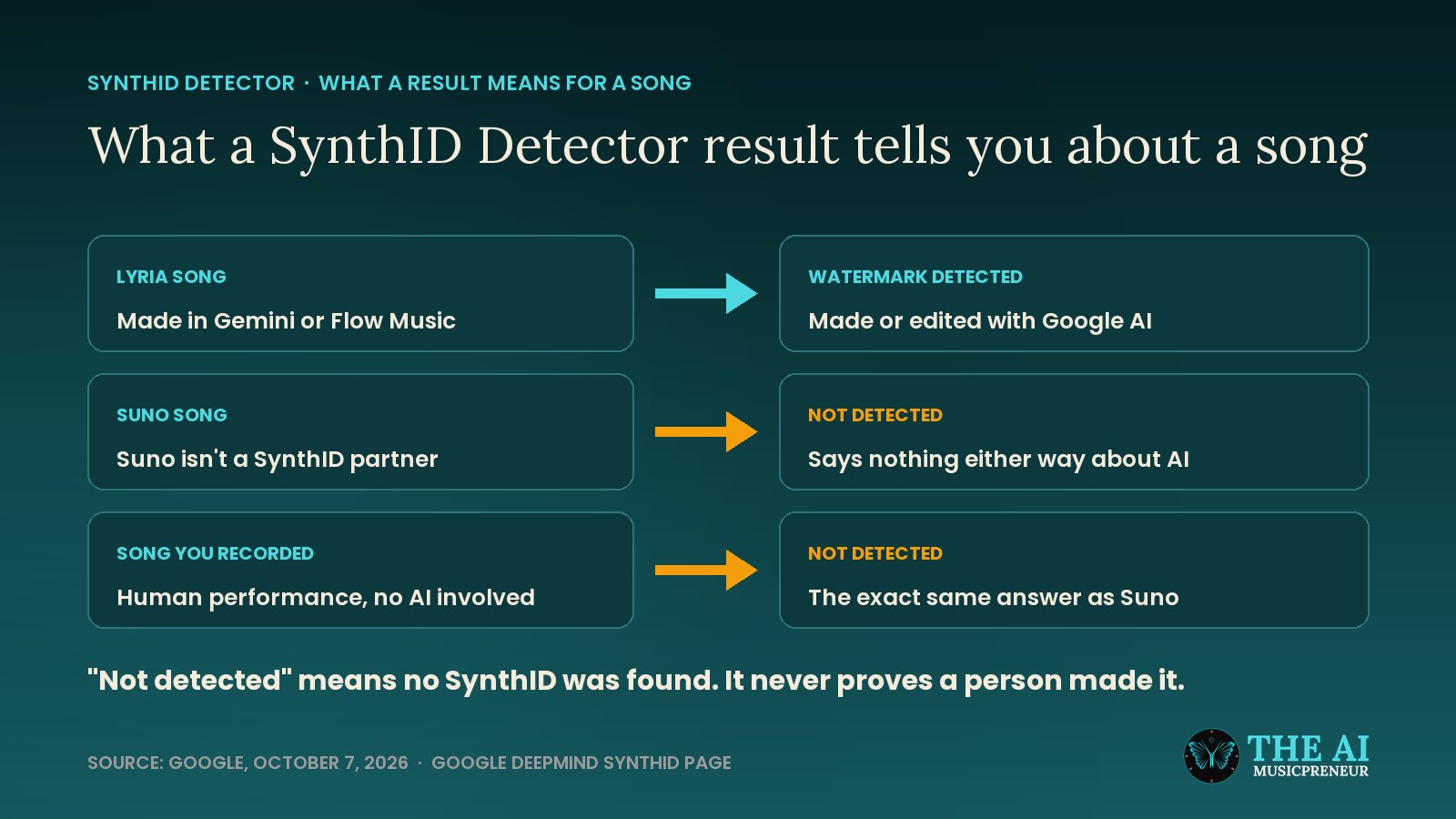
So a positive result is solid evidence that Google AI or a partner touched the file. A negative result only means SynthID wasn’t found, and it leaves the real question open.
I’d expect Suno tracks to start showing up with a “not detected” screenshot attached as proof they’re human-made. That screenshot proves nothing.
How to tell if a song is AI-generated now that SynthID Detector is public
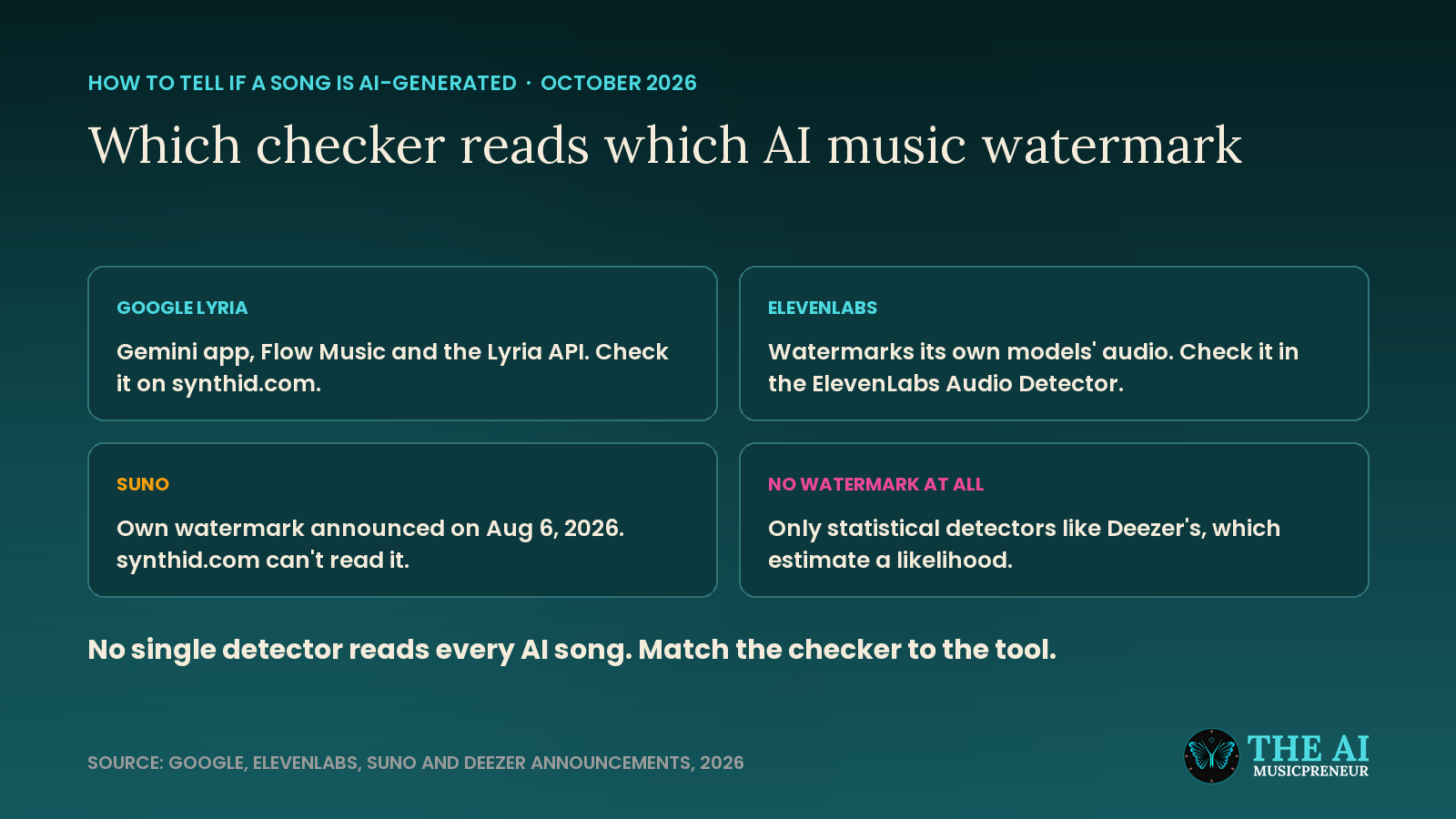
There’s still no single checker for every AI song. Each watermark needs its owner’s detector, so you match the checker to the tool that made the track:
- Lyria songs from the Gemini app, Flow Music or the Lyria API: upload them to synthid.com.
- ElevenLabs audio: ElevenLabs says it watermarks audio from its own models, and its free Audio Detector reads those marks for signed-in users.
- Suno songs: synthid.com can’t help. Suno says its own watermark is meant to help distribution platforms catch fraud.
- Anything without a watermark: statistical tools like Deezer’s free detector or Modulate’s AI music detector listen for patterns and give you a likelihood, not proof.
Those likelihood scores already decide where songs go. SubmitHub blocks any track its own detector scores at 85% or higher likelihood of being AI.
For your own releases, the change is simple. If a track came out of Gemini or Flow Music, anyone can now confirm it for free, whether that’s a label, a curator or a fan, and switching off the visible label doesn’t hide it. I’d put it in the credits myself before somebody finds it on synthid.com.
Frequently asked questions
Is Google's SynthID Detector free, and which accounts can sign in to synthid.com?
Yes. SynthID Detector is free and has been available worldwide in English since October 7, 2026. You sign in at synthid.com with a Google, OpenAI or Apple account, upload an image, video or audio file, and the result says either that a SynthID watermark was detected or that it wasn't.
How much audio had Google watermarked with SynthID by October 2026?
Google says more than 240,000 years of audio carried SynthID as of October 7, 2026, alongside more than 180 billion images and videos. At Google I/O on May 19, 2026, the figures were 60,000 years of audio and 100 billion images and videos. Google does not say how much of that audio is music, as opposed to NotebookLM podcasts and other generated sound.
Can Google's SynthID Detector read ElevenLabs audio watermarks?
Google's October 7, 2026 announcement does not list ElevenLabs among the partners synthid.com covers, even though Google said in May that ElevenLabs was bringing SynthID to more of its content. ElevenLabs runs its own free Audio Detector for signed-in users, which reads the watermarks on audio made by ElevenLabs' own models. For an ElevenLabs file, that is the checker built for the job.
Does the SynthID audio watermark in Lyria songs survive MP3 compression?
Google DeepMind says the SynthID audio watermark is inaudible and designed to hold up against added noise, MP3 compression and speed changes. The mark goes into the audio itself at the moment Lyria generates the track, rather than into the file's metadata, so a normal export and re-upload does not strip it.
About the author

Covering AI music tools, industry shifts, and news for music creators and professionals. Twice-weekly newsletter at aimusicpreneur.com.