Judge lets the producer suing Kanye West over AI vocals on Vultures 2 and Bully stay anonymous after death threats
My stack My fav 6 tools for AI music after testing 70+
-
 ElevenMusic · Music generation
-
 Moises · Stem separation
-
 Controlla · Voice swap & cloning
-
 Cryo Mix · Mixing + mastering
-
 Neural Frames · Music videos
-
 ONCE · Distribution
Some links are affiliate links — I earn a commission at no cost to you. Every tool here is one I run myself and truly believe in. This stack is proven.
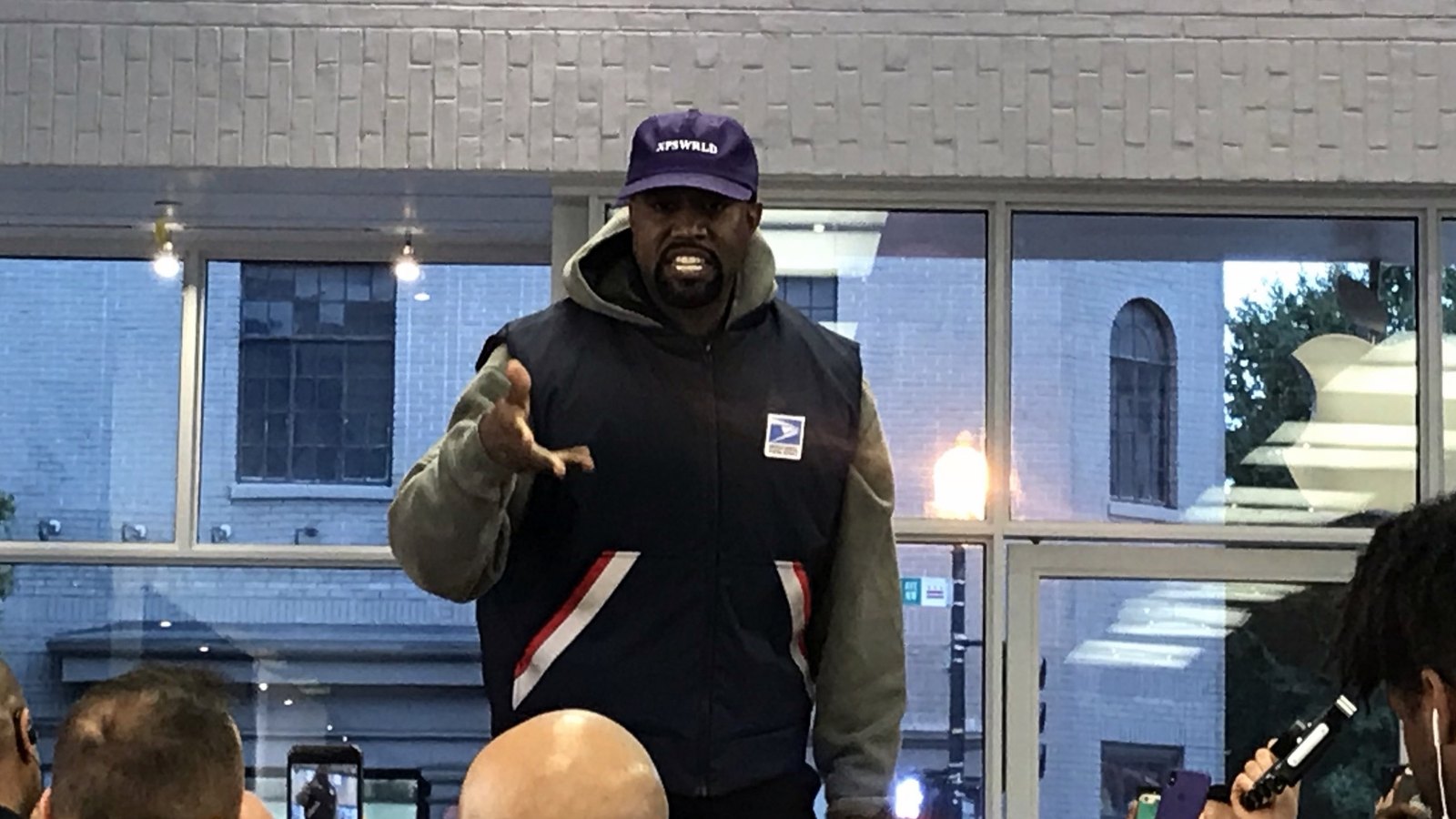
The producer suing Ye, the artist formerly known as Kanye West, over AI vocals on Vultures 2 and Bully can keep his name out of public court filings. He told the court that Ye’s fans threatened to kill him.
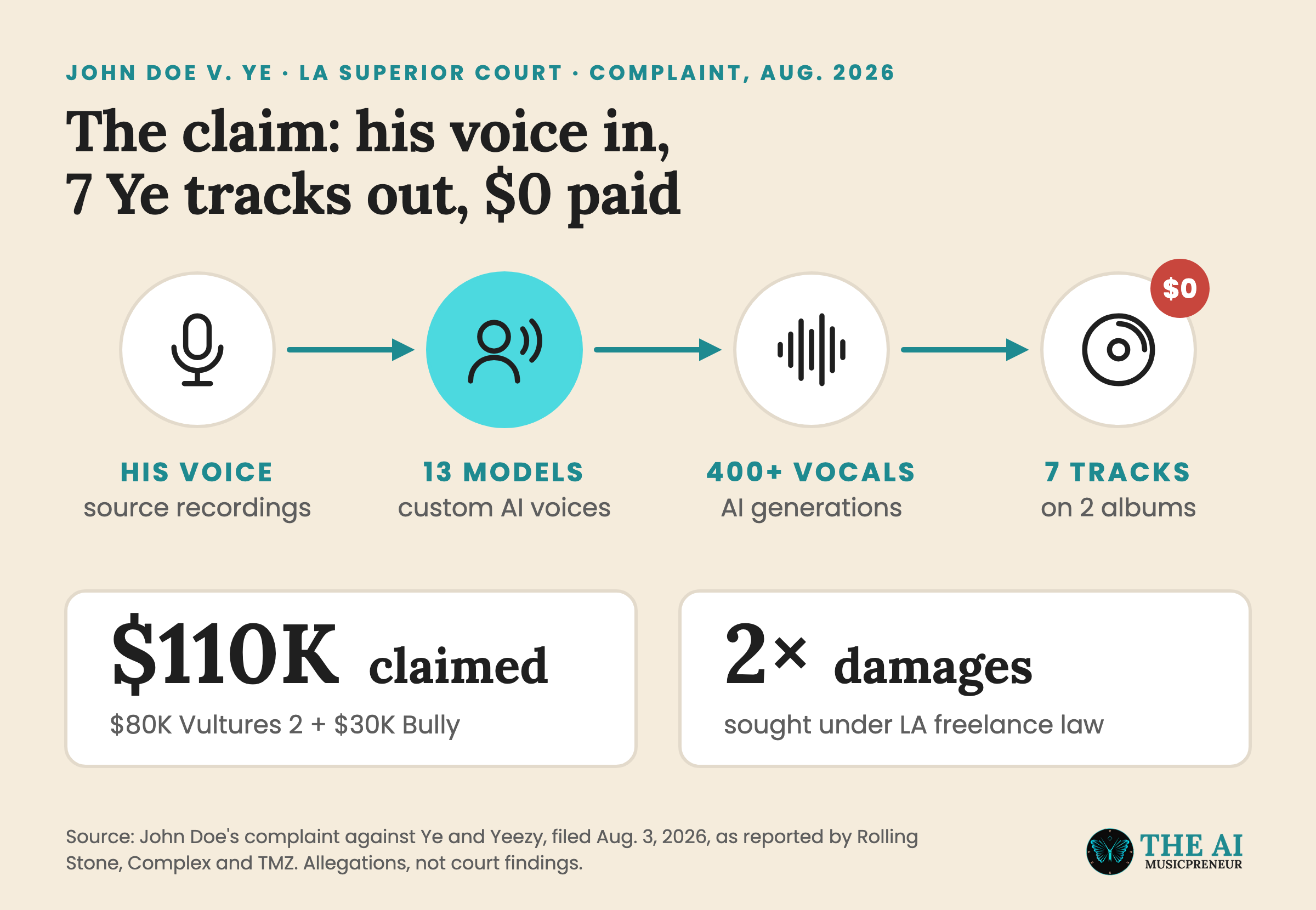
Judge Kristin S. Escalante granted the limited request on Wednesday, November 18, 2026, in Los Angeles Superior Court. The producer sues as John Doe, and his August lawsuit says he built at least 13 custom AI voice models and more than 400 AI vocals for Ye, using his own voice as the source, and was never paid or credited.
He’s asking for at least $110,000 for 7 released tracks, plus double damages under a Los Angeles freelance law. Ye said in March that Bully has “NO AI”. Everything in the suit is still an allegation, and no court has ruled on whether AI vocals are on either album.
What Judge Kristin Escalante’s November 2026 ruling hides in the John Doe lawsuit against Ye
His attorney, Mark Steven Avila, asked for 3 things to stay out of public view: the producer’s legal name, his home address and his family members’ identifying details. The order bars his real name from the lawsuit’s pleadings, where he appears only as John Doe.
It stops there. The name can still be used at trial, and Ye’s legal team can use it in its own investigation and when it talks to witnesses, according to MyNewsLA’s report on the ruling.
Escalante wrote that the producer “has an overriding interest that overcomes the right of public access to court records, specifically, the right to be free from threats of harm and harassment.” She reviewed evidence filed under seal before deciding, TMZ reports.
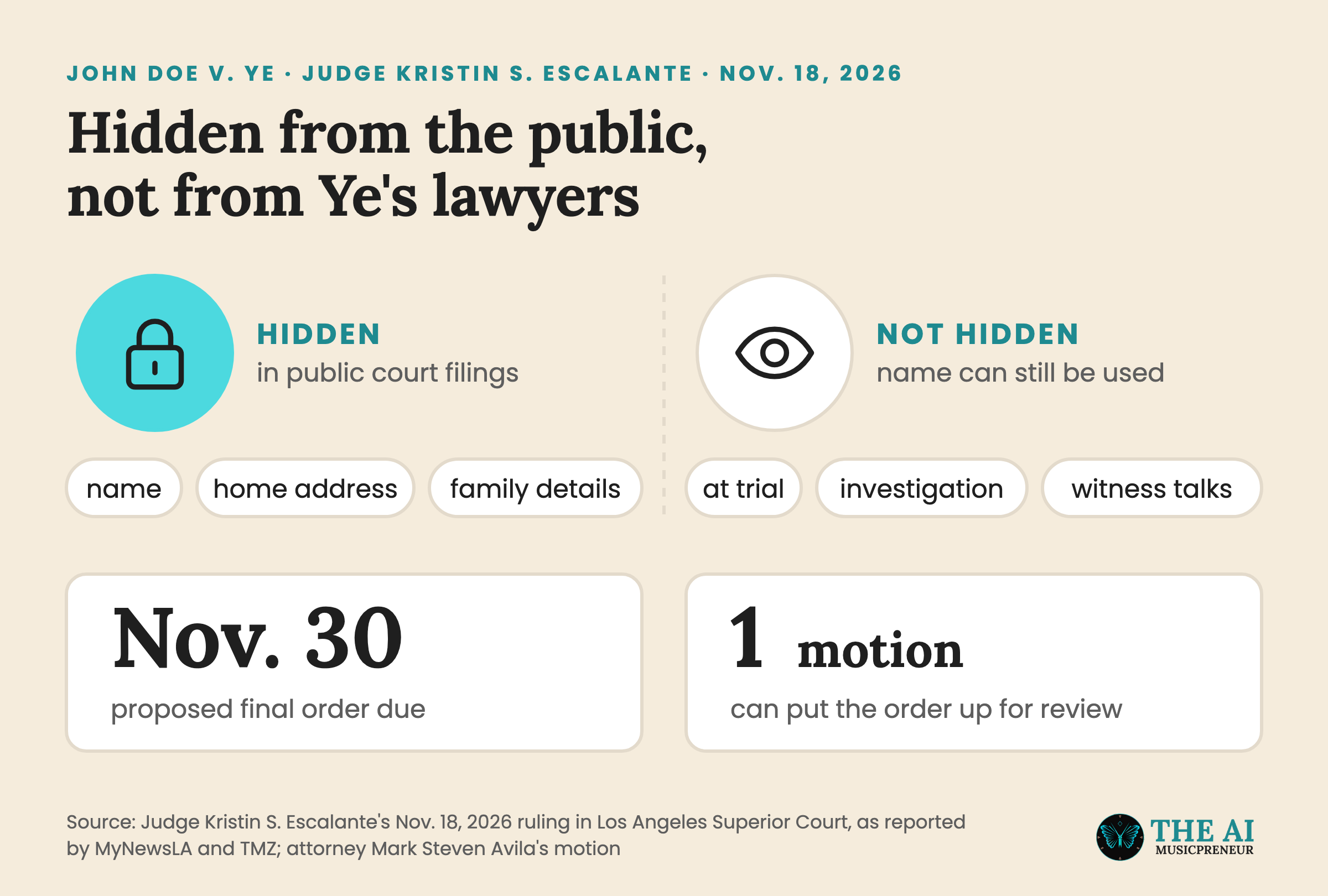
The order isn’t final yet. Escalante gave the lawyers until November 30 to send her a proposed final order to sign, and it can be reconsidered if Ye’s attorneys or a third party file a motion.
So why did he ask for it in the first place?
Why the John Doe producer says Ye’s supporters threatened to kill him
In his filing, the producer says he has received repeated death threats from Ye’s supporters, including calls to track him down and kill him on a specific date. He says his family was threatened too.
He also alleges that a Yeezy representative intimidated him and encouraged or endorsed the threats. None of the coverage of the ruling includes a response from Ye’s team.
Because plaintiff continues to fear for his physical and emotional safety and that of his family, and to mitigate severe emotional distress, plaintiff respectfully requests that the court allow the case to proceed under a pseudonym.
The ruling settles one narrow question: whether his name stays out of the public pleadings. It doesn’t decide whether the threats happened as he describes, and it says nothing about whether Ye owes him money. That part goes back to what he says he built.
What the John Doe lawsuit says he built for Ye’s Vultures 2 and Bully
The producer filed his suit on August 3, 2026, against Ye and Yeezy Record Label LLC. According to the complaint, reported by Rolling Stone, Ye hired him “on an emergency basis” on August 1, 2024, two days before Vultures 2 came out.
Working “under extreme time pressure”, he says he built at least 13 custom AI voice models, made more than 400 individual vocal generations and recorded his own voice as the source material.
A custom AI voice model is basically a voice clone. You train it on recordings, then sing a line into it, and the line comes back in the trained voice. Tools like Kits AI sell exactly this, and Isekai Records acts Kilo Kent and Zemi do a version of it in public, singing their own songs and letting Suno change the voice.
The reporting on the complaint doesn’t say which software the producer used.
He says 5 tracks on Vultures 2 carry his work, including an original AI vocal overlay that became a core production element on one released song, Complex reports.
In October 2024 he started on Bully. There he says he did more AI vocal production, advised on manual vocal punches (re-recording single words or lines by hand) and wrote with other artists on 2 tracks that were released.
The suit says Ye and Yeezy acknowledged his work and told him they were updating streaming platforms to credit him. Later, he says, they offered him “a master buyout”. He says that “despite nearly two years of demands”, he still hasn’t been paid.
How much is the John Doe producer suing Ye for: $110,000 or $220,000?
Both numbers are in the coverage, and they come from the same claim.
The complaint asks for at least $110,000 in compensatory damages for the 7 released tracks: $80,000 for Vultures 2 and $30,000 for Bully, according to TMZ’s August report. That’s the figure TMZ and iHeart use.
And he wants double damages under the Los Angeles Freelance Worker Protections Ordinance. Doubled, $110,000 comes to $220,000, the “at least $220,000” MyNewsLA used in its report on the ruling.
The ordinance is one of the freelance laws behind his complaint’s line about missing written contracts. Since July 1, 2023, anyone hiring a freelancer for work in the City of Los Angeles worth $600 or more has to put it in writing and pay within 30 days of the work being done, unless the contract sets a date. If the money is late, the city’s summary of the law says the freelancer can be awarded “up to twice the amount that remains unpaid.”
He also wants the court to make Ye’s companies credit him properly on streaming platforms. Ye, for his part, has told fans something very different about Bully.
What Ye said about AI on Bully before the John Doe lawsuit
Ye has said in public that Bully has no AI on it. On March 25, 2026, two days before the streaming release, he posted “BULLY ON THE WAY NO AI” on X with the tracklist. His team had denied AI on Bully in January too.
That came a year after Ye demoed Audimee voice cloning live on a podcast in February 2025, where he called the technology “the next version of sampling”.
AI wasn’t new to the Vultures era either. Ye put out an AI-generated video for “530” from Vultures 2 in January 2025. Voice clones turn up around other big names too: Luke Bryan says writers cloned his voice on pitch demos.
The John Doe complaint tells a different story, but so far it’s only his side. No court has looked at whether AI vocals are on either album, and the reporting on the suit doesn’t name the tracks. A spokesman for Ye didn’t immediately respond to Rolling Stone’s request for comment when the suit was filed.
Next up is the proposed final order, due on Escalante’s desk by November 30. The money and the credits are still to be fought over.
Frequently asked questions
Who is the lawyer representing John Doe in his lawsuit against Ye?
Mark Steven Avila represents the producer suing as John Doe. In the anonymity motion, Avila wrote that his client only asked to keep his legal name, home address and family members' identifying information out of public view, not to seal the complaint or close any hearing.
Which legal claims does John Doe's lawsuit bring against Ye and Yeezy Record Label LLC?
The complaint, filed August 3, 2026 in Los Angeles Superior Court, claims breach of contract, unjust enrichment, violations of state and local laws that protect freelance workers, and violations of California's Unfair Competition Law. It also asks the court to make Ye's companies credit him properly on streaming platforms.
Which Bully songs does John Doe's lawsuit say he worked on?
The public reporting on the complaint doesn't name the songs. It says he contributed to 2 commercially released Bully tracks through AI vocal production, writing with other artists and advice on vocal punch-ins, plus 5 tracks on Vultures 2.
What does the Los Angeles Freelance Worker Protections Ordinance require from anyone hiring a freelancer?
For work in the City of Los Angeles worth $600 or more in a calendar year, the hiring party has to give the freelancer a written contract and pay by the contract date, or within 30 days of the work being done if no date is set. The city's summary says a freelancer who isn't paid on time can be awarded up to twice the unpaid amount.
About the author
Covering AI music tools, industry shifts, and news for music creators and professionals. Twice-weekly newsletter at aimusicpreneur.com.