Luke Bryan denies AI wrote his single, and says writers cloned his voice on the demo
My stack My fav 6 tools for AI music after testing 70+
-
 ElevenMusic · Music generation
 -
 Moises · Stem separation
 -
 Controlla · Voice swap & cloning
 -
 Cryo Mix · Mixing + mastering
 -
 Neural Frames · Music videos
 -
 ONCE · Distribution
Some links are affiliate links — I earn a commission at no cost to you. Every tool here is one I run myself and truly believe in. This stack is proven.
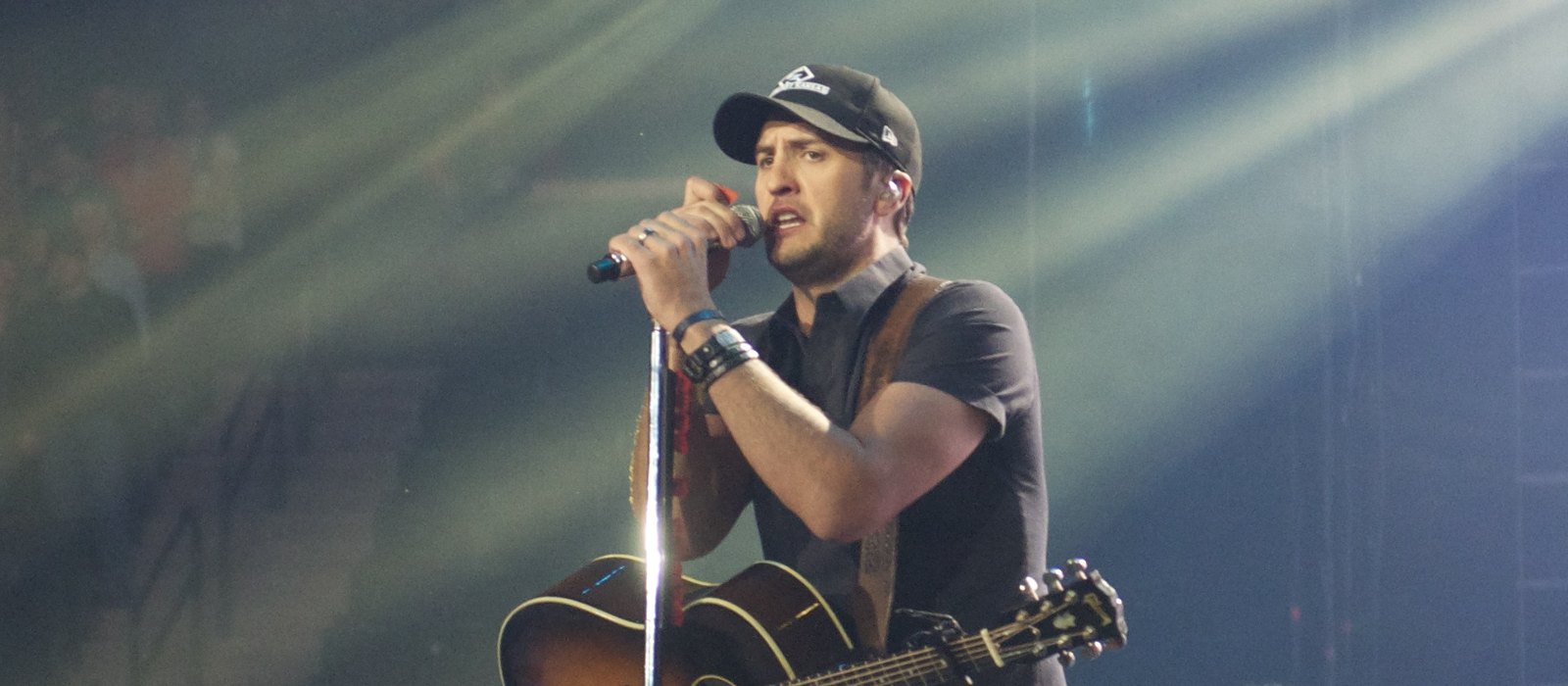
Luke Bryan released the album Signs on September 18, 2026, and spent the days before it arrived answering a question no country artist was being asked five years ago: did a machine write this. The track that set it off is “Fish Hunt Golf Drink”, which he wrote with Chase McGill and Matt Dragstrem after a conversation with Riley Green, and which listeners decided sounded generated. In a radio interview with Big D & Bubba he denied it flatly, then described something more interesting than the denial.
What Luke Bryan says he did and did not do
His line on songwriting is narrow and precise, which is worth noting because most artist denials are not.
All I can say is, I know the songs that I personally wrote, there was no AI involved.
He then gives away the limit of that. Signs carries many outside writers, several of whom he says he does not know well, and he cannot say what tools any of them used before the song reached him. That is an honest answer and a slightly unnerving one, because it describes an industry where nobody downstream can certify the chain.
The demo process already runs on voice clones
The part that will get less coverage than the denial is what Bryan says happened during pitching.
Outside writers sending him songs put an AI clone of his voice on the demo, so he could hear how he would sound singing it. He says he asked for this himself, got the clone back about ten minutes later, and agreed to record the song after hearing it.
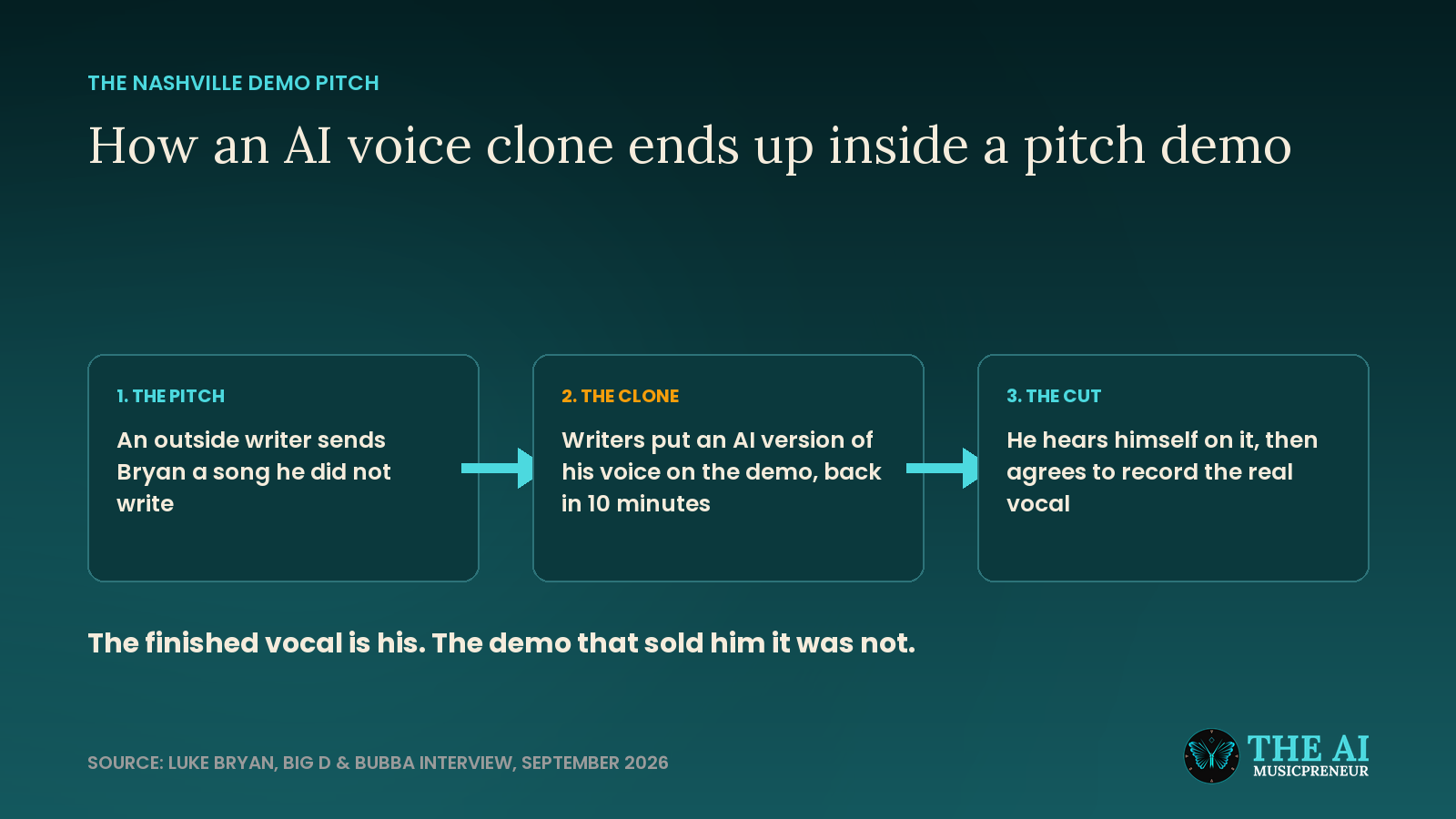
Nothing about that is hidden or illegal, and the finished vocal is his. It does sit oddly next to a headline about an artist who has never used AI, and it is a good illustration of why “did you use AI” has stopped being a yes or no question.
Why the accusation is now a standing risk for any artist
Bryan’s real frustration is not the technology. It is having to answer for it.
When you do something, and you've got a 17-year-old kid claiming that I, or any artist, AI'd something, then the person that's worked their a** off for all these years has to go explain themselves.
He is not alone in the week. Randy Travis responded to false AI claims about his own new album within days, and the same accusation has followed bands who released songs with nothing generated in them. Country is a particularly exposed genre for it right now, with fully AI acts like Breaking Rust charting on Billboard and River Cain putting five AI singles on the iTunes country chart.
What a real artist can do about a false AI accusation
Bryan’s own advice is to ignore it, and if you dislike a song, not to listen to it. That works when you are Luke Bryan.
For everyone else, the defensible version is documentation. Keep your session files, your voice memos and your writing-room notes, because the evidence that a human made something is boring, dated and specific. Put your writing credits and any AI disclosure into your release metadata rather than leaving a gap for someone else to fill in, which is the same field Spotify now reads for its AI Persona label.
The pattern to expect: as detection and labelling spread across the platforms, the accusation gets cheaper to make and the proof gets easier to produce. Bryan is dealing with the first half of that curve without the second half being built yet.
Frequently asked questions
Did Luke Bryan use AI to write Fish Hunt Golf Drink?
He says no. Bryan told Big D & Bubba that every song he personally wrote on the album Signs involved no AI, while adding that he cannot speak for outside writers on the songs he did not write. Fish Hunt Golf Drink is credited to Bryan with Chase McGill and Matt Dragstrem.
What did Luke Bryan say about AI cloning his voice on demos?
He described outside writers putting an AI version of his voice on a demo when pitching him a song, so he could hear how he would sound on it. In his telling he asked for it, the clone came back within about ten minutes, and he then agreed to record the song.
Why did fans accuse Luke Bryan of using AI?
The lyrics of Fish Hunt Golf Drink are built on short repeated phrases about fishing, hunting, golf and drinking, and listeners read that simplicity as a sign of AI generation. Bryan says the song came out of a conversation with Riley Green.
What album is Fish Hunt Golf Drink from?
Signs, Luke Bryan's album released on September 18, 2026. The AI accusations arrived in the days before the release, while he was doing promotional radio.
Has another country artist faced AI accusations this week?
Yes. Randy Travis responded to false claims that AI was used on his new album in the same week, which makes two country acts publicly denying AI involvement within days of each other.
About the author

Covering AI music tools, industry shifts, and news for music creators and professionals. Twice-weekly newsletter at aimusicpreneur.com.