Google put Lyria 3.5 in the Gemini app and opened the API to developers
My stack My fav 6 tools for AI music after testing 70+
-
 ElevenMusic · Music generation
 -
 Moises · Stem separation
 -
 Controlla · Voice swap & cloning
 -
 Cryo Mix · Mixing + mastering
 -
 Neural Frames · Music videos
 -
 ONCE · Distribution
Some links are affiliate links — I earn a commission at no cost to you. Every tool here is one I run myself and truly believe in. This stack is proven.
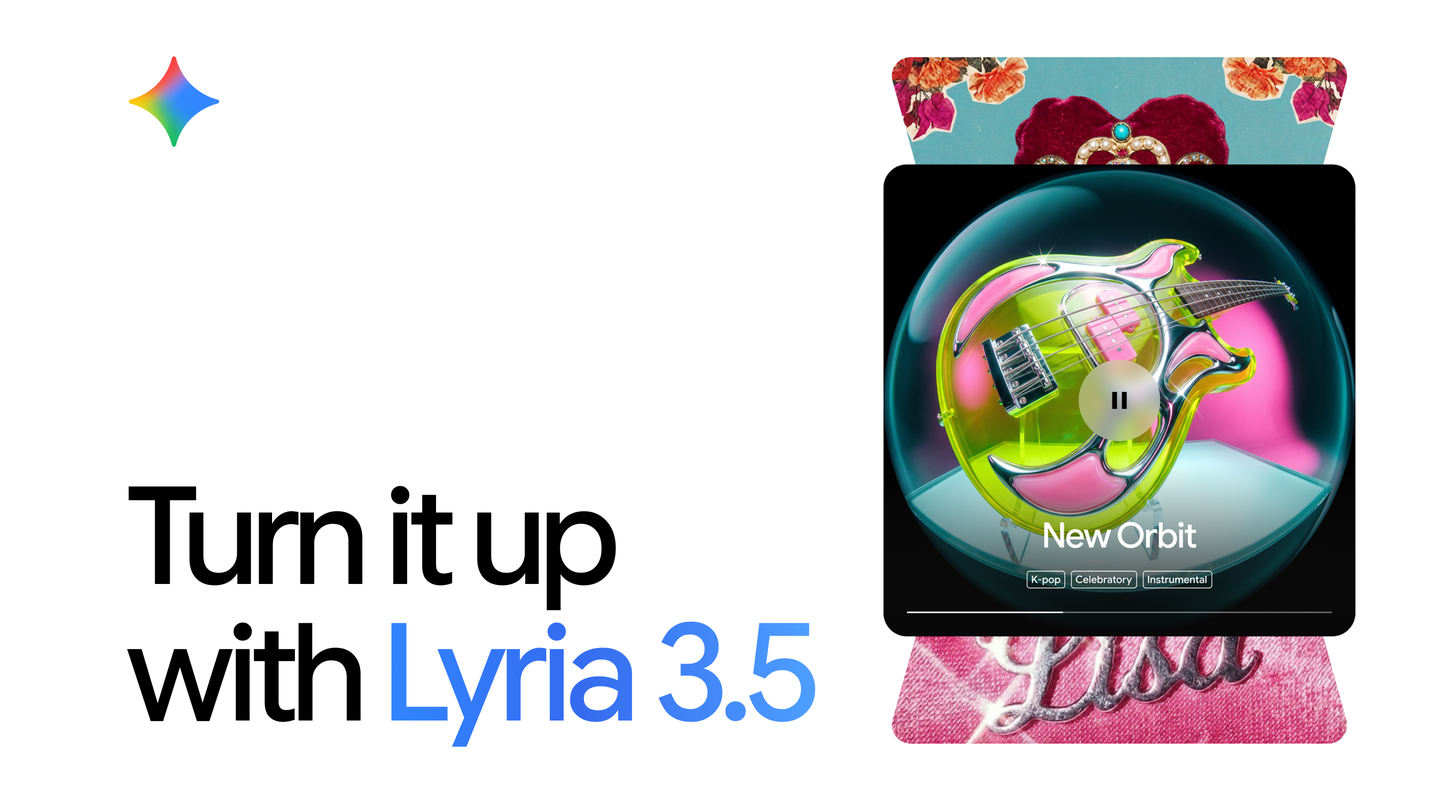
Google made Lyria 3.5 available in the Gemini app and the Gemini API on September 4, 2026. The model itself is not new. It shipped in Google Flow Music on July 29, and for five weeks that was the only place you could use it. Now it sits inside the assistant Google puts in front of a general audience, and behind a public API.
That is the whole story, and it matters more than a version bump would. A model most producers had to seek out is now a default option in a chat box.
What changed in the Gemini app
Google lists three things. You can select or describe your genre and choose between vocal or instrumental styles. You get templates as starting points, which Google pitches for background music, brand jingles, ringtones and custom birthday tracks. And you can pick a short or a longer track.
The genre and vocal controls are the useful pair. Describing a style in plain words and toggling vocals off is the minimum you need before a generated bed is worth putting under anything.
Lyria 3.5, our best-sounding music generation model, is now available in the Gemini app and the Gemini API.
The template framing tells you who Google is aiming at. Birthday tracks and ringtones are not producer features. They are prompts for people who have never opened a DAW, a piece of software like Ableton or Logic where music actually gets built.
Why the Gemini API release is the bigger half
Putting Lyria 3.5 behind the Gemini API means any developer can call song generation from their own product. Google also lists Google AI Studio and Google Vids as access points.
Compare that to how Suno and Udio reach people. Those are destinations. You go to the site, you generate, you leave. An API turns generation into plumbing that shows up inside apps that have nothing to do with music.
The catch: Google is still fighting an indie-artist lawsuit over how the Lyria family was trained, and I covered Google’s YouTube terms defense in June. Wider distribution does not settle the training question. It raises the stakes on it.
Where this leaves Flow Music
Google Flow Music keeps the model too, and Google still frames it as the home for artists and AI creatives. My coverage of the July Flow Music launch has the detail on tempo, drums, bass and track-length controls, which are still the deeper control set.
So the split is roughly: Gemini for a quick track, Flow Music when you need to steer the parts. Android Authority notes the Gemini version leads with templates and length choice rather than the full control surface.
Every output still carries SynthID, Google’s embedded watermark for AI-generated content. That does not change with the surface you generate on.
Frequently asked questions
Where can you use Google Lyria 3.5 after the September 2026 rollout?
Lyria 3.5 is available in the Gemini app on web and mobile, in the Gemini API, in Google Flow Music, in Google AI Studio and in Google Vids. Google says the Gemini app rollout reaches all users globally.
What can the Gemini app do with music after the Lyria 3.5 update?
You can select or describe a genre, choose between vocal and instrumental styles, and pick a short or longer track. Google also added templates as starting points for things like background music, jingles and ringtones.
Is Lyria 3.5 in the Gemini app the same model as in Flow Music?
Yes. Lyria 3.5 launched inside Google Flow Music on July 29, 2026, and the September 4 release puts that same model into the Gemini app and the Gemini API. The change is where you can reach it, not what it is.
Can developers build music generation into their own apps with the Gemini API?
Yes. Google documents Lyria 3.5 music generation as part of the Gemini API, and lists Google AI Studio as an access point for developers. That makes song generation a callable service rather than a feature locked inside one Google product.
About the author

Covering AI music tools, industry shifts, and news for music creators and professionals. Twice-weekly newsletter at aimusicpreneur.com.