Google ships Lyria 3.5 in Flow Music with expressive vocals and tempo control
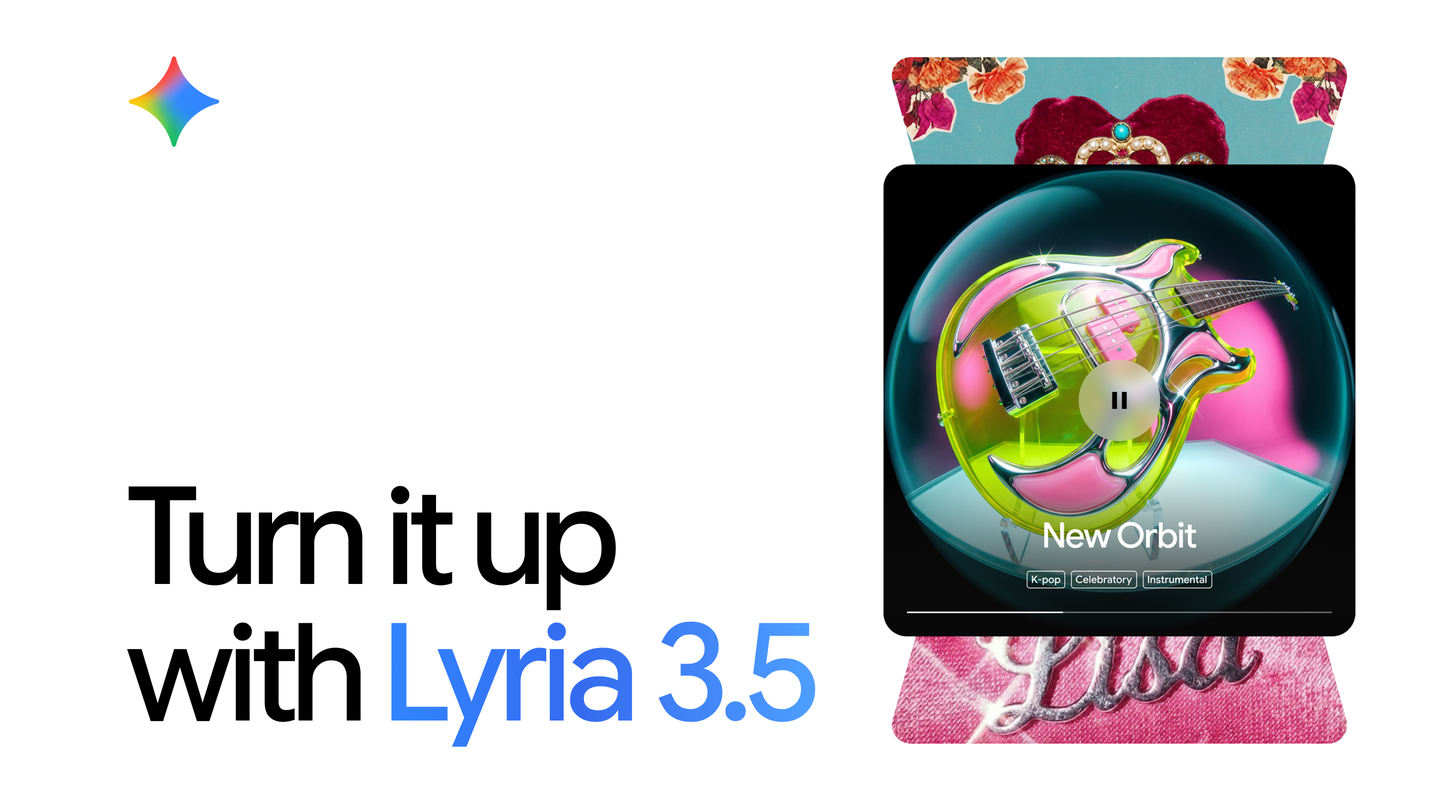
Google started rolling out Lyria 3.5 inside Google Flow Music on July 29, 2026. The model takes over from Lyria 3 Pro and lands with four claimed gains: richer melodic structure, better lyrics, more expressive vocals, and direct control over tempo and duration.
Hayk Martiros, credited on Google DeepMind’s Lyria team, posted about shipping the model that day.
What Lyria 3.5 changes in Google Flow Music
Google’s announcement lists four upgrades. Musicality covers more complex melodic structures the company says sound more natural. Lyrics get higher quality output with better prompt adherence and structural awareness, so a generation stays on the subject you asked for and lands its sections where a song would.
Vocals are the third. Google claims more expression and emotion, more realistic singing, and improved pronunciation. Pronunciation has been the tell that gives away a generated vocal faster than anything else, so it is the most checkable claim in the set.
Our newest music generation model, Lyria 3.5, delivers significant advancements across musicality, lyrics, and vocal quality, empowering you to craft richer tracks.
The controls Lyria 3.5 adds: tempo, drums, bass and track length
Creative control is the fourth upgrade and the one working producers will test first. Google names tempo and duration. Android Central reports the set also reaches vocals, drums and bass, with separate tools for track length.
That matters more than the audio-quality claims. Every generative music tool can produce something listenable now. The gap between a demo and a usable record is whether you can steer the parts, and a tempo field is worth more in practice than a slightly warmer vocal.
How Google Flow Music got here: Riffusion, ProducerAI, then Google
Flow Music began as Riffusion, an open-source project that went viral in 2022. It relaunched as ProducerAI in 2025, and Google acquired it in February 2026 and folded it into Google Labs. The rebrand to Flow Music came in April, aligning it with Google’s Flow image and video suite.
The platform leans on the rest of Google’s model stack. Gemini handles chat, Veo does video, Nano Banana does images, and every output carries SynthID, Google’s AI watermark. In May, Believe partnered with Google to put Flow Music in front of its artists and TuneCore’s.
Five days before the Lyria 3.5 rollout, Google upgraded Spaces, the Flow Music workspace for building custom instruments and music apps. Spaces picked up song generation and editing, stem splitting, and image, lyric and video generation, plus covers, section replacement and track extension.
Google is shipping fast while defending a Lyria training lawsuit
The release pace sits oddly next to Google’s legal position. In June, Google asked a court to throw out an indie-artist lawsuit over Lyria, arguing YouTube’s terms of service already licensed uploaded music for AI training.
That argument is unresolved. Anyone describing Lyria as the licensed alternative to Suno and Udio is ahead of the record.
Frequently asked questions
What is Google Lyria 3.5?
Lyria 3.5 is Google's music generation model, announced July 29, 2026 and rolling out inside Google Flow Music. It replaces Lyria 3 Pro as the model behind the platform's song generation, with improvements to musicality, lyrics and vocal quality.
What can you control in Google Lyria 3.5?
Google highlights control over tempo and the duration of an output, and Android Central reports the control set also covers vocals, drums and bass alongside track-length tools. The stated aim is more creative control over a generation rather than accepting whatever the model returns.
How is Lyria 3.5 different from Lyria 3 Pro in Flow Music?
Lyria 3 Pro was the model Flow Music ran on before this release. Lyria 3.5 adds more complex melodic structure, higher-quality lyrics with better prompt adherence and structural awareness, and more expressive vocals with improved pronunciation.
Does Google Flow Music watermark tracks made with Lyria?
Yes. Output from Flow Music is embedded with SynthID, Google's watermark for identifying AI-generated content. The platform also draws on Gemini, Veo and Nano Banana for chat, video and image generation.
About the author

Covering AI music tools, industry shifts, and news for music creators and professionals. Twice-weekly newsletter at aimusicpreneur.com.