ORCA wants streaming services to charge a per-track upload fee to curb AI spam and fraud
My stack My fav 6 tools for AI music after testing 70+
-
 ElevenMusic · Music generation
 -
 Moises · Stem separation
 -
 Controlla · Voice swap & cloning
 -
 Cryo Mix · Mixing + mastering
 -
 Neural Frames · Music videos
 -
 ONCE · Distribution
Some links are affiliate links — I earn a commission at no cost to you. Every tool here is one I run myself and truly believe in. This stack is proven.
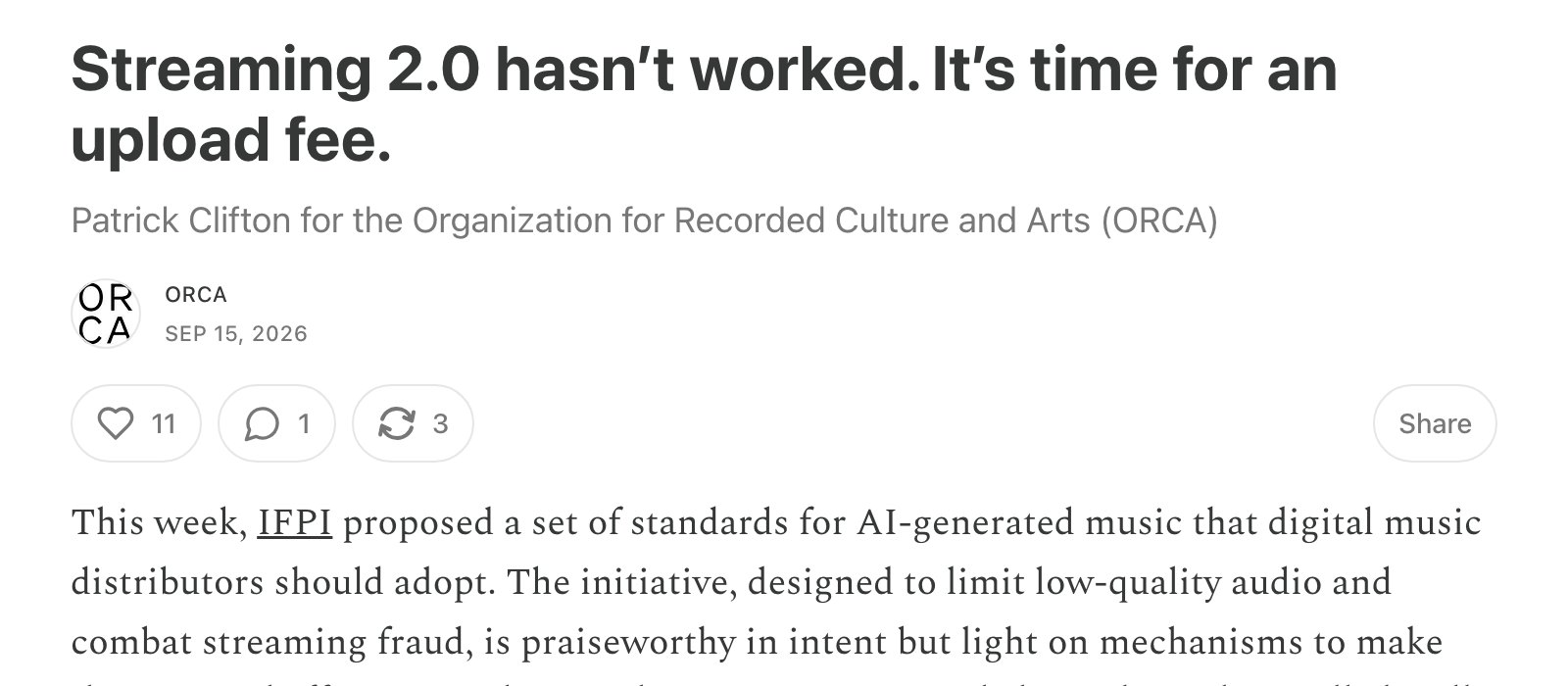
38 million tracks were uploaded to streaming services in 2025, according to Luminate. That’s about 106,000 new tracks a day, and streaming services charge nothing to take any of them in.
ORCA wants to change that. The Organization for Recorded Culture and Arts, a think tank set up by independent labels including Beggars Group, is proposing a fee for every new track uploaded to a streaming service.
Executive director Patrick Clifton laid it out in a September 15, 2026 post, and Music Ally picked it up on September 28.
How ORCA’s per-track upload fee would work
Right now, streaming services take in as much music as distributors send and charge nothing to host it. ORCA says that deal has been abused by people uploading junk at scale.
Its framework has 4 parts:
- A fee per track for new recordings, set high enough to make high-volume uploading uneconomic.
- Each streaming service sets its own fee with its licensing partners, based on its upload volumes and how it pays out.
- The fee is charged at the contract level and collected by the streaming service.
- The money goes into the royalty pool and gets paid out like any other revenue.
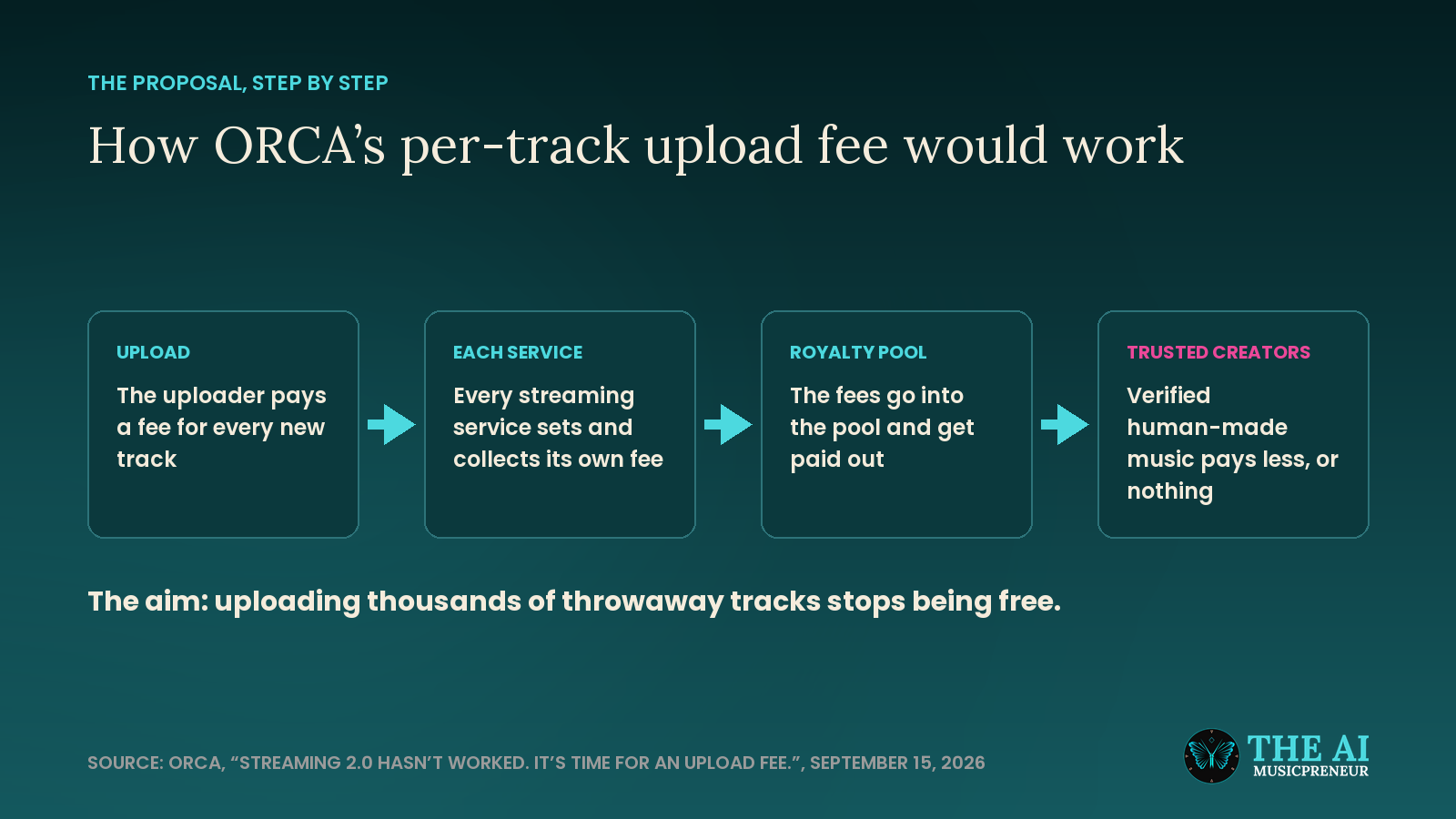
The part that matters most if you release music yourself is the exemption. ORCA wants existing quality-assurance scorecards updated to recognise creators of legitimate, human-made music, and to lower the fee, or drop it entirely, for anyone who passes those trust and safety checks.
Clifton admits the fee would need to be “carefully calibrated” so it doesn’t repeat the demonetisation hit legitimate artists and labels took under UMG’s Streaming 2.0 model. ORCA also hasn’t said how a contract-level fee would pass down to artists who pay a distributor to deliver their music.
The proposal is on the table to prompt discussion, to refine the idea and encourage action from everyone along the recorded music value chain.
Why ORCA says IFPI’s pledge and Streaming 2.0 haven’t stopped AI spam
ORCA’s argument is that generative AI turned a volume problem into a flood.
The numbers it leans on come from Deezer, which ORCA calls the only streaming service that’s open about this. Deezer said in July it was taking in nearly 90,000 AI-generated tracks a day, and that AI now makes up 50% of its uploads. In January, Deezer said up to 85% of streams on AI-generated tracks in 2025 were fraudulent. ORCA says its contacts at anti-fraud firm Beatdapp confirm Deezer’s data is broadly representative across streaming services.
Two fixes are already on the table, and ORCA says neither goes far enough:
- Streaming 2.0. UMG’s framework, as ORCA describes it, stops payouts on tracks under 1,000 streams a year. ORCA says the Deezer data shows the problem getting worse anyway, with AI as the catalyst.
- IFPI’s pledge. The Streaming Integrity Initiative launched on September 14 asks distributors to vet uploads for AI-related risks. ORCA calls it “praiseworthy in intent but light on mechanisms.”
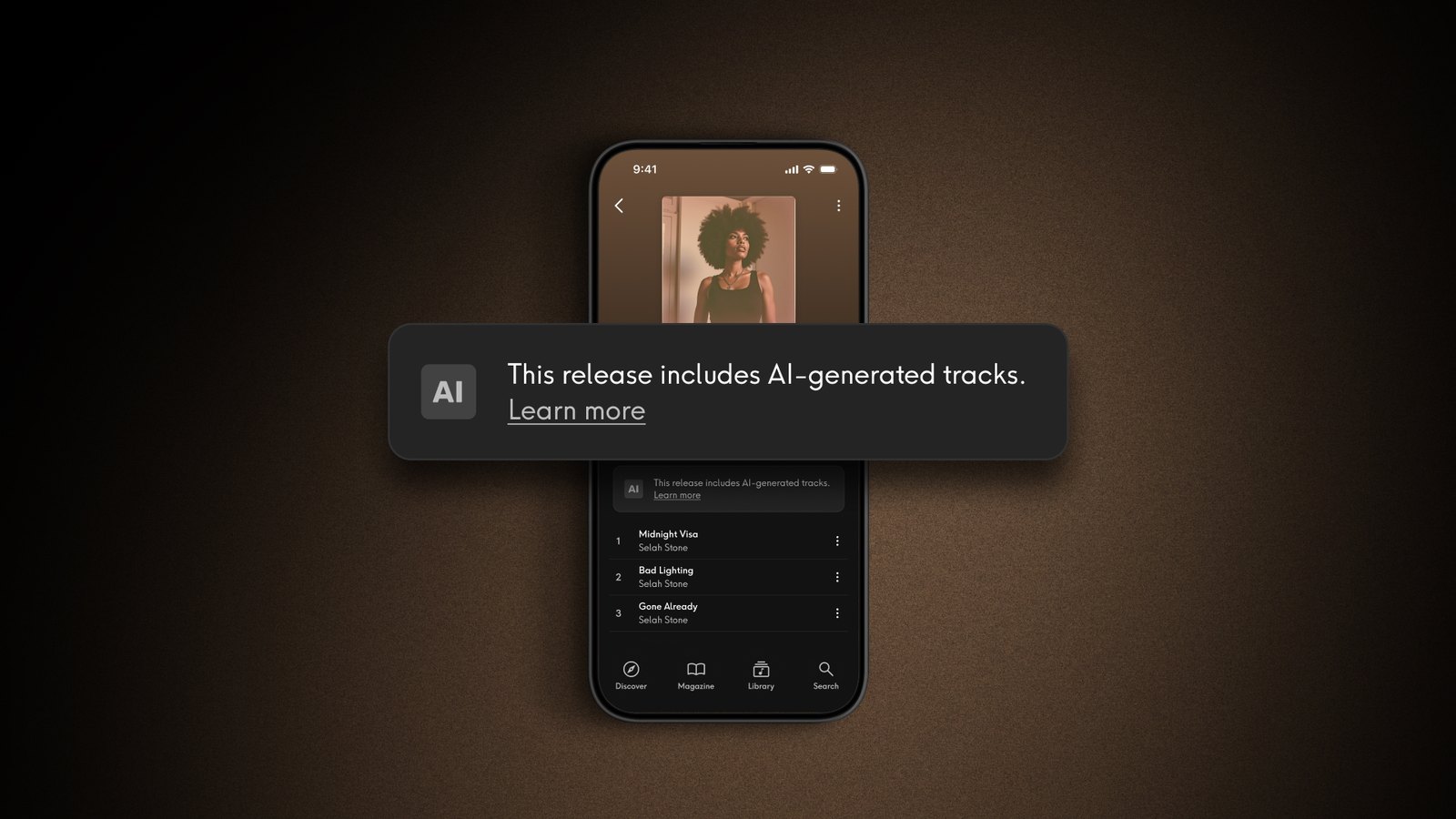
Volume is also at the centre of UMG’s lawsuit against DistroKid, which Music Ally notes made much of nearly 12 million tracks going through DistroKid in 6 months. And Qobuz, which just started tagging AI-generated music, says 60% of streams on its AI tracks are fraudulent.
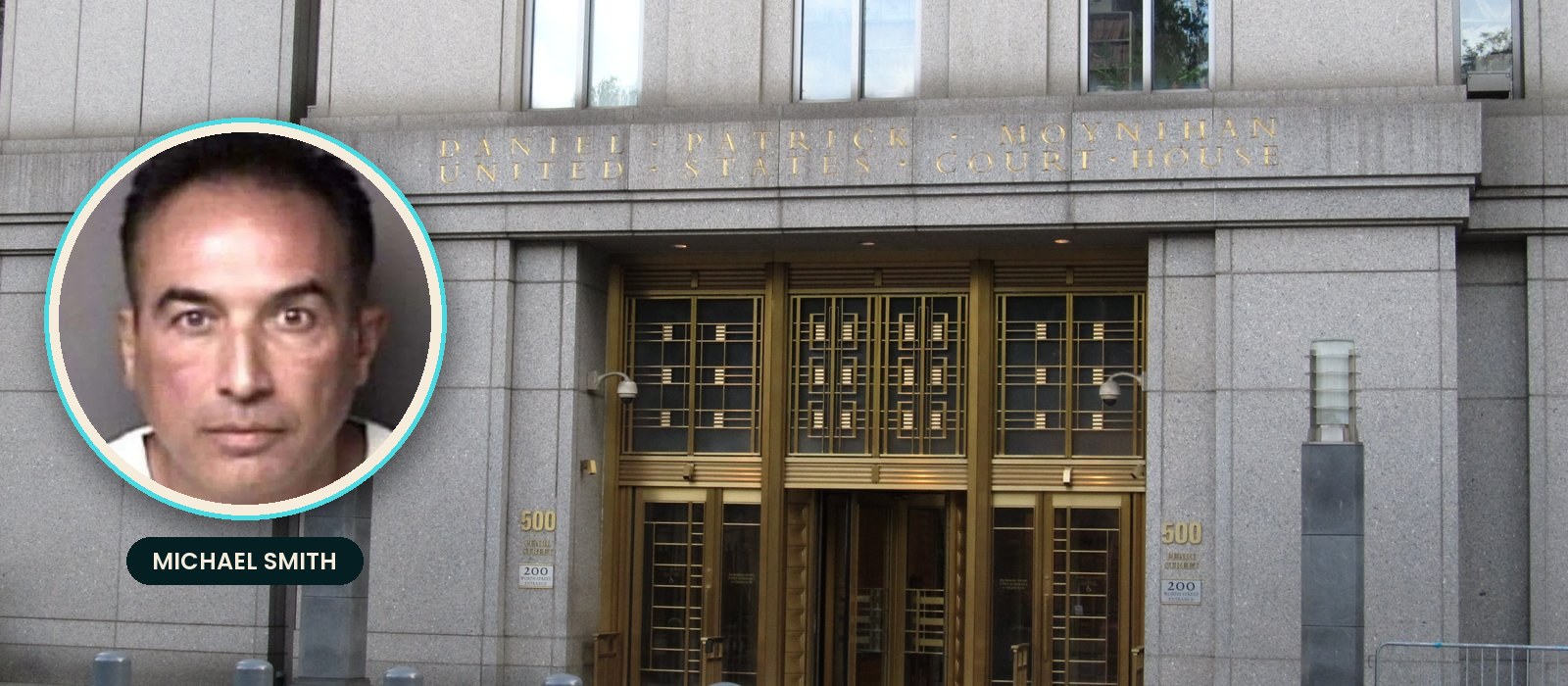
Why does any of this touch your royalties? Most streaming services pay out of one pot, split by each track’s share of plays. Fake plays on junk tracks take a slice of that same pot, which is what the $8M Michael Smith fraud case was about. ORCA’s fee would make every junk upload cost money up front, then put that money back into the pot.
ORCA itself expects every party to find downstream consequences it hasn’t considered, and calls the fee a starting point for discussion. Whether any streaming service picks it up is the next thing to see.
Frequently asked questions
What is ORCA, the Organization for Recorded Culture and Arts?
ORCA is a think tank launched by independent record labels, including Beggars Group, to publish research on the economic, social and cultural value of recorded music. It is coordinated by the Center for Music Ecosystems, and Patrick Clifton is its executive director.
Who would pay ORCA's proposed upload fee, artists or distributors?
ORCA says the fee would be charged at the contract level and collected by each streaming service, which points to the labels and distributors that deliver music rather than individual artists. ORCA hasn't said how the cost would pass down to artists who use a distributor.
What is Universal Music's Streaming 2.0 model?
Streaming 2.0 is the remuneration framework Universal Music developed to stop paying out on very low-performing tracks. ORCA describes it as removing payouts for tracks with fewer than 1,000 streams a year, and Deezer was UMG's first partner on it.
Has any streaming service adopted an upload fee for new tracks?
No. ORCA published the upload fee as a proposal on September 15, 2026 to start a discussion across the recorded music value chain. According to ORCA, streaming services don't currently charge anything to ingest and onboard new music.
About the author

Covering AI music tools, industry shifts, and news for music creators and professionals. Twice-weekly newsletter at aimusicpreneur.com.