Universal sues DistroKid, the distributor behind 3 in 4 AI music releases
My stack My fav 6 tools for AI music after testing 70+
-
 ElevenMusic · Music generation
 -
 Moises · Stem separation
 -
 Controlla · Voice swap & cloning
 -
 Cryo Mix · Mixing + mastering
 -
 Neural Frames · Music videos
 -
 ONCE · Distribution
Some links are affiliate links — I earn a commission at no cost to you. Every tool here is one I run myself and truly believe in. This stack is proven.
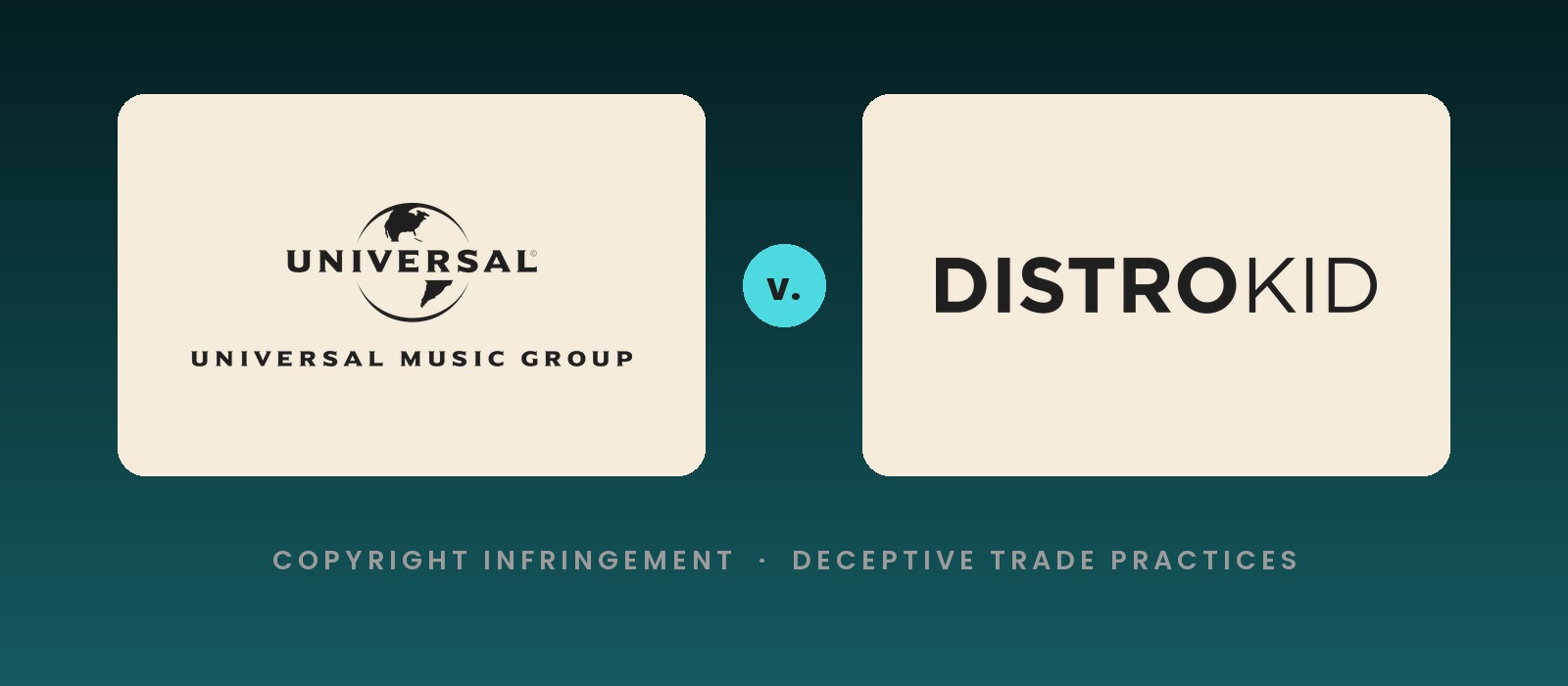
Universal Music Group sued DistroKid on September 15, 2026. The complaint runs 52 pages, landed in a Delaware federal court, and says DistroKid has “engaged in both deceptive trade practices and blatant copyright infringement”. UMG says it has already identified nearly 2,000 infringing DistroKid-distributed recordings.
DistroKid is the biggest distributor in the world by volume, and it says it handles roughly 40% of all new music for more than 4 million artists. It is also the route most AI music takes to streaming. DistroKid carried 77.6% of the AI releases that came with distributor data in SIQA’s Mid-Year 2026 report.
So this is not a fight between a major label and a small vendor. It is a fight over the pipe that most people reading this actually upload through.
What Universal accuses DistroKid of doing
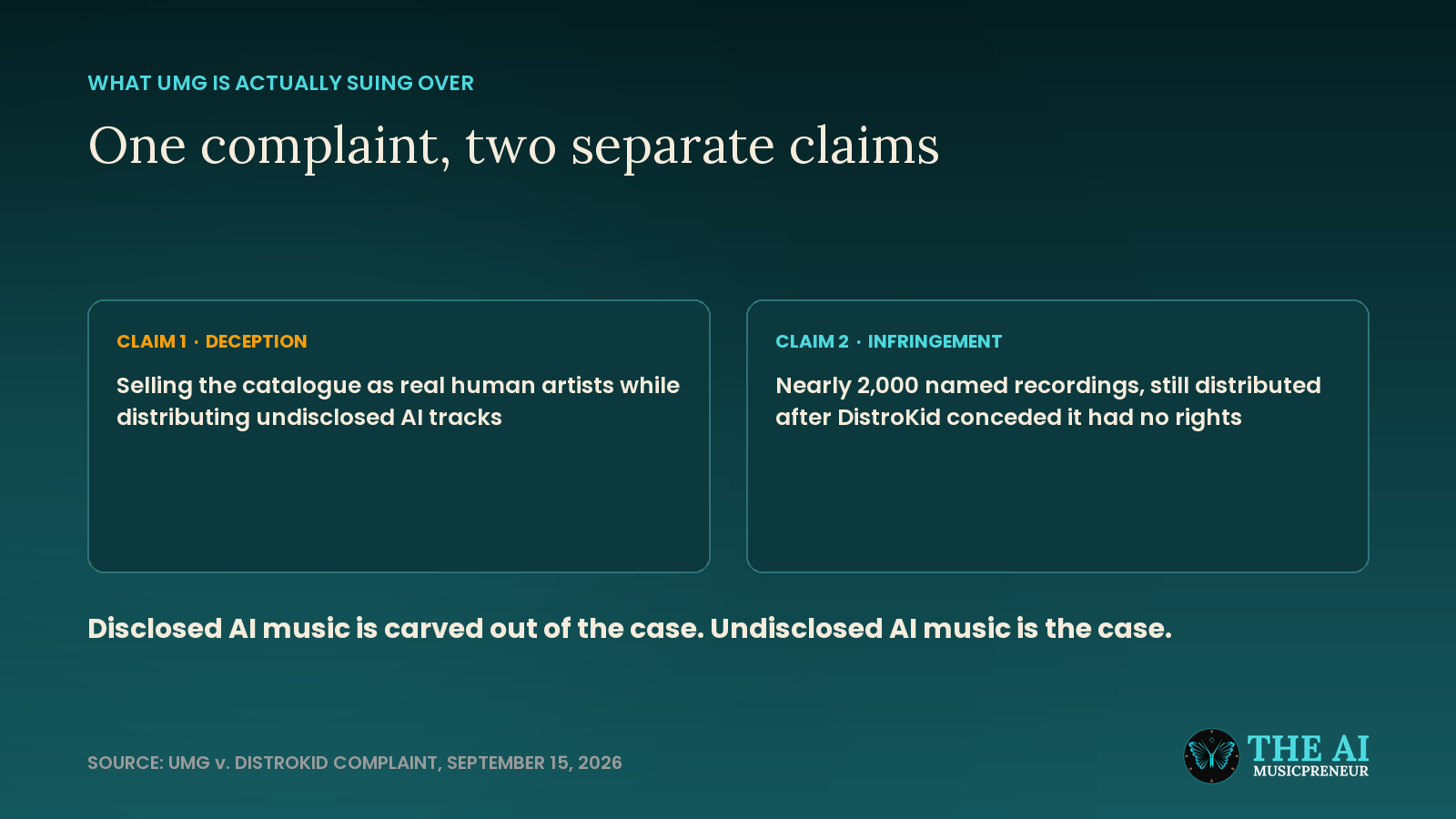
UMG draws a line early in the complaint, and the line is worth reading carefully if you release AI music. The suit says it is “not about the distribution of AI-generated music when clearly disclosed as such”.
The problem UMG names is AI music that arrives dressed as something else. The complaint says DistroKid gives the false impression that what it distributes is “artist-backed releases, created and owned by real human artists”, and that it acts in line with industry efforts to stop mass AI uploads.
DistroKid is flooding platforms with AI-generated 'slop' that siphons revenue and listeners from the legitimate artists and rightsholders.
UMG also says DistroKid signs up account holders who had already been flagged for streaming fraud by the Music Fights Fraud Alliance, the industry group set up to share exactly that kind of warning between platforms.
ISRC theft: how a fake upload collects a real song’s money
Every commercial recording carries a unique code, the ISRC, and streaming services use it to decide whose track just got played and who gets paid for it. UMG says some DistroKid uploads were submitted under codes that already belonged to Universal recordings.
The complaint gives one example. A DistroKid track called “Juice Newton”, credited to an “artist” named “Candy DuIfer”, carried the same ISRC as Juice Newton’s “Angel of the Morning”.
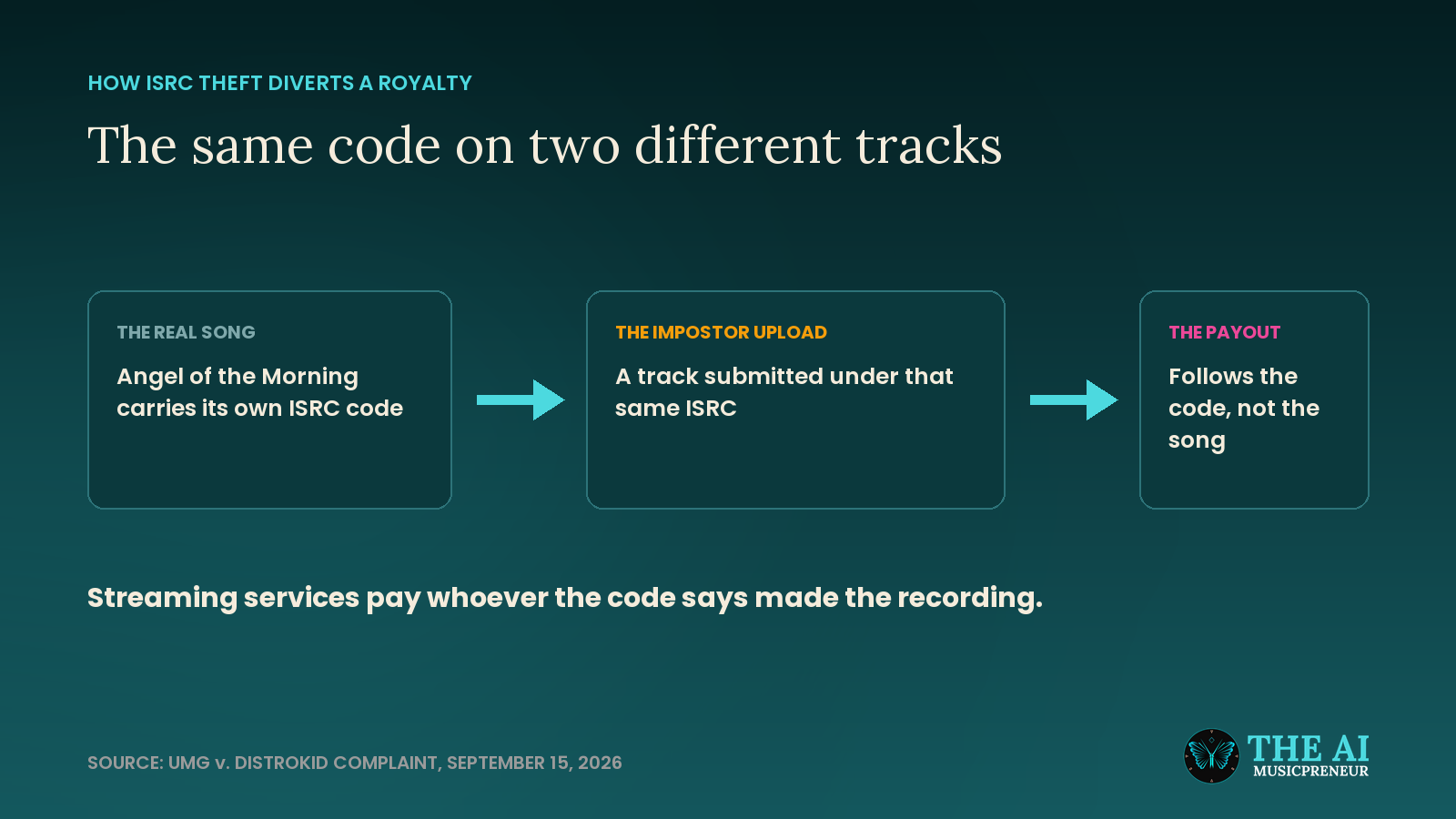
Alongside that, UMG lists speed-altered versions of hits, uploads that copy the real cover art, and tracks that keep a Universal instrumental and drop new vocals over it.
The sharpest allegation is about what happened next. UMG says that after DistroKid conceded it had no rights in a track on one service, it kept sending that same recording to other services.
Why this lands on 3 in 4 AI music releases
SIQA’s Mid-Year 2026 data puts DistroKid at 77.6% of AI releases that disclosed a distributor, up from 75.8% in Q1. Everything else is a rounding error by comparison: self-released at 6.2%, LANDR at 4.9%, UnitedMasters at 3.5%, TuneCore at 1.7%.
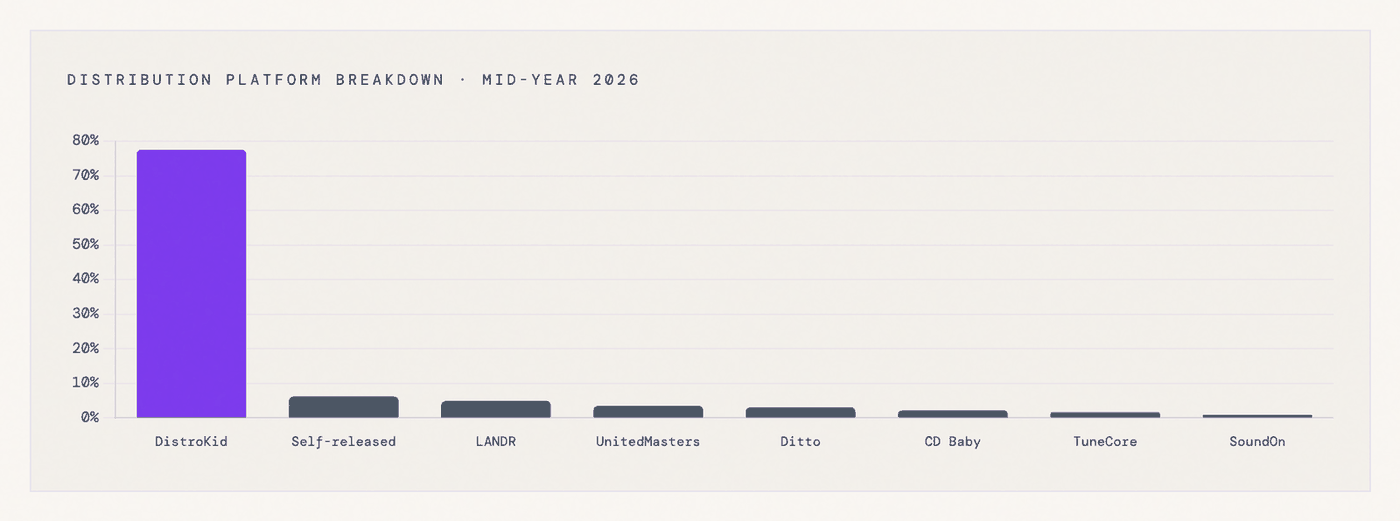
That concentration is the reason a suit against one distributor reads as a suit against AI music distribution generally. If you release tracks made with Suno or Udio, there is a 3 in 4 chance your distributor is the defendant.
The timing says something too. One day before the filing, IFPI launched the Streaming Integrity Initiative with 27 companies signed on. DistroKid and TuneCore were both missing from that list.
What Universal is asking the court for
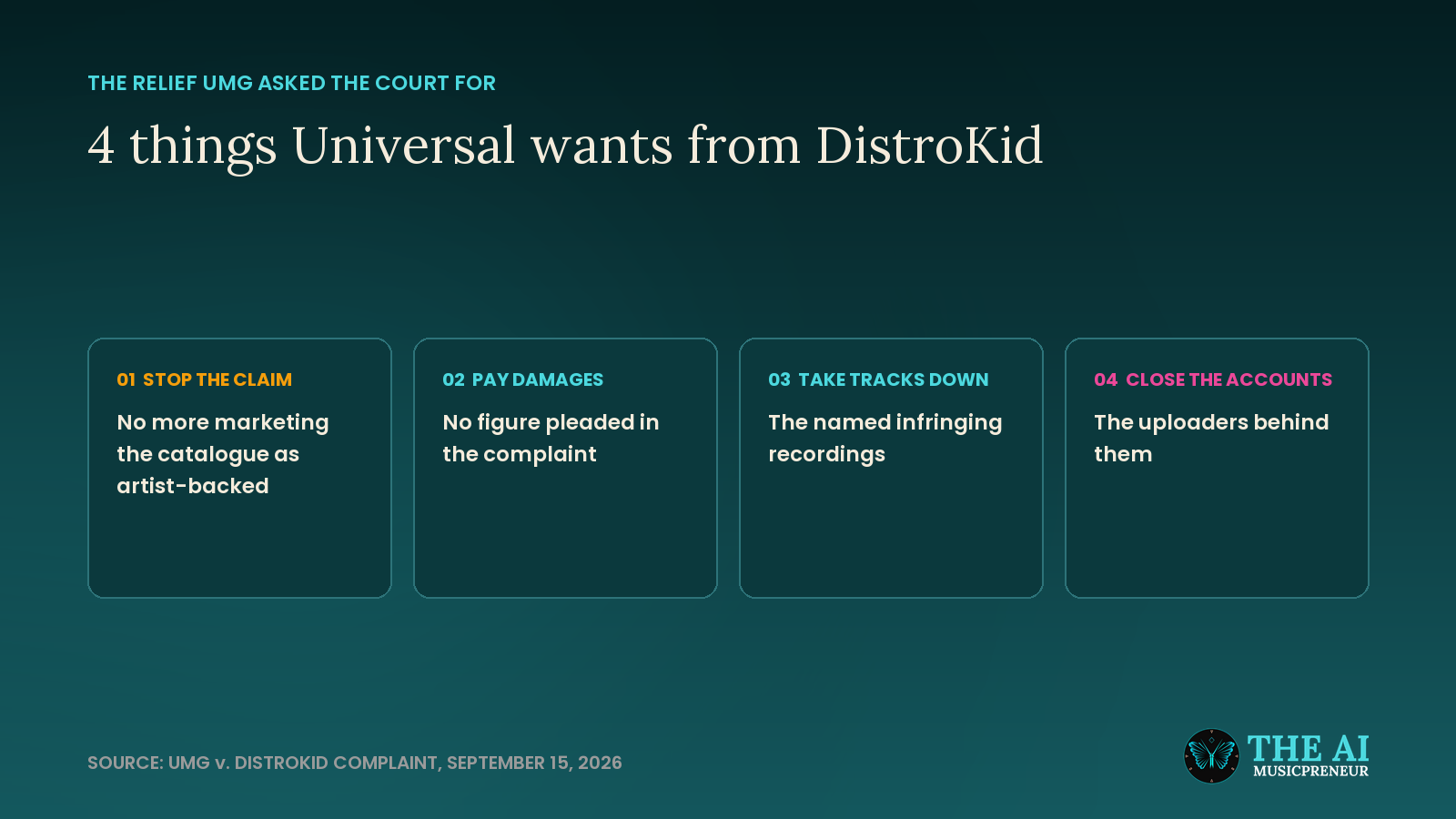
UMG wants a court order stopping DistroKid from telling the market that most of what it distributes comes from real artists. That is the deception half of the case, and it aims at DistroKid’s marketing rather than its catalogue.
Then it wants the money side. UMG is asking for damages, for the named tracks to come down, and for the accounts behind them to be closed.
The complaint also points at DistroKid’s growth, including the majority stake CVC Capital Partners bought in July. UMG’s argument is that the conduct and the valuation are connected.
DistroKid had not responded publicly when MBW and Digital Music News published on September 15.
Should you move off DistroKid right now?
Probably not today, and I’d be careful with anyone telling you otherwise. A complaint is one side’s account, no judge has ruled, and nothing in it asks for action against ordinary catalogues.
What I would do is close the gap the case is actually about. Disclose AI use on the upload form, because the one category UMG explicitly carved out is AI music that says it is AI music.
If you want to compare the AI policies and upload caps before your next release, I keep them side by side in my roundup of AI music distribution services.
The suit names a distributor. The thing it puts on trial is undisclosed AI music, and that is a choice made on the upload form rather than in a courtroom.
Frequently asked questions
Why is Universal Music Group suing DistroKid?
UMG says DistroKid does two separate things wrong. It sells itself as a home for real human artists while distributing large volumes of AI-generated tracks, and it keeps distributing specific recordings after being told it has no rights to them. The complaint calls this a mix of deceptive trade practices and copyright infringement.
Does the Universal lawsuit mean DistroKid will delete my music?
Not on its own. UMG asked the court to remove the tracks it named and to close the accounts behind them, which are accounts it says were used for infringement and fraud. Nothing in the complaint asks for action against ordinary DistroKid catalogues, and no ruling has been made yet.
What is ISRC theft in the Universal DistroKid lawsuit?
Every commercial recording gets a unique code called an ISRC. UMG says some DistroKid uploads were submitted under the same code as a real Universal recording, so streams and royalties earned by the real song got routed to the impostor upload instead. The complaint gives an example of a track using the ISRC of Juice Newton's 'Angel of the Morning'.
How many infringing tracks did Universal identify on DistroKid?
Nearly 2,000 DistroKid-distributed recordings are named as infringing in the September 2026 complaint. UMG says that figure only covers tracks caught by rights management tools, and expects evidence-gathering to surface millions more it has not yet checked.
About the author

Covering AI music tools, industry shifts, and news for music creators and professionals. Twice-weekly newsletter at aimusicpreneur.com.