7 Best AI Music Distribution Services in 2026 (Free and Paid)
My stack My fav 6 tools for AI music after testing 70+
-
 ElevenMusic · Music generation
 -
 Moises · Stem separation
 -
 Controlla · Voice swap & cloning
 -
 Cryo Mix · Mixing + mastering
 -
 Neural Frames · Music videos
 -
 ONCE · Distribution
Some links are affiliate links — I earn a commission at no cost to you. Every tool here is one I run myself and truly believe in. This stack is proven.
Picking an AI music distribution service in 2026 comes down to 3 questions: will the distributor take your AI track, what will it cost you, and what happens when a platform flags your streams. I compared 7 services on those questions, and I had one dataset no other roundup uses: the SIQA Q1 2026 report, which recorded which distributor 413 verified AI artists used to get their tracks to Spotify.
The short version: 3 in 4 AI artists use DistroKid. The distributor with the clearest AI policy, LANDR, sits at 2.1%. And 2.1% of AI artists are on CD Baby, a service that bans AI-generated composition outright.
TL;DR: the 3 best AI music distribution services in 2026
This list is for AI-assisted artists and Suno or Udio creators deciding where to release. If you produce fully human music with no AI, the same 7 services work, but the caps and disclosure rules below won’t touch you.
- LANDR, best for AI-assisted artists: a clear cap of 30 AI releases a month, mandatory disclosure at upload, and StreamScan fraud alerts on every plan from €22 a year. Read my LANDR review for the mastering side.
- DistroKid, most used by AI artists: 75.8% of SIQA’s AI artists release through it, and it was the first distributor to feed Spotify’s AI Credits from $24.99 a year.
- ONCE, best pay-per-release for AI-native creators: $2 per AI release, paid once, 0% royalty cut, and automatic AI disclosure to every store. My ONCE review covers the chat agent.
How I compared these 7 music distribution services
I did not release the same test track through all 7 services and watch the streams. That would take a year and 7 accounts. I’m saying it up front so you don’t read these rankings as stream-tested results.
What the rankings are built on:
- Published AI policy. Every stance below comes from the company’s own policy page, not a summary of one.
- Published pricing. I opened every pricing page on September 7, 2026 and read the current number.
- Documented store reach. How many platforms, and which ones drop AI tracks.
- Documented fraud tooling. What the distributor shows you when a platform flags your streams.
The 5 things I compared:
- AI policy clarity
- Cost and royalty split
- Store reach and delivery
- Fraud protection
- Workflow extras
No weights, no dots, no star ratings. Untested products don’t get stars from me.
Changelog: September 2026, first version.
What the SIQA Q1 2026 data says about which distributors AI artists use
SIQA, the Sonic Intelligence and Quality Assurance chart, verified 1,551 AI tracks in Q1 2026. 413 of the submissions carried distributor data. I sit on SIQA’s Creative Advisory Council, which is how I know the dataset, and which is also why I’m naming that here.
Here is the distributor split, straight from the report:
| Distributor | Share of AI artists (Q1 2026) |
|---|---|
| DistroKid | 75.8% |
| Self-released (no distributor) | 9.4% |
| TuneCore | 4.7% |
| UnitedMasters | 3% |
| CD Baby | 2.1% |
| LANDR | 2.1% |
| SoundOn | 1.3% |
| Other | 1.6% |
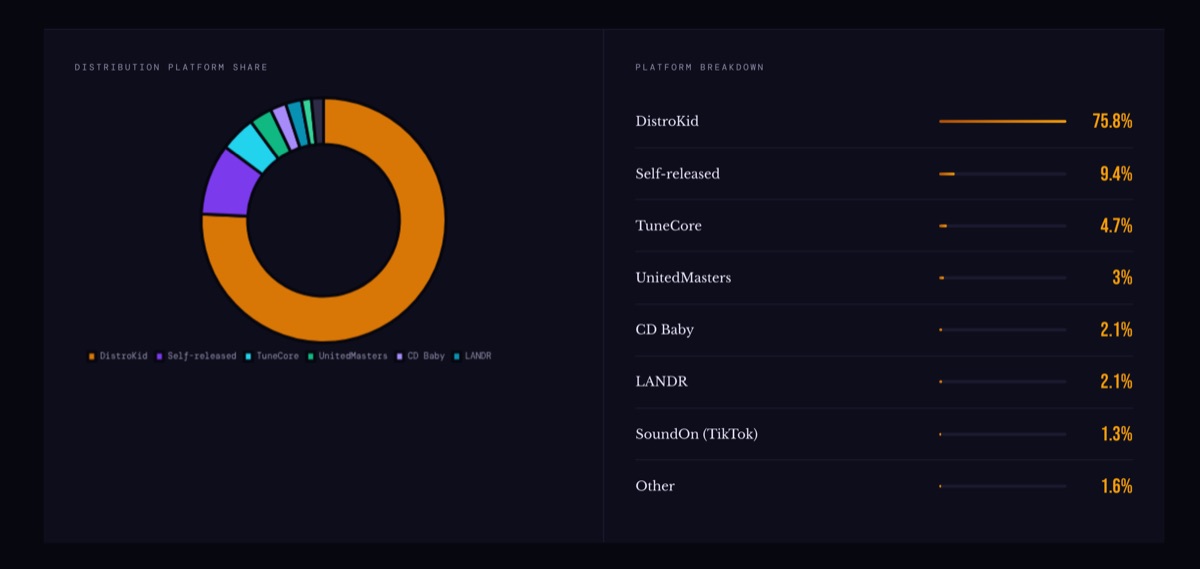
Two more numbers from the same report matter for the reviews below. 81% of the verified tracks involved meaningful human contribution (lyrics, vocals, arrangement, or production), and only 19% were fully AI-generated. Suno made 90.4% of them.
So the typical “AI artist” is a person who wrote or sang part of the song and used Suno for the rest. That person is who the LANDR and DistroKid policies are written for. The fully AI-generated 19% is who ONCE is built for, and who CD Baby turns away.
Quick comparison: AI policy, caps, free tiers and pricing for all 7
All prices are USD, checked on the official pricing pages on September 7, 2026. A distributor is the company that takes your finished track and delivers it to Spotify, Apple Music, and the other stores, then collects and pays out your streaming money.
| Service | Type | Best for | AI policy | AI cap | Free tier | Pricing from |
|---|---|---|---|---|---|---|
| LANDR | Pay per release or subscription | AI-assisted artists | Accepts AI with mandatory disclosure, no AI covers | 30 AI releases per month | No | €8 per single (15% cut) or €22/yr, keep 100% |
| DistroKid | Annual subscription | Volume releasers | Accepts AI under 5 rules, AI Credits disclosure at upload | None published | No | $24.99/yr, keep 100% |
| ONCE | Pay per release | Fully AI-generated tracks | Built for AI, provenance scan and auto disclosure | None | No, but no subscription | $2 per AI release, 0% cut |
| TuneCore | Annual subscription or per release | Artists who want Believe’s catalog reach | Accepts AI under 4 principles, tightened Suno review in 2026 | None published | No (free plan ended June 2025) | $24.99/yr, keep 100%, 20% social fee |
| UnitedMasters | Annual subscription | Hip-hop and brand-deal hunters | Accepts AI, no fully AI tracks to Meta or TikTok, no voice clones | None published | Not on the pricing page | $19.99/yr, keep 100% |
| SoundOn | Freemium, 3 tiers | TikTok-first releases | Accepts AI, ACRCloud scan before delivery, photo ID at signup | Release quota on the free tier | Yes, keep 90% | €0 (90% cut to you) or €2.17/mo, keep 100% |
| Symphonic | Annual subscription | AI artists who want mastering and licensing in one account | Accepts generative AI including Suno, disclosure for audio and artwork at upload | None published | No | $29.99/yr, keep 100%, 30% UGC fee |
How strict is each distributor about AI music?
Price is the easy column. The one that decides whether your release survives is this one, so here it is for 15 services, including 8 I didn’t review above. Green means the distributor accepts fully AI-generated music as a matter of published policy. Amber means it accepts but with a restriction that will cost you a cap, a platform, or a rejection. Red means don’t upload AI music there.
Three patterns worth naming.
A green light is not the same as full monetization. Look at how many of the accepting distributors quietly drop AI tracks from Content ID and social platforms. Horus Music delivers AI music to no Content ID platform at all, naming YouTube, Meta, SoundCloud, AudibleMagic, SoundExchange, and TikTok in its own published AI policy. Amuse cuts Meta and YouTube Content ID. RouteNote cuts YouTube Content ID. LANDR, my top pick, has 6 of its own, which it confirmed for this piece and I list in its review below. So your AI track lands on Spotify and earns nothing from the platforms where discovery happens.
Two of the three red lights are the same company. CD Baby and Soundrop both enforce the Downtown Music Content Policy, so this isn’t a CD Baby quirk, it’s a corporate position applied across a distribution family. If a distributor is owned by a company suing AI music firms, read its policy before you pay. AWAL sits in the same category through Sony ownership.
The bans are spreading past distribution. Bandcamp, where a lot of independent artists sell directly, banned music generated wholly or in substantial part by AI in January 2026, enforced by human reviewers rather than detection software. Bandcamp is not a distributor, so it won’t appear in a comparison like this one, and it will still remove your release.
A sourcing note, because this section is the reason to read the page. The stances for LANDR, DistroKid, ONCE, TuneCore, UnitedMasters, SoundOn, Symphonic, and CD Baby come from each company’s own policy pages, which I read for this piece, and LANDR’s list of AI-restricted platforms came straight from LANDR after publication. Horus Music, Ditto Music, Amuse, and Soundrop come from their own published policies too. RouteNote, Anti-Joy, and AWAL come from secondary reporting, and AWAL’s “closed” is my read of an application process rather than a stated rule.
The 7 best AI music distribution services reviewed
One review per service, numbered by my ranking. Each one closes with a one-sentence verdict instead of a score.
1. LANDR: best for AI-assisted artists
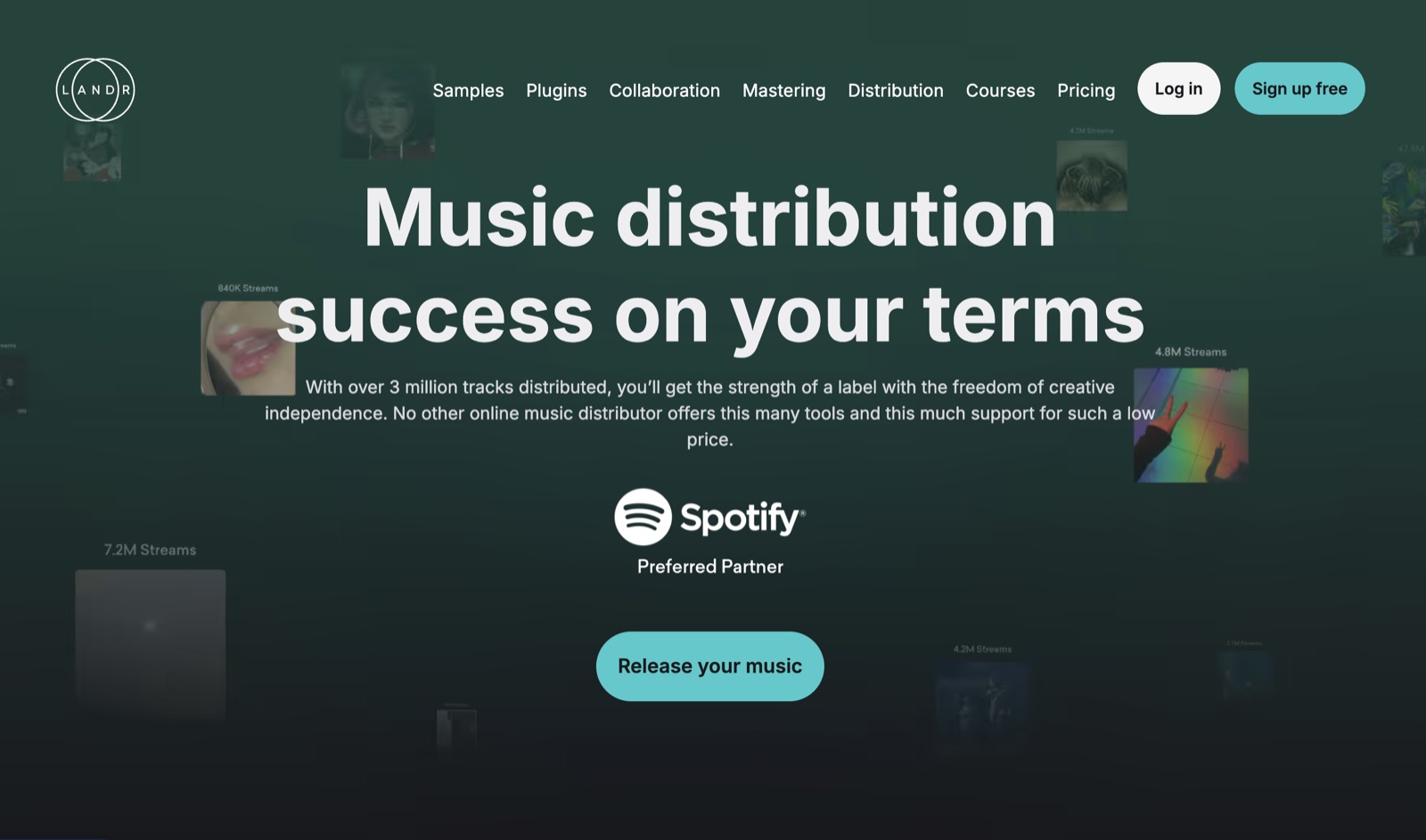
LANDR started as an AI mastering service in Montreal and bolted distribution onto it later. That history shows in the AI policy, which is the most specific one in this list.
- AI policy: accepts AI-generated tracks with mandatory disclosure at upload. No AI-generated cover songs. You must hold all rights, including any human contributions.
- AI cap: 30 AI-generated releases per calendar month per subscriber, across singles, EPs, and albums. The cap was 12 until this year.
- Pricing, pay per release: €8 per single or €17 per album, one time, and LANDR takes a 15% commission on those. Releases approved within 7 days.
- Pricing, unlimited plans: on LANDR’s distribution page, Distribution Basic €22 a year for 1 artist, with YouTube Content ID, social monetization, and a release importer. Distribution Pro €41 a year for 5 artists, with advanced reporting and faster releases. Distribution + Mastering €63 a year adds unlimited MP3 masters and 6 WAV masters. All 3 keep 100% of your royalties, cover 150+ platforms, and leave your music live forever. Prices exclude VAT.
- Fraud protection: StreamScan, included with every distribution plan.
Why I picked it: the number. Every other distributor here accepts AI with disclosure and leaves the ceiling unstated, so you find out where it is when a release stalls. LANDR’s AI policy page prints 30 a month. If you exceed it, LANDR says releases can be delayed, removed, or your future uploads restricted. That’s a rule you can plan a release calendar around.
StreamScan is the second reason. LANDR’s StreamScan page explains the mechanism: it pulls the monthly artificial-streaming reports that Spotify and Apple Music send to every distributor, flags the affected release in your dashboard with a severity level, and tells you what to do next. LANDR’s line for it is “as soon as LANDR knows, you know.” Most distributors sit on those reports until the platform pulls royalties, which is how a $8 million streaming fraud case ran for 7 years before anyone acted.
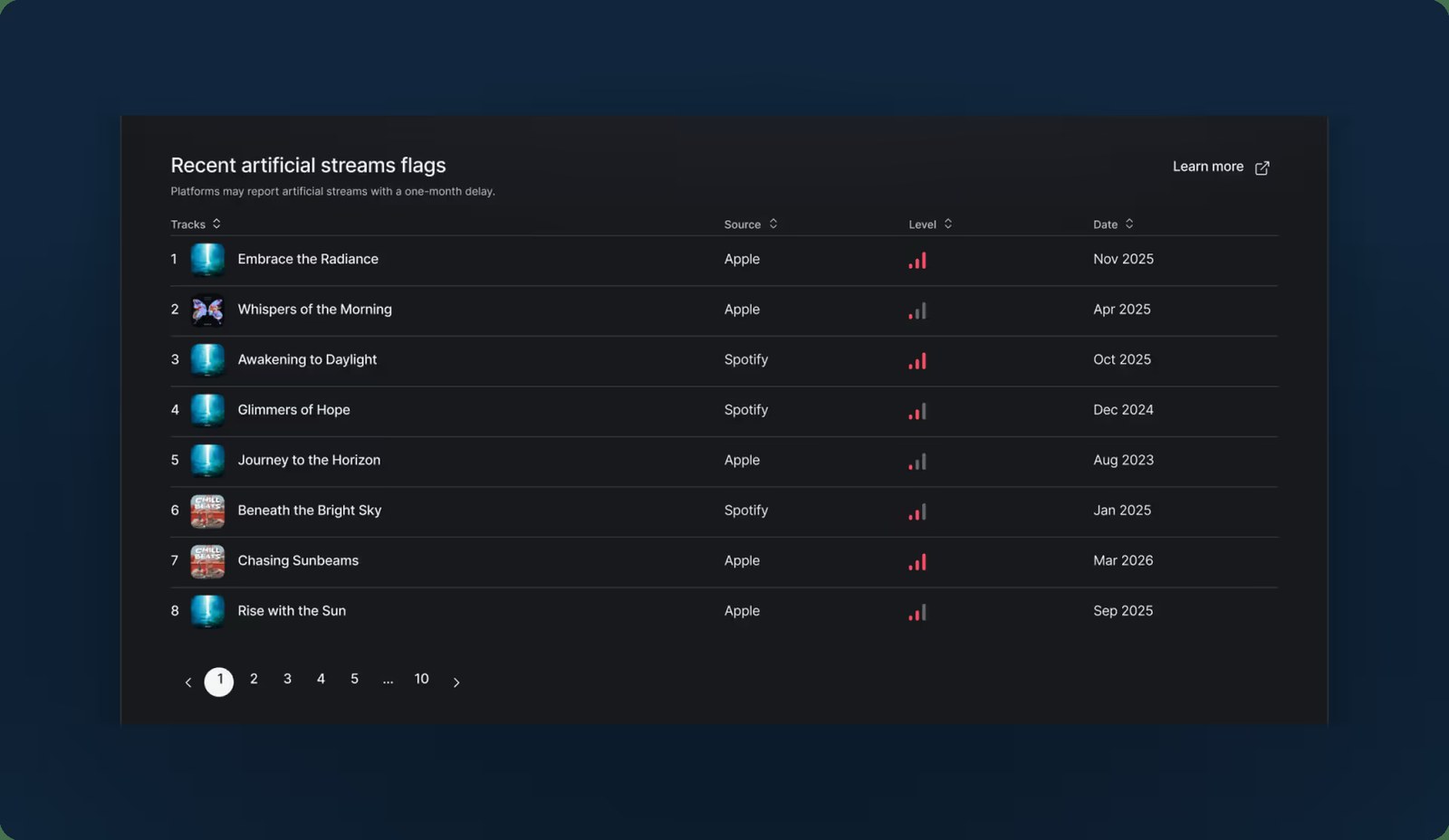
Standout features:
- Music stays live after you cancel the subscription
- Release importer that migrates a DistroKid catalog with play counts intact
- Fair Trade AI program, which pays artists who opt in to license their music for AI training, now with a $1 million advance fund
- Mastering, samples, and plugins in the same account if you want the bundle, which LANDR packages as AI music tools plus distribution
What is missing: two gaps, one about where your AI tracks actually land and one about the cheapest tier.
- The store exclusions. LANDR’s policy page says some streaming services and social platforms have their own AI restrictions, then doesn’t name them. LANDR’s team gave me the current list for this piece: YouTube Content ID, Meta (Facebook and Instagram), TikTok, Deezer, Lissen, and Pandora. That’s 6 platforms your AI release skips, including the 2 where short-form discovery happens, and LANDR is clear that platform policies keep moving, so read it as where things stand in September 2026 rather than a fixed list.
- The 15% commission on pay-per-release. €8 a single looks cheap next to a subscription until you notice the cut never stops. On a track earning €500 a year that’s €75 a year against €22 for Basic.
Best for: artists who write, sing, or produce part of the track, use Suno or LANDR’s own tools for the rest, and want a rule they can read.
Verdict: LANDR earns first place because it’s the only distributor that tells you the AI ceiling in a number and warns you about fake streams before the platform does.
2. DistroKid: most used by AI artists
DistroKid is where 75.8% of SIQA’s AI artists went, and the reason is boring: it’s cheap, it’s fast, and it accepted AI music with a disclosure step before most competitors had a policy at all.
- AI policy: accepts AI music under 5 published rules: follow the streaming services’ content guidelines, own 100% of the rights to whatever the AI produced, never mimic someone else’s voice or likeness without permission, no mass-generated spam made to game algorithms, and no infringement of anyone else’s rights.
- AI cap: none published.
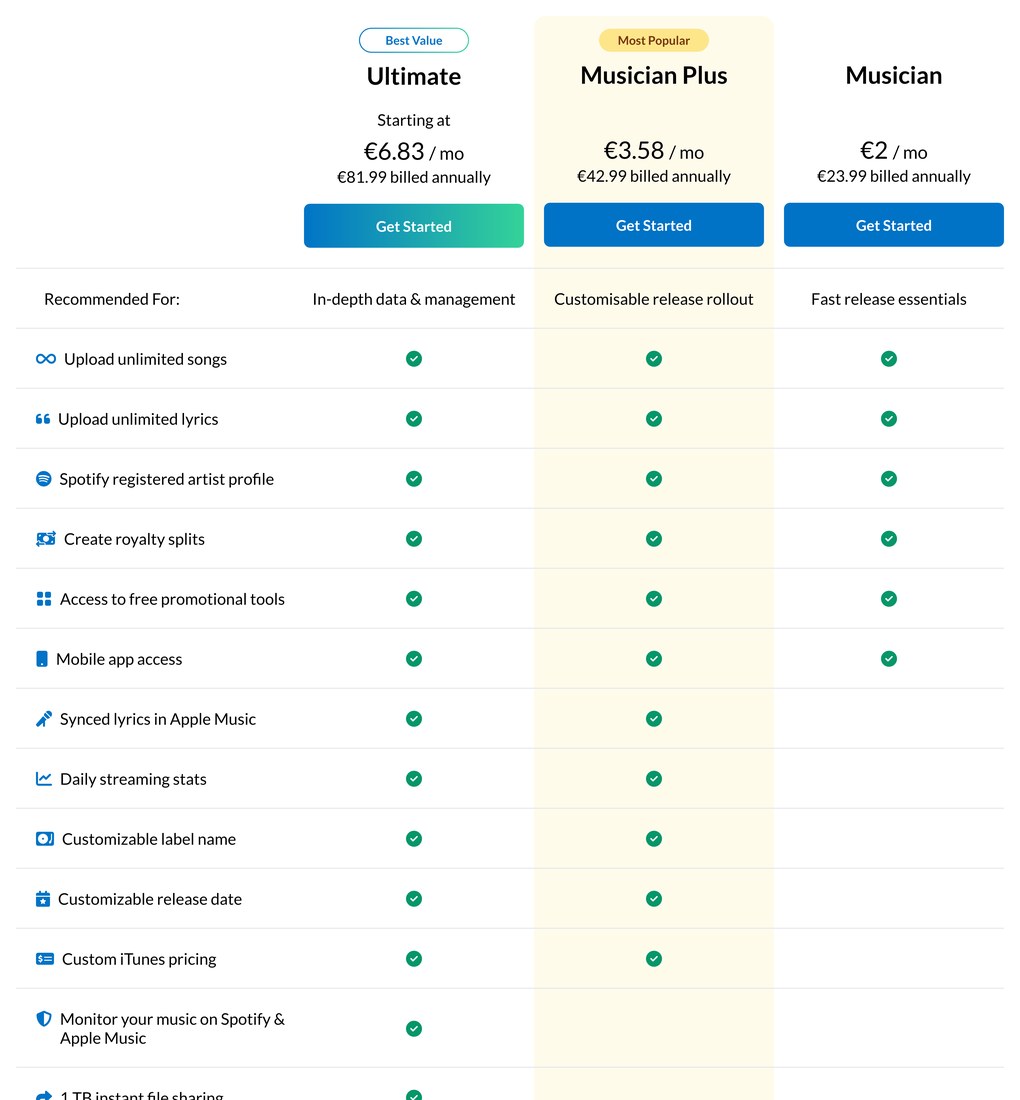
- Pricing: Musician $24.99 a year for 1 artist name. Musician Plus $44.99 for 2 names plus custom release dates. Ultimate $89.99 for up to 100 names. Unlimited uploads and 100% of streaming royalties on all 3. Europe pays €23.99, €42.99, and €81.99.
- Fraud protection: automated detection on submissions, no artist-facing report like StreamScan.
Why I picked it: the disclosure is the most granular in the category, and that helps the AI-assisted majority more than anything else on this page. DistroKid’s AI Credits ask whether any of the track was AI-generated. Say yes and you pick at least one of 3 boxes: the lyrics, meaning AI wrote the words, the music, meaning AI composed the melody, or all of the audio. Pick all of the audio and DistroKid asks one more thing: whether your artist name is a human or an AI persona. Those answers show up to listeners on Spotify and Apple Music, and you can edit them after release from the album page.
Read the exemption, because it’s the line most AI-assisted artists get wrong: you do not need AI credits if you used AI only as a tool. Pitch correction, auto-tune, AI-assisted mixing, and AI mastering are not AI credits. Only AI-generated audio, lyrics, or composition triggers one. That distinction is closer to how SIQA classifies AI music than anything the other 6 services publish.
The pipe is also proven. When Spotify launched its AI Credits beta on April 16, 2026, the disclosure metadata came through DistroKid first, travelling as structured data on the DDEX standard, which is the industry’s shared format for the information that rides along with a track. That is the mechanism the whole “disclosed AI isn’t down-ranked” promise runs on.
The ownership picture changed this year. CVC Capital Partners bought a majority stake in DistroKid, which makes the biggest pipe for AI uploads a private-equity asset. Nothing in the AI policy has changed since.
Standout features:
- Fastest go-live in the category, usually days
- Royalty splits with collaborators built in
- Spotify registered artist profile and synced lyrics on Apple Music (Plus and above)
What is missing: the add-ons. Your music comes down if you stop paying unless you buy Leave a Legacy at $29 per single or $49 per album. YouTube Content ID costs $4.95 per single per year and DistroKid keeps 20% of what it collects. Musician, the $24.99 plan, can’t schedule a release date. Add those up and a casual artist releasing 3 singles a year is closer to $100 than $25.
Best for: anyone releasing more than 2 tracks a month who wants the most tested route for Suno and Udio tracks and doesn’t mind paying for permanence separately.
Verdict: DistroKid is second because it’s what works for 3 in 4 AI artists, and it stays second because it never tells you where the AI ceiling is.
3. ONCE: best pay-per-release for AI-native creators
ONCE is a 5-person, bootstrapped distributor in Nashville, co-founded by Chris McMurtry and F. Reid Shippen, a Grammy-winning mix engineer. It’s the only service here built for AI music instead of tolerating it.
- AI policy: built for Suno, Udio, and its own OMG generator. Every upload gets an AI provenance scan, and the AI disclosure is attached to the delivery to every store automatically.
- AI cap: none.
- Pricing: $2 per AI release, $1 per human release, paid once at first distribution. Credits are $1 each at base, down to $0.78 in a 500-pack on the ONCE pricing page. No subscription, 0% royalty cut, tracks stay live forever.
- Fraud protection: provenance scanning at upload. No artificial-streaming report yet.
Why I picked it: the math for a low-volume creator. If you release 6 AI tracks a year, ONCE costs $12 once, against $24.99 every year at DistroKid plus $29 per track if you ever want to stop paying. The ONCE AI distribution page also does something no other distributor does with the AI surcharge: about $0.92 of every AI dollar goes into an Artist Compensation Fund that routes money to working musicians. ONCE says openly the fund is accumulating and hasn’t paid out yet, and publishes a quarterly transparency report. I covered the mechanism when ONCE linked generation and compensation earlier this year.
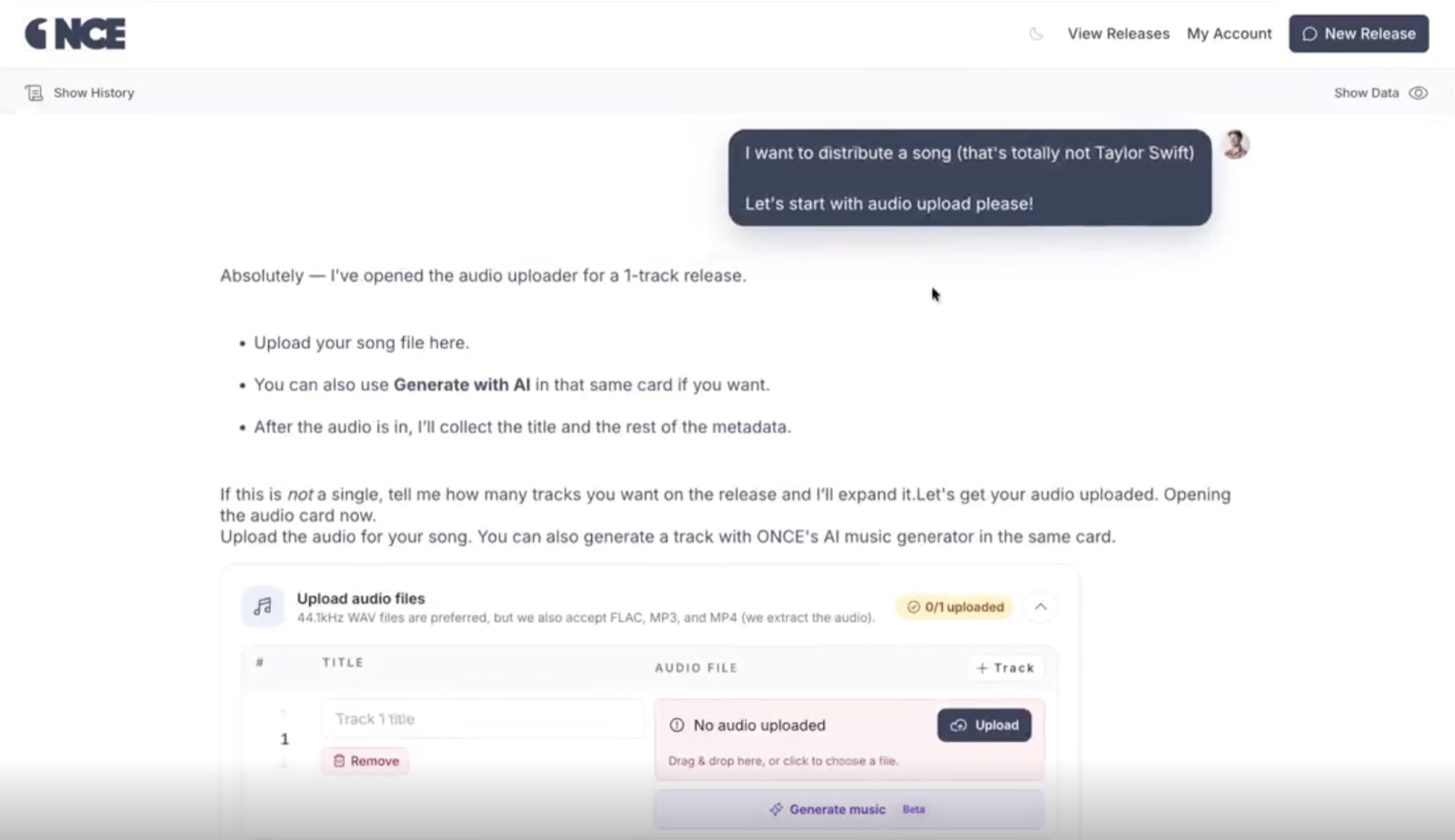
The workflow is a chat. You tell the agent you want to release a song, it opens the uploader, collects the metadata, assigns the ISRC and UPC (the identifier codes every store needs for a recording and a release), and registers you with a performing rights organization through Unison. Tracks usually go live on Spotify in 24 to 72 hours.
Standout features:
- REST API and an MCP server, so you can distribute from a script or from Claude
- Automatic AI disclosure to every store, no checkbox to forget
- Credits never expire, and a referral earns you 5 free credits
What is missing: YouTube Content ID isn’t bundled, there’s no physical distribution, and the store count is 20+ against 150+ at the subscription services. The bigger question is longevity. 5 people and no outside money is a real risk for a service holding your catalog, and their transparency is the asset that offsets it. Above roughly 25 releases a year the per-release price also overtakes a DistroKid subscription.
Best for: Suno and Udio creators releasing fully AI-generated tracks one at a time, and anyone who wants the AI disclosure handled for them.
Verdict: ONCE is third because it’s the cheapest honest route for a fully AI track, and I’d rank it higher the day it ships a StreamScan-style fraud report.
4. TuneCore: Believe’s AI principles with a tighter Suno review
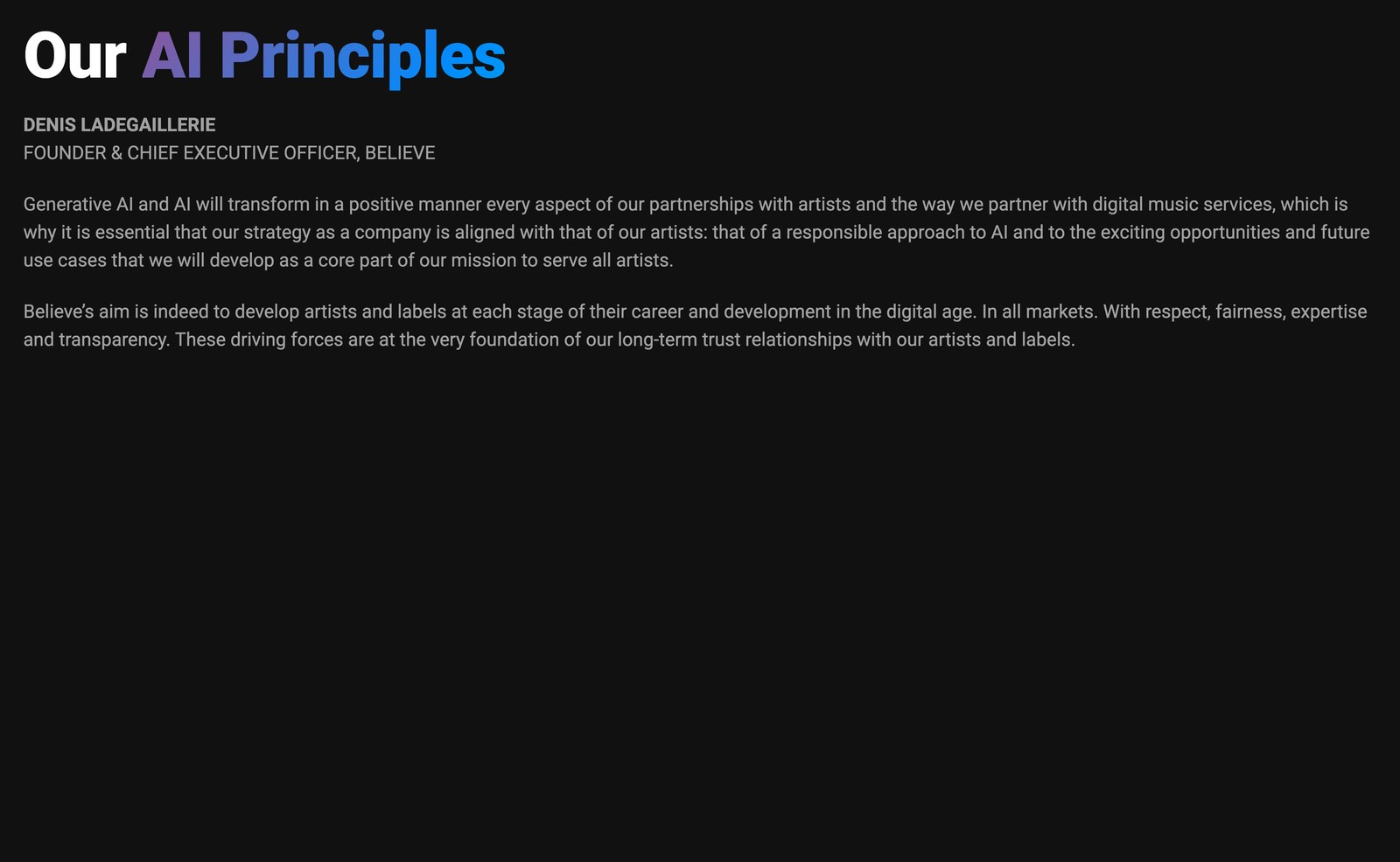
TuneCore is owned by Believe, the French digital music company, and it has been selling music to the stores since 2006. Its AI stance is a set of principles rather than a cap. In 2026 the review got stricter.
- AI policy: accepts AI music under Believe’s 4 principles: consent, control, value-sharing, and transparency. In 2026 TuneCore pulled unlicensed AI tracks and tightened review of Suno uploads, with rejections reported.
- AI cap: none published.
- Pricing: on TuneCore’s plan page, Rising Artist $24.99 a year, Breakout Artist $44.99, Professional $54.99, all unlimited releases to 150+ stores with 100% of streaming royalties. On Professional, each primary artist past the first costs $14.99 a year. Pay-per-release still exists: a single is $24.99, an album $44.99 the first year and $56.49 every year after. TuneCore keeps 20% of earnings from TikTok, YouTube, Instagram, and Facebook.
- Fraud protection: Believe’s own AI detection, no artist-facing dashboard.
Why it’s here: reach and the principles. Denis Ladegaillerie, Believe’s founder and CEO, put the 4 principles on the TuneCore AI page as the test for every AI deal the company touches. 4.7% of SIQA’s AI artists use it, second among distributors.
What is missing: a number. Believe’s transparency principle doesn’t tell you how many AI tracks you can upload before review slows down, and the 2026 Suno rejections landed on artists who had no way to see them coming. The free New Artist plan is gone, so $24.99 is the floor. That 20% social fee hits exactly the platforms where AI tracks tend to spread first. One more trap: if you buy discounted distribution credits on the pay-per-release model, then upgrade to an unlimited plan, TuneCore forfeits the credits you already paid for.
Best for: artists who want Believe’s store reach and publishing add-ons and release mostly human tracks with some AI in the process.
Verdict: TuneCore lands fourth because the principles are good and the practice in 2026 was unpredictable for Suno users.
5. UnitedMasters: permissive on AI, no fully AI tracks to Meta or TikTok
UnitedMasters, founded by former Interscope executive Steve Stoute, sells distribution plus a brand-deal marketplace. Its AI policy is short and permissive.
- AI policy: no AI ban. Fully AI tracks (AI vocals and AI instrumentals) are not delivered to Meta or TikTok. No voice clones or impersonation of other artists. Source: the UnitedMasters AI support article.
- AI cap: none published.
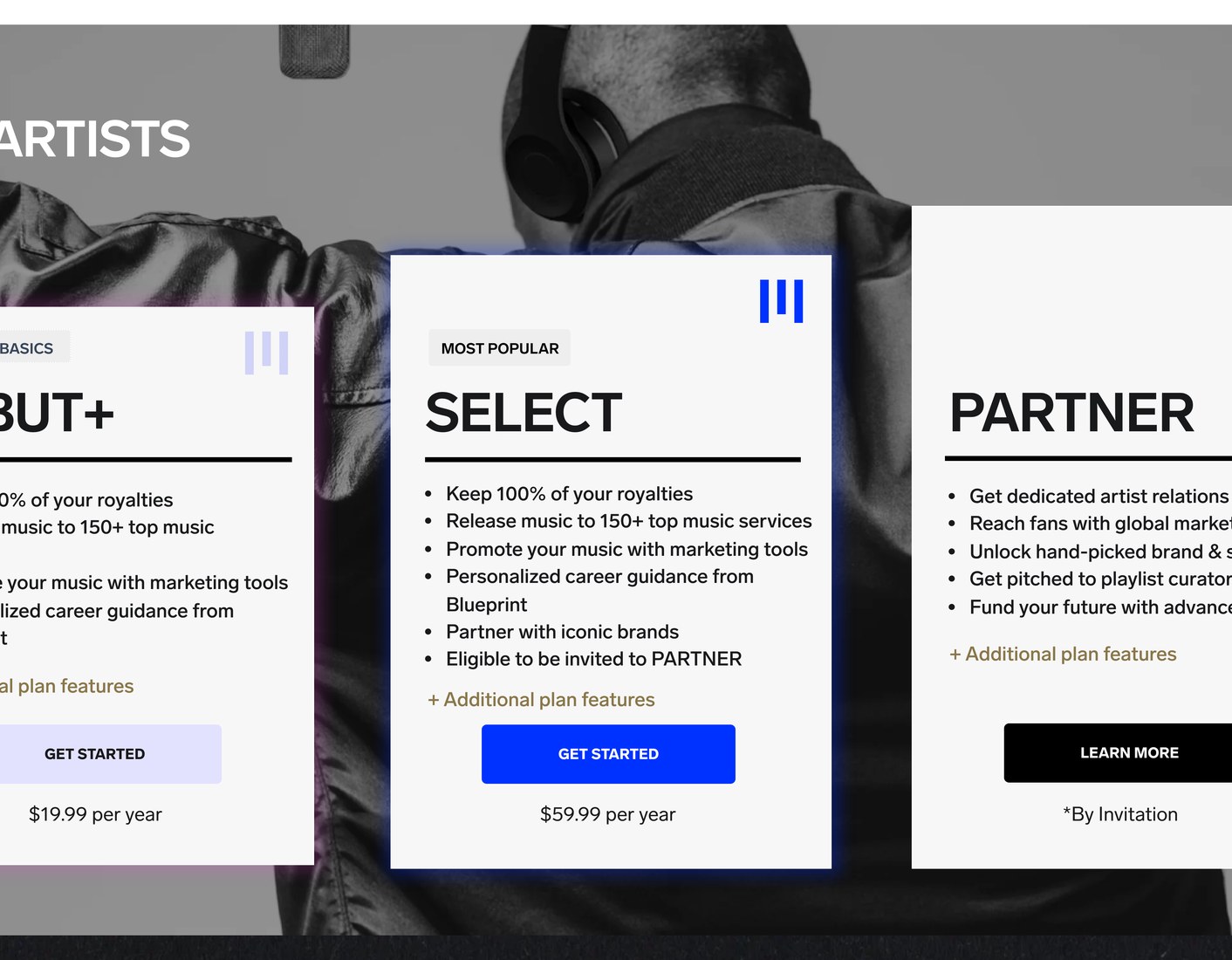
- Pricing: Debut+ is $19.99 a year with 100% royalties, unlimited releases to 150+ services, Blueprint career guidance, and a 5-business-day review. Select is $59.99 a year and adds brand and sync deal eligibility, 2 free masters, and a 2-day review. Partner is invite-only. A free Debut tier where UnitedMasters keeps 10% is documented in the support pages but no longer shown on the pricing page, so treat it as available on request rather than advertised.
- Fraud protection: none published beyond standard review.
Why it’s here: Debut+ at $19.99 is the cheapest keep-100% subscription in the category, and 3% of SIQA’s AI artists use the service. The brand pipeline (NBA, NFL, consumer brands) reaches a small, unpublished share of the roster. Select buys eligibility, not placements. UnitedMasters also masters inside the app now, through a partnership with RoEx, at $4.99 a track.
What is missing: the Meta and TikTok exclusion is the one to read twice. If your track is fully AI, it never reaches the two platforms where short-form discovery happens. Releases take about 5 business days, and the music comes down if a paid plan lapses.
Best for: hip-hop and R&B artists on a budget who use AI for parts of a track and want a shot at brand deals.
Verdict: UnitedMasters is fifth because the price is right and the AI rules are clear, but a fully AI track loses TikTok and Instagram the moment it’s uploaded.
6. SoundOn: TikTok-first distribution with ACRCloud scanning
SoundOn is TikTok’s own distributor, launched in 2021. It used to be the free option in this category. In 2026 it moved to 3 tiers, and the free one now costs you 10% of your streaming money.
- AI policy: accepts AI music. Every uploader passes photo-ID verification, and since April 2026 every upload is fingerprinted by ACRCloud’s Derivative Works Detection before it leaves the building.
- AI cap: none published, but the free tier has a release quota, and SoundOn says rapid-fire or duplicate uploads can trigger a temporary suspension on any tier.
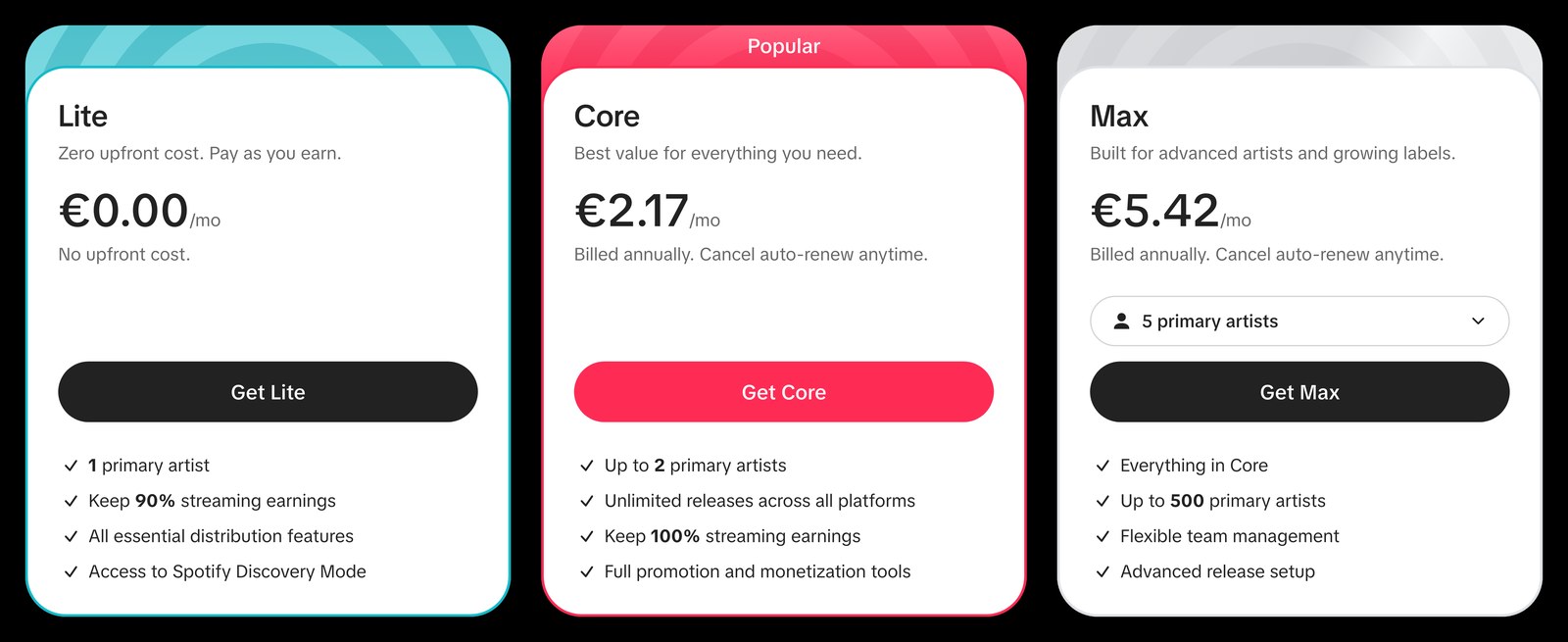
- Pricing: 3 tiers on SoundOn’s pricing page. Lite €0.00 a month, 1 artist, you keep 90% of streaming earnings, major stores only, no YouTube Content ID. Core €2.17 a month billed annually, 2 artists, unlimited releases to all stores, you keep 100%, Content ID included. Max from €5.42 a month billed annually, 5 to 500 artists.
- Fraud protection: ACRCloud pre-distribution scanning, which catches pitch-shifted and speed-shifted copies of existing songs and escalates them to human review.
Why it’s here: the scanning. I wrote up the ACRCloud fraud detection deal when it landed, and the point stands: it moves the gate from the platform to the distributor. A sped-up copy of someone else’s song gets stopped before Spotify ever sees it, which protects the honest AI artist from being lumped in with the fraud. Only 1.3% of SIQA’s AI artists use SoundOn, which I think will change.
What is missing: the free tier got worse, and most reviews you’ll read still describe the old deal. Per SoundOn’s own fees article, Lite keeps 10% of what you earn on Spotify, Apple Music, and Amazon Music, caps you at a release quota, and withholds YouTube Content ID. Core at €2.17 a month fixes all 3, which puts it within a euro of DistroKid. Downgrades aren’t available either, so pick the tier you want to stay on. The dashboard is TikTok-first, so Spotify analytics are thin.
Best for: artists whose release plan starts on TikTok, and specifically Core rather than Lite once anything starts earning.
Verdict: SoundOn is sixth on reach and reporting, and first on fraud gates, and the tier worth having is Core, not the free one.
7. Symphonic: AI mastering and AI licensing income in one account
Symphonic is the distributor in this list that treats AI as a business line rather than an upload problem. It masters your track with AI, distributes it with an AI disclosure, and will license your catalog to AI companies if you ask it to.
- AI policy: accepts uploads made with generative AI tools, Suno included, as long as the content follows Symphonic’s policy and the stores’ rules. At upload you say whether generative AI was used in the audio and in the artwork. No impersonating a real person’s likeness, no third-party infringement. Symphonic also holds licensing relationships with ElevenLabs and Udio.
- AI cap: none published.
- Pricing: Starter is $29.99 a year for one primary artist, unlimited releases, unlimited featured and remix artists, and 100% of streaming royalties. Symphonic keeps 30% of user-generated-content revenue from TikTok, YouTube Content ID, Facebook, Instagram, and Snapchat. Partner is a custom-percentage deal by application.
- Fraud protection: standard review, plus documented fraud detection that has caught some legitimate viral spikes.
Why I picked it: two things no other distributor here bundles. The first is AI mastering inside the platform, powered by Masterchannel, at $5 a track with a free full-length preview before you pay. You master, then drop the file straight into the release builder. The second is AI Dataset Licensing: an opt-in where Symphonic negotiates licences for your catalog to train approved AI models and you share the revenue. Nothing gets licensed unless you enrol, and you keep ownership.
Read the enrolment terms before ticking the box. Once you opt in, you stay in for the length of your distribution agreement, and leaving only stops future licences. It doesn’t pull your music back out of a model that already trained on it.
Standout features:
- Free royalty splits to collaborators with SplitShare, paid out monthly
- TransferTrack, which moves an existing catalog over without losing stats
- Spotify Discovery Mode, playlist, and TikTok analytics on the Starter plan
- Disclosure covers AI artwork as well as audio, which most distributors ignore
What is missing: Starter allows one primary artist, so a second project means Partner or a second account. The 30% cut on UGC revenue is higher than TuneCore’s 20% on the same platforms. And the AI stance lives in a support article rather than a printed cap, so, as with DistroKid, you find the ceiling when a release stalls. Symphonic doesn’t appear as a named distributor in SIQA’s data, so I can’t tell you how many AI artists use it.
Best for: AI-assisted artists who want mastering, distribution, and a possible AI licensing income from one login, and don’t need more than one artist name.
Verdict: Symphonic earns seventh place because it’s the only distributor here that both accepts your AI track and pays you when AI companies want your music.
How do you upload AI music to Spotify?
Spotify doesn’t take uploads from artists. Every track goes through a distributor, so “how to upload music to Spotify” always means “pick a distributor and follow its upload flow.” For an AI track, the flow has 4 steps.
- Check your generator’s commercial rights. Suno and Udio only grant commercial release rights on paid plans, and DistroKid checks that you held those rights at the time you generated the track. Export the WAV, not the MP3, and make a 3000 by 3000 pixel cover.
- Pick a distributor that accepts AI. From this list: LANDR, DistroKid, ONCE, TuneCore, UnitedMasters, SoundOn, or Symphonic. Not CD Baby, and not Soundrop.
- Disclose the AI use at upload. DistroKid asks which parts are AI. LANDR requires the disclosure. ONCE attaches it for you. That disclosure becomes the AI Credits Spotify shows in song credits, and Spotify says disclosed AI music isn’t down-ranked.
- Watch for artificial-streaming flags. Don’t buy streams, don’t run bots, and don’t bulk-upload 40 near-identical tracks. Spotify removed more than 75 million spammy tracks before its September 2025 policy update, and Deezer, which now takes about 90,000 AI tracks a day, found up to 85% of their streams fraudulent. If your distributor has a fraud report, check it monthly.
ChillPanic’s walkthrough shows the Suno-to-Spotify flow end to end:
How to choose the best music distribution service for AI music
The best music distribution service for independent artists using AI is the one whose policy matches how much of your track is AI. Run your workflow through these 7 checks before you pay anyone:
- AI policy fit. Fully AI-generated tracks fit ONCE, DistroKid, Symphonic, and SoundOn. AI-assisted tracks fit LANDR and UnitedMasters. Human tracks with AI mastering fit anything, including CD Baby.
- Disclosure handling. Does the distributor ask (DistroKid, LANDR), do it for you (ONCE), or say nothing (SoundOn)? Silence means you own the risk. And check what counts: DistroKid only wants AI credits for AI-generated audio, lyrics, or composition, not for AI mixing or mastering.
- Caps. LANDR prints 30 a month. No other distributor prints a number. If you release more than 30 AI tracks a month, you have a stream-farm problem, not a distributor problem.
- Cost model. Subscription (DistroKid, LANDR, TuneCore, UnitedMasters, Symphonic) wins above about 25 releases a year. Pay-per-release (ONCE, or LANDR’s €8 single tier) wins below it. Free (SoundOn) wins until the year-two 90% cut costs more than $20.
- Fraud protection. StreamScan at LANDR and ACRCloud scanning at SoundOn are the only 2 artist-facing systems in this list. Everyone else finds out when the platform does.
- Store exclusions. UnitedMasters won’t send fully AI tracks to Meta or TikTok. LANDR’s AI releases skip 6 platforms: YouTube Content ID, Meta, TikTok, Deezer, Lissen, and Pandora. ONCE covers 20+ stores against 150+ elsewhere.
- Rights verification. Every service asks whether you hold commercial rights to the AI output. Screenshot your generator’s plan page the day you generate the track.
- Mastering in the same account. 3 of the 7 now finish the track for you: LANDR with its own engine, Symphonic through Masterchannel at $5, UnitedMasters through RoEx at $4.99. Worth it if you’d otherwise pay for a separate mastering tool.
Recap: which AI music distributor to pick
- LANDR if you’re an AI-assisted artist who wants a printed cap, mandatory disclosure, and fraud alerts in one €22 plan.
- DistroKid if you release often and want the route 75.8% of AI artists already use.
- ONCE if your tracks are fully AI-generated and you release fewer than 25 a year.
- TuneCore if you want Believe’s reach and mostly release human tracks.
- UnitedMasters if you’re on a budget and can live without TikTok for fully AI tracks.
- SoundOn if TikTok is the plan, and take Core at €2.17 a month rather than the 10% cut on Lite.
- Symphonic if you want AI mastering, disclosure, and an opt-in AI licensing income in the same $29.99 account.
Free music distribution is enough to start
You don’t need to pay upfront to get an AI track onto Spotify. SoundOn’s Lite tier costs nothing and takes 10% instead. ONCE costs $2 once. I released my first tracks through a paid distributor years before any of these existed. The songs decided whether those releases worked, and the subscription had nothing to do with it.
Start on a 10% tier or start at $2, release 3 tracks, and see whether anyone outside your friends streams them. That tells you more than any pricing page. The percentage only starts costing you real money once something works, which is a good problem.
At some point you’ll want features that cost money: YouTube Content ID (LANDR Pro, DistroKid add-on, TuneCore), custom release dates for a pre-save campaign (DistroKid Plus, LANDR), and a fraud report you can act on (LANDR StreamScan). Those are worth paying for when there’s revenue to protect, and not before.
Frequently asked questions
Does Spotify allow AI music?
Yes. Spotify accepts AI-generated and AI-assisted music through any distributor that delivers to it, as long as the track is not impersonating a real artist and is not used for artificial streaming. Since April 2026 Spotify reads AI disclosure metadata from distributors and shows it as AI Credits in song credits, and it says disclosed AI music is not down-ranked. Spotify removed more than 75 million spammy tracks in 2025, so bulk uploads and stream manipulation are what get tracks removed.
Does DistroKid allow AI music?
Yes. DistroKid accepts AI music and asks you to disclose it at upload, with checkboxes for which parts are AI: lyrics, vocals, instrumental, or all of it. DistroKid was the first distributor partner for Spotify's AI Credits beta in April 2026. Fully AI-generated tracks get extra scrutiny for stream manipulation and copyright, and you need commercial rights from your generator's paid tier at the time you made the track.
Can you upload AI music to DistroKid?
You can, on any DistroKid plan from $24.99 a year. Upload the WAV or MP3, fill in the AI disclosure step honestly, and confirm you hold the commercial rights. In SIQA's Q1 2026 data, 75.8% of AI artists with distributor data used DistroKid, so it is the most tested path for Suno and Udio tracks. Leave the disclosure blank and you risk a takedown later when the platform's detection catches the track.
Is there a free AI music distributor?
Yes, and the free option takes a cut instead of a fee. SoundOn's Lite tier costs nothing upfront and SoundOn keeps 10% of your streaming earnings, with a release quota and no YouTube Content ID. UnitedMasters has run a free Debut tier on the same 10% terms, though its pricing page now leads with Debut+ at $19.99 a year. ONCE is not free but comes close at $2 per AI release paid once, with no subscription and a 0% royalty cut, which beats a 10% tier as soon as your catalog earns real money.
Which distributor is best for AI music?
It depends on how much of the track is AI. For AI-assisted artists who write, sing, or produce part of the song, LANDR is my pick because of its clear 30-per-month cap, mandatory disclosure, and StreamScan fraud alerts included on every plan. For fully AI-generated Suno or Udio tracks released one at a time, ONCE is the best value at $2 per release. For volume releasers who want the most tested pipe, DistroKid is what 75.8% of SIQA's AI artists use.
Does CD Baby accept AI music?
No, not AI-generated music. CD Baby's Downtown Music Content Policy rejects any release where the composition, melody, vocals, or structure were AI-generated, because those parts cannot be copyrighted under the human-authorship rule confirmed in Thaler v. Perlmutter. Human songs that used AI production tools like mastering, mixing, or stem separation are fine. Uploading an AI track without disclosing it risks removal of your whole catalog and your account.
How much does it cost to distribute music?
Between nothing and $89.99 a year in 2026, depending on whether you pay a fee or give up a percentage. SoundOn Lite costs nothing and keeps 10% of your royalties. UnitedMasters Debut+ is $19.99 a year, LANDR Basic 22 euros, DistroKid and TuneCore $24.99 for unlimited releases. ONCE charges $1 per human release or $2 per AI release, paid once. CD Baby charges $9.99 per single, then keeps 9% forever. Add-ons like YouTube Content ID, extra artist names, and DistroKid's Leave a Legacy fee push the real yearly cost higher.
Can you put AI generated music on Spotify?
Yes, through a distributor that accepts AI music, which today means DistroKid, LANDR, ONCE, TuneCore, UnitedMasters, SoundOn, or Symphonic, but not CD Baby. Spotify itself does not upload from artists directly. Check that your generator plan grants commercial rights, disclose the AI use in the distributor's upload form, and avoid bulk uploads of near-identical tracks, which Spotify's spam filter removes.
How many AI songs are on Spotify?
Spotify has not published a count. The best proxy comes from Deezer, which reported in July 2026 that fully AI-generated tracks passed 50% of its daily uploads at peak, about 90,000 tracks a day, up from 39% in January. Deezer keeps them, tags them, and holds them out of recommendations and editorial playlists, so they draw only 1 to 3% of its streams. Spotify said it removed more than 75 million spammy tracks in the 12 months before its September 2025 policy update, many of them AI-generated. A distributor's AI cap, like LANDR's 30 per month, exists because of these volumes.
What happens if you don't disclose AI music?
Your track can be removed and your account flagged. DistroKid, LANDR, ONCE, and UnitedMasters all require AI disclosure at upload, and platforms like Deezer and Spotify run their own detection, so an undisclosed AI track is usually caught anyway. CD Baby says undisclosed AI risks removal of your entire catalog. Disclosed AI music is not down-ranked on Spotify, so hiding it buys you nothing and risks everything.
About the author

Covering AI music tools, industry shifts, and news for music creators and professionals. Twice-weekly newsletter at aimusicpreneur.com.