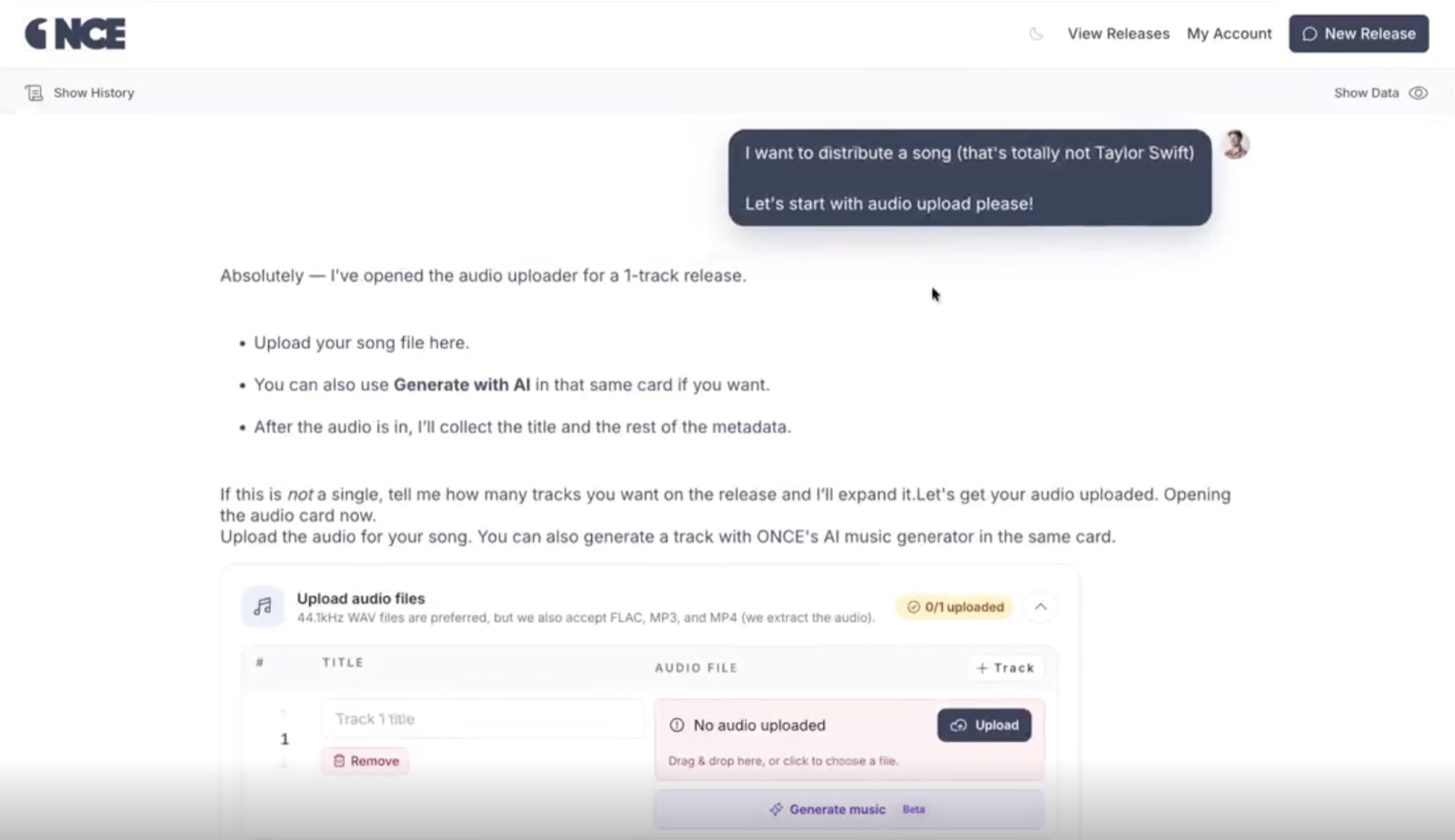
ONCE becomes first distributor to link AI music generation and artist compensation in 2026
My stack My fav 6 tools for AI music after testing 70+
-
 ElevenMusic · Music generation
 -
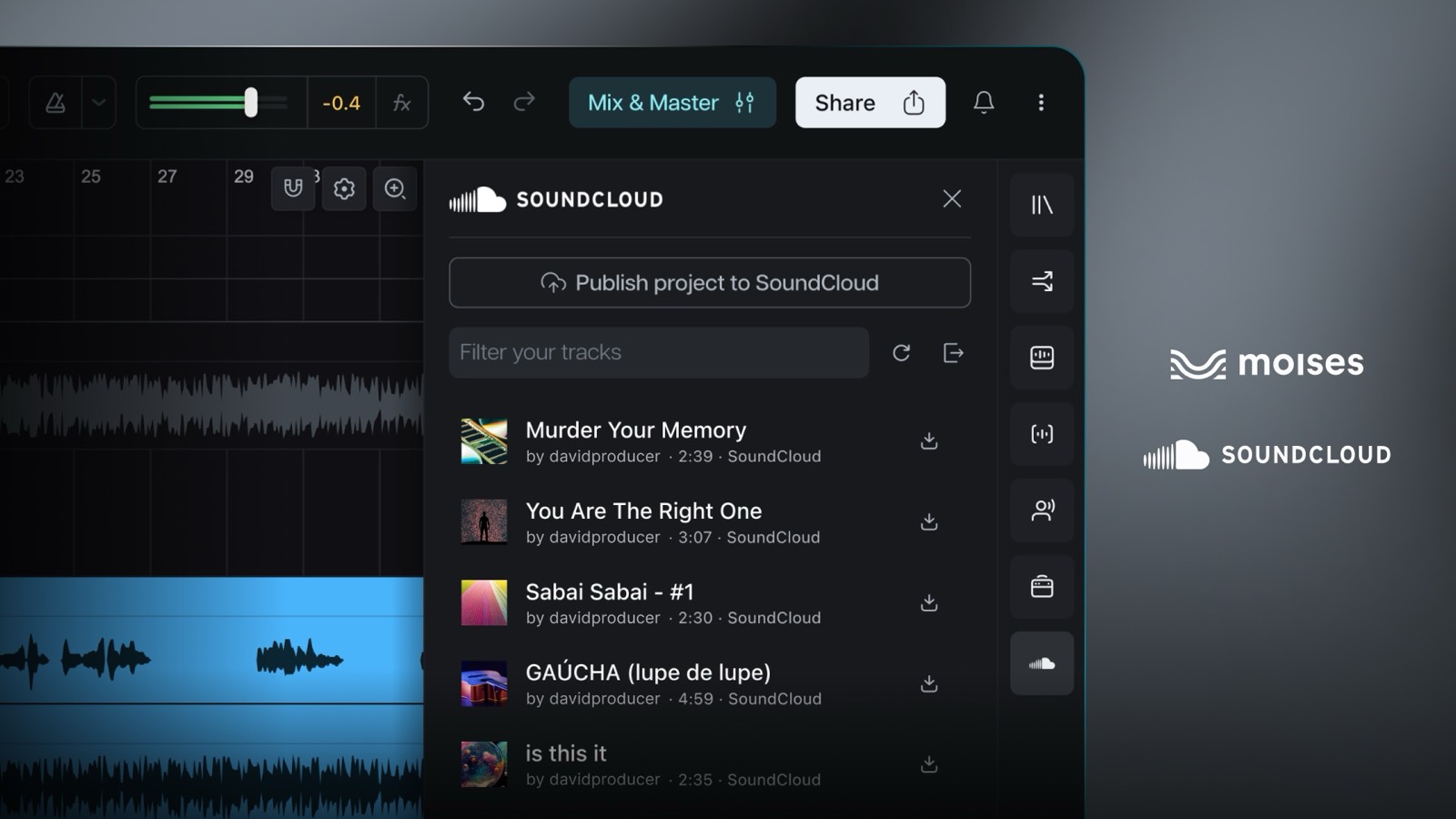
 Moises · Stem separation
 -
 Controlla · Voice swap & cloning
 -
 Cryo Mix · Mixing + mastering
 -
 Neural Frames · Music videos
 -
 ONCE · Distribution
Some links are affiliate links — I earn a commission at no cost to you. Every tool here is one I run myself and truly believe in. This stack is proven.
Key highlights
- ONCE Music Generation (OMG) is the first platform to combine AI song generation and DSP distribution under one roof, with a mandatory artist compensation mechanism built into the pricing.
- Every distributed AI track costs $2.00. Of that, ~$0.92 goes into a dedicated Artist Compensation Fund — compared to Suno’s ~$0.02 per track with zero artist payments.
- ONCE scans every upload with Vobile’s AI Song Detector and will publish quarterly reports naming which AI platforms compensate artists.
AI music is flooding streaming platforms with no compensation trail
On April 20, 2026, Deezer reported that 44% of all new music uploaded to its platform is AI-generated — roughly 75,000 tracks per day, up from 10,000 in January 2025. TechCrunch confirmed that 85% of those AI streams are flagged as fraudulent and demonetized.
Someone is uploading a lot of AI music. Almost none of the money flows to the musicians whose recordings trained the models.
ONCE, co-founded by Grammy-winning mix engineer F. Reid Shippen, launched ONCE Music Generation (OMG) on April 21, 2026 — positioning itself as the distribution platform with a formal answer to that problem.
How ONCE built compensation into the pricing
Generation inside ONCE is free. When you distribute a track to Spotify, Apple Music, or 25+ other stores, each generation iteration adds one distribution credit. A single distributed track costs $2.00: $0.08 covers generation, $0.10 covers distribution, ~$0.92 goes to the Artist Compensation Fund, ~$0.90 is retained by ONCE.
Shippen was direct about the attribution problem: the current state of AI training data is “a big ass soup of stuff that’s untrackable.” So the fund flows to music non-profits for now, with quarterly public reports. ONCE’s stated timeline for direct per-track payments to identifiable artists is 12-24 months.
ONCE also deployed the Vobile AI Song Detector across every upload — identifying whether a track is AI-generated and which platform produced it.
The quarterly reports are a competitive pressure move

Those reports will name Suno, ElevenLabs, Udio, and Lyria by compensation status, broken down by generation source. That’s reputational leverage disguised as transparency.
Suno routes nothing to artists. ElevenLabs Music Marketplace pays sellers of generated tracks, but those creators own nothing legally since AI music carries no copyright. Among the ethical AI tools that do pay artists and models like SpaceHeater, ONCE is the first to put the compensation mechanism inside the distribution pipeline itself.
ONCE also extended an open API offer to generation platforms: use ONCE’s distribution infrastructure so the artists whose work trained your model actually get paid. That’s a partnership pitch wrapped in a manifesto.
What this means if you distribute AI music
DSP policies on AI music are already fragmenting — Deezer tags and demonetizes, Spotify requires DDEX metadata, Bandcamp bans AI music outright. ONCE estimates mandatory AI disclosure as a distribution condition is 1-2 years out.
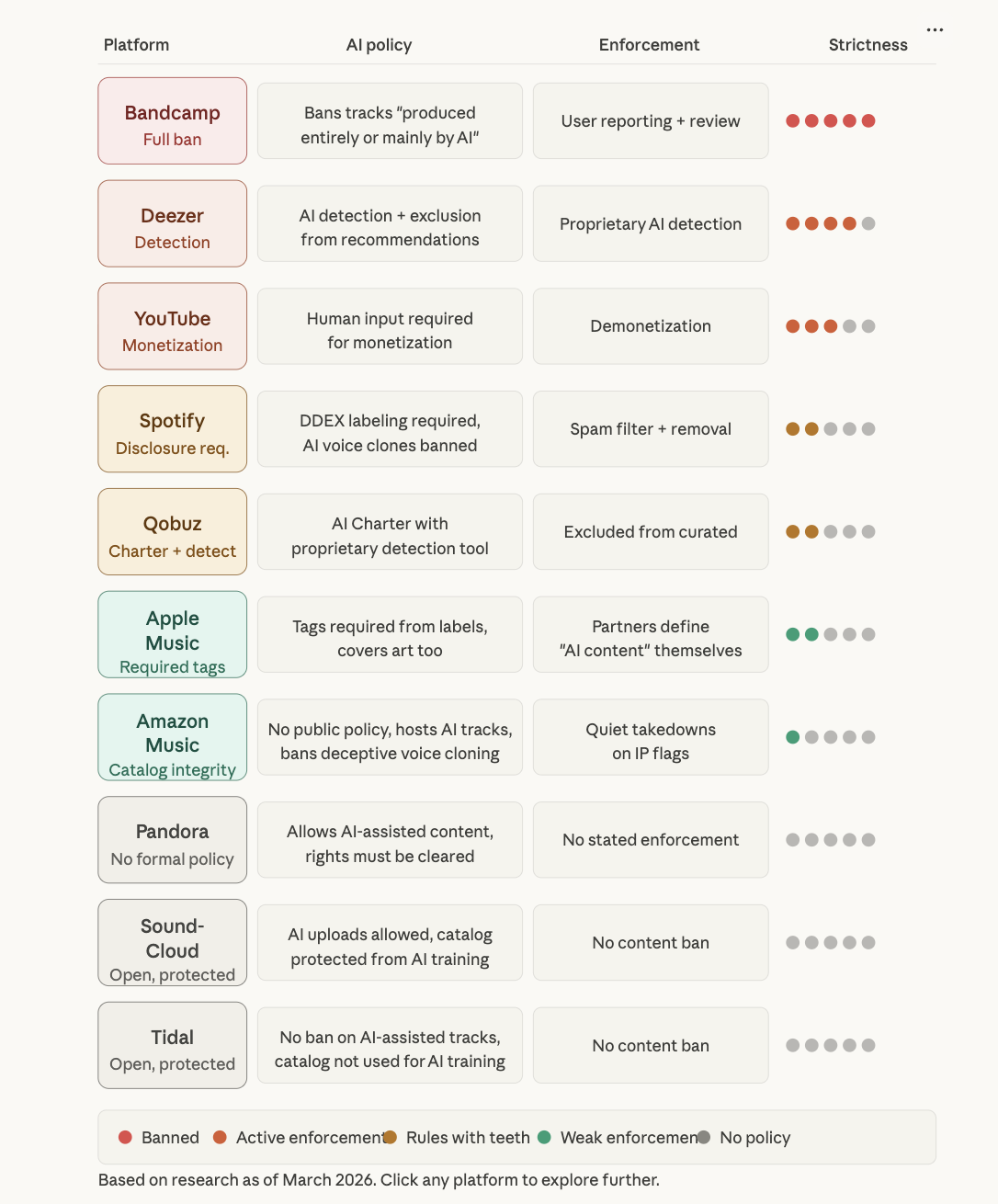
ONCE is pre-compliant: generation source tracked, disclosure metadata delivered to every DSP, Vobile detection on every file, full audit trail. If you’re distributing AI-generated music today, this is the only path with a documented chain of custody from prompt to stream.
Frequently asked questions
What is ONCE Music Generation and how does it work?
ONCE Music Generation (OMG) lets you generate songs inside ONCE for free, then distribute to Spotify, Apple Music, and 25+ stores. Each generation iteration you choose to distribute costs one credit at $2.00 total, with ~$0.92 going into the Artist Compensation Fund.
Does ONCE pay individual artists directly?
Not yet. Attribution of AI training data is technically impossible today. The fund flows to music non-profits with quarterly public reporting. ONCE’s stated timeline for direct per-track artist payments is 12-24 months, contingent on attribution technology.
How does ONCE compare to DistroKid or TuneCore for AI music?
DistroKid and TuneCore distribute AI music but don’t generate it, don’t track provenance automatically, and route nothing back to artists. ONCE generates, distributes, tracks provenance, and funds artist compensation from every distribution fee.
About the author

Covering AI music tools, industry shifts, and news for music creators and professionals. Twice-weekly newsletter at aimusicpreneur.com.