TikTok tests AI likeness detection with US creators, ID scan required
My stack My fav 6 tools for AI music after testing 70+
-
 ElevenMusic · Music generation
 -
 Moises · Stem separation
 -
 Controlla · Voice swap & cloning
 -
 Cryo Mix · Mixing + mastering
 -
 Neural Frames · Music videos
 -
 ONCE · Distribution
Some links are affiliate links — I earn a commission at no cost to you. Every tool here is one I run myself and truly believe in. This stack is proven.
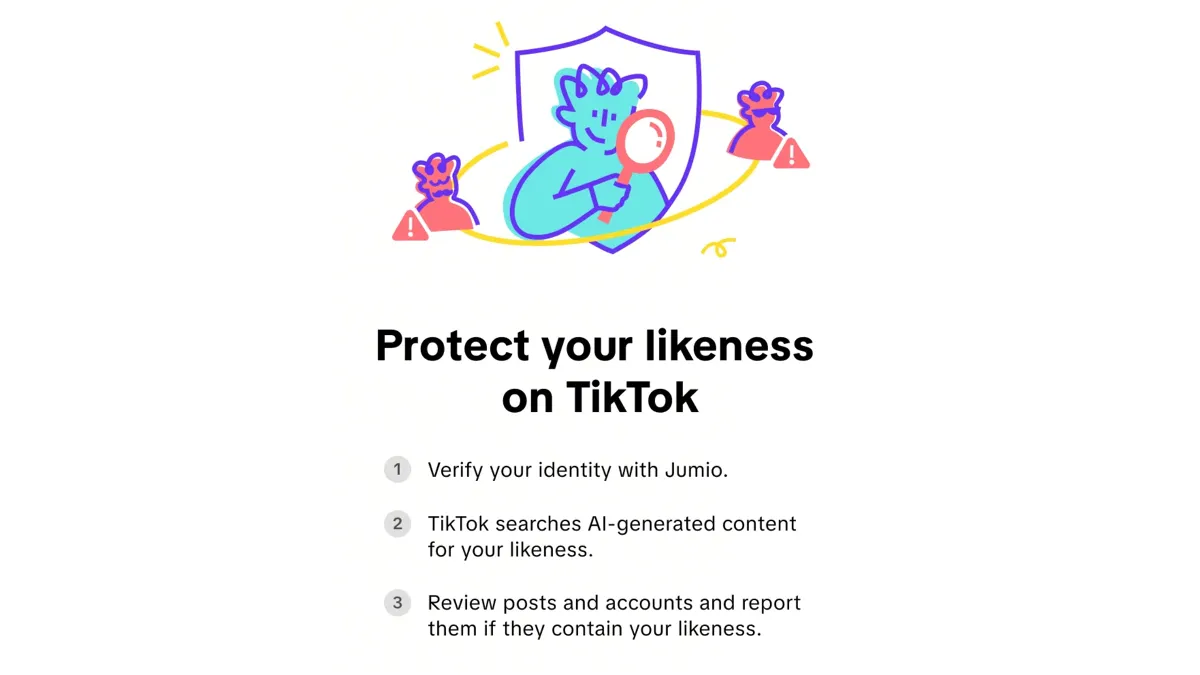
TikTok has started testing an opt-in tool that hunts for AI-generated versions of its creators. The likeness detection feature, spotted by social media consultant Matt Navarra in July 2026 and confirmed by TikTok to The Verge, is live for a small group of US creators.
How TikTok’s likeness detection test works
The flow has three steps:
- Verify your identity through Jumio, with a real-time selfie and a government ID check.
- TikTok scans the platform for AI-generated content matching your face.
- You review the flagged posts and report the ones using your likeness to TikTok.
TikTok US spokesperson Zachary Kizer says the company does not keep the ID documents from verification.
Facial information is used only for likeness matching and to help identify potential unauthorized uses of a creator's likeness.
TikTok follows YouTube’s likeness playbook
YouTube built the template. It started developing likeness detection in 2024 and expanded the tool to all users 18 and over in May. TikTok adopting the same scan-review-report model means both major short-form platforms now treat face-cloning as a problem creators manage in-app.
For music, the likeness fight has run through label channels so far. UMG’s renewed TikTok deal covers AI takedowns for its artists, and voice cloning tools made an artist’s face and voice reproducible by anyone with a browser. A direct detection tool is the first likeness protection on TikTok an unsigned artist can operate without a label behind them.
Frequently asked questions
What is TikTok's AI likeness detection tool?
An opt-in feature TikTok started testing with some US creators in July 2026. Once a creator verifies their identity, TikTok scans the platform for AI-generated content using their face and surfaces the results. The creator reviews the flagged posts and can report accounts directly to TikTok.
How do creators verify their identity for TikTok's likeness detection?
Through Jumio, a third-party identity verification company. The process requires a real-time selfie and a government ID check. TikTok says it does not retain the ID documents and uses facial information only for likeness matching.
How is TikTok's likeness detection different from YouTube's likeness detection tool?
YouTube started building likeness detection in 2024 and expanded it to all users 18 and over in May 2026. TikTok's version is newer and narrower, an opt-in test limited to a small pool of US creators as of July 2026, with the same basic flow of scan, review, and report.
About the author

Covering AI music tools, industry shifts, and news for music creators and professionals. Twice-weekly newsletter at aimusicpreneur.com.