Believe, TuneCore, and Spotify crack down on unlicensed AI music in 2026
Key highlights
- Believe and TuneCore are automatically blocking distribution of tracks built on unlicensed AI platforms, using detection technology they say is 99% reliable at identifying the source model.
- Spotify launched its Verified by Spotify badge on April 30, 2026, explicitly excluding profiles that primarily represent AI-generated or AI-persona artists.
- The moves together create a two-tier system: licensed AI tools like ElevenLabs and Udio get distribution and visibility, while unlicensed ones like Suno get structurally cut off.
Distributors and DSPs move on the same day
On April 30, 2026, two announcements landed within hours of each other, and together they signal something the music industry has been building toward for over a year: infrastructure-level enforcement against unlicensed AI music.
Believe, the Paris-based distributor and parent company of TuneCore, told Music Business Worldwide it has deployed Gen-AI detection technology it says is “99% reliable” at identifying the specific AI model that produced any given track. When that model belongs to an unlicensed platform, Believe and TuneCore block distribution automatically.
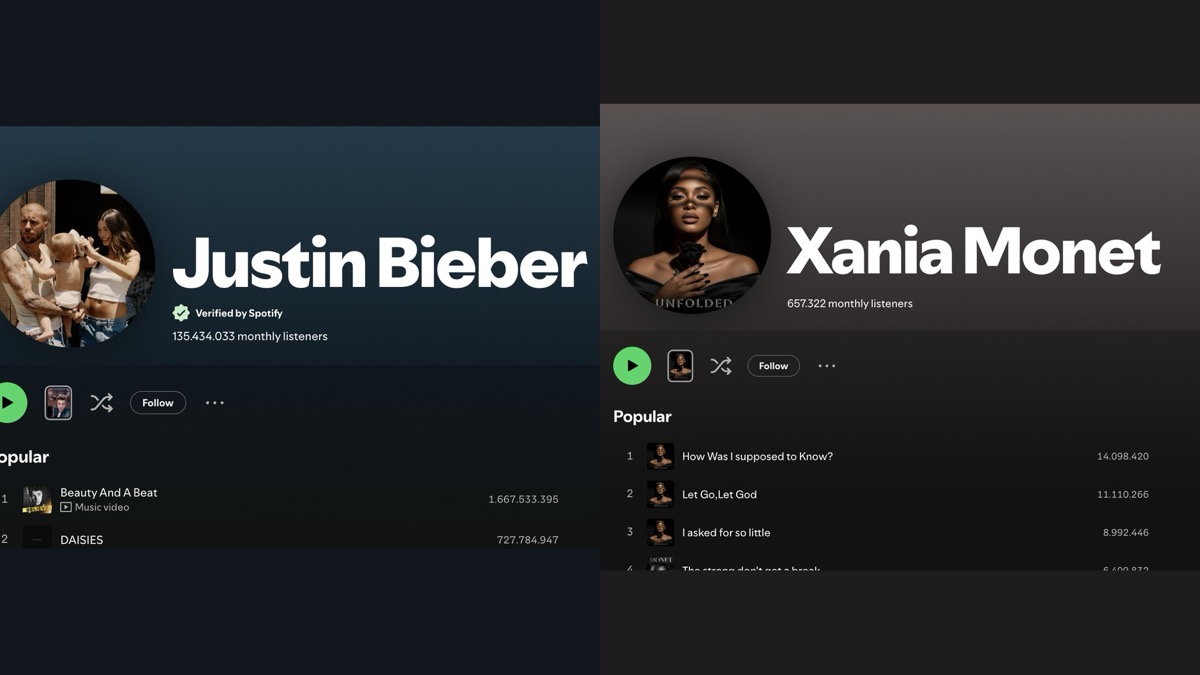
That same day, Spotify launched its Verified by Spotify badge — a light green checkmark that appears on artist profiles and next to names in search. At launch, profiles that primarily represent AI-generated or AI-persona artists are explicitly not eligible.
Believe names Suno a pirate studio
The takeaway: Believe is not just blocking tracks. It’s classifying platforms as legitimate or illegitimate at the source.
Believe CEO Denis Ladegaillerie gave MBW a direct quote that removes any ambiguity: “The reality now is it’s unlikely [Suno will get licensed], at least for the models they’ve already trained on. Which means the Gen-AI content made on those models is illegal, and is going to stay illegal, for the foreseeable future.”
Suno sits at the top of Believe’s “pirate studios” list. It remains under active copyright litigation from Universal Music Group and Sony Music Entertainment with no licensing deal in sight. Suno powered 90% of commercially released AI tracks in Q1 2026 according to SIQA’s AI Music Intelligence Report, and DistroKid was named the single most-used distributor for AI-created releases in the same report.
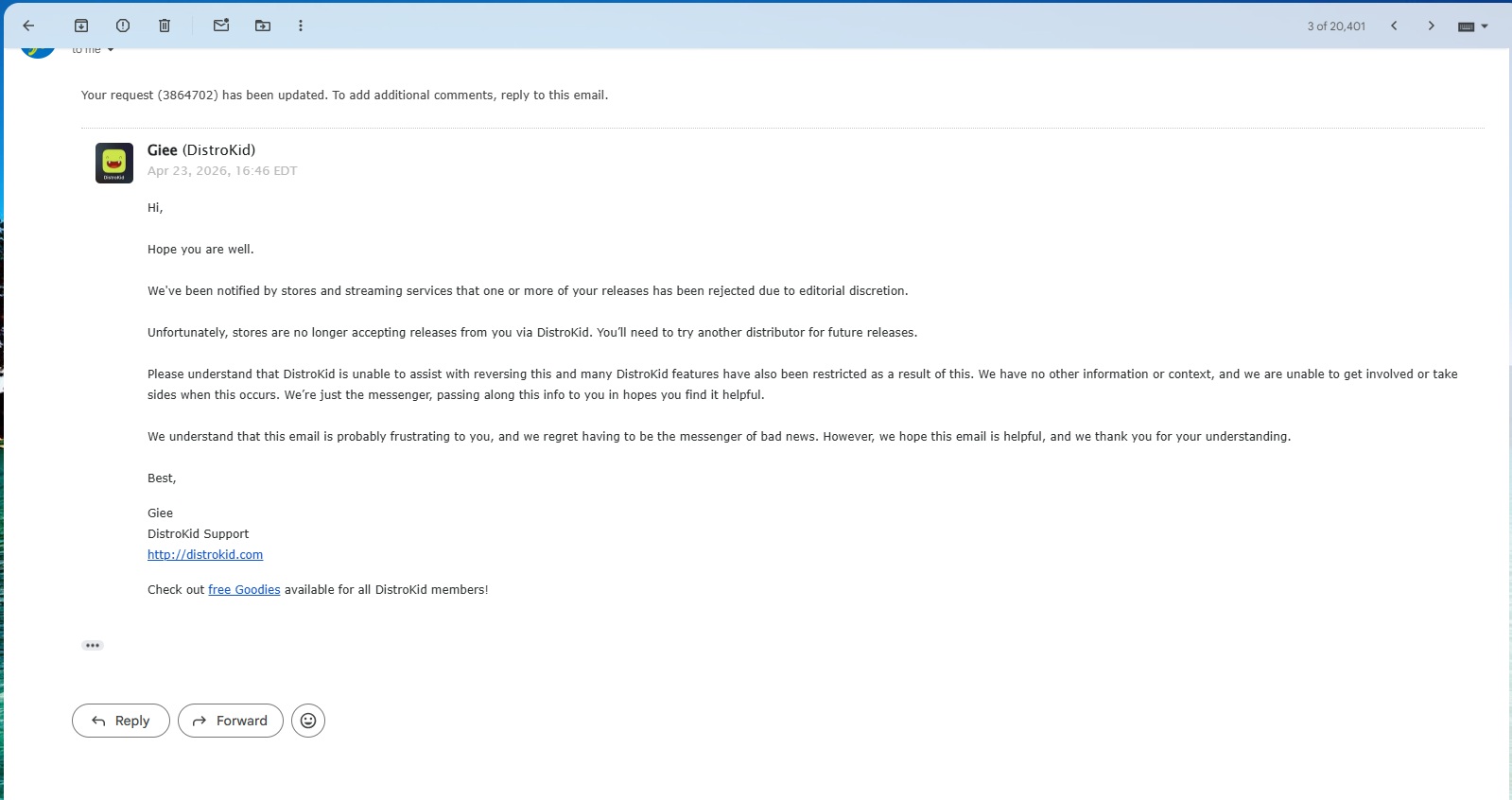
In the Suno AI Facebook group with 135,000 members, creators are already reporting mass DistroKid rejections too — accounts flagged for fraudulent activity, artificial streaming, and copyright violations. One user described uploading deep house instrumentals, waiting 3 weeks, then receiving a rejection with no actionable explanation. These aren’t isolated incidents. They’re consistent with what happens when AI streaming rules tighten at the platform level.
Ladegaillerie also challenged DSPs directly: “We do not understand why streaming services aren’t blocking tracks that create significant potential copyright liability, pollute the user experience, and are essentially used to enable streaming fraud.”
Licensed AI tools get a pass, unlicensed ones don’t
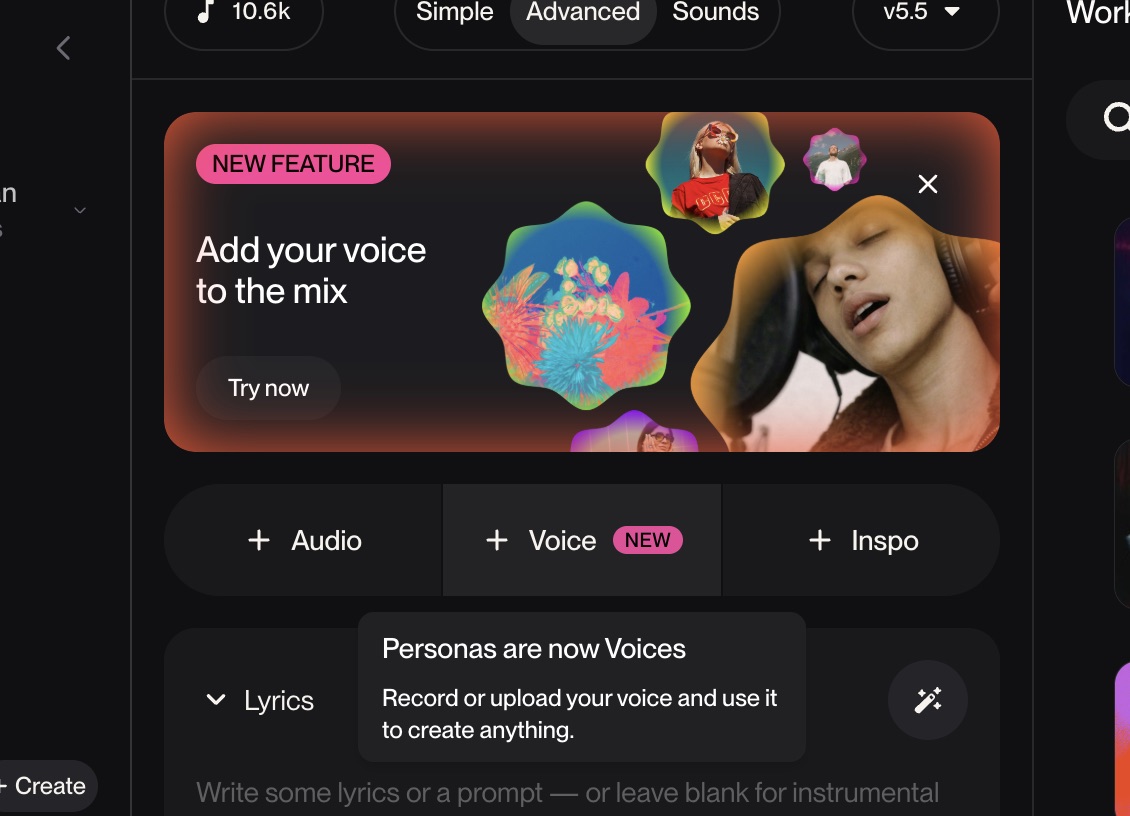
While Believe blocks Suno, it simultaneously inked new licensing deals with ElevenLabs and Udio. Both now hold agreements with major labels — Udio with Universal, Warner, Merlin, and Kobalt; ElevenLabs with Kobalt and Merlin. The message is not that AI music is unwelcome. The message is that unlicensed AI music is.
This two-tier structure mirrors what happened with streaming AI artists on Spotify during 2025, when platforms struggled to distinguish genuine acts from profile farms. Spotify has already removed 75 million “spammy tracks” over the past year. Deezer reports AI now accounts for 44% of its catalog.
The Suno GEMA lawsuit in Germany established a European precedent. The UMG and Sony litigation has been grinding through U.S. courts. Now the contractual and technical walls are going up at the distributor level before courts even rule.
What this means for creators using Suno
The Spotify verification badge is opt-in signaling for human artists. It’s a career-building tool: a green checkmark next to your name in search, linked to concert dates, social accounts, and genuine listener activity. AI-persona profiles don’t qualify.
For creators who built release workflows on Suno specifically, the distribution path is narrowing — not from a single rule change, but from coordinated pressure across distributors, DSPs, and now visual signals in search. The TechCrunch analysis of the badge launch confirmed Spotify expects more than 99% of artists listeners actively search for will be verified — meaning those who aren’t will increasingly stand out.
If you’re using AI tools in your workflow, the question is no longer whether the platform allows it. The question is whether the tool you’re using has a licensing deal.
Frequently asked questions
Why are Believe and TuneCore blocking Suno tracks in 2026?
Believe and TuneCore are blocking tracks generated on platforms they classify as “”pirate studios”” — AI services that trained on copyrighted music without licensing agreements. Suno remains under active litigation from Universal Music Group and Sony Music Entertainment and has not secured a licensing deal with Believe, making its outputs ineligible for distribution through TuneCore.
What is the Verified by Spotify badge and who can get it?
Verified by Spotify is a green checkmark badge launched April 30, 2026. It appears on artist profiles and in search results to signal authenticity. Artists need a real presence on and off Spotify — including concert dates, social accounts, and consistent listener activity. Profiles that primarily represent AI-generated or AI-persona artists are not eligible at launch.
Can you still distribute AI music through TuneCore in 2026?
TuneCore supports AI-assisted music only when the underlying AI model uses a fully licensed dataset. Tracks generated entirely on unlicensed platforms like Suno will be automatically blocked. Tracks created using licensed tools like ElevenLabs or Udio are not subject to the same restriction.
What AI music tools are still allowed for distribution in 2026?
ElevenLabs and Udio both hold licensing agreements with major rights holders including Universal, Warner, Merlin, and Kobalt. Believe and TuneCore treat these as legitimate tools. Suno, which holds no such agreements, is classified as an unlicensed platform and its output is blocked from distribution.”
About the author

Covering AI music tools, industry shifts, and news for music creators and professionals. Twice-weekly newsletter at aimusicpreneur.com.