Kenjiro Tsuda's AI voice case: Tokyo court rules a voice is a publicity right, but rejects his TikTok takedown
My stack My fav 6 tools for AI music after testing 70+
-
 ElevenMusic · Music generation
 -
 Moises · Stem separation
 -
 Controlla · Voice swap & cloning
 -
 Cryo Mix · Mixing + mastering
 -
 Neural Frames · Music videos
 -
 ONCE · Distribution
Some links are affiliate links — I earn a commission at no cost to you. Every tool here is one I run myself and truly believe in. This stack is proven.
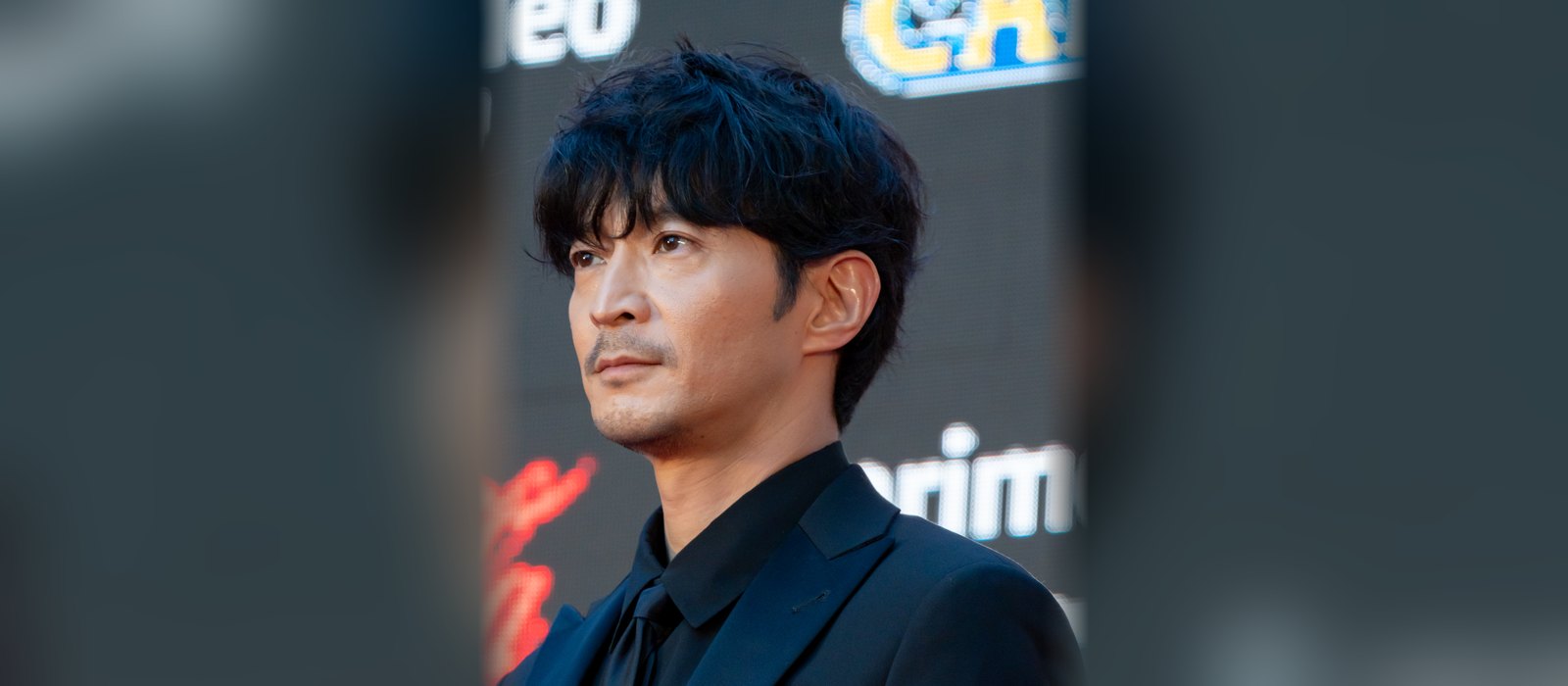
A Tokyo court has ruled, for the first time in Japan, that a voice is protected the same way a face is.
On Wednesday, September 30, 2026, the Tokyo District Court said a person’s voice falls under the publicity right, the right of a well-known person to control the commercial pull of their name and likeness. The case was brought by voice actor Kenjiro Tsuda, the Japanese voice of Kento Nanami in “Jujutsu Kaisen” and of Kylo Ren in “Star Wars”.
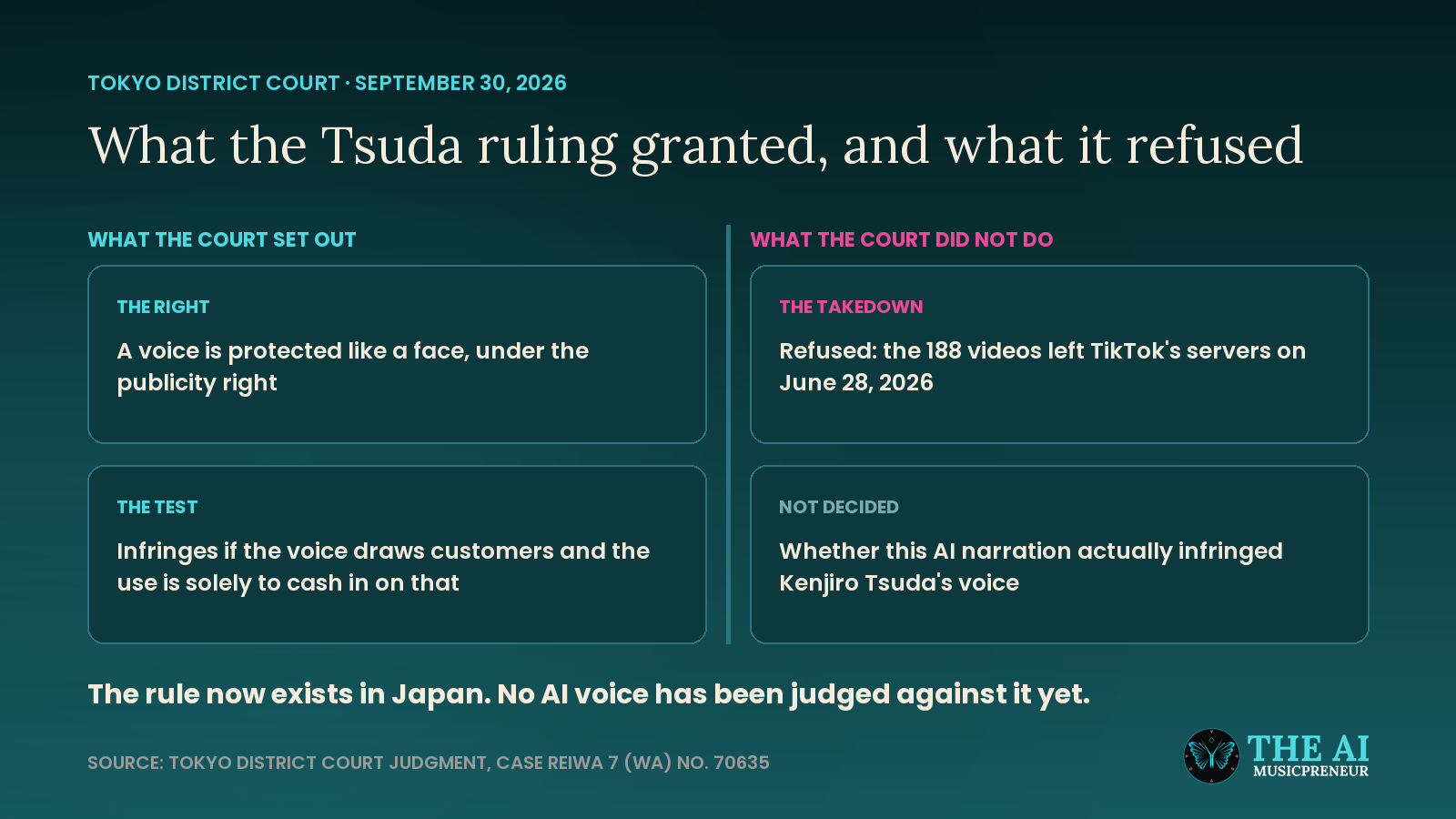
But Tsuda still lost. The court dismissed his demand that TikTok take down 188 videos narrated by an AI voice that sounded like his, because by then the videos were already gone.
The anonymous account posted urban legends, occult stories and trivia, and had more than 210,000 followers by November 2025. According to the lawsuit, its owner earned 500,000 to 750,000 yen ($3,200 to $4,800) a month from it, as Kyodo reported via Nikkei Asia.
I read the 9-page judgment, which the court has published in Japanese. Here is what it decides, and what it leaves open.
What the Tokyo District Court ruled about Kenjiro Tsuda’s voice
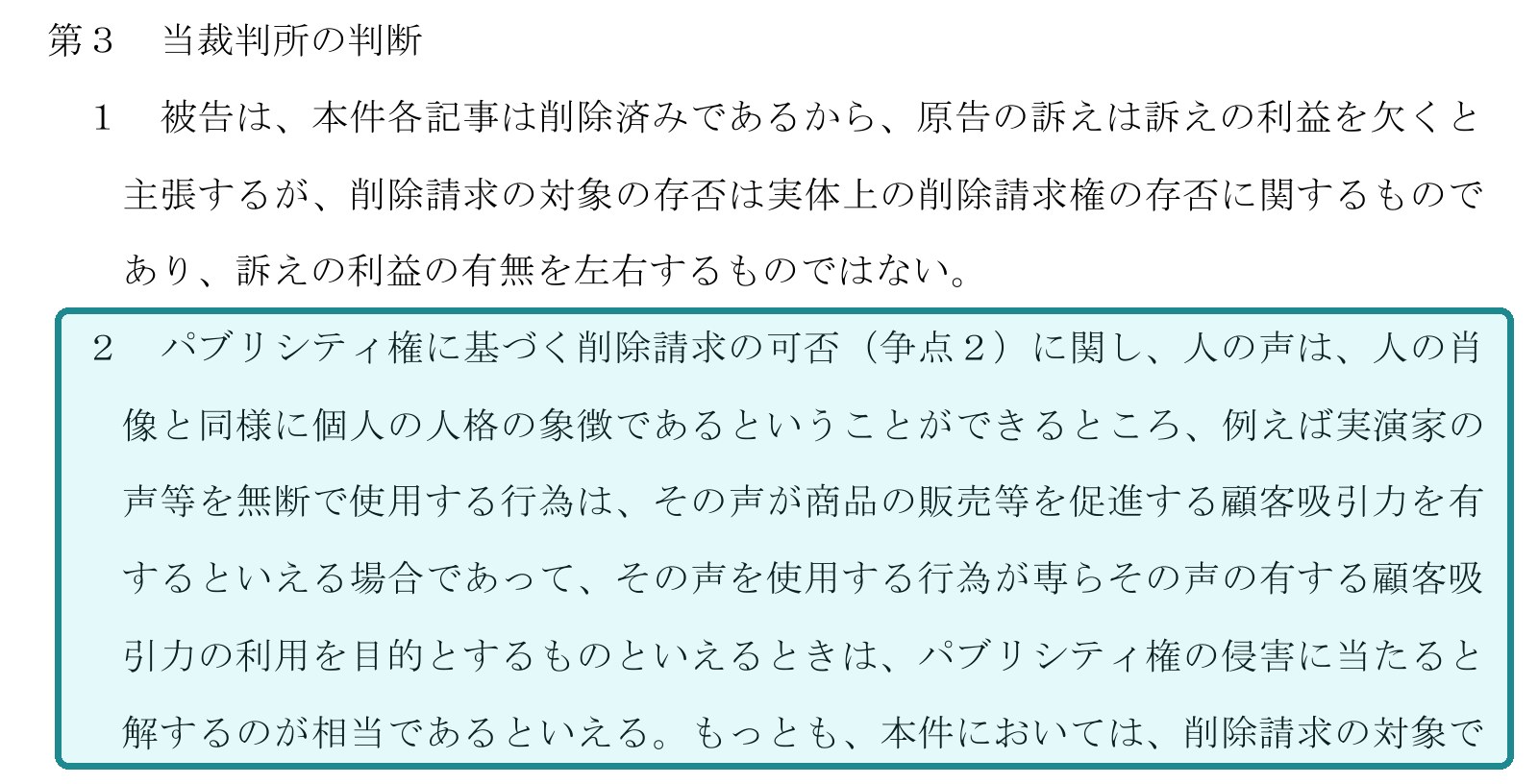
The case went to the court’s 46th civil division, one of its four intellectual property divisions. The key passage is a single sentence, and it puts a voice on the same footing as a face.
A person's voice, like a person's likeness, can be called a symbol of the individual's personality.
From there the court set a two-part test. Using someone’s voice without permission, “for example, the voice of a performer”, infringes the publicity right when both of these are true:
- The voice has the power to draw customers, meaning it helps sell something.
- The use is aimed solely at exploiting that pull.
That wording comes straight from Japan’s Supreme Court. In February 2012 it used the same “solely to exploit” standard in a case brought by the pop duo Pink Lady, over photos a weekly magazine ran in a diet feature without their permission. That ruling covered a person’s “likeness and the like”.
Tsuda’s lawyer Takashi Hirano explained on X that one goal of this lawsuit was to find out whether a voice fits inside that phrase, KAI-YOU reported. It does now, at least at district court level.
So if the court agreed with Tsuda on the principle, why did he lose?
Why the Tokyo District Court dismissed Kenjiro Tsuda’s TikTok takedown anyway
Tsuda sued TikTok Pte. Ltd., the Singapore company that runs TikTok, because he never found out who was behind the account. A disclosure order in August 2025 produced an IP address, but the logs needed to trace it had already expired, his lawyers told Bengo4.com. TikTok did not act on an out-of-court takedown request in September 2025, and Tsuda filed suit that November.
During the case, the uploader quit. The account was deleted on May 29, 2026. Nobody asked to restore it within 30 days, so the court found the 188 videos left TikTok’s servers at the end of June 28. Oral argument closed on July 3.
That timing decided the case. The court said that even if TikTok could have owed a duty to delete, there was nothing left to delete, so it dismissed the claim. It then said it would not rule on the remaining issues. So it never decided whether this particular AI voice infringed Tsuda’s rights, and it never ruled on his second claim under Japan’s Unfair Competition Prevention Act.
Hirano told reporters the original goal was “fully achieved” once every video was gone, so Tsuda will not appeal. He never asked for damages either, saying from the start that the suit was not about money.
TikTok said it respects the court’s decision and will study the ruling before deciding how to respond, according to the Tokyo Shimbun.
How Kenjiro Tsuda’s lawyers tried to prove the AI voice was his
Proving a voice match is the hard part of any voice clone case, and this one shows why.
The uploader said on an outside website that the AI was never trained on Tsuda, but on a friend who was good at imitating him. TikTok argued the narration was an ordinary male voice that nobody would mistake for Tsuda’s. The comments under the videos disagreed: the judgment quotes viewers writing “Kenjiro Tsuda…?” and “sounds like Kenjiro Tsuda’s voice”.
Tsuda’s team ran the audio through several deep learning models to compare it with his real voice, and handed the court the code of the analysis program as evidence. Hirano described the method at a Waseda University seminar on September 3, and he was blunt about why courts struggle with it: “A trial is a process where sight and language dominate,” he said. Voice similarity, in his words, is “a very bad fit” for that.
Because the court stopped at the deletion question, none of that evidence was ever tested. It is the same proof problem I covered when Jorja Smith’s label FAMM went after “I Run”, a viral track it said cloned her voice.
So what does a voice actor’s case mean for people who sing?
Does the Kenjiro Tsuda ruling protect singers from AI voice clones?
On its wording, the test is not limited to voice actors. The court’s example is “the voice of a performer”, and Japan’s Copyright Act defines performers as including actors, dancers, musicians and singers. The Tokyo Shimbun read the ruling as covering the voices of actors and singers.
There are 3 limits to know before a singer relies on it:
- It’s a district court ruling. Other Japanese courts don’t have to follow it, and with no appeal, no higher court will review it.
- The voice has to draw customers. Japan’s publicity right protects the commercial pull of well-known people, so this condition is easiest to meet for a voice people already know.
- The use has to be solely about cashing in. Pink Lady lost in 2012 because the Supreme Court found the magazine’s diet feature was not solely aimed at cashing in on their photos.
The ruling matches the Justice Ministry’s guidelines from August 7, 2026, which say the voices of voice actors and others can be protected by the publicity right, and that posting look-alike voices on social media to earn money may violate it.
Hirano thinks the ruling will deter future clones. “For the first time, a rule has been set out that a voice is also protected by the publicity right,” he told the Tokyo Shimbun. “It will act as a deterrent from here on.”
Is AI voice cloning legal? Where a singer’s voice is protected from AI clones in 2026
AI voice cloning law depends on where you are, and the Tsuda ruling gives Japan its first piece of case law. Here is where a voice stands in the places that have moved, as of October 1, 2026:
- Japan: no statute names voice. The Justice Ministry’s guidelines and now the Tokyo District Court’s test cover it through the publicity right.
- Tennessee: the ELVIS Act has protected a person’s voice, including a simulated one, since July 2024.
- US federal: the NO FAKES Act cleared the Senate Judiciary Committee on June 18, 2026. On September 30, the same day as the Tokyo ruling, Senator Ted Cruz blocked an attempt to pass it and asked for stronger free speech protections, Deadline reported.
- Denmark: the government has drafted a copyright amendment that would give every person rights over AI imitations of their face, voice and body. The European Commission has raised concerns about the draft.
- South Africa: copyright protects recordings but not vocal style or timbre, so African artists have no direct recourse against a clone under local law.
Where no voice law exists, artists use whatever law they can. Lionel Richie filed voice trademarks, and Jason Isbell and David Lowery built their class action against Suno on publicity and biometric law, accusing it of storing singers’ “voiceprints”.
In Japan, the rule is now on paper. The 188 videos that started this case were never judged against it, so that job falls to the next one.
Frequently asked questions
Why did Kenjiro Tsuda sue TikTok instead of the person who posted the AI voice videos?
Tsuda never found out who ran the account. A disclosure order in August 2025 produced an IP address, but the logs needed to trace it had already expired, so the trail ended there. That left TikTok Pte. Ltd., the Singapore company that operates TikTok, as the only party he could ask to remove the videos.
Will Kenjiro Tsuda appeal the Tokyo District Court ruling in his AI voice case?
No. His lawyer Takashi Hirano said the team will not appeal, because the account and all 188 videos are gone and the original goal of the lawsuit was met. Tsuda never asked for damages either, saying from the start that the case was not about money.
How much did the TikTok account that imitated Kenjiro Tsuda's voice earn?
Tsuda's lawsuit alleged the poster earned 500,000 to 750,000 yen a month, about $3,200 to $4,800, from TikTok's payouts for views. His lawyer put it at around 700,000 yen a month once the account passed 100,000 followers in January 2025. By November 2025 it had more than 210,000 followers.
What did Japan's Justice Ministry publish about AI voice clones in August 2026?
On August 7, 2026, the Justice Ministry published a report from its study group on the unauthorized use of likeness and voice, framed as interpretive guidelines on publicity right infringement by generative AI. It says the voices of voice actors and others can be protected by the publicity right and related personal rights. It explains how existing law applies and does not create a new statute.
What was the 2012 Pink Lady case behind the Kenjiro Tsuda voice ruling?
In February 2012, Japan's Supreme Court ruled on a claim by the pop duo Pink Lady against a weekly magazine that used their photos in a diet article. It confirmed the publicity right and held that using someone's likeness infringes only when the use is solely aimed at exploiting its pull with customers. Pink Lady lost, and the Tokyo District Court applied the same standard to voice in the Tsuda case.
About the author

Covering AI music tools, industry shifts, and news for music creators and professionals. Twice-weekly newsletter at aimusicpreneur.com.