The AI Music Briefing #20: One tool made 92.8% of AI music, and one distributor shipped 77.6% of it
The week of September 12 to 18, 2026, when SIQA's mid-year report put Suno in 92.8% of verified AI releases and DistroKid in 77.6% of them, SubmitHub started blocking any track its detector scores at 85%, and Universal sued DistroKid over nearly 2,000 recordings.
My stack My fav 6 tools for AI music after testing 70+
-
 ElevenMusic · Music generation
 -
 Moises · Stem separation
 -
 Controlla · Voice swap & cloning
 -
 Cryo Mix · Mixing + mastering
 -
 Neural Frames · Music videos
 -
 ONCE · Distribution
Some links are affiliate links — I earn a commission at no cost to you. Every tool here is one I run myself and truly believe in. This stack is proven.
Issue #20 · the week of September 12 to 18, 2026 · ~7 min read. The Friday read for music industry professionals working at the intersection of AI and the traditional music business. Curated by Christopher Wieduwilt.
What’s in store:
- Top Story: a new AI music dataset, and 7 findings on how concentrated this really is
- SubmitHub blocks submissions on a machine’s score, not yours
- Free this week: 4-track stem separation, and Antares pitch correction
- 3 lawsuits moved, one of them brand new against the biggest distributor in the world
This week in AI music: the upload layer got 4 new gates, and 2 paid studio tools turned free
4 gatekeepers moved to the point of upload in 4 days. 2 long-standing paid tools became bundled in 48 hours.
Also, a $349 guitar box now runs stem separation with no internet.
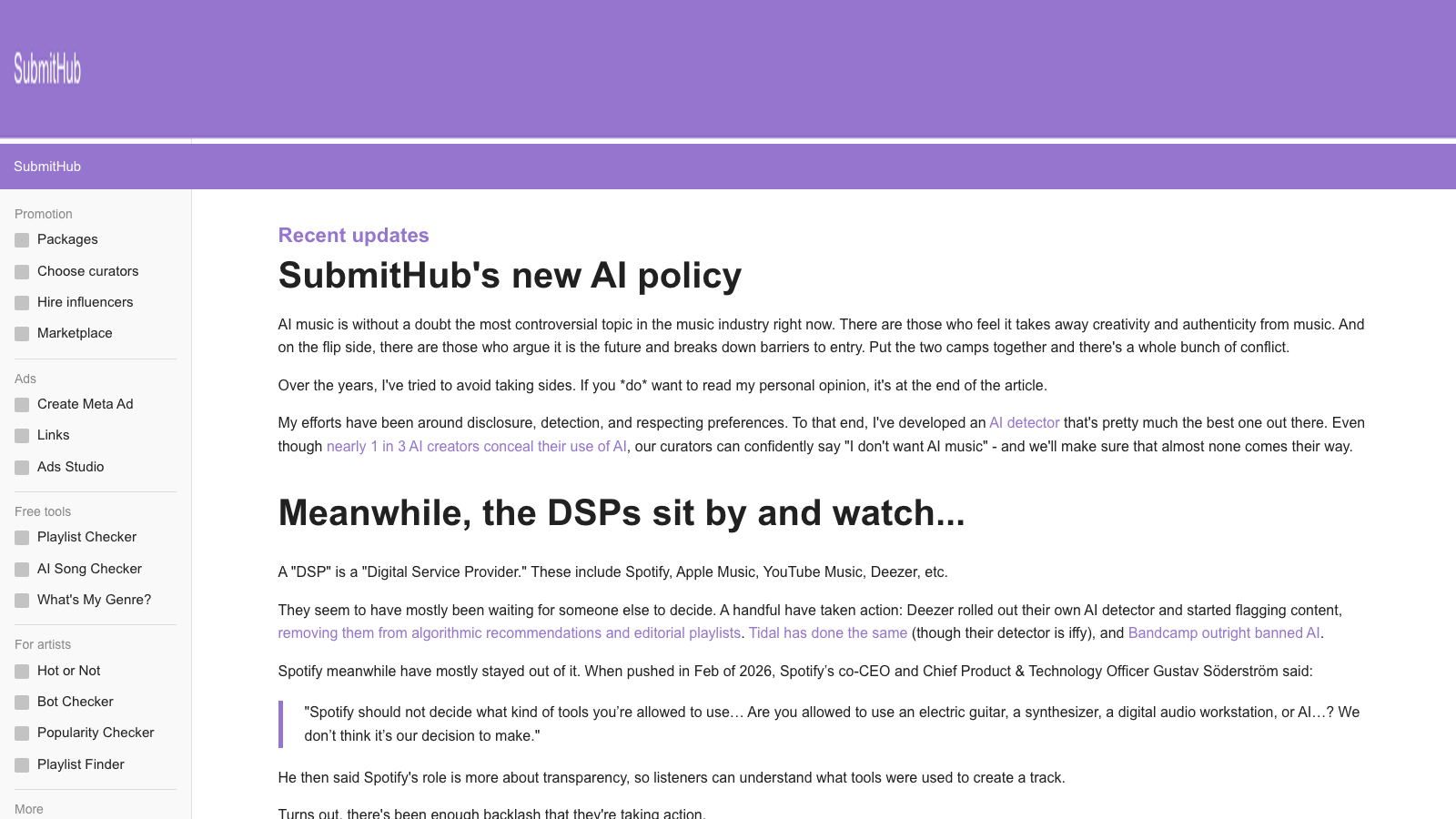
SubmitHub blocks any track its detector scores at 85% or higher
SubmitHub started blocking any track its own detector scores at 85% or higher likelihood of being AI. Founder Jason Grishkoff put the cost at about 10% of revenue, a month after publishing that 23.2% of submissions were fully AI-generated.
IFPI’s Streaming Integrity Initiative signed 27 companies, and every big distributor is missing
IFPI launched the Streaming Integrity Initiative with 27 companies and 5 commitments, including identity checks before upload. DistroKid, Believe, TuneCore, SoundOn and UnitedMasters are all missing from the list.

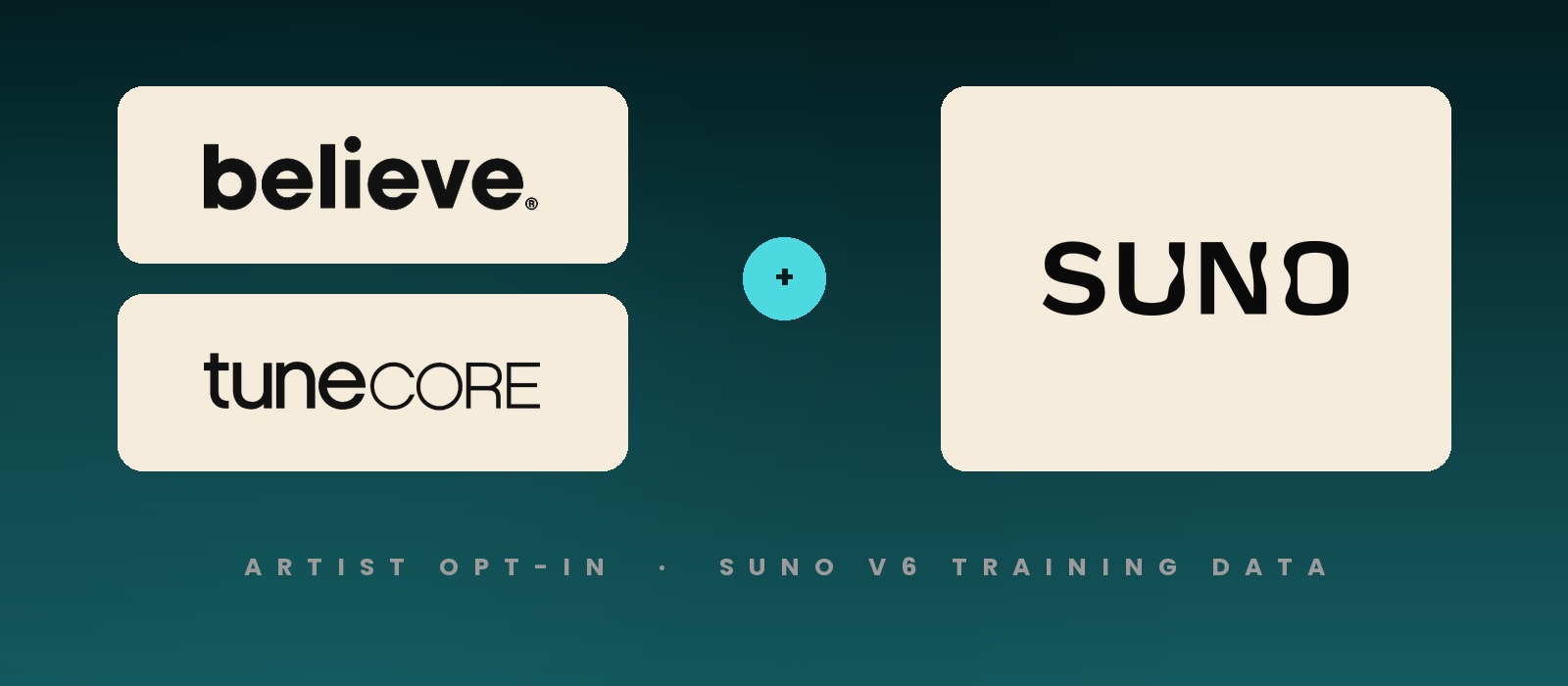
Believe and TuneCore artists have to consent twice before Suno trains on them
Believe confirmed that a TuneCore or Believe artist has to consent twice before a track reaches Suno’s training data, once to AI programs in general and once to the Suno deal by name. A no at either step is permanent.
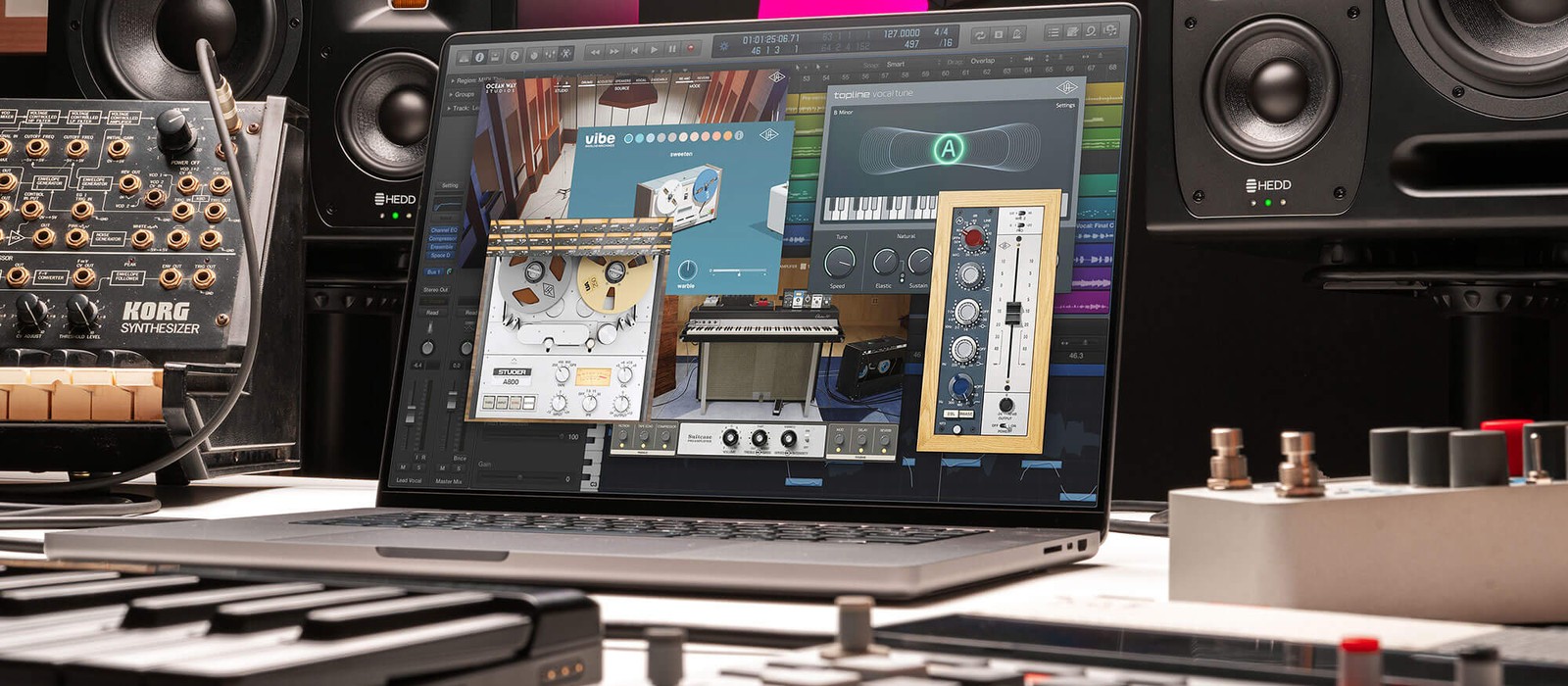
Universal Audio put 4-track stem separation into the free version of LUNA 3.0
Universal Audio put 4-track stem separation into the free version of LUNA 3.0. The $199 LUNA Studio tier takes it to 6 tracks and adds audio-to-MIDI, lyric transcription and chord extraction.
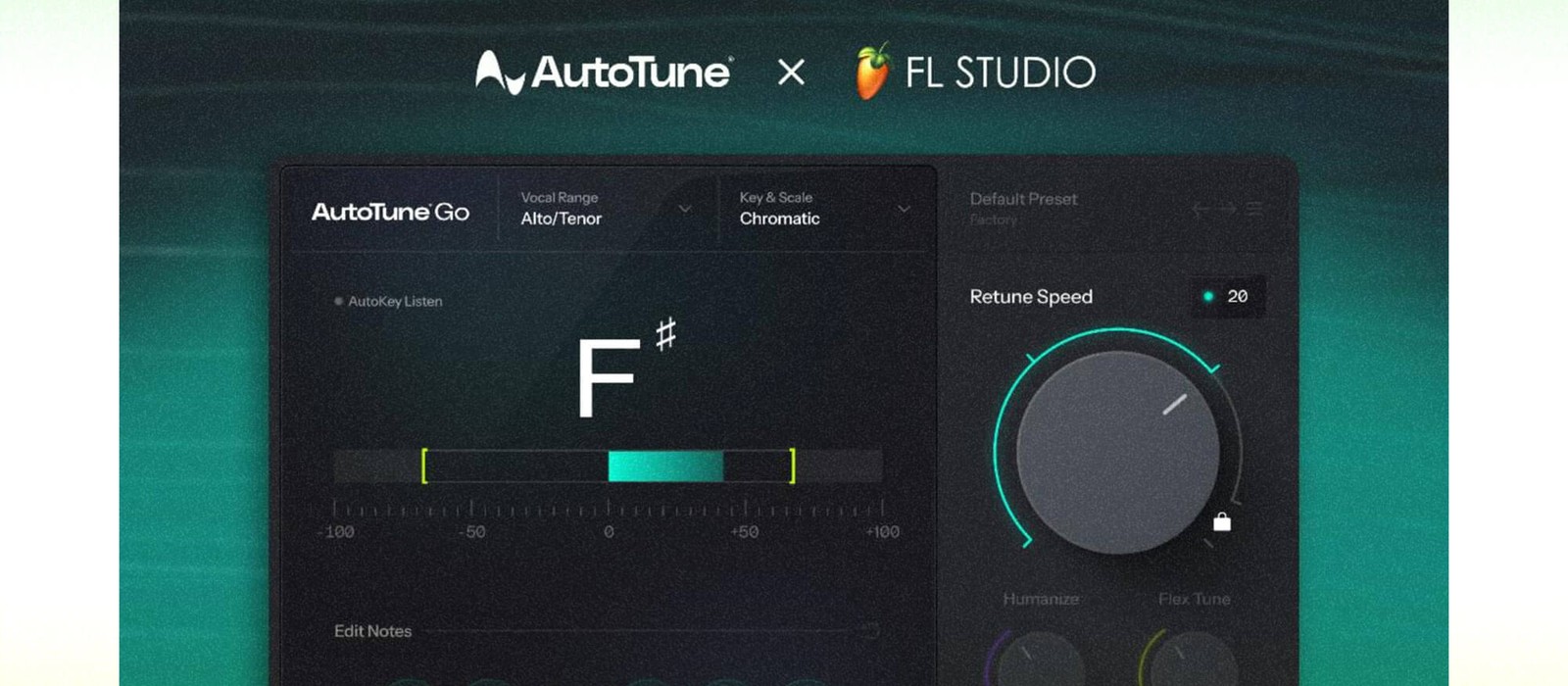
Antares released AutoTune Go free to every FL Studio user
Antares released AutoTune Go free to every FL Studio user, the free FL Cloud tier included. Pitch correction with 4 Retune Speed settings, visual pitch display and auto vocal range detection.
A Suno track entered Melon’s Top 100, and KOMCA registers neither half of it
A Suno track from the Joseon Hiphop channel entered Melon’s Top 100 at No. 89 on September 6. The lyrics are human, the music is Suno, and KOMCA registers neither, so the creator collects no songwriting royalties.

Michael Beckham filed a third class action over Suno’s breach, and puts it at 55.3 million emails
Michael Beckham filed a third class action over Suno’s November 2025 breach, 10 days after a judge merged the first two. His complaint puts the stolen dataset at 55.3 million email addresses, and says he learned he was in it from Have I Been Pwned rather than from Suno.
Busta Rhymes says streaming pay is broken, Spotify says $1 million, and both are right
Busta Rhymes said on the Power Players podcast that streaming still hasn’t worked out artist pay, and Spotify replied with a number: over $1 million in 2025 for his catalogue. Both are true, because producers get paid out of the artist’s share and the platform never touches that split.

LALAL.AI runs real-time stem separation on Neko, a $349 guitar box, with nothing sent to a server
LALAL.AI showed its separation engine running on Neko, a $349 wireless guitar box, splitting a track into 4 stems in real time with nothing sent to a server. Six years in a browser tab, now on a neural chip.
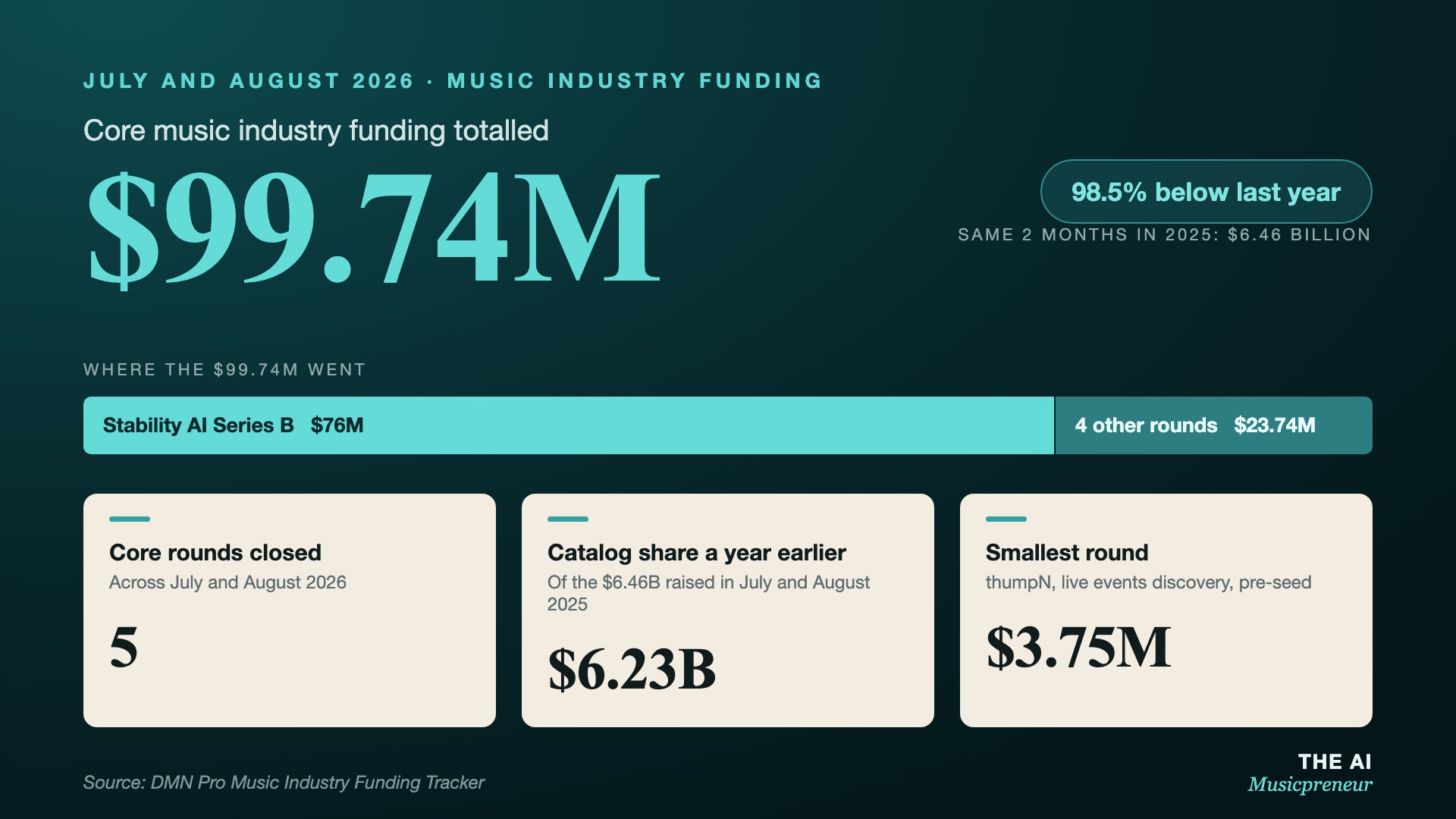
Music industry funding fell to $99.74 million, and the 98.5% headline hides the real drop
Music industry funding fell to $99.74 million across 5 rounds in July and August, against $6.46 billion a year earlier. Read the paragraph under that 98.5%: $6.23 billion of last year was catalog securitization, so the like-for-like drop is about 57%.
Top Story: SIQA’s mid-year report, 7 findings, and the DistroKid number Universal just sued over
The AI music business is far more concentrated than anyone says out loud. One tool, one distributor, one country, and all 3 tightened this year instead of spreading out.
The Sonic Intelligence Academy sent members its Mid-Year 2026 report on Sunday: 1,743 verified submissions from 886 artists in 54 countries, plus 20 chart weeks from April 1 to August 20.
Creators disclose the classification at submission and SIQA verifies it, so this describes people who release AI music and submit it to a chart, not everything on Spotify.
I read it against the Q1 edition. Here are the 7 that matter.
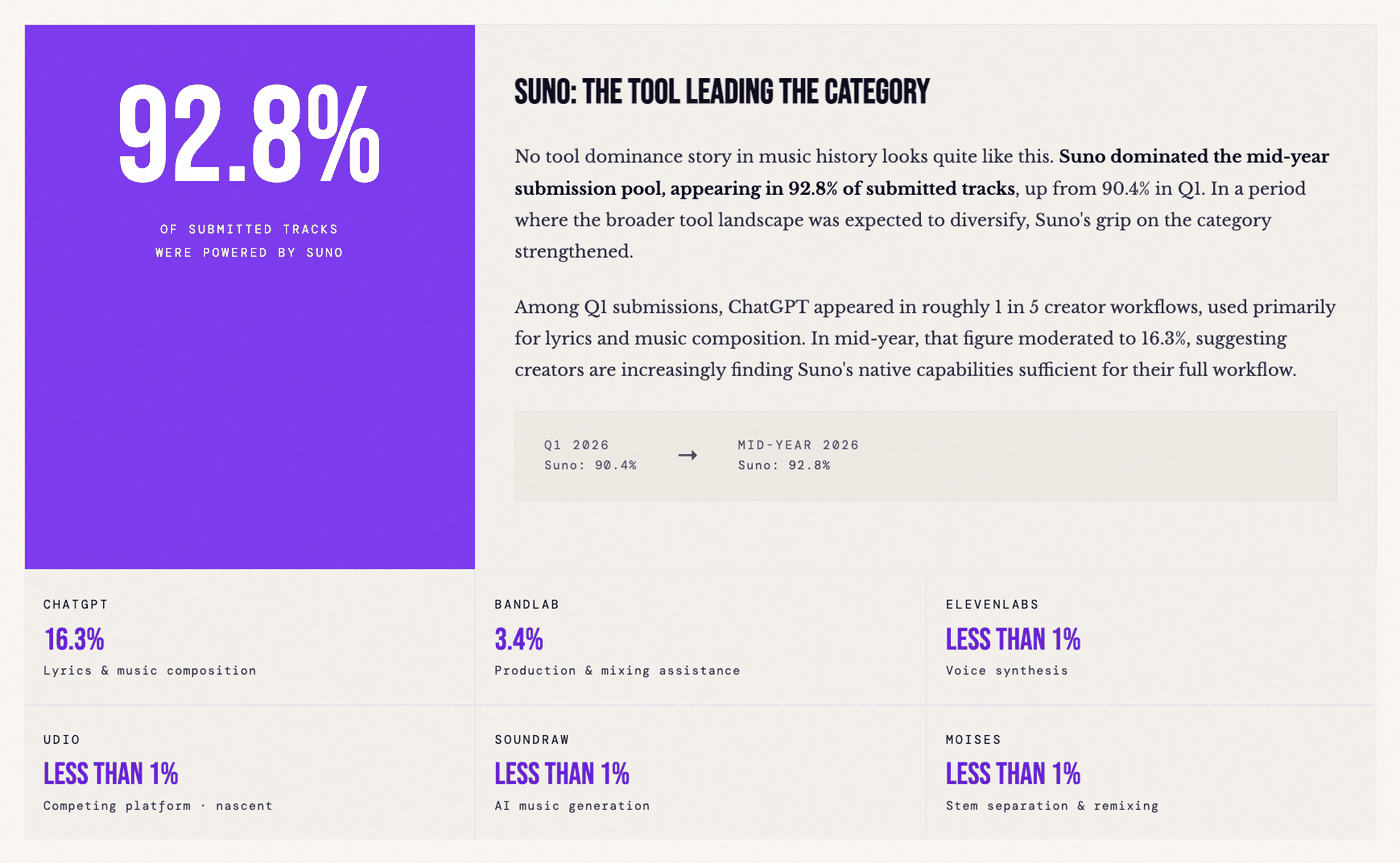
Suno appears in 92.8% of verified AI releases, up from 90.4% in Q1
Suno appears in 92.8% of verified submissions, up from 90.4% in Q1. ChatGPT sits at 16.3% for lyrics, BandLab at 3.4%, Udio under 1%.
Everyone expected the field to widen this year. It narrowed, so every Suno policy change is now an industry-wide event.
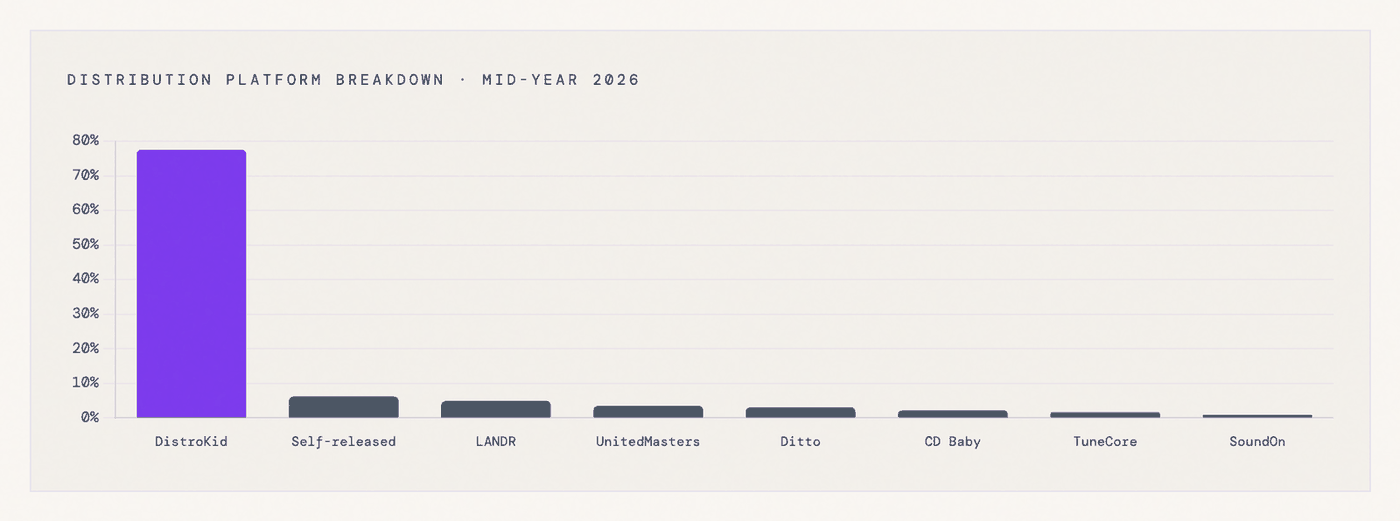
DistroKid carries 77.6% of AI releases, the number Universal cited when it sued
DistroKid carried 77.6% of releases with distributor data, up from 75.8%. TuneCore fell from 4.7% to 1.7% after Believe started blocking unlicensed Suno tracks in April.
Universal cited this number when it sued DistroKid on Tuesday. Your distributor’s AI policy now decides whether your release shows up in data like this at all.
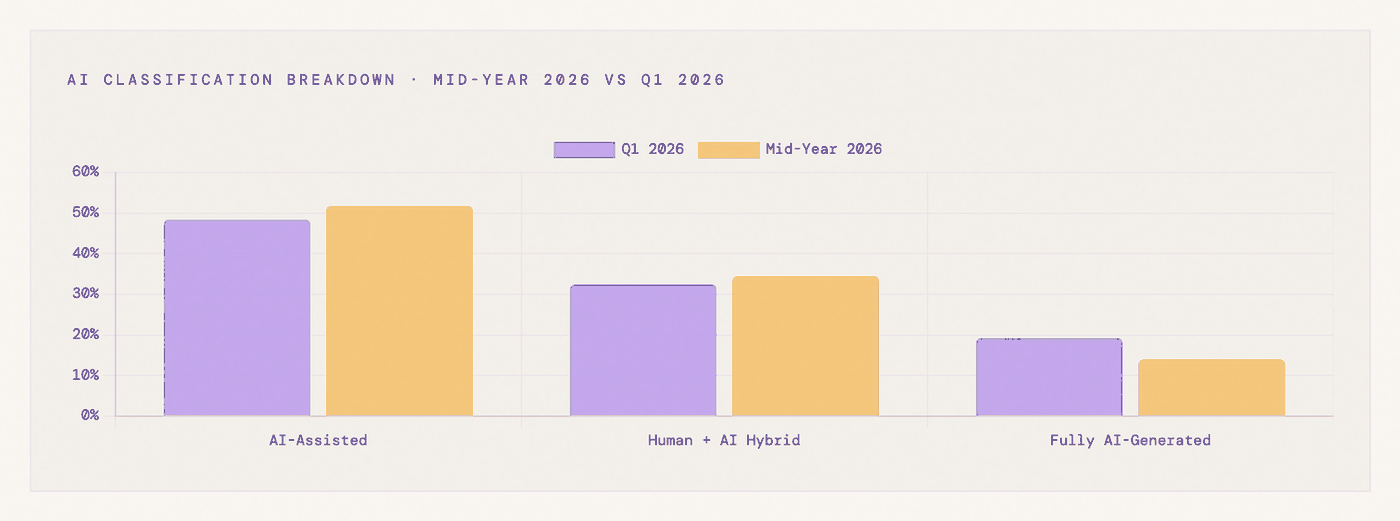
Fully AI-generated tracks fell to 13.9%, down 5.3 points in one period
Fully AI-generated fell 5.3 points in one period, from 19.2% to 13.9%. Both human-led tiers grew: AI-Assisted to 51.7%, Human + AI Hybrid to 34.4%.
The tier is self-declared, and ARIA has since barred fully AI songs from Australia’s charts. When a label costs chart access, fewer people pick it.
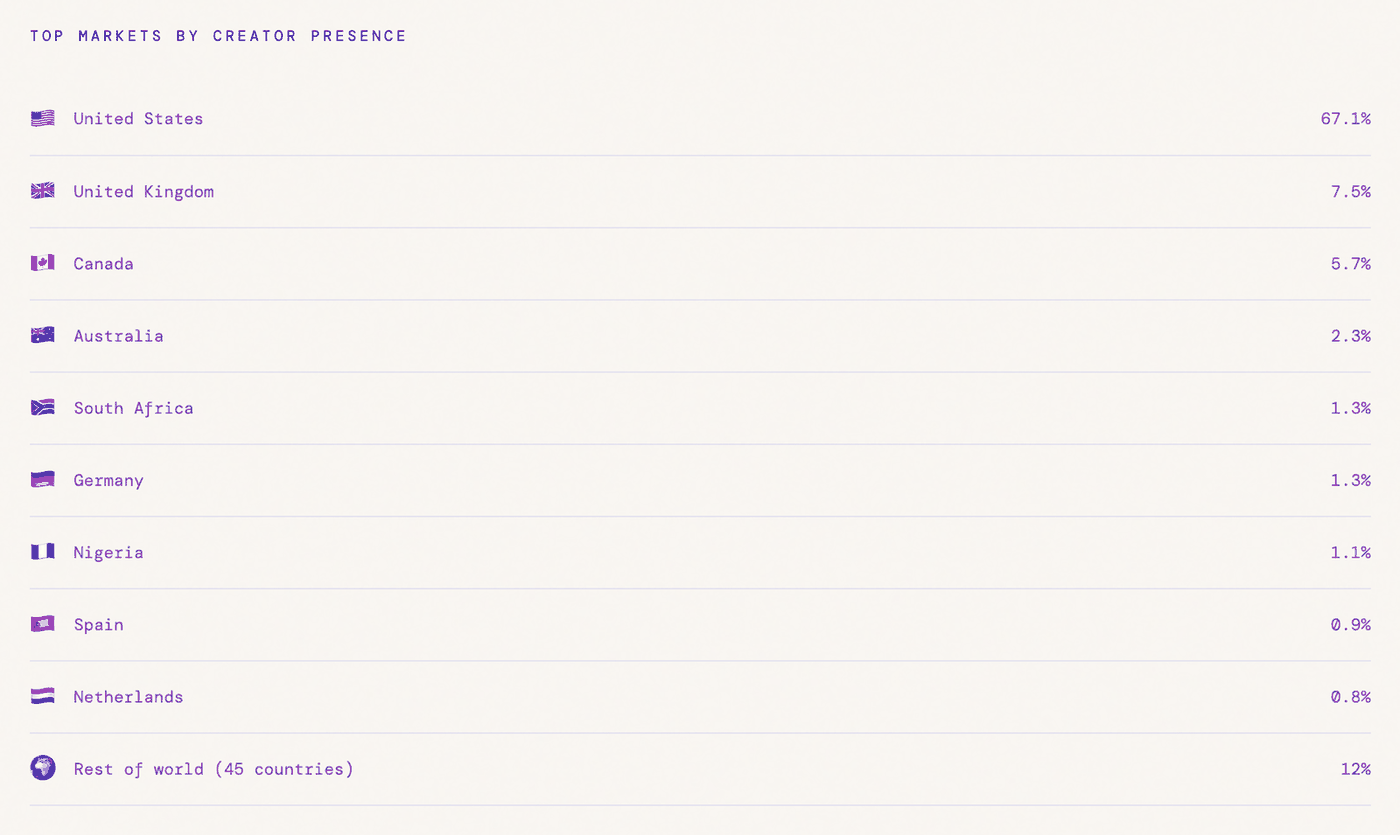
67.1% of verified AI music is made in the United States, and Germany halved
The US share slipped from 68.3%, and the rest spreads across 53 countries. The UK is a clear second at 7.5%, up from 5.4%.
Canada holds 5.7%, Australia enters the top 5 at 2.3%, Nigeria doubled to 1.1%. Germany halved to 1.3% in the same months the GEMA case ran through the Munich court.
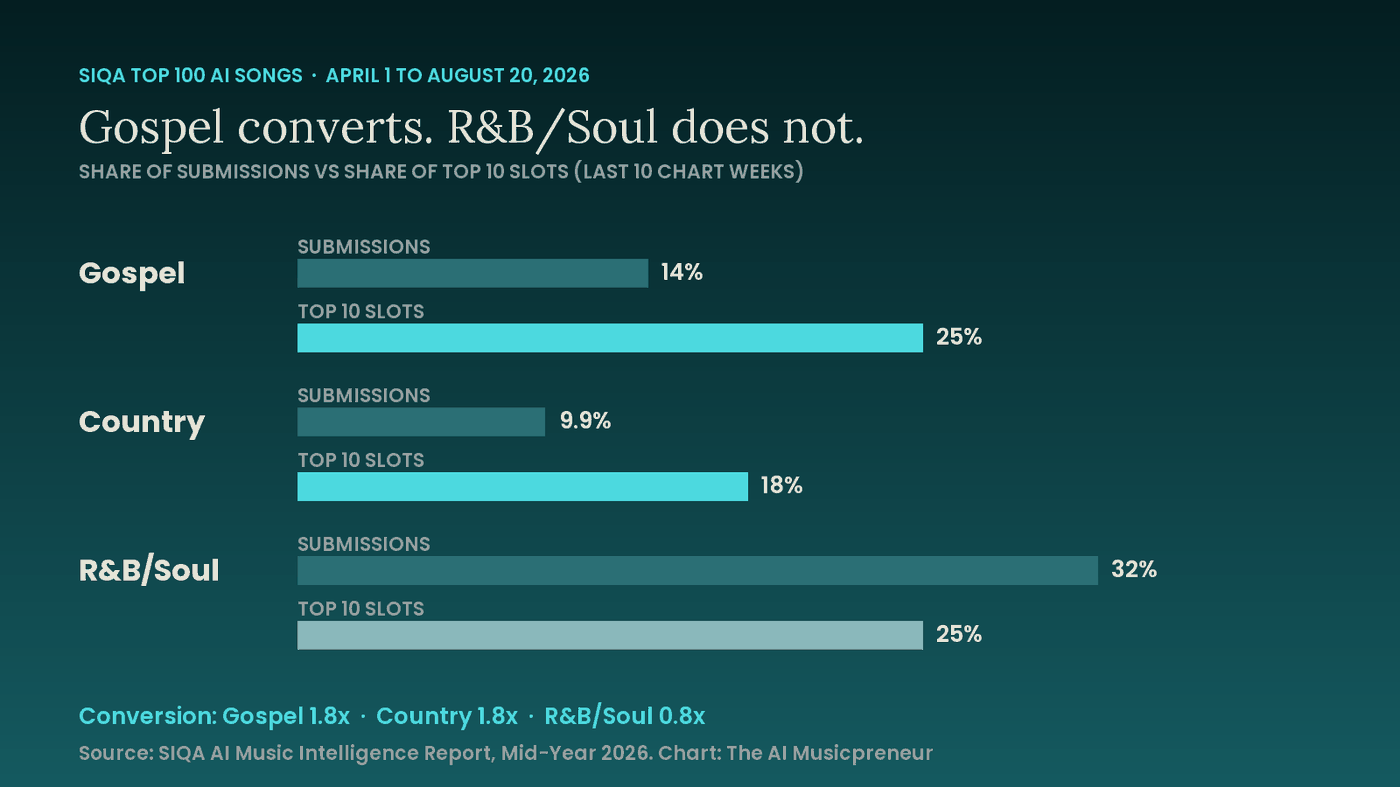
Gospel nearly doubled to 14.0% and converts to chart slots at 1.8x R&B
Gospel went from 8.1% to 14.0% of submissions, the fastest growth in the dataset, and took 25% of the top slots in the last 10 chart weeks.
R&B/Soul makes more than twice as much music and took the same 25%. In the first 10 weeks it held 63%.
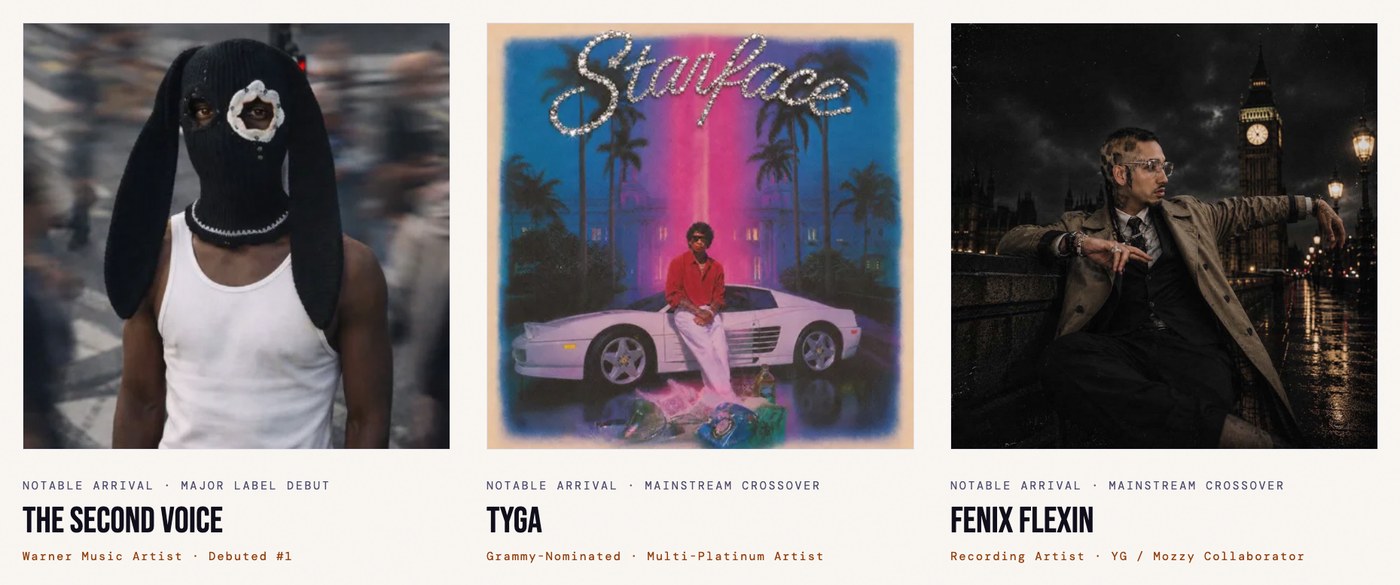
The Second Voice held the AI No.1 for 14 weeks on Warner’s Spinnin’ Records
The Second Voice debuted at No.1 on Warner’s Spinnin’ Records and never moved, May through August. Tyga peaked at No.8 after confirming he used Suno on $TARFACE.
In Q1 the only industry names on this chart sat at No.76 and No.88.
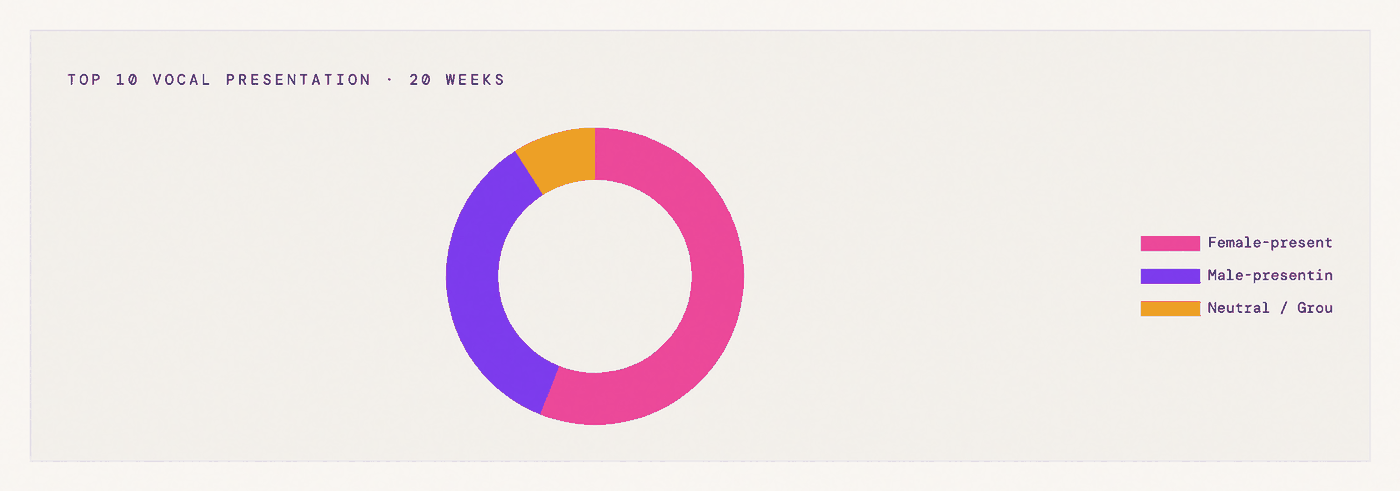
Female-presenting artists took 56% of the top 10 slots across 20 chart weeks
Across 200 weekly top 10 slots, female-presenting artists took 56%, male-presenting 35%, neutral or group acts 9%.
SIQA reads the artist persona, not the gender of the person behind it, and in this category those are often different people.
Here’s the part I can’t prove. SIQA’s pool is self-selecting, so anyone who never submits to a chart is invisible in all 7 numbers, and the tool spread outside it could be wider.
I still think the direction holds, because every number moved the same way as Q1.
One tool, one pipe, one country. Plan for that.
AI Music Lawsuit Tracker: Universal sued the world’s biggest distributor, and the union’s own answer came back to bite it
3 cases moved. RIAA v. Suno, RIAA v. Udio, GEMA v. Suno, SOCAN v. Suno, Lowery v. Suno, Round Hill, the artist class action and the Sony and Warner Chappell suit against Anthropic did not.
UMG v. DistroKid: nearly 2,000 recordings named, and UMG wants the accounts deleted
Universal Music Group sued DistroKid on September 15 in a Delaware federal court, naming nearly 2,000 infringing recordings across 52 pages and asking the court to delete the accounts behind them.
UMG wrote the limit into its own complaint: the case is “not about the distribution of AI-generated music when clearly disclosed as such”. The problem it names is AI music presented as human work.
AFM v. Universal and Warner: the labels say the union’s own admission ends the case
Universal and Warner filed their closing answers on September 11, and both rest on one moment from July.
The musicians’ union admitted in court that no contract covers AI use, and the labels are now telling the judge that admission ends the case. It decides whether session players get paid when a label licenses their recordings to Suno and Udio.
Concord v. Anthropic: publishers want the titles of the songbooks Anthropic scanned and binned
Music publishers asked a California court on September 11 to open up Project Panama, Anthropic’s program of buying printed books, scanning every page and binning the paper.
They say some of those books were songbooks holding their songs, and they want the titles. Anthropic says the question can wait.
→ Full case files and timelines
One thing to do this weekend: pull 4 stems from a record you keep going back to
Universal Audio put 4-track stem separation into the free version of LUNA 3.0 on Tuesday. Install it, drop in one reference track you’ve never been able to reverse engineer, split it, and solo the drums and bass.
Thirty minutes. Learning from a finished record used to cost a separation credit and a wait, and now it runs locally for nothing.
If you’re on FL Studio, grab AutoTune Go the same night. It’s free on every tier now, FL Cloud included.
About The AI Music Briefing
The AI Music Briefing is a weekly Friday read for music industry professionals working at the intersection of AI and the traditional music business. Curated and written by Christopher Wieduwilt, founder of The AI Musicpreneur. Browse every issue of the briefing.
Got a tip, a story, or a partnership idea? Reach out any time. Every message lands directly in my inbox.
— Christopher
About the author

Covering AI music tools, industry shifts, and news for music creators and professionals. Twice-weekly newsletter at aimusicpreneur.com.