Spotify says it paid Busta Rhymes over $1m last year. He says streaming still doesn't work.
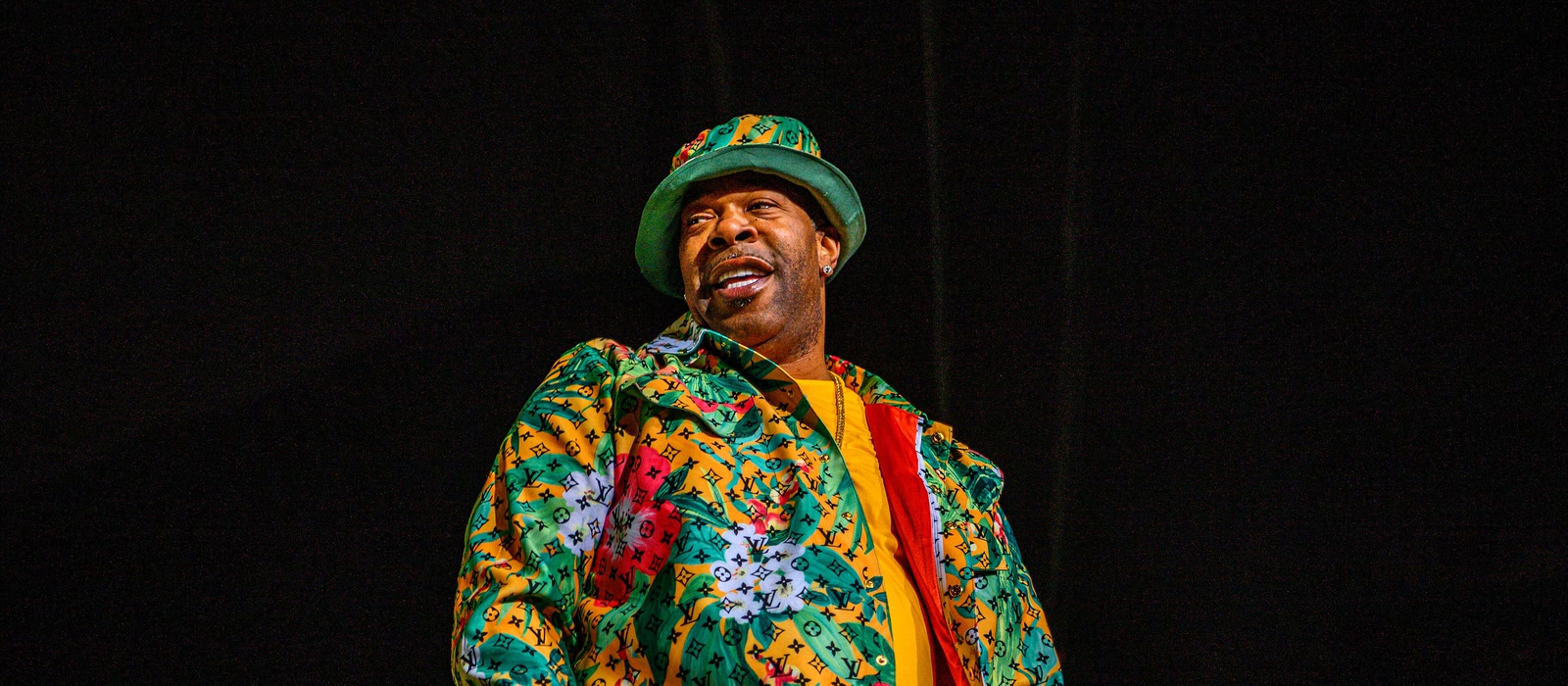
Busta Rhymes said on the Power Players with Brian Sozzi podcast that the industry still has not worked out how artists get paid from streaming. Spotify emailed Yahoo Finance a number in response: more than $1 million paid out in 2025 for streams of his catalogue. Both statements are accurate, and the gap between them is the whole argument.
An artist with a catalogue that deep saying the model does not work, and a platform answering with a seven-figure payout, is not two people disagreeing about facts. It is two people describing different ends of the same pipe.
What Busta Rhymes told Brian Sozzi about streaming pay
His complaint was not about his own bank balance. It was about the class of people around him.
I don't think we've figured it out yet, unfortunately, in the way that business is being done today. I'm talking about like us as artists, producers amongst our peers. We're all facing a very similar frustration with streaming.
He named producers specifically, which matters. Producers usually get paid out of the artist’s recording share, so they sit one layer further from the money than the artist does and carry the same problem with less power to fix it.
“It’s imperative that they find a way to respect the value of the artist and the artist’s creation,” he added.
Why Spotify’s $1m figure doesn’t contradict him
Spotify does not pay artists. It pays rights holders, which normally means the label or distributor that controls the recording. What happens next is governed by a contract Spotify is not part of and does not publish.
So a catalogue can generate more than $1 million while the artist named on it sees a fraction. The money passes through the label’s share, any advance that has not been paid back yet, and the splits owed to producers, co-writers and featured artists. For a catalogue built across the 1990s and 2000s, those contracts were written long before streaming existed.
Spotify’s statement is a real answer to a question nobody asked. It responds to “artists aren’t paid enough” with evidence about gross catalogue revenue, and those are different claims.
How pro-rata pooling turned into an AI problem
The structure underneath all of this is called pro-rata. Spotify pools subscription and advertising revenue, then splits it by each rights holder’s share of total plays across the whole service. Your subscription does not follow the artists you actually listen to. It joins a pot.
That design has been criticised for a decade on the grounds that it favours the biggest catalogues. The newer problem is that it also pays anything capable of generating plays at scale, regardless of whether a person made it or a person listened to it.
Michael Smith pleaded guilty in 2026 to pushing hundreds of thousands of AI-generated tracks through bot accounts and collecting around $10m from exactly this mechanism. Deezer now reports tens of thousands of fully AI-generated uploads a day. Every one of those plays draws from the same pool that pays Busta Rhymes and the producers he was talking about.
The industry response so far has been detection and enforcement rather than restructuring. IFPI launched the Streaming Integrity Initiative on September 14 to push identity checks onto distributors, and analysts are already modelling AI features as revenue per listener rather than as a payout question. The pool itself stays as it is.
What Busta Rhymes says artists should do instead
His answer was not a policy demand. It was an exit route.
“Part of the evolution in understanding how to move and shake and continue to resonate is understanding how to make sure you do what you got to do so that people understand not only the value of your music, but the value of you,” he said. “So that anywhere you go, even outside of music, you’re still able to monetize your IP.”
IP here means the rights you own: the recordings, the name, the likeness, the brand. His argument is to build those until, as he put it, the brand is bigger than anything streaming.
That works if you are Busta Rhymes. It is harder advice to act on with 400 monthly listeners, which is the position most of the producers he mentioned are actually in. The people with the least bargaining power over the pooled model are also the ones least able to route around it.
Frequently asked questions
What did Busta Rhymes say about streaming royalties in September 2026?
On the Power Players with Brian Sozzi podcast, Busta Rhymes said he does not think the industry has worked out how to make money in streaming the way business is done today, and that artists and producers face a very similar frustration. He added that it is imperative for platforms to respect the value of the artist and the artist's creation.
How did Spotify respond to Busta Rhymes' streaming comments?
A Spotify spokesperson told Yahoo Finance by email that Spotify paid out more than $1 million in 2025 for streams of Busta Rhymes' catalogue. The statement addressed the total sum generated by his catalogue rather than what reached him personally after his label and any other parties took their share.
Why can Spotify's payout figure and an artist's complaint both be true?
Spotify pays rights holders, not artists. Money goes to the label or distributor that controls the recording, and what reaches the artist depends on their contract, any unrecouped advance, and the split agreed with producers and co-writers. A catalogue can generate over $1 million while the named artist receives a fraction of it.
What is pro-rata streaming payout and why do artists object to it?
Under pro-rata, a platform pools all subscription and advertising revenue, then divides it by each rights holder's share of total plays. Your own subscription does not follow the artists you listen to. Artists object because the model rewards raw play volume across the whole service, which favours the largest catalogues and anything that can generate plays at scale.
What does Busta Rhymes say artists should do about streaming pay?
He argued for building value outside the recording itself. His framing was that artists need people to understand the value of the artist as well as the music, so they can monetise their IP anywhere, including outside music, and grow the brand to the point where it is bigger than streaming.
About the author

Covering AI music tools, industry shifts, and news for music creators and professionals. Twice-weekly newsletter at aimusicpreneur.com.