KeyBanc puts a number on Spotify's AI music plans: about 2% more revenue per listener
My stack My fav 6 tools for AI music after testing 70+
-
 ElevenMusic · Music generation
 -
 Moises · Stem separation
 -
 Controlla · Voice swap & cloning
 -
 Cryo Mix · Mixing + mastering
 -
 Neural Frames · Music videos
 -
 ONCE · Distribution
Some links are affiliate links — I earn a commission at no cost to you. Every tool here is one I run myself and truly believe in. This stack is proven.

The AI music debate reached the part where somebody attaches a number to it. On September 10, KeyBanc kept its Overweight rating on Spotify with a $680 price target and estimated that AI music features could lift Spotify’s average revenue per user by about 2% in the first 12 to 18 months, according to Investing.com’s report on the note.
Average revenue per user is the money Spotify collects per listener. It is the number that moves when Spotify sells an add-on or a higher tier, rather than when it signs up more people. Analysts are now pricing AI music into that second column.
What KeyBanc expects AI music to do to Spotify’s revenue
The 2% figure is an estimate on a product that is mostly unshipped, so treat it as a house view rather than a measurement. KeyBanc’s own framing leaves room to move: the firm said growth could go faster if superfan tiers get taken up, and it models around 15% revenue growth and 30% earnings growth over the medium term on product innovation generally.
I can’t read the full note, which sits behind Investing.com’s page, so the specifics here are what that report and the ratings wires carried. The $680 target was confirmed across several of them on the same day.
What Spotify told investors about AI at Goldman Sachs Communacopia 2026
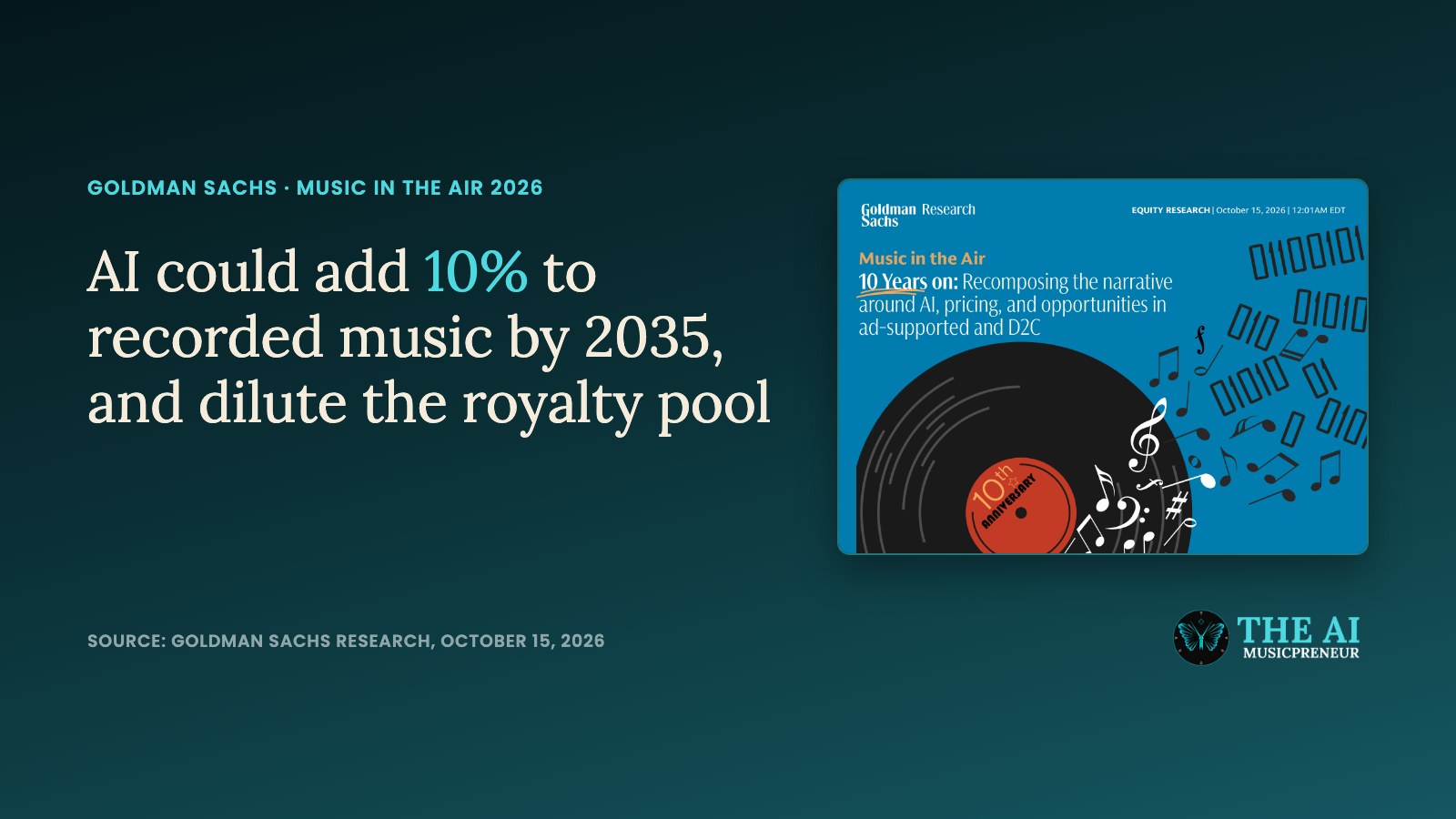
Spotify spent its slot at the Goldman Sachs Communacopia + Technology Conference 2026 sketching a company that sells more than music subscriptions. Co-CEO Gustav Söderström described a path toward what he called the first truly intelligent media service, with growth coming from video, audiobooks, fitness and generative tools stacked on the existing tiers.
The business model he described is three-layer: free access, premium subscriptions, and paid add-ons for heavy users. That is where an AI feature lands. Not as a cheaper product, as a more expensive one.
Why 2% more revenue per listener does not reach artists by itself
Spotify pays rights holders out of a royalty pool, and an artist’s share depends on the deal between them, the pool, and a label or distributor in the middle. A revenue lift on an add-on only changes an artist’s payout if that revenue enters the same pool and the split is published. When Spotify struck its AI remix deals, co-CEO Alex Norström defended the economics without publishing the rates, and the Merlin agreement covering fan-made covers arrived on the same terms: announced, not itemised.
Check your own side of it in 30 seconds. Open Spotify for Artists, look at your last month’s payout, and divide it by streams. That per-stream figure is the only number in this story you can verify yourself, and nothing in an analyst note changes it.
Two things now sit on the same page. A bank telling investors AI music is worth about 2% more per listener, and an ongoing argument about how AI tracks should be counted and paid at all. Spotify has also been adding AI persona badges to artist profiles, which is the disclosure half of the same product. The revenue half got a number first.
Frequently asked questions
What did KeyBanc say about Spotify's AI music opportunity in September 2026?
KeyBanc reiterated an Overweight rating on Spotify with a $680 price target on September 10, 2026, and estimated that AI music features could lift average revenue per user by around 2% in the first 12 to 18 months. The firm said adoption of superfan tiers could push that higher, and it models roughly 15% revenue growth and 30% earnings growth over the medium term.
What is ARPU and why does it matter for Spotify's AI plans?
ARPU is the average revenue Spotify collects per user. Analysts watch it because Spotify can grow revenue two ways: sign up more listeners, or get more money from the listeners it already has. AI features are being priced into the second route, through add-ons and higher tiers rather than a bigger subscriber count.
What did Spotify say about AI at Goldman Sachs Communacopia 2026?
Spotify laid out a growth plan built on AI, new product layers and expansion beyond music into video, audiobooks, fitness and generative tools. Co-CEO Gustav Söderström described the company moving toward becoming the first truly intelligent media service, while acknowledging it has to turn that into steady revenue growth and better margins.
Does a higher Spotify ARPU mean artists get paid more per stream?
Not automatically. Spotify pays recorded music rights holders from a royalty pool, and what reaches an artist depends on that pool, on the label or distributor deal in between, and on how streams are counted. A revenue lift from paid add-ons only reaches artists if those revenues feed the same pool and the split is disclosed.
About the author

Covering AI music tools, industry shifts, and news for music creators and professionals. Twice-weekly newsletter at aimusicpreneur.com.