NPR asks if 2026 is the fakest year in music, and 6 of its 17 examples are about AI
My stack My fav 6 tools for AI music after testing 70+
-
 ElevenMusic · Music generation
-
 Moises · Stem separation
-
 Controlla · Voice swap & cloning
-
 Cryo Mix · Mixing + mastering
-
 Neural Frames · Music videos
-
 ONCE · Distribution
Some links are affiliate links — I earn a commission at no cost to you. Every tool here is one I run myself and truly believe in. This stack is proven.
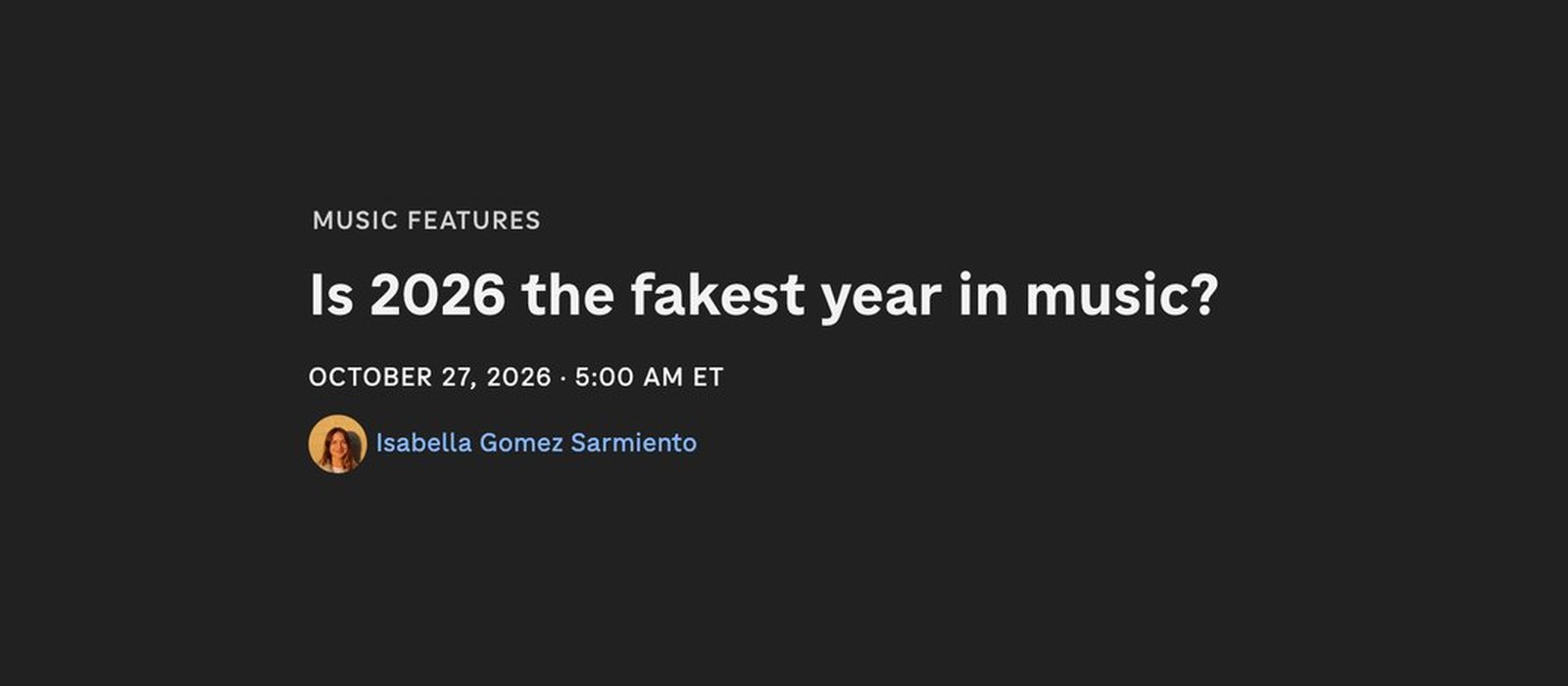
NPR counted 17 reasons to call 2026 the fakest year in music, and 6 of them are about AI.
The timeline, “Is 2026 the fakest year in music?”, was written by Isabella Gomez Sarmiento and published on October 27, 2026. It runs from fake fan accounts around the indie band Geese to a US senator’s AI video of herself as Kendrick Lamar.
NPR opens with James Blake. Earlier this summer the British producer and singer posted a run of complaints on Instagram, saying album reviews, comment sections and streaming numbers are increasingly manipulated for profit. His line: “If you’re an artist, remember that in 2026 there’s not a single part of the system that isn’t faked.”
One more AI name shows up without an entry. TaTa Taktumi, the AI artist signed by PMG, is in NPR’s lead illustration next to Shakira, Gracie Abrams, Mr. Fantasy and Boy Throb.
The 6 AI stories in NPR’s 2026 ‘fakest year in music’ timeline
5 of the 6 have a date you can pin down, so here they are in order:
Deezer. Deezer reported in July that fully AI-generated music passed 50% of its daily uploads in June, peaking at close to 90,000 tracks a day (my breakdown of the numbers). NPR adds the other half of the report: those songs drew less than 3% of total streams, and most of those streams were flagged as fraudulent.
Spotify. Spotify’s AI Persona badge marks artist profiles whose public identity is AI-generated. Spotify’s announcement spells out the scope: “This badge is about the artist’s public identity, not about how the music was made.”
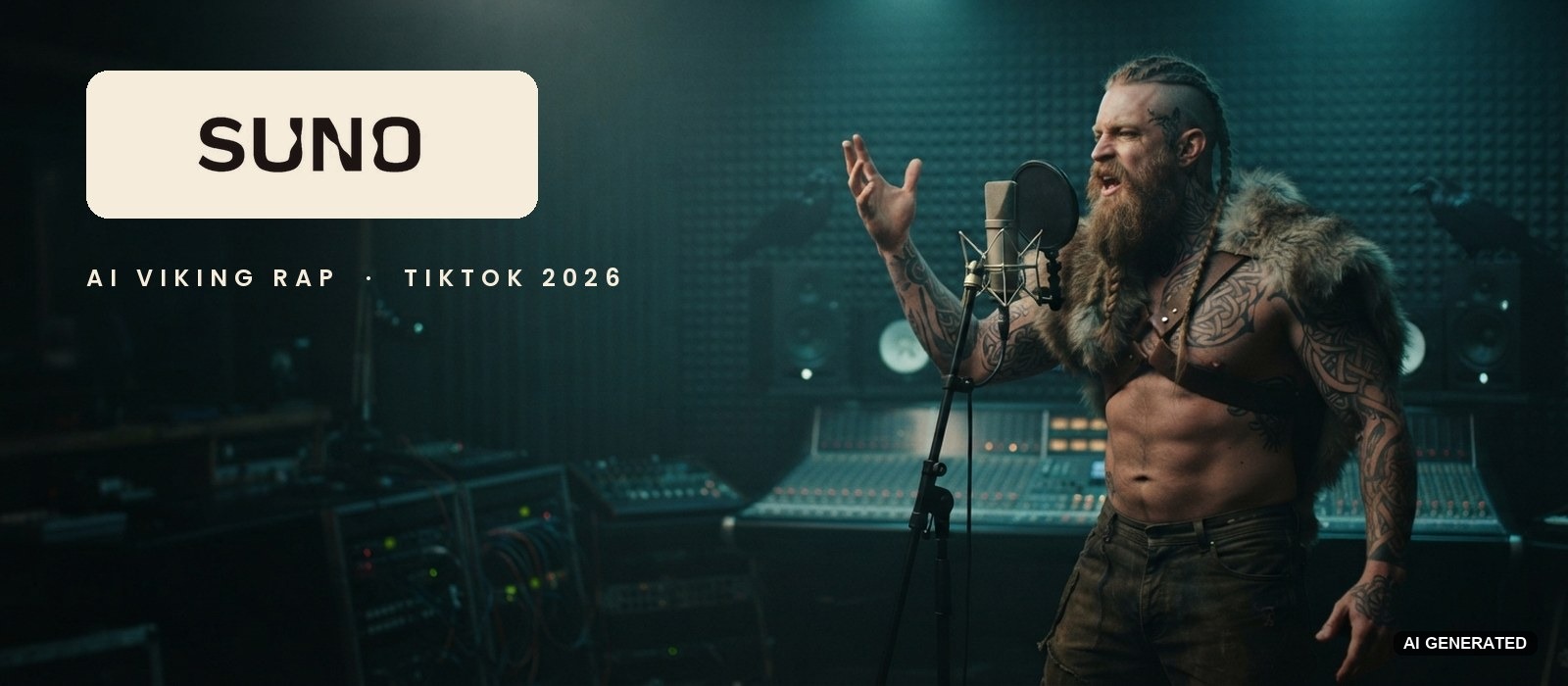
Suno. Isbell, Lowery, Forsyth and Calle sued Suno in Boston federal court over their voices and identities, and the complaint has no copyright claim. They allege Suno captured and stored their musical styles, vocal tone and other identifying features, so users could type an artist’s name as a prompt. The suit also points to Suno’s own past statements that it doesn’t allow artist names as prompts.
Michael Smith. On October 6, Judge John G. Koeltl sentenced Michael Smith to 18 months in prison in Manhattan. Prosecutors say Smith uploaded AI-generated songs from 2017 through 2024 and streamed them with bots to collect millions in royalties. NPR calls him the first person criminally charged for manipulating streams with AI, and the Justice Department says he also forfeits more than $8 million.
Marsha Blackburn. On October 13, the senator’s campaign account posted an AI video of her performing “Not Like Us” in a recreation of Kendrick Lamar’s Super Bowl halftime show. NPR points out that Blackburn has championed legislation to regulate AI, and that she told Fox13 News a county commissioner made the clip and her campaign thought it was “fun.”
The Rolling Stones. The sixth entry has no exact date. In the video for “In the Stars”, released this summer ahead of the band’s 25th studio album Foreign Tongues, Mick Jagger, Keith Richards and Ronnie Wood appear as younger versions of themselves. Deep Voodoo, the AI startup formed by South Park creators Trey Parker and Matt Stone, made the de-aged versions.
That’s the AI half. The other 11 entries ask whether a fan base, a stream count or an artist is real.
The other 11 entries in NPR’s 2026 timeline: fake fans, clone claims and industry plants
Here’s what NPR lists, in its own order:
- Geese: In March, the co-founders of marketing agency Chaotic Good Projects told Billboard they create fake fan accounts for their roster, and WIRED later called the fanfare around Geese a “psyop”. Frontman Cameron Winter told Rolling Stone their label hired the agency to repost performance clips, not to fake fans.
- Harry Styles: In April, Ticketmaster canceled thousands of tickets to Styles’ 30-night Madison Square Garden residency, saying scalpers used fake identities to get past ticket limits.
- Mr. Fantasy: In May, Riverdale actor KJ Apa accused the TikTok singer of having “completely and utterly stolen my identity and likeness”. Mr. Fantasy later told Entertainment Tonight the 2 had “talked it out.”
- Malcolm Todd: In June, “Earrings” jumped 70% overnight to the top of Spotify’s US chart, and Spotify later deleted more than half a million of its streams as bot-driven.
- Gracie Abrams: “Nepo baby” and “industry plant” questions followed her through the July press tour for Daughter From Hell, her first No. 1 album on the Billboard 200.
- Influencer payola: 5 music creators told NPR they take payments from labels and agencies to promote songs without disclosing it.
- Shakira and Usher: Fans claimed Shakira used a body double at the World Cup opening ceremony and that a clone played Usher’s MetLife Stadium show in August. Usher’s reply: “AI ain’t that advanced.”
- Boy Throb: The TikTok boy band, signed to Kesha’s label, denied to NPR that it’s a Nathan Fielder stunt.
- Betty Hammerschlag: Journalist Shawn Reynaldo’s First Floor investigation claims the underground Gen Z artist is a project of German artist Tilman Hornig, a man in his 40s.
- Stella Lefty: Her debut album Long Way Home draws plagiarism claims, even though the 2 songs it interpolates credit Noah Kahan and the writers of the Chicks’ “There’s Your Trouble”.
- Phoebe Bridgers: Her no-phones rule turned into memes about made-up things happening at her shows.
(Usher’s denial name-checks AI, but the claim was about a body double, so I left it out of the 6.)
How to check if an artist on Spotify is AI in 2026
Spotify’s AI Persona badge is the fastest check. An artist can self-disclose an AI-generated identity through Spotify for Artists, and Spotify applies a Likely AI Persona label itself, starting with artists above set audience thresholds. The badges started showing in the app in mid-September.
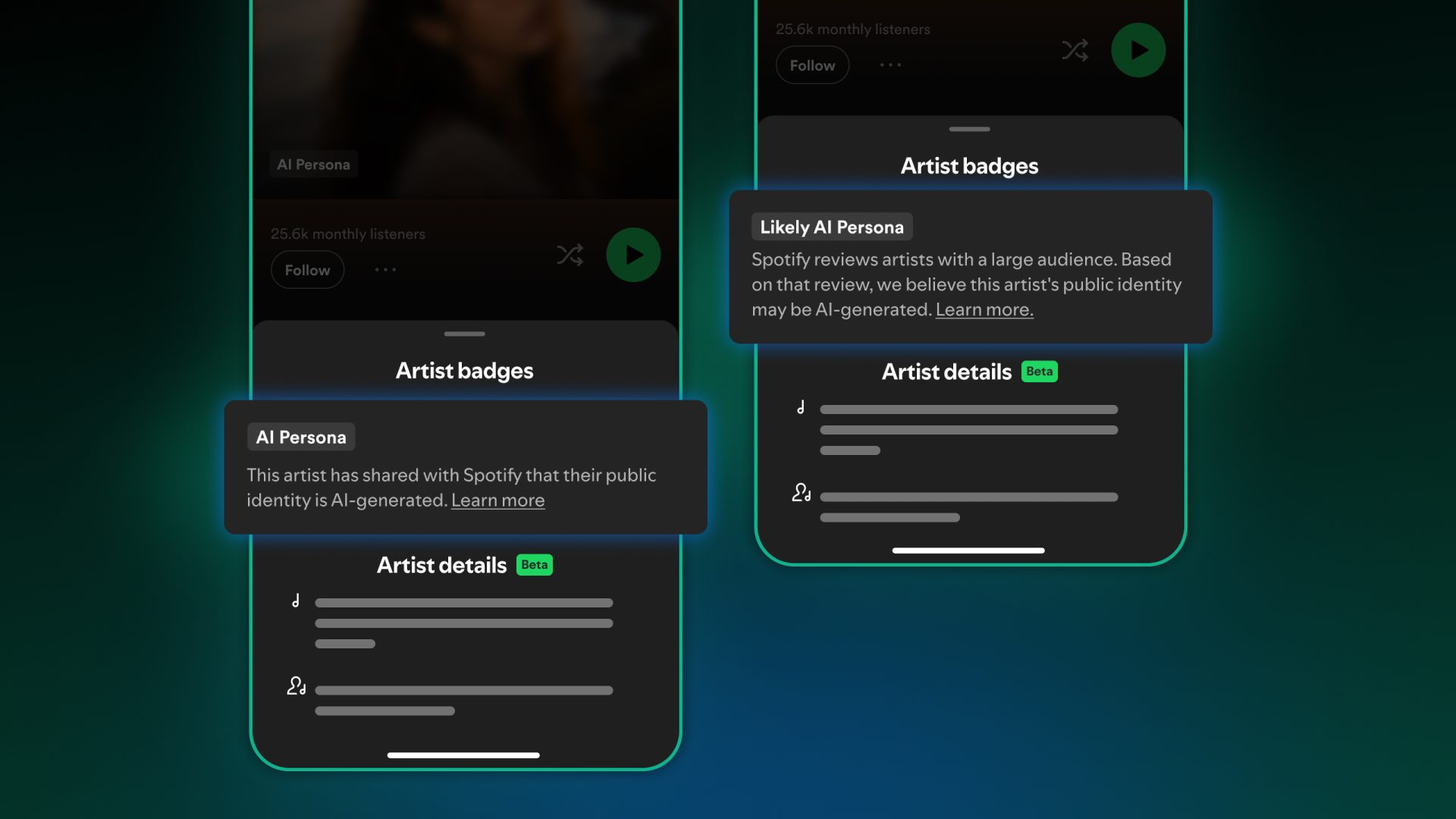
Music from a badged profile stays out of Spotify’s editorial, algorithmic and personalized recommendations by default. Badged artists get notified and can appeal.
The badge only covers the artist, though. To check the songs, Deezer’s free AI music detector scans a playlist from any of 20 streaming services through Tune My Music and gives you an AI score. When Deezer launched it in June, 43% of users switching over from other platforms already had AI-generated tracks in their playlists.
Run your own playlists through it, and you’ll know how much of NPR’s fakest year is sitting in your library.
Frequently asked questions
Who wrote NPR's 'Is 2026 the fakest year in music?' timeline?
Isabella Gomez Sarmiento wrote it for NPR Music Features, and NPR published it on October 27, 2026. It's part of a package that also includes a historical survey of music fakes, a podcast on why it feels harder than ever to know what's real, and an essay by Ann Powers on where the desire for authenticity comes from.
What did James Blake post on Instagram about fakery in music in 2026?
In the summer of 2026, James Blake posted a series of complaints that the music industry is essentially rigged, with album reviews, comment sections and streaming numbers manipulated for profit. He wrote: 'If you're an artist, remember that in 2026 there's not a single part of the system that isn't faked.' NPR uses that line to open its timeline.
Is Betty Hammerschlag an AI artist?
None of the reporting NPR cites says so. Journalist Shawn Reynaldo's investigation in his First Floor newsletter claims Betty Hammerschlag is a project of German artist Tilman Hornig, a man in his 40s. Reynaldo says he couldn't verify the artist's identity or get a comment from Hornig.
Did The Rolling Stones use AI in the 'In the Stars' music video?
Yes. In the video, Mick Jagger, Keith Richards and Ronnie Wood appear as younger versions of themselves, and NPR reports the de-aged versions were made by Deep Voodoo, an AI startup formed by South Park creators Trey Parker and Matt Stone. The single comes from Foreign Tongues, the band's 25th studio album.
About the author

Covering AI music tools, industry shifts, and news for music creators and professionals. Twice-weekly newsletter at aimusicpreneur.com.