Jason Isbell and David Lowery sue Suno over identity, and the complaint has no copyright claim
My stack My fav 6 tools for AI music after testing 70+
-
 ElevenMusic · Music generation
 -
 Moises · Stem separation
 -
 Controlla · Voice swap & cloning
 -
 Cryo Mix · Mixing + mastering
 -
 Neural Frames · Music videos
 -
 ONCE · Distribution
Some links are affiliate links — I earn a commission at no cost to you. Every tool here is one I run myself and truly believe in. This stack is proven.
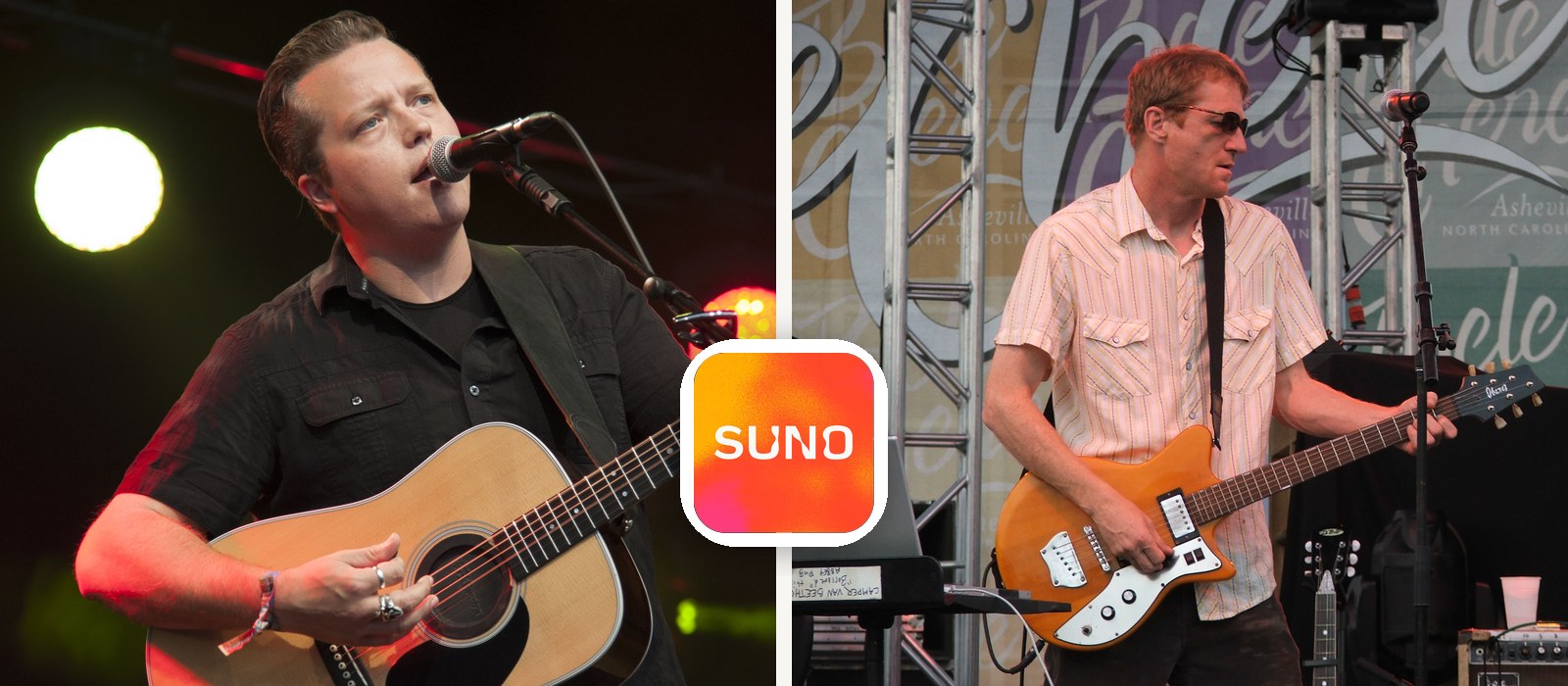
Jason Isbell and David Lowery have sued Suno, and the interesting part is what they left out. Their 84-page proposed class action, filed August 31 in Boston federal court, doesn’t contain a single copyright claim.
They’re joined by Texas blues musician Guy Forsyth and Florida saxophonist Eduardo Calle. Isbell has six Grammys. Lowery fronted Cracker and Camper Van Beethoven, and has spent a decade picking fights with the plumbing of the music business.
The argument is that Suno built a machine indexed by musicians’ names, and that a name is property.
What Suno v5 returned when the plaintiffs typed in “jason isbell”
The complaint, published in full by MBW, works by demonstration rather than assertion.
Type “jason isbell” into Suno’s v5 model, the plaintiffs say, and you get back an Americana track called Paper Bell
. Suno’s own description of it reads contemporary Americana singer-songwriter with fingerpicked acoustic guitar.
The filing says the vocal imitated Isbell’s characteristic clear male vocals and country twang.
Then there’s the cover art. Suno generated a picture of a paper bell, standing in front of a church and some trees.
Feed it “Camper Van Beethoven” on v5.5 and it produces Pull Over Where the Wheat
, described by the platform as quirky late-1980s alternative rock with folk-rock elements. Nobody had to jailbreak anything. The name went in, and the artist came out the other side in three formats at once: audio, text and image.
That’s the whole theory of the case. Suno’s own behavior is the evidence that the identity was worth something to Suno.
Why the Illinois biometric claim is the sharpest part of the filing
The publicity claims sit on familiar ground. Illinois has a Right of Publicity Act, California has a common-law version, and the complaint pulls in similar laws across other states. That’s the rule a celebrity leans on when an ad copies their look without asking.
The biometric claim is the one worth watching.
Illinois has a law called the Biometric Information Privacy Act, which requires written consent before a company collects data that identifies you by your body. Fingerprints, face scans, and voiceprints. The plaintiffs allege Suno’s processing pipeline computed and stored measurements of individual singers’ voices, among them pitch contours, formant structure and breath dynamics, and that this data is a voiceprint within the meaning of the Act.
Suno never asked, never disclosed, never published a retention policy, and never obtained the written consent BIPA requires. It captured and stored the voiceprints anyway.
BIPA is a statute with real teeth and a long record of expensive settlements, and it doesn’t care whether the output was transformative. It asks what was collected and whether anyone said yes.
This is the same structural move that a New York judge sketched out last month, when he threw out the indie artists’ unfair competition claim against Udio and then wrote that training on an artist’s vocal characteristics could implicate identity interests separate from copyright. He gave them 30 days to plead it properly. Isbell and Lowery have arrived with it pleaded properly from day one.
Suno says it blocks artist names, and the complaint says a space defeats the filter
Suno has an answer to this on the record already. The company has said it intentionally do not use artist names as a category of training metadata,
and that it built detection filters that block or prevent a user from using specific artist, song, or album names as prompts.
The plaintiffs call that false, and their rebuttal is almost rude in its simplicity.
They go further and point at Suno’s paid affiliate marketers, who have published tutorials teaching subscribers how to get around the filter. If accurate, that’s a company earning commission on instructions for defeating its own guardrail.
Suno has raised over $400 million at a $5.4 billion valuation and passed 2 million paid subscribers in February. It has also spent this year settling: Warner first, then a global licensing deal with BMG in August, with a new label-backed model due before the end of 2026. Those deals buy peace with rightsholders. They don’t buy anything from Isbell, because Isbell isn’t a rightsholder here. He’s a person.
What Isbell and Lowery are not asking the court for
The complaint is unusually careful about its own limits, and the line deserves quoting.
Plaintiffs claim no ownership of country music, of Americana music, or of any genre, style, or musical idea, and nothing in this Complaint asserts a right to prevent anyone, human or machine, from making blues or any other style.
No damages figure appears anywhere in the 84 pages. The filing says the total across the proposed class tops $5 million, which is the threshold for federal court, and asks the judge for state-law damages, Suno’s profits from the conduct, punitive damages where the state permits them, and an order barring Suno from capturing or commercially exploiting musicians’ voices and names without consent.
The class definition is the part that could get expensive. It covers musicians whose names are or have been accepted as prompts in Suno,
which the complaint argues is self-defining: if Suno operationalized your name, Suno decided your identity was useful. As the filing puts it, the musician may be a global star or a session player whose name is familiar mainly to musicians, collectors, or people who read liner notes on their parents’ vinyl collection.
The complaint opens by comparing Suno to the Borg from Star Trek, and closes on it too: A musician’s identity is their property, but Suno took it without consent. This lawsuit is how these musicians resist the premise that resistance is futile.
Why this case reaches something the label lawsuits cannot
Every major AI music case so far has been about recordings. The RIAA labels sued over masters they own. Sony’s second suit against Udio counts 30,117 of them. Those cases can settle tomorrow and still leave one question completely untouched: does a singer have any interest in the sound of their own voice, separate from the recording it lives in?
Only artists can ask that, because only artists can say the voice is theirs while the master belongs to somebody else. The earlier indie class actions circled it and kept getting knocked back on preemption, the rule saying federal copyright law swallows state claims covering the same ground.
Isbell and Lowery have written a complaint engineered to avoid that trap. Whether it survives a motion to dismiss will tell working musicians more about their position than any settlement between Suno and a major label ever will.
Frequently asked questions
Which musicians filed the Suno identity class action in August 2026?
Jason Isbell, David Lowery of Cracker and Camper Van Beethoven, Texas blues musician Guy Forsyth, and Florida saxophonist Eduardo Calle. They filed as proposed class representatives, so the case is written to cover other musicians whose names Suno accepts as prompts.
Why does the Isbell and Lowery complaint against Suno avoid copyright claims?
Copyright covers the recording. The plaintiffs are claiming the thing a recording contract usually leaves with the artist: their name, their voice and their persona. Keeping copyright out of the filing also keeps it clear of the preemption arguments that have sunk earlier state-law claims against AI music companies.
What are the voiceprints the Isbell and Lowery complaint accuses Suno of storing?
The complaint defines a voiceprint as the unique identifying characteristics of a person's voice that can be used to identify them. It alleges Suno's pipeline computed and stored measurements including pitch contours, formant structure and breath dynamics, which it argues qualify as biometric data under Illinois law.
How much money are Jason Isbell and David Lowery asking Suno to pay?
The complaint names no damages figure. It states the total across the proposed class exceeds $5 million, the threshold for filing in federal court, and asks for damages set by state law, Suno's profits from the conduct, and punitive damages where a state allows them.
What did Suno v5 generate when the plaintiffs typed in Jason Isbell's name?
An Americana track called Paper Bell, which the platform described as contemporary Americana singer-songwriter with fingerpicked acoustic guitar. The filing says the audio imitated Isbell's clear male vocals and country twang, and the cover art showed a paper bell in front of a church and trees.
About the author

Covering AI music tools, industry shifts, and news for music creators and professionals. Twice-weekly newsletter at aimusicpreneur.com.