Udio beats the indie artists' state-law claim, and the judge gives them 30 days to replead voice and identity
My stack My fav 6 tools for AI music after testing 70+
-
 ElevenMusic · Music generation
 -
 Moises · Stem separation
 -
 Controlla · Voice swap & cloning
 -
 Cryo Mix · Mixing + mastering
 -
 Neural Frames · Music videos
 -
 ONCE · Distribution
Some links are affiliate links — I earn a commission at no cost to you. Every tool here is one I run myself and truly believe in. This stack is proven.
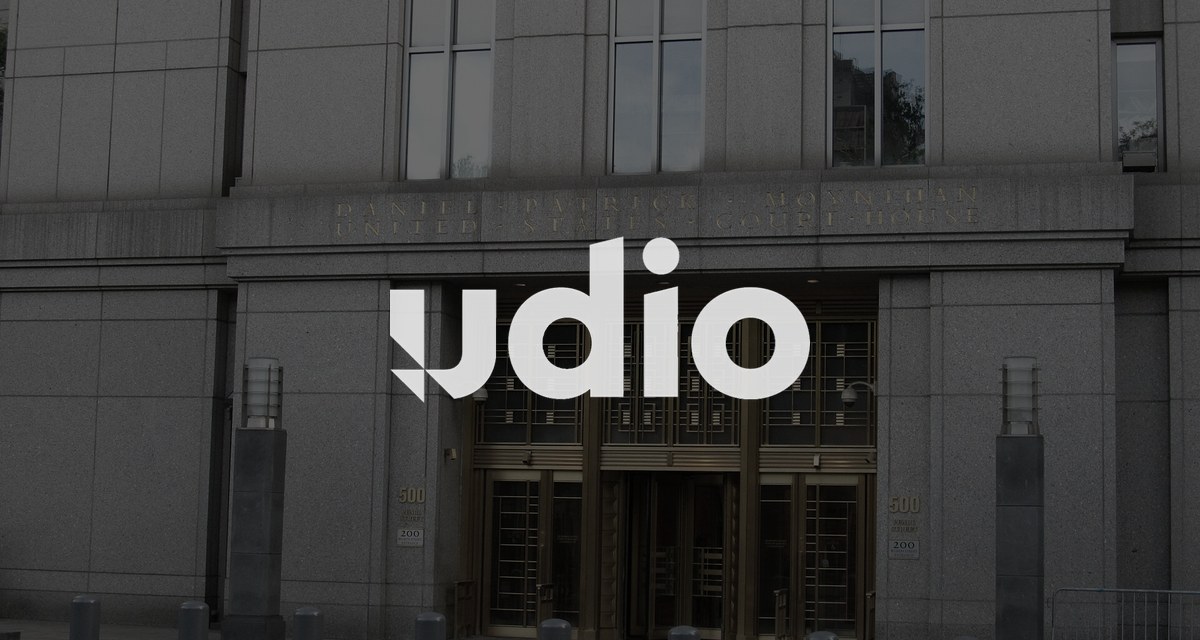
Judge Alvin K. Hellerstein refused to revive the independent artists’ state-law claim against Udio in an order filed on August 17, 2026. Their unfair competition theory stays dismissed as preempted by the Copyright Act. Then he told them how to try again, and gave them 30 days to do it.
The case is the class action country artist Tony Justice filed in June 2025 alongside 5th Wheel Records and My Heartland Publishing, later joined by Hagens Berman as co-counsel. The copyright infringement and circumvention counts were never in play here. Only Count Four was.
Why copyright preemption killed the Tennessee unfair competition claim
Count Four started life as a Tennessee Consumer Protection Act claim. Opposing Udio’s motion to dismiss, the artists said the TCPA citation was inadvertent and the count was always meant to be common-law unfair competition, then asked for leave to fix the citation using the same facts.
Hellerstein considered both versions on May 21, 2026, and dismissed both. Under the Second Circuit’s Briarpatch test, a state-law claim dies when it covers copyrightable work and seeks rights equivalent to copyright’s own. He found the artists’ claim aimed at Udio using their creative works and artistic labour to win a market advantage, which is the injury copyright already covers.
On reconsideration the artists changed the shape of the claim. In a footnote they said their intended amendments would have alleged their voices, personas and identities were extracted and used independently of the underlying recordings, and manipulated to bring those identity-based attributes into focus for training. Hellerstein read that as a new case, not a clarification of the old one.
He anchored the analysis to Melendez v. Sirius XM Radio, where the Second Circuit preempted a performer’s identity claims because he never alleged his likeness was pulled out to appear independently of the copyrighted broadcasts. The artists suing Udio had the same gap, and filled it too late.
The voice-cloning door Hellerstein left open for independent artists
The closing pages are more useful to artists than the denial is damaging.
The Court does not foreclose the possibility that an AI platform trained on an artist's vocal characteristics could, under appropriate circumstances, implicate identity interests distinct from copyright claims.
He follows it with a route. Nothing in the order stops the plaintiffs from seeking leave to amend by proper motion with a proposed amended complaint attached, and they have 30 days from August 17 to file one. He also states plainly he is taking no view on whether he would grant it, or whether the new facts would clear preemption. A telephonic status conference is set for October 16, 2026.
The distinction being drawn matters for every artist watching AI training cases. A claim built on “you used my songs to compete with me” is copyright, and gets preempted. A claim built on “you pulled my voice out of my songs and trained on the voice itself” is an identity claim, and might survive. Proving the second one requires pleading the extraction as its own act, which is precisely the evidentiary problem the Jorja Smith case ran into when her label tried to prove a voice clone. The full order is on CourtListener, and Mealey’s reported it on August 19.
Frequently asked questions
What did Judge Hellerstein decide in Justice v. Uncharted Labs on August 17, 2026?
He denied the plaintiffs' motion for reconsideration of his May 21, 2026 order dismissing Count Four of their complaint against Udio. The Tennessee Consumer Protection Act claim and the common-law unfair competition theory both remain dismissed as preempted by the Copyright Act. Their copyright infringement and circumvention claims are unaffected.
Why is the artists' unfair competition claim against Udio preempted by copyright?
The Second Circuit's Briarpatch test preempts a state-law claim when it covers work protected by copyright and seeks rights equivalent to copyright's exclusive rights. Hellerstein found the artists' claim centred on Udio using their creative works and artistic labour to gain a market advantage, which is the same injury as infringement. The Second Circuit takes a restrictive view of what extra elements make a claim qualitatively different.
What is the 30-day window Judge Hellerstein gave the artists suing Udio?
Hellerstein wrote nothing in the order stops the plaintiffs from seeking leave to amend by a proper motion including a proposed amended complaint, and gave them 30 days from the August 17 order to file one. He expressly took no view on whether he would grant it or whether the new facts would survive preemption.
Does the Justice v. Uncharted Labs ruling block voice-cloning claims against AI music platforms?
No. Hellerstein wrote he does not foreclose the possibility an AI platform trained on an artist's vocal characteristics could implicate identity interests distinct from copyright claims. The problem was procedural: the artists raised that theory for the first time in a footnote on reconsideration rather than pleading it.
About the author
Covering AI music tools, industry shifts, and news for music creators and professionals. Twice-weekly newsletter at aimusicpreneur.com.