Female voices are the most popular sound in AI music, 2 reports running
My stack My fav 6 tools for AI music after testing 70+
-
 ElevenMusic · Music generation
 -
 Moises · Stem separation
 -
 Controlla · Voice swap & cloning
 -
 Cryo Mix · Mixing + mastering
 -
 Neural Frames · Music videos
 -
 ONCE · Distribution
Some links are affiliate links — I earn a commission at no cost to you. Every tool here is one I run myself and truly believe in. This stack is proven.
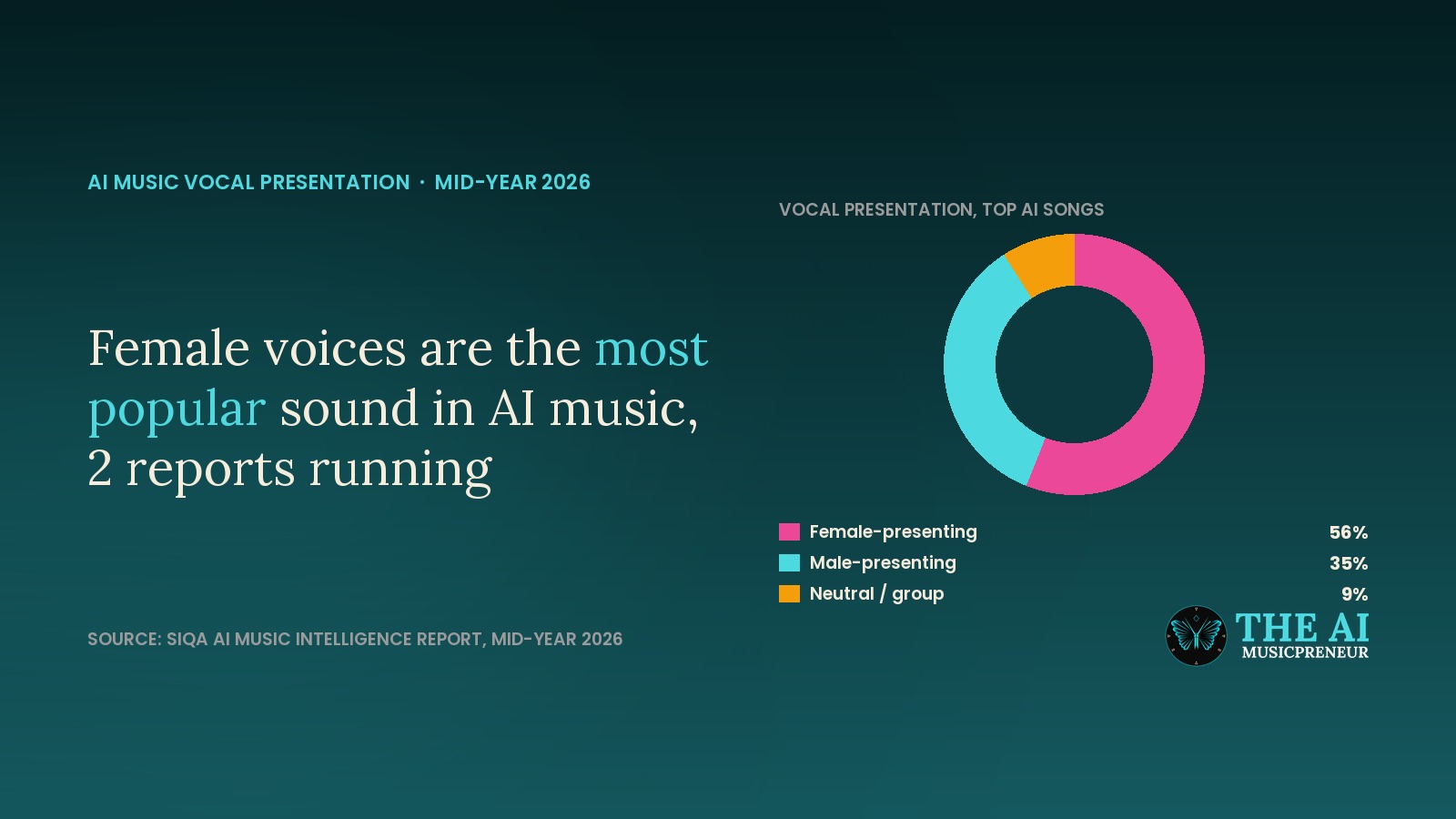
Female-presenting artists account for 56% of the most popular AI songs, according to the Sonic Intelligence Academy’s Mid-Year 2026 report. Male-presenting artists hold 35% and neutral or group acts 9%. The measurement covers 200 weekly top 10 positions across 20 chart weeks.
The plainest way to say it: the most popular AI music in the world is sung by women who mostly do not exist.
What SIQA counts when it measures vocal presentation
SIQA assesses how the artist persona presents vocally, read from the name, the artwork and the music. It does not measure the gender of the person who made the track.
The report says so directly, and the distinction is not a technicality. In a category where the vocal is frequently generated, the persona and the creator can point in opposite directions on the same release.
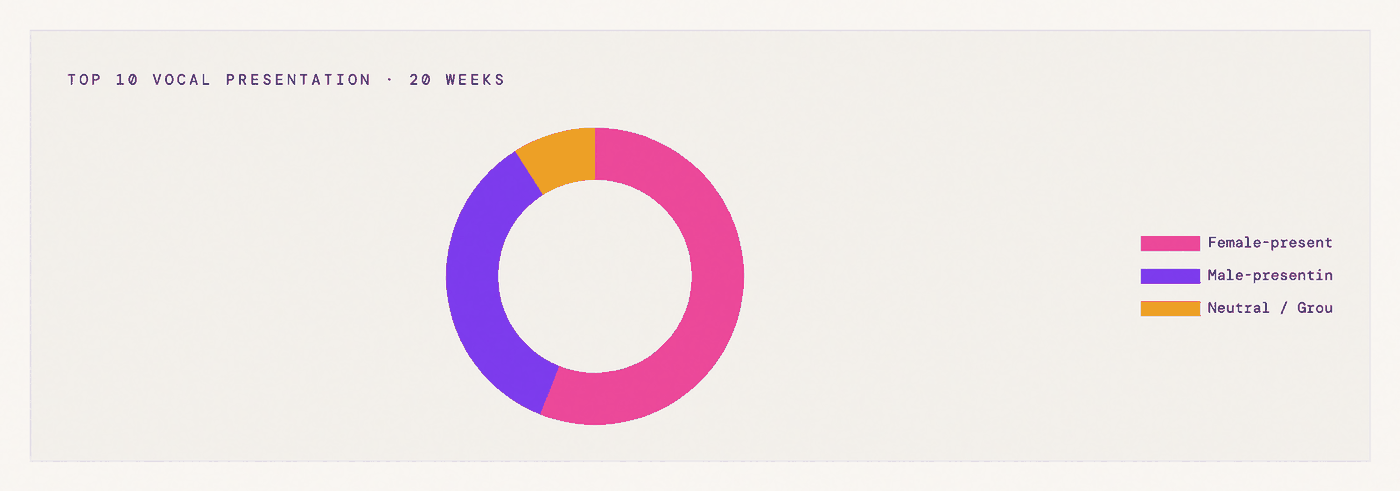
Q1 found the same lean, with female-presenting artists at 37.2% of all chart positions and 70% of the top 10 by Week 9. Mid-year holds it for 20 more weeks and closes the period at 6 of 10.
One reporting period is a statistic. Two consecutive ones, across different artists and a different chart era, is a pattern.
The artists carrying the female-presenting share
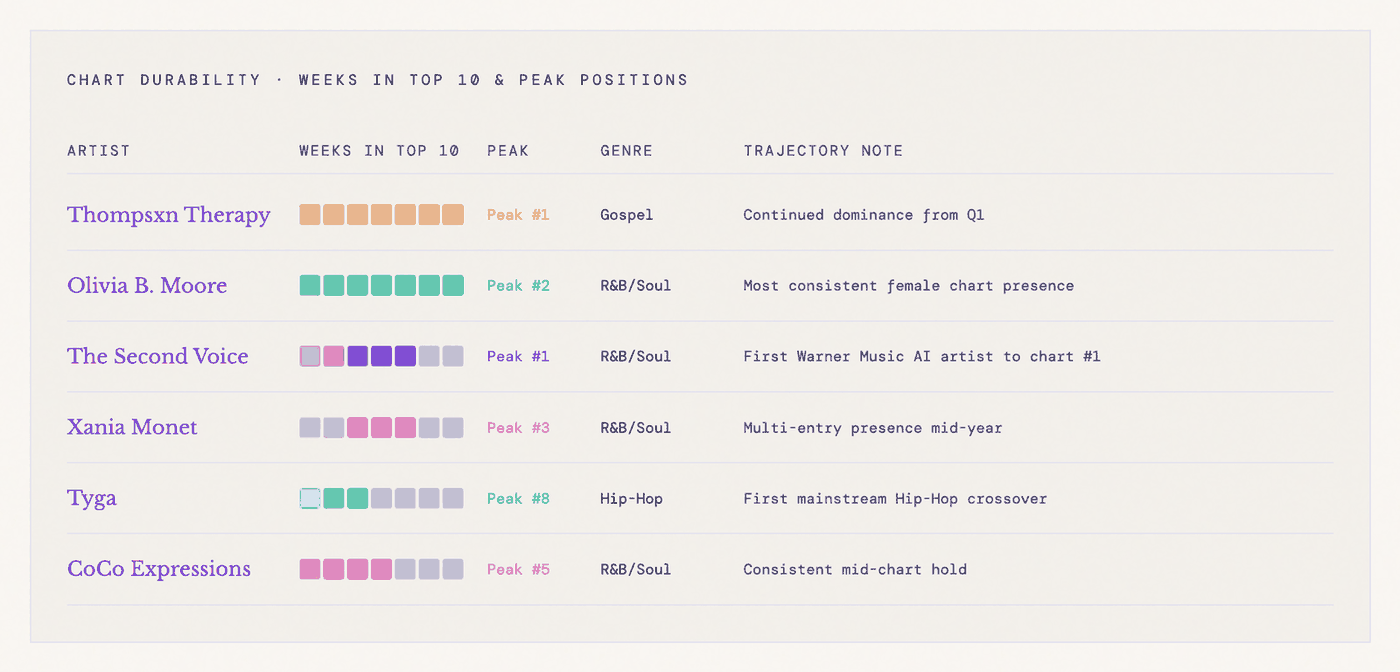
Olivia B. Moore logged 7 weeks inside the top 10 with a peak of No.2, the most consistent female chart presence in the dataset. She started making music after losing her IT job, and in June she was the only artist with 2 songs charting at once.
Xania Monet followed with 5 weeks and a peak of No.3, carrying multiple simultaneous entries. CoCo Expressions held 4 weeks with a peak of No.5.
Why the AI vocal question matters for casting and licensing
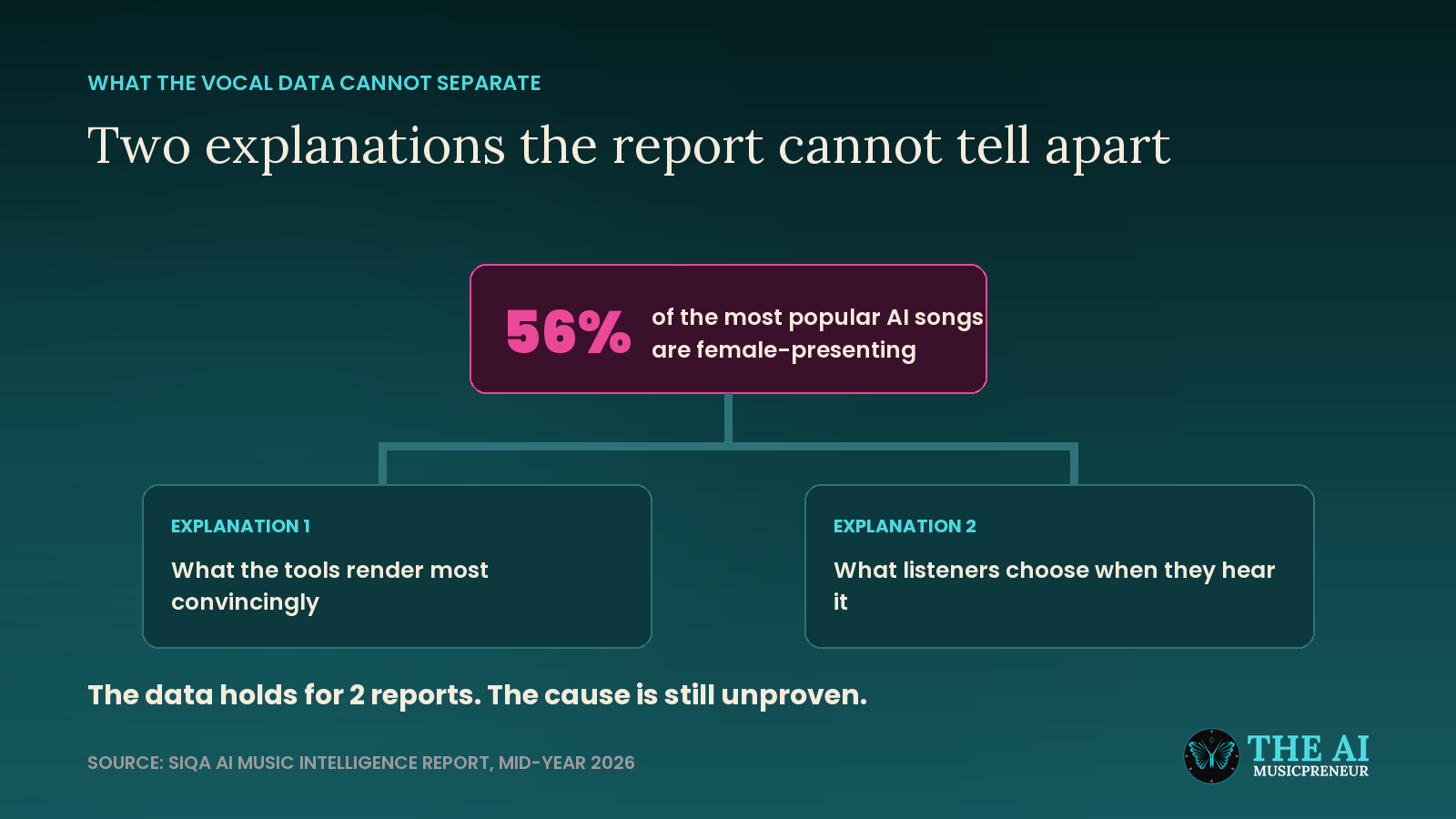
Here is the part I cannot resolve from this data, and I’d rather say so than guess. Some of this is what current tools render most convincingly. Some of it is what listeners actually prefer when they hear it. The report cannot separate the two and neither can I.
What the data does settle is the commercial default. If you are a producer picking a voice, an A&R considering an AI act, or a sync agent briefing a track, the audience evidence points one way across 2 reporting periods.
That default carries real consequences downstream. Session singers compete against a generated vocal that costs nothing per take. Voice licensing rates get set against a free alternative. And the artists with the strongest position are the ones cloning their own voice, which is the tier SIQA logged at 34.4% of releases and still growing.
It also cuts against the assumption the industry started with. AI music was supposed to be a male hobbyist scene building tracks in bedrooms. The most popular records in the category are fronted by women, and have been for 2 reports.
If you are choosing a voice for a track right now, the useful question is not which gender performs better. It is whether the voice you pick is one you have the rights to keep using, because the tools change every quarter and the licence you signed does not.
Frequently asked questions
What share of popular AI songs have female vocals in mid-year 2026?
Female-presenting artists accounted for 56% of the 200 weekly top 10 positions SIQA analysed across 20 chart weeks. Male-presenting artists held 35% and neutral or group acts held 9%. The reporting period closed with 6 of the 10 most popular AI songs credited to female-presenting artists.
Does SIQA measure the gender of AI music creators?
No. SIQA assesses the observable vocal presentation of the AI artist persona, using publicly available artist names, artwork and music. The report states plainly that this is a different data point from the gender identity of the human creator behind the project, and that it tracks vocal presentation to understand the cultural landscape of AI music.
Which female-presenting AI artists charted most during mid-year 2026?
Olivia B. Moore logged 7 weeks inside the top 10 with a peak of No.2, the most consistent female chart presence in the period. Xania Monet followed with 5 weeks and a peak of No.3, with multiple simultaneous entries. CoCo Expressions held 4 weeks with a peak of No.5.
Why are most popular AI songs sung by female voices?
SIQA reports the pattern without claiming a cause, and the honest answer is that the data cannot separate the two likely explanations. One is what current generation tools render most convincingly. The other is what listeners choose when they hear it. What the mid-year report establishes is that the lean held for 20 more chart weeks after Q1 first identified it.
About the author

Covering AI music tools, industry shifts, and news for music creators and professionals. Twice-weekly newsletter at aimusicpreneur.com.