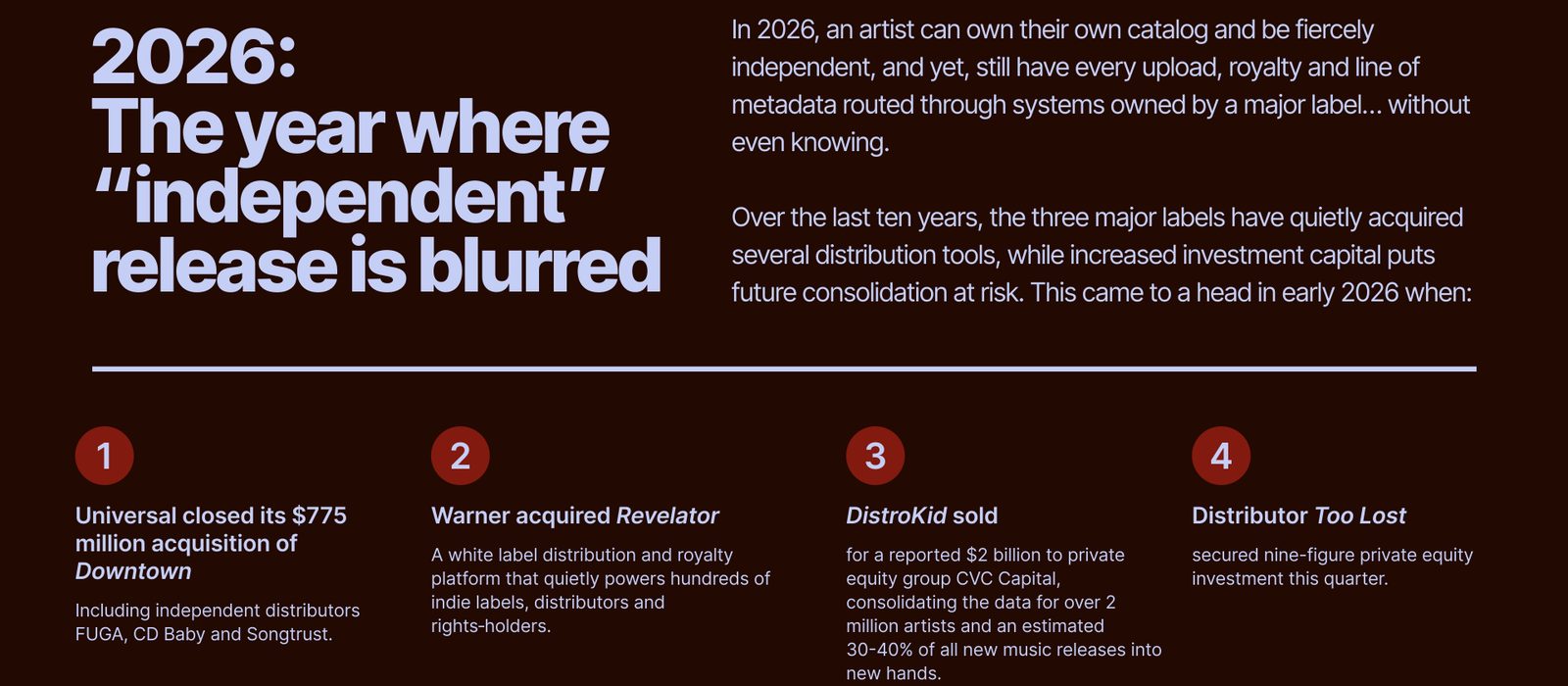
Major labels' proposed AI chart rules would exclude most of today's charting AI artists
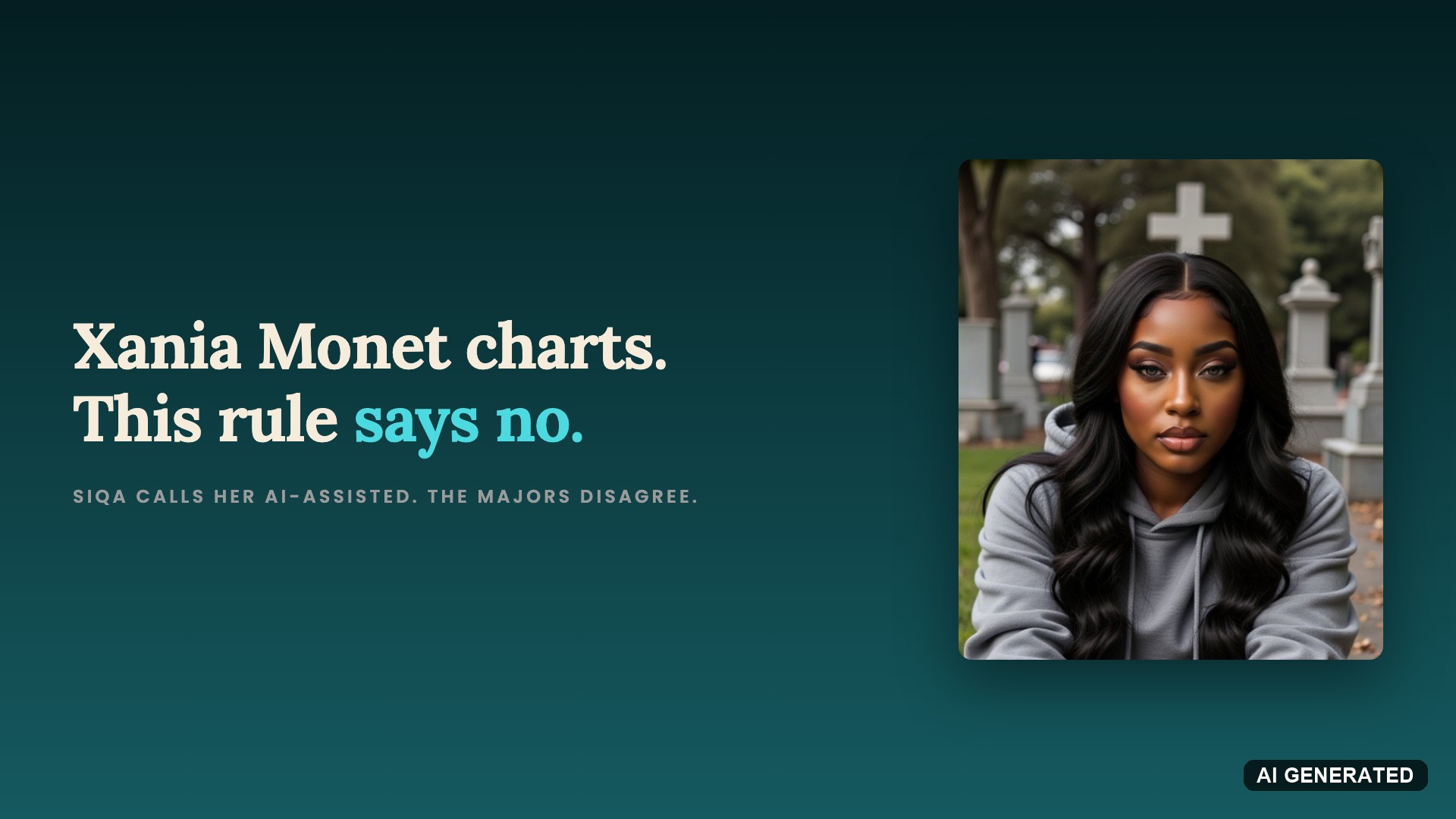
A coalition of 11 music companies published six principles on July 29, 2026 for when a recording made with generative AI should be allowed into the official charts. All three majors signed, alongside Believe, BMG, Concord, Dirty Hit, Glassnote Records, HYBE Corp., Mom+Pop Music and Partisan Records. Read plainly, the framework lets AI-assisted tracks chart and keeps purely synthetic ones out.
The trouble starts with the word assisted. A chart that already includes AI music has been running since January, and its definition of AI-assisted sits a long way from the one the labels are proposing.
The six criteria in the major-label chart proposal
The press release says a recording developed with generative AI must not chart where there is reason to believe it fails any of the following:
- The generative AI services used are properly authorised and lawful.
- The recording is substantially human made.
- It raises no stream or chart manipulation concerns.
- It complies with applicable law, including copyright, related rights and personality rights.
- Making it available does not breach the terms of the AI service used.
- The use of generative AI is appropriately signalled to chart compilers.
These are principles, not rules. Chart compilers like the Official Charts Company and Billboard would each have to adopt them. The stated goal is to “establish a clear boundary between human-led creativity and works that are purely synthetic or generated by unauthorized AI models”.
Why “substantially human made” is the criterion that decides everything
Five of the six can be checked against a record. Was the tool licensed, did the plan permit commercial release, does the stream pattern look manipulated, does the track clone someone’s voice, was AI use disclosed on the way in. Those have answers.
“Substantially human made” has no published threshold. No percentage, no list of qualifying contributions, no method for confirming any of it. It is also the criterion the other five defer to, because a track can clear every mechanical test and still be shown the door on this one.
These principles would enable official charts to accommodate appropriate use of AI in the creative process whilst remaining an authentic celebration of human artistry.
The gap matters because the human work in an AI-rendered track is invisible in the finished file. Writing the lyrics, cutting 100 takes, arranging stems individually inside Suno Studio: none of it survives the export. A chart compiler receives a master and a metadata field.
SIQA and the major labels define AI-assisted very differently
SIQA has run an AI music chart since January 2026 and had to answer this question to exist at all. Its framework splits AI music three ways instead of two, and it keys on creative input rather than on how synthetic the output sounds.
| Question | Major-label proposal | SIQA AI Music Charts |
|---|---|---|
| Can a fully AI-generated track chart? | No. It fails “substantially human made”. | Yes. It charts in the fully AI-generated tier. |
| What counts as AI-assisted? | Undefined. Human contribution must be substantial, with no threshold given. | A human supplied original creative input, such as writing the lyrics, even when AI produced the music and vocal. |
| How many tiers? | Two, in effect: eligible or not. | Three: AI-Assisted, Human + AI Hybrid, Fully AI-Generated. |
| Does the AI tool’s licence status matter? | Yes. The service must be authorised and lawful, and its terms unbroken. | Not a stated eligibility gate. |
| Voice clones of other artists? | Barred through personality rights and copyright compliance. | Barred. Fraudulent cover versions of real artists are excluded. |
| Who decides? | Chart compilers, working from supplied metadata. | SIQA review, run in-house, with the tier published per track. |
Under SIQA, a songwriter who wrote every word and let Suno build the track is AI-assisted. Under an output-based reading of the major-label framework, the same record looks purely synthetic, because nothing in the master proves who wrote the words.
The charting AI artists the major-label rules would catch
Breaking Rust, the AI country act that reached Billboard, is classified fully AI-generated. Under criterion two it fails outright.
The harder cases are the ones SIQA already calls AI-assisted. China Styles writes her own lyrics and runs them through Suno and ChatGPT, with a synthesized voice carrying them. Her track “I Love Me, Loud” reached Billboard. Xania Monet, Olivia B. Moore and Slime Dot sit in the same tier on the strength of human songwriting.


Both are classified AI-assisted by SIQA. Both would reach a chart compiler as a synthetic-sounding master with an unverifiable lyric credit.
Every one of those records would arrive at a chart compiler as a fully synthetic-sounding master with a lyric credit nobody can verify. Most of the roster Danny Jacobson signed to Hallwood Media sits in that position.
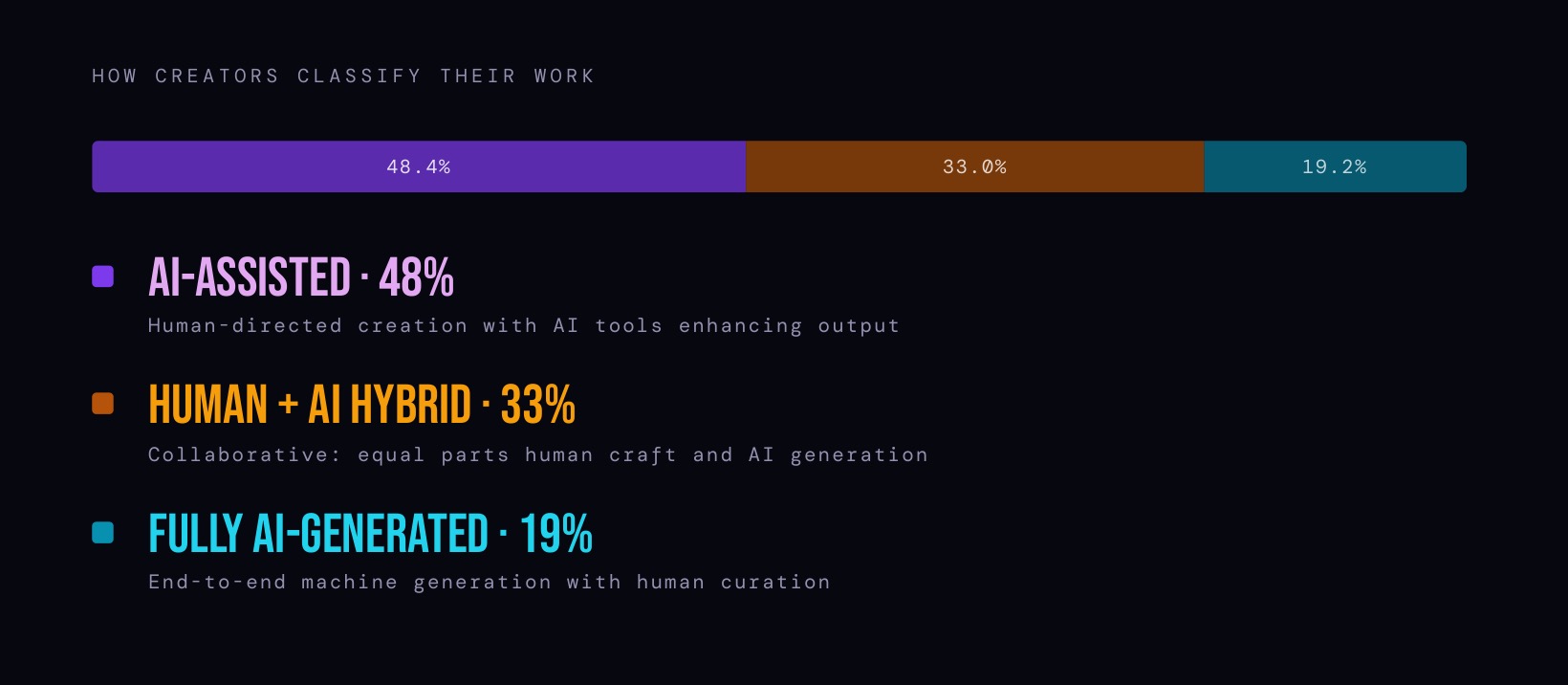
SIQA’s Q1 2026 sample of 1,551 verified tracks put 48.4% of creators in AI-Assisted, 33.0% in Human + AI Hybrid and 19.2% in Fully AI-Generated. 81% of that population is meaningfully involved in making the record. A binary eligible-or-not gate has nowhere to put them.
TIDAL, Bandcamp and Spotify are already building the same gate
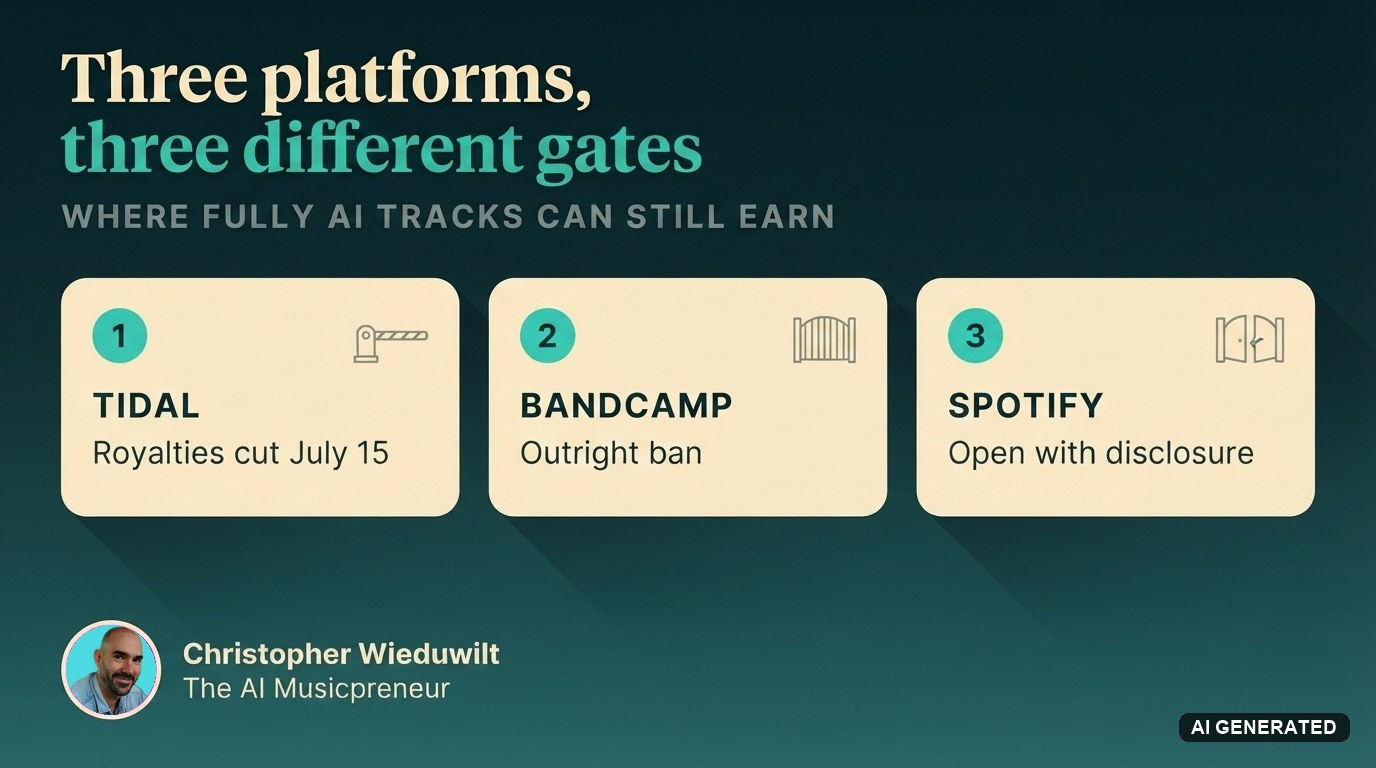
Chart eligibility is the newest version of a wall going up in several places at once. TIDAL stopped paying royalties on fully AI-generated tracks on July 15, 2026. Bandcamp bans music produced entirely or mainly by AI. Both decisions rest on the same undefined line.
Spotify sits on the other side. It accepts AI music with DDEX disclosure and bans voice impersonation, and it carries more reach than TIDAL and Bandcamp combined. The gate is not closed. The track gets labelled on the way through.
Frequently asked questions
What are the six AI chart eligibility principles the major labels proposed?
A recording must use only properly authorised and lawful generative AI services, be substantially human made, raise no stream or chart manipulation concerns, comply with copyright, related rights and personality rights law, avoid breaching the AI service's own terms, and have its AI use signalled to chart compilers. A track failing any one of them would be ruled ineligible.
Which companies signed the July 2026 AI chart eligibility proposal?
Universal Music Group, Sony Music Entertainment and Warner Music Group joined Believe, BMG, Concord, Dirty Hit, Glassnote Records, HYBE Corp., Mom+Pop Music and Partisan Records. The group published the principles in a press release on July 29, 2026.
Are the proposed AI chart eligibility rules already in force?
No. They are principles addressed to chart compilers, not adopted rules. Bodies like the Official Charts Company and Billboard would each have to decide whether to apply them.
How does SIQA's AI-assisted tier differ from the major labels' definition?
SIQA treats a track as AI-assisted when a human supplied the original creative input, such as writing the lyrics, even if AI generated the music and the vocal. The major-label framework asks whether a recording is substantially human made without defining a threshold, and an output-based review cannot confirm who wrote the words.
Would Xania Monet and Breaking Rust qualify under the proposed AI chart rules?
Breaking Rust is classified fully AI-generated and would fail the substantially-human-made test. Xania Monet, China Styles, Olivia B. Moore and Slime Dot are all classified AI-assisted by SIQA on the strength of human songwriting, but nothing in a finished master proves that authorship to a chart compiler.
About the author

Covering AI music tools, industry shifts, and news for music creators and professionals. Twice-weekly newsletter at aimusicpreneur.com.