The AI Music Briefing #5: Parkinson's took his guitar, so he used Suno
The week of June 1–7, 2026, when the legal math got loud: Sony and Universal pushed Suno's potential damages past $9.1 billion, Anthropic raised $65 billion, and a London musician with Parkinson's finished his album with Suno and Udio. Here's the full briefing.
My stack My fav 6 tools for AI music after testing 70+
-
 ElevenMusic · Music generation
 -
 Moises · Stem separation
 -
 Controlla · Voice swap & cloning
 -
 Cryo Mix · Mixing + mastering
 -
 Neural Frames · Music videos
 -
 ONCE · Distribution
Some links are affiliate links — I earn a commission at no cost to you. Every tool here is one I run myself and truly believe in. This stack is proven.
Issue #5 · the week of June 1–7, 2026 · ~7 min read. The Friday read for music industry professionals working at the intersection of AI and the traditional music business. Curated by Christopher Wieduwilt.
The week the legal math got loud
This week the numbers did the talking, and they did not agree with each other.
Sony and Universal moved to put 61,026 Suno recordings in play, pushing potential damages past $9.1 billion. Anthropic raised $65 billion and filed to go public at $965 billion. Suno closed $400 million at a $5.4 billion valuation. And in London, a musician with Parkinson’s used the same generators the labels are suing to finish his album.
Capital is pouring into the model makers while the courts price the taking. Here is the week in one read.
What’s in store:
- Suno’s $9 billion damages math, and the parallel move against Udio
- Suno and Udio both fighting to seal one number: their training-set size
- Where the money is actually flowing (and where it dried up)
- The album a musician with Parkinson’s finished with Suno and Udio
High Signal News: copyright fights, new AI tools, and Anthropic’s $65B raise
CISAC’s Björn Ulvaeus says creators are ‘not in the room’ on AI laws
CISAC President Björn Ulvaeus, of ABBA, used the body’s annual report to say human creators are shut out of AI copyright talks and unpaid for work used to train models. Governments tend to consult the big labels, publishers, and studios first, not the individual songwriters whose catalogs feed the systems.
US Copyright Office leaders headline the AIMP summit on June 9
Register of Copyrights Shira Perlmutter and General Counsel Emily Chapuis do a fireside chat at the AIMP Global Music Publishing Summit on June 9 in New York. Chapuis led the Office’s report questioning training-as-fair-use, the question at the center of every case in this issue.
ARIA rejects a push to weaken Australia’s AI copyright
At the AFR AI Summit, Tech Council of Australia chair Scott Farquhar said training AI locally means cutting “a deal with every single recording artist in the entire world.” ARIA CEO Annabelle Herd countered that four deals, one per major plus Merlin, would license about 80% of the world’s recordings, and that a $67 billion creative sector “won’t rewrite copyright on the advice of those who profit from dismantling it.”
TONE3000’s A2 puts high-end amp tone on a $3 chip
TONE3000 released NAM Architecture 2 (A2), free and open-source, built with NAM creator Steve Atkinson. In its own 1,000-person blind test, A2-Full scored 100, level with real recorded gear, ahead of Neural DSP V2 (94), ToneX (90.5), and Line 6 Proxy (77). A2-Lite runs at 50% CPU on a $3 ARM chip, and Blackstar, Lava Music, Darkglass, HeadRush, Chaos Audio, and Dimehead are already on board. The scores are TONE3000’s own, so watch for outside testing.
EightSix Brand Studio scores tracks against a brand’s sonic fingerprint
Berlin sonic-branding agency EightSix launched Brand Studio, which rates a track against a brand’s mDNA profile across six dimensions. The AI sits in the analysis (Cyanite for audio, SoundOut’s 500,000 consumer studies for testing), not in generation, and a human still makes the call. Clients include Siemens, OTTO, and Douglas. It indexes and ranks artists for sync work, worth watching if you pitch for brand placements.
RoEx Automix Desktop brings local AI mixing to the Mac
RoEx’s new native Apple Silicon app runs its AI mixing and mastering on your own machine, no uploads, up to 24 hours offline, and 2 to 5x faster than the web tool. A new .amx session file opens a full mix on double-click, and it exports to Ableton, Bitwig, and Fender Studio. Windows and Linux builds are coming.
Anthropic raises $65B, then files to go public at $965B
Anthropic raised $65 billion on May 28 at a $965 billion valuation, past OpenAI’s $852 billion, then filed a confidential draft S-1 days later on a reported $47 billion run-rate. The round landed the same week Concord, Universal, and ABKCO dropped their vicarious-infringement claim post-Cox. The core claim, that Anthropic copied lyrics to train Claude, is still live.
Top Story: Parkinson’s took his guitar, so AI helped Samuel Smith finish his album
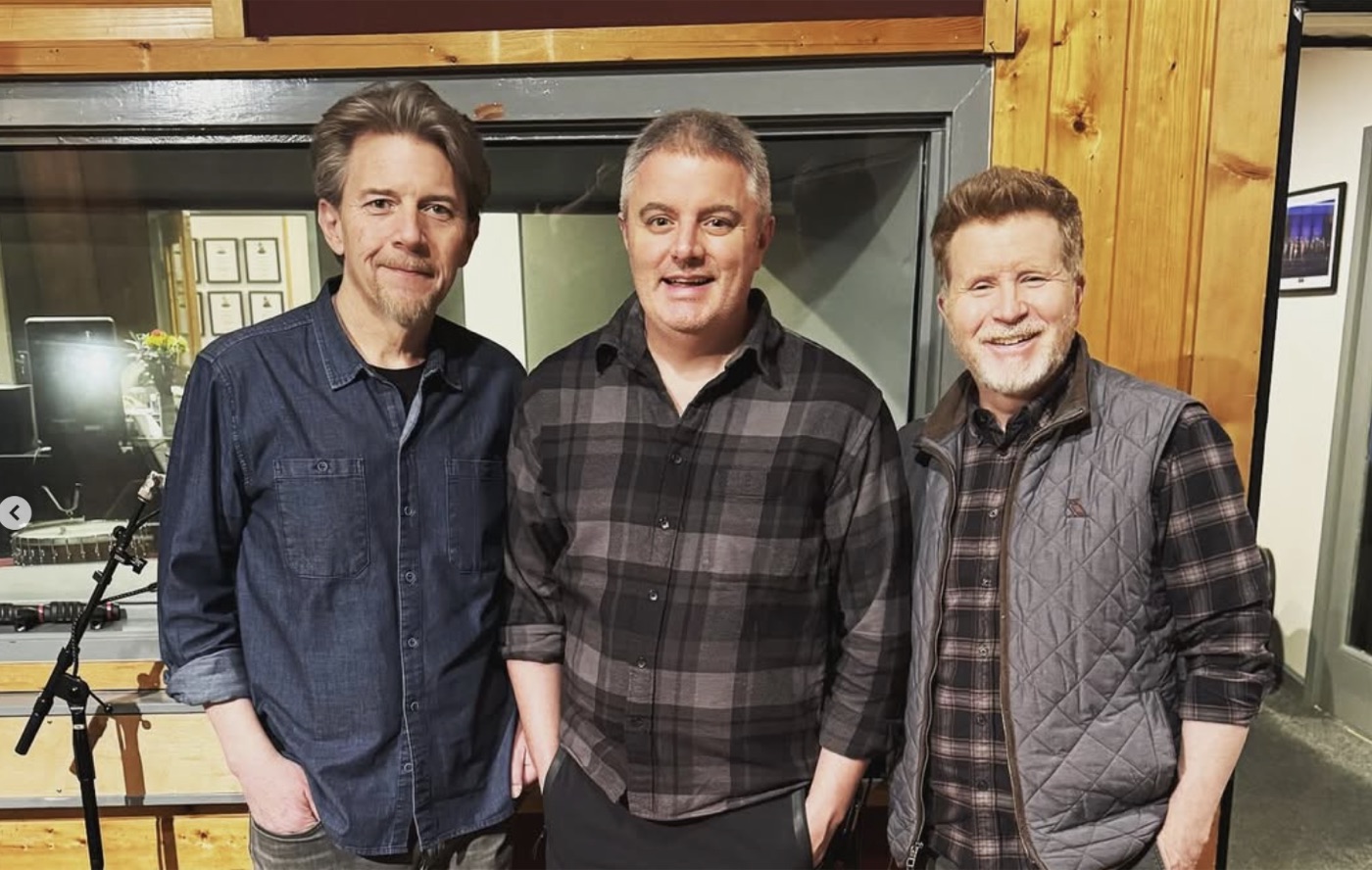
Samuel Smith, a 49-year-old London musician, spent more than a year making his album The Art of Letting Go. Partway through, Parkinson’s disease eroded his guitar playing. He finished the record anyway, humming melodies into his phone and feeding them into Suno and Udio to build demos for his session players.
The AI music debate runs on scraped catalogs, fake artists, and the lawsuits filling the rest of this issue. Smith’s story is the use case the coverage skips: a working musician using the same generators to keep doing the job his body was taking away. The tools the majors are pricing at $9 billion in damages are the ones letting him keep writing.
Smith hums a song idea into his phone, uploads it, then writes prompts for instrumentation, mood, and style. The app generates a version, then another. He said a convincing demo often took 50, 100, 150 attempts plus heavy editing. The demos were reference tracks, never the final record.
- “I upload my lyrics; AI doesn’t create my lyrics. I upload my music; AI does not create my music,” he told the Associated Press.
- He wrote all his own lyrics and melodies. Human players cut the album.
Grammy-winning pianist Matt Rollings produced it in Nashville with a band of roots and bluegrass heavyweights, including Jerry Douglas, Alison Brown, Stuart Duncan, and Julian Lage. On the track “Horizon,” Smith got a brief window when his arm freed up and played a final guitar duet with Lage.
“I had a window of about 10 minutes in the studio when my arm freed up. So in the end, I was able to capture the last breath of my guitar playing,” Samuel Smith told the Associated Press.
The generators Smith leaned on are the ones the industry is suing, and they deny infringement. His message to the companies was to engage with health professionals and music therapists and show what the tools can do for society. Whether they pick up that thread is open.
The line between an instrument and a replacement sits with the operator, not the app. Smith wrote the songs, ran the prompts, picked the takes, and human players made the record. The tool moved his ideas, not his taste.
Music Intelligence: UK funding, RIŽIK, and a 5 billion AI-fan forecast
UK music-tech funding fell to £68.8M in 2025
MTUK’s Sound Investments report puts UK music-tech funding at £68.8M in 2025, down from a £183M peak in 2021, with growth-stage money off 90% since 2020. Set that against the same week’s numbers: Anthropic’s $65 billion round and Suno’s $400 million at a $5.4 billion valuation. The capital is flowing to the AI model makers, not the small tools working musicians use to split stems and write hooks. When growth money skips that layer, you end up renting your toolkit from whoever has the biggest parent company.
RIŽIK on taming AI instead of fearing it
LA live electronic artist RIŽIK (Hisham Dahud, who teaches Artist Entrepreneurship at UCLA) argues music is heading for a correction back toward humanity, not away from it. His read: streaming turning songs into a utility is the deeper break, not AI. The optimism is conditional. The future looks bright if artists keep their hands on the controls, which is the same line Samuel Smith’s story draws from the other direction.
Controlla’s CEO predicts 5 billion AI music fans by 2040
In a LinkedIn post, Controlla’s Rohan Paul predicted 5 billion people will love AI music by 2040, up from roughly 200 million who have tried it. His analogy: recorded music is mass-produced furniture, AI music is a custom piece built for your taste. Controlla trains voices on consent with direct royalties, and Paul argued for artists’ publicity rights at the US Copyright Office. The number is a founder rounding up; the move underneath it, fans as co-creators instead of an audience, is the part worth tracking.
AI Music Lawsuit Tracker
RIAA v. Suno: damages near $9.1B across 61,026 recordings
RIAA v. Suno: Partly settled. Warner settled in November 2025; Sony and Universal are still litigating in Boston.
This week: Two moves. Sony and Universal filed to expand the list from 560 to 61,026 recordings, pushing potential damages past $9.1 billion. Separately, Suno filed May 29 to seal the single figure for its total training-set size, citing competitive harm. Inner City Press is fighting to unseal it.
RIAA v. Udio: Sony moves to add 30,304 recordings
RIAA v. Udio: Mostly settled. Universal and Warner settled in late 2025; Sony alone is litigating in New York, with the DMCA claim allowed to proceed.
This week: Two moves. Sony is moving to add roughly 30,304 recordings, with a status conference set for July 10. And Udio filed June 1 to seal its “Training Data Number,” the same competitive-harm argument Suno used May 29.
GEMA v. Suno: Munich verdict expected July 31
GEMA v. Suno: Awaiting verdict. The Munich Regional Court rules July 31, 2026.
This week: No change this week. Verdict still expected July 31.
Good to know: Concord, Universal, and ABKCO dropped their vicarious-infringement claim against Anthropic this week, post-Cox; the core lyric-training claim is still live.
→ Full case files and timelines
Artist Index: Imogen Heap and Sheena Taylor
Imogen Heap built ai.mogen, a voice model trained on her own recordings
Imogen Heap: the Grammy-winning British electronic artist built ai.mogen, a voice model trained only on her own recordings. Her single “Aftercare” charted #76 on the SIQA Top 100 AI Songs as a Human + AI Hybrid.
Sheena Taylor hit No. 1 on Billboard Gospel with a Suno-built song
Sheena Taylor: the US gospel artist hit No. 1 on Billboard’s Gospel Digital Song Sales chart in May 2026 with “I Denounce You Satan,” built with Suno, off a catalog of roughly twenty releases in under a year.
→ Browse the full Artist Index
My Take: pay for the training data, and keep a human steering

Two stories ran the same week, and the contrast is vast.
- Sony and Universal moved to price Suno’s training at over $9 billion in damages.
- Samuel Smith, a London musician with Parkinson’s, used Suno and Udio to finish his album after the disease took his guitar.
Here is the part I won’t soften: Paying for the work that trains these models is non-negotiable. The scraped path pays no one; the licensed path pays the creators who built the tool. I back the labels making the unlicensed road expensive, because that is what drags Suno toward licensing. The $9 billion is a crowbar, and it should be.
Smith’s story sits next to that, not above it: He wrote his own lyrics and melodies, ran 150 generations, picked the takes. How well he used the tool is a separate question from whether the company paid for what it trained on.
Both matter, and the industry keeps collapsing them into one.
When the licensed models arrive, that is the bar: paid at the source, and steered by a human.
One thing to do this weekend: run a stem through RoEx local AI mastering

Download RoEx Automix Desktop, the free Apple Silicon beta, and process a stem on your own machine with no upload.
You will feel the on-device shift the moment the round trip disappears: no bounce, no wait, no reimport, the master lands back where you work.
It is also the cleanest way to understand why this week’s news matters. The tools are moving off the web and into the room where you make the song.
About The AI Music Briefing
The AI Music Briefing is a weekly Friday read for music industry professionals working at the intersection of AI and the traditional music business. Curated and written by Christopher Wieduwilt, founder of The AI Musicpreneur. Browse every issue of the briefing.
Got a tip, a story, or a partnership idea? Reach out any time. Every message lands directly in my inbox.
Always rooting for you,
Christopher
About the author
Covering AI music tools, industry shifts, and news for music creators and professionals. Twice-weekly newsletter at aimusicpreneur.com.