The AI Music Briefing #10: The RIAA and IFPI's plan to label AI music, and the catch
The week of July 6–12, 2026: the RIAA and IFPI propose 'AI' and 'ai' labels for streaming, Q2 music funding quadruples to $5.75 billion, CVC Capital Partners takes a majority stake in DistroKid, Jamendo sues Suno over training audio, and Bandcamp lays off most of its engineers.
My stack My fav 6 tools for AI music after testing 70+
-
 ElevenMusic · Music generation
 -
 Moises · Stem separation
 -
 Controlla · Voice swap & cloning
 -
 Cryo Mix · Mixing + mastering
 -
 Neural Frames · Music videos
 -
 ONCE · Distribution
Some links are affiliate links — I earn a commission at no cost to you. Every tool here is one I run myself and truly believe in. This stack is proven.
Issue #10 · the week of July 6–12, 2026 · ~7 min read. The Friday read for music industry professionals working at the intersection of AI and the traditional music business. Curated by Christopher Wieduwilt.
The industry proposed how to label AI music. Streaming has to agree.
This week the industry stopped arguing about whether to label AI music and proposed how.
The RIAA and IFPI unveiled a system to tag AI on streaming: a capital “AI” for AI-generated tracks, a lowercase “ai” for AI-assisted ones. It landed days after the BBC said its AI pledge hinged on a labelling standard that did not exist. Underneath it, the money moved: Q2 funding hit $5.75 billion, CVC bought a majority of DistroKid, Jamendo sued Suno over training audio. One thread: the industry is building the rails for AI music faster than it decides who they are for.
What’s in store:
- Top Story: The RIAA and IFPI’s plan to label AI music, and the catch
- Q2 music funding hit $5.75B, quadruple last year
- Jamendo sues Suno over unpaid training audio
- Bandcamp lays off most of its engineers
- Christopher’s Take
High Signal News: Q2’s $5.75B, DistroKid, and Jamendo v. Suno
Music industry funding hit $5.75B in Q2, quadruple last year
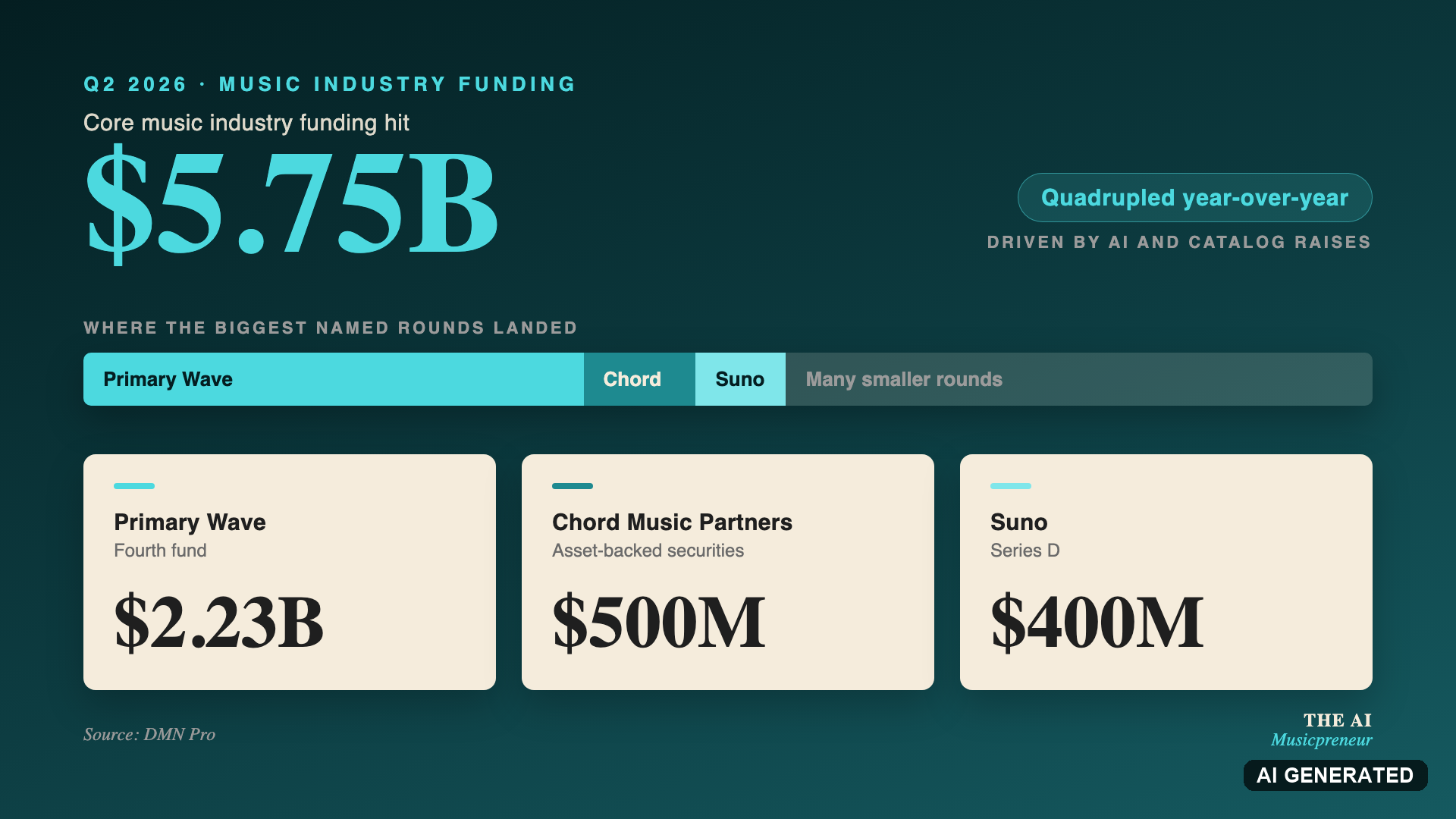
Core music funding hit roughly $5.75 billion in Q2 2026, quadruple a year ago, per DMN Pro, with AI and catalog raises topping $3.2 billion. Primary Wave’s $2.23 billion fourth fund and Suno’s $400 million Series D led it. The money is concentrating in the tools and the rights, not in the artists who fill them.
What this means for you → The tools you use are getting billions in runway, so expect them to keep shipping fast. The open question is whether any of it reaches a working artist.
CVC Capital Partners buys a majority stake in DistroKid
Private equity firm CVC Capital Partners is taking a majority stake in DistroKid, the distributor that funnels millions of tracks to streaming, a fast-growing share of them AI-made. It puts the biggest indie upload pipe under PE ownership at the exact moment AI floods it with volume. Terms were not disclosed.
What this means for you → For a distributor, new owners mean new margin targets. For a Suno-first creator, the tool you upload through now answers to a PE fund.
Jamendo sues Suno over 919 hours of training audio
Jamendo sued Suno in Massachusetts federal court on June 29. The complaint claims Suno’s early open-source Bark model trained on roughly 919 hours of Jamendo audio pulled from a research-only dataset, and that Suno never paid the invoice for that use. It opens a second front on Suno’s training data, separate from the major-label cases.
Bandcamp lays off most of its remaining engineers
Bandcamp cut most of its remaining engineering team, according to a 13-year employee. Indie artists who lean on it for direct-to-fan sales are weighing alternatives. Direct-to-fan is the core of the 1,000-true-fans model, so a weakened Bandcamp hits the one channel where artists own the relationship.
What this means for you → Do not assume the platform is stable. Back up your fan list off-platform this weekend.
FL Studio 2026 ships a smarter Gopher AI and a no-AI-training pledge
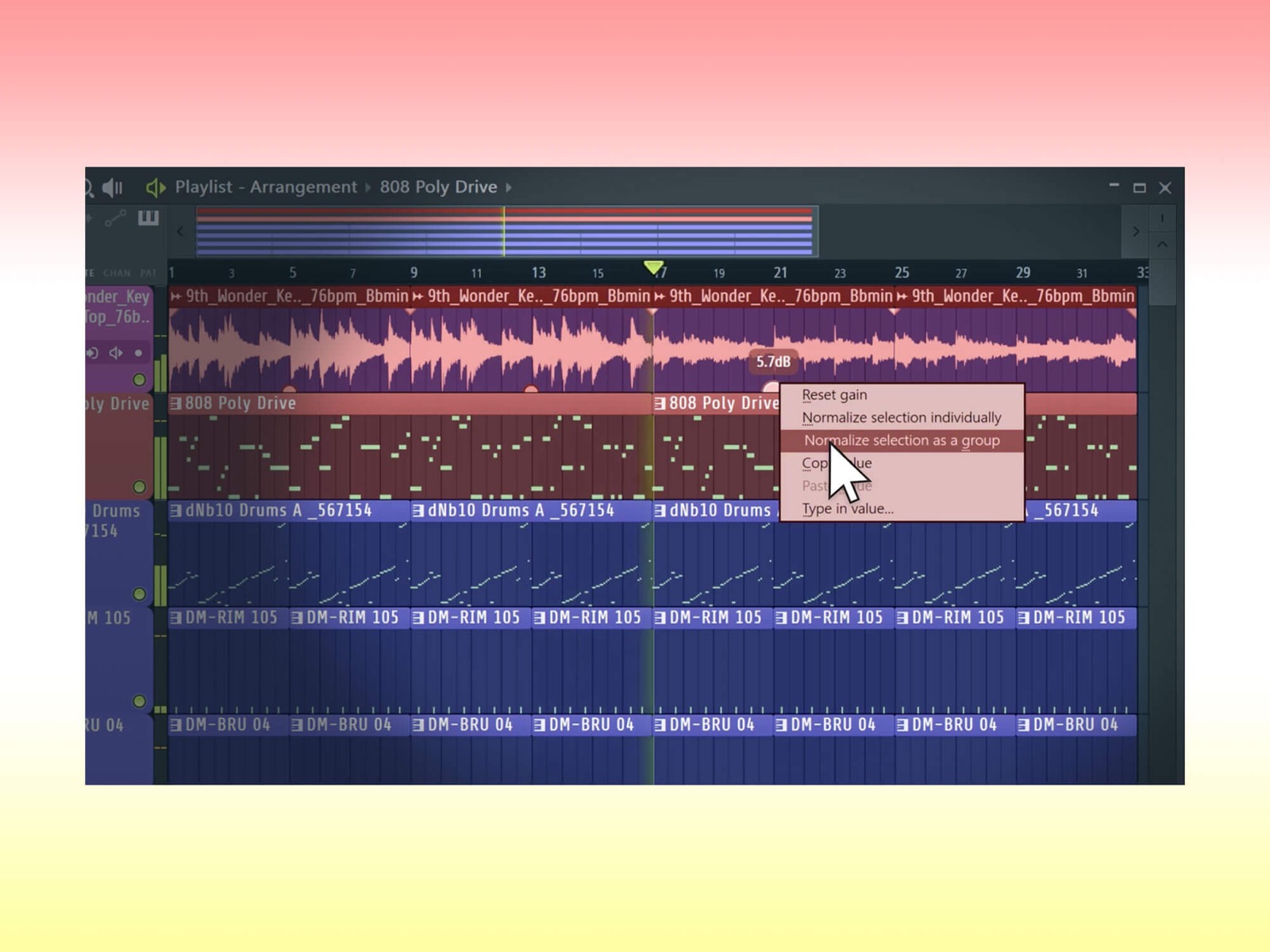
Image-Line shipped FL Studio 2026 on July 9. Its Gopher assistant now takes multi-step instructions like routing mixers and building Piano Roll parts, and does not train on user data. Image-Line also promised none of the projects in FL Cloud will be used to train AI. FLEX got its first overhaul since 2019. Free for existing license holders. New to FL Studio? My beginner’s guide walks through every major update in FL Studio 2026.
thumpN raises $3.7M for an AI agent that finds concerts by chat
India’s thumpN raised a $3.75M pre-seed and launched a beta built around Shadow, an AI agent that finds live events through conversation instead of search. Backers include Paytm founder Vijay Shekhar Sharma and singers Arijit Singh, Badshah, and Sunidhi Chauhan. CEO Varun Khare is targeting 10% of India’s ticketed events market.
Gotobeat takes its AI touring tech to arenas
Gotobeat, which uses AI to predict concert demand for emerging artists, launched an arena touring division after selling more than 150,000 tickets in 2025 for small and medium venues. Its first two arena shows are at OVO Arena Wembley with Lucki and TayC. The bet: AI demand-prediction can take some of the guesswork out of arena-scale risk.
AI Music Lawsuit Tracker
RIAA v. Suno: Suno fights the 61,026-track expansion
RIAA v. Suno: partly settled. Warner settled in November 2025; Sony and Universal are still litigating and are moving to expand the case to 61,026 recordings.
This week: Moved July 6. Suno asked the Massachusetts court to deny the 61,026-track expansion, pointing to the July 2 Udio ruling that capped that parallel case at its original works. Suno argues two years of discovery is enough.
RIAA v. Udio: held at 333 works, Sony alone litigating
RIAA v. Udio: mostly settled. Universal and Warner settled in late 2025; Sony alone is still litigating, and the case is held at 333 works.
This week: No change this week.
GEMA v. Suno: awaiting the Munich Regional Court verdict
GEMA v. Suno: awaiting verdict. The Munich Regional Court will rule on July 31, 2026.
This week: No change this week.
AFM v. Universal & Warner: session players’ contract suit pending
AFM v. Universal & Warner: filed June 5, 2026. The American Federation of Musicians says the labels licensed member recordings to AI companies without paying or crediting session players.
This week: No change this week.
Artists v. Suno & Udio: class actions ongoing with Hagens Berman
Artists v. Suno & Udio: ongoing. Independent artists are suing in class actions; the firm Hagens Berman joined and amended the Udio complaint in June.
This week: No change this week.
New to the roster: Jamendo v. Suno (filed June 29 over Bark training data) is covered in High Signal News above and joins the tracker next week.
→ Full case files and timelines
Top Story: Music’s biggest bodies proposed a way to label AI songs. Streaming still has to say yes
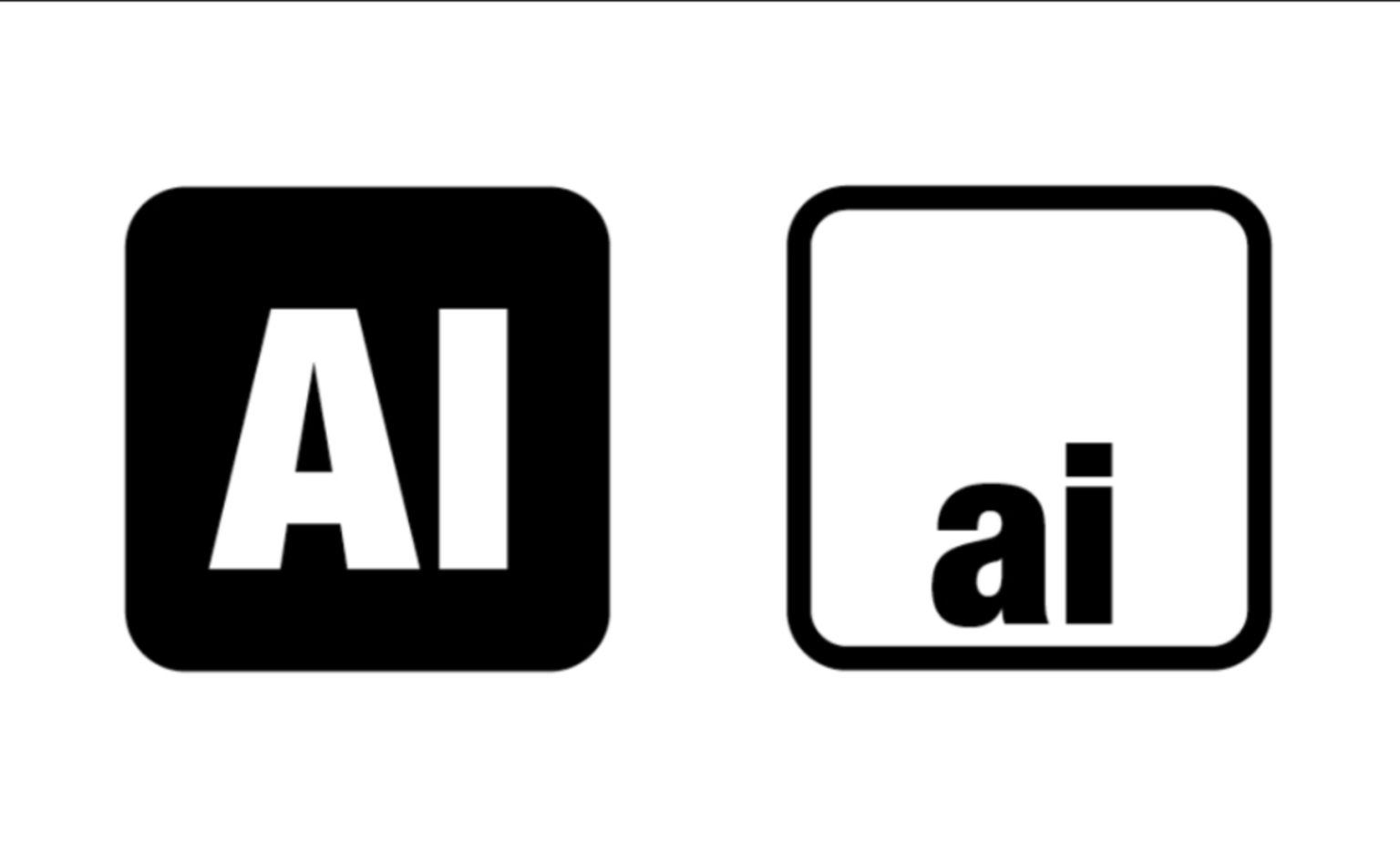
The RIAA and IFPI, the US and global recorded-music bodies, unveiled a plan on July 10 to label AI on streaming services, first reported by the Wall Street Journal. The system uses two tags: a capital “AI” for tracks that are wholly AI-generated or whose lead vocals or key instruments are AI, and a lowercase “ai” for AI-assisted tracks made substantially by humans.
For the first time, the major-label side of the industry has a shared proposal for listener-facing AI labels, instead of every platform building its own. It landed days after the BBC said its own AI pledge depended on an industry labelling standard that did not exist. Now there is a proposal for one.
The initiative is led by the RIAA and IFPI, and backed by the indie-label body A2IM, the Recording Academy, the performers’ union SAG-AFTRA, and the Human Artistry Campaign.
- Two labels, not one: “AI” for AI-generated, “ai” for AI-assisted.
- The official IFPI announcement is out, framing the labels as “immediately understandable.”
A labelling scheme only works if the streaming services adopt the badges, and it is unclear whether any have agreed. The streaming lobby DiMA gave a cautious welcome through CEO Graham Davies, who stressed the system needs accurate AI metadata flowing the whole path from creator to fan.
“We look forward to receiving more detailed and accurate AI metadata, which will strengthen our ability to give fans the transparency they deserve,” said Graham Davies, CEO of DiMA.
The plan does not yet involve DDEX, the body that sets music metadata standards, and no DSP has publicly signed on. Spotify, Apple Music, Tidal, and Deezer each already run their own AI-disclosure or detection systems. Whether they bend those toward one shared badge or keep going their own way is the whole game.
If you release music, a disclosure decision is coming to your upload flow whether you want it or not. The label you get, capital “AI” or lowercase “ai,” will ride on the metadata you or your distributor supply. Get your AI-use disclosure straight now, because the tag next to your song may be set by a default you never chose.
Music Intelligence: Audiotool 3.0, John Dahlbäck, and neural frames’ AI artist job
Audiotool 3.0 turns a browser DAW into an open, AI-connected platform
Audiotool rebuilt its free browser DAW and launched it publicly on July 8, with real-time multiplayer across browsers and tablets. The real move is NEXUS, an open-source SDK where anyone can build instruments, effects, and AI-connected tools, wired to your preferred LLM through MCP and Context I/O. Launch partners include Splice, Ujam, BandM8, and Fraunhofer, the body behind the MP3.
John Dahlbäck: AI for vocals, not full songs
Swedish producer John Dahlbäck went from scared of AI to using it for vocals and idea-starting, while calling full-song generation lazy. He is a named, working producer modelling the middle path most of the industry lives in: AI as a tool inside the process, not the author of it.
Reason Players, Scaler 3, and the generative tools with no AI at all
In a week defined by training-data lawsuits, there is a clean alternative most coverage skips: rule-based generative tools, from Reason 14 Players to Scaler 3 and Eurorack. They generate ideas from music theory, not from scraped catalogs, so you keep full control and a clean copyright. The tension worth sitting with: how much of the AI music fight is a training-data fight underneath.
Neural frames is hiring a full-time AI artist
Nicolai Klemke, founder of neural frames (the AI music video platform, bootstrapped to $5M ARR in Berlin), is hiring a full-time AI artist to make AI videos all day and launch content for every feature. Small post, big signal: AI music companies are now creating a dedicated in-house creative role, a job that did not exist two years ago.
My Take: we label AI music faster than we pay the humans under it

I run an AI music newsletter, so take this from someone who wants the tools to win.
This week the industry finally moved to label AI music, an “AI” tag for the fully synthetic and an “ai” tag for the assisted. That is a real step, and I am glad it is happening. But look at what else landed the same week. Funding hit $5.75 billion, almost none of it aimed at artists, and Jamendo had to sue Suno to get paid for the audio it trained on. We are getting good at labelling AI. We are still bad at paying the humans underneath it.
I lived through the Myspace crash. The lesson stuck: a platform you build your business on can hollow itself out overnight, and no one asks your permission first.
So here is what I keep coming back to. The label next to your song will be set by metadata and defaults, and the money is buying everything around you. The one thing no badge and no acquisition can take is your direct line to the people who show up for you. Own that first.
One thing to do this weekend: export your Bandcamp fan and email list

With Bandcamp cutting most of its engineers, do not assume the platform stays reliable. Log in, export your fan and email data, and drop a copy somewhere you control, a spreadsheet or your email tool. It takes 20 minutes. The whole theme of this issue is that money is flowing to whoever owns the pipes and the rights, so the one asset no acquisition can take from you is a direct line to the fans who show up. Own the list before you need it.
About The AI Music Briefing
The AI Music Briefing is a weekly Friday read for music industry professionals working at the intersection of AI and the traditional music business. Curated and written by Christopher Wieduwilt, founder of The AI Musicpreneur. Browse every issue of the briefing.
Got a tip, a story, or a partnership idea? Reach out any time. Every message lands directly in my inbox.
Christopher
About the author
Covering AI music tools, industry shifts, and news for music creators and professionals. Twice-weekly newsletter at aimusicpreneur.com.