
9 Best Generative Music Tools in 2026 (No AI Required)
My stack My fav 6 tools for AI music after testing 70+
-
 ElevenMusic · Music generation
 -
 Moises · Stem separation
 -
 Controlla · Voice swap & cloning
 -
 Cryo Mix · Mixing + mastering
 -
 Neural Frames · Music videos
 -
 ONCE · Distribution
Some links are affiliate links — I earn a commission at no cost to you. Every tool here is one I run myself and truly believe in. This stack is proven.
You can generate chords, melodies, basslines, and drum patterns without touching an AI model. Generative music tools built on rules, probability, and music theory have done this since the 1960s, and the current crop is the best it has ever been. If you want AI to render a finished track from a prompt, my AI music generators roundup covers those. This list is for producers who want to generate music without AI: no training data, no licensing questions, and every note lands as editable MIDI.
I tested 9 tools across 3 groups: generators built into DAWs, chord generator plugins, and Eurorack hardware. Reason 14’s Players lead the field because they follow you into any DAW.
TL;DR: the best generative music tools in 2026
The quick picks:
- Reason 14 Players — Best for any DAW: 9 rule-based MIDI devices, from Arpeggio Lab to Bassline Generator, running as a VST3, AU, or AAX plugin for €159 paid once.
- Ableton Live 12 MIDI Generators — Best built-in: 5 generators (Seed, Stacks, Rhythm, Shape, Euclidean) already sitting in your Live 12 license.
- Xfer Cthulhu — Budget pick: chord memorizer plus pattern arpeggiator for $39.99, with a free unlimited demo.
Best chord workflow overall: Scaler 3 at $99. Best hands-on hardware: the Turing Machine and Marbles school of Eurorack random sequencers.
How I tested these generative music tools
I considered 14 tools and kept 9. The bar for entry was simple: the tool must generate musical material (not presets, not samples) using rules, probability, or music theory, and the maker must not market it as AI.
The vendor’s own label decided the line. That test cut 2 tools you might expect here. Orb Producer Suite became LANDR Composer and now sells itself as an AI chord progression generator, so it’s out. Logic’s Session Players are marketed by Apple as AI, so Logic appears here only through its rule-based Arpeggiator and Chord Trigger MIDI FX.
I ran every software tool against the same project: a plain C minor pad chord progression at 90 BPM. Each tool had to turn it into arps, basslines, or new voicings I could drag into the arrangement as MIDI.
I scored each tool on 5 criteria, weighted for producers who plan to release what they make:
- Output musicality (30%): do the generated patterns sound usable, or like dice rolls?
- Control (25%): how much can you steer scale, rhythm, density, and range?
- Workflow and DAW integration (20%): does it drop MIDI cleanly where you work?
- Learning curve (15%): how fast do you get the first usable pattern?
- Value (10%): price against what it replaces.
Each criterion gets 1 to 5 dots. The dots combine into a weighted star rating out of 5, scored within each group, so a plugin competes against plugins, not against a DAW. Licensing safety, my usual second criterion, is missing for a reason: every tool here scores perfect on it by construction, because nothing was trained on anyone’s music.
Changelog: published July 6, 2026. Orb Producer Suite excluded (now LANDR Composer, AI-branded).
What does it mean to generate music without AI?
A generative music tool creates musical material from a system you set up: a scale, a probability, a pattern rule, a random seed. An AI music generator creates material from a model trained on existing recordings. The output looks similar. The mechanism is opposite.
Brian Eno named this tradition “generative music” in a 1996 talk in San Francisco, pointing back to Terry Riley, Steve Reich, and his own Music for Airports from 1978. The idea: simple rules, run over time, produce music no one composed note by note. Algorithmic composition, aleatoric music, and stochastic music all describe flavors of the same approach.

The practical difference for you sits in 3 places. Control: a rule-based midi generator exposes every parameter, so you can steer the output instead of re-rolling a prompt. Copyright: no training data means no licensing question, and the notes you keep are yours. Editability: everything arrives as MIDI or voltage, never as a baked stereo file.
Tools like Magenta Studio or AudioCipher sit on the other side of the line. Both generate MIDI, and both run models. Useful, but a different deal. If you want the full picture of what sits on the AI side, my Can AI make music explainer covers it.
Quick comparison: 9 generative music tools
The Type and Works in columns matter most here, because half these tools live inside one specific DAW.
| Tool | Type | Best for | Exports | Works in | Free option | Pricing from |
|---|---|---|---|---|---|---|
| Reason 14 Players | MIDI generator suite | Rule-based generation in any DAW | MIDI | Any DAW (VST3, AU, AAX) | 7-day trial | €159 once (Reason Rack) |
| Ableton Live 12 MIDI Generators | Built-in MIDI tools | Idea starts inside Live | MIDI | Ableton Live 12 | 90-day trial | $99 (Live Intro) |
| Logic Pro Arpeggiator + Chord Trigger | MIDI FX | Mac producers | MIDI | Logic Pro (Mac) | 90-day trial | $199.99 (Logic Pro) |
| FL Studio Riff Machine | Piano roll generator | Seeded riffs and variations | MIDI | FL Studio | Unlimited trial | $99 (FL Studio Fruity) |
| Bitwig Note Grid | Modular note generator | Building your own generator | MIDI | Bitwig Studio | 30-day trial | $399 (Bitwig Studio) |
| Scaler 3 | Chord generator plugin | Theory-guided writing | MIDI | VST, VST3, AU, AAX, standalone | None | $99 |
| Captain Plugins Epic | Songwriting plugin suite | Writing full songs fast | MIDI | VST, AU | None | $99 |
| Xfer Cthulhu | Chord memorizer + arpeggiator | Chords and arps on a budget | MIDI | VST, AU, AAX | Free demo | $39.99 |
| Turing Machine + Marbles | Eurorack random sequencers | Hands-on generative hardware | CV, gates | Eurorack modular | None | Varies by clone |
Rule-based MIDI generators inside your DAW
Your DAW probably ships a midi generator already, and 5 of the 9 picks live in this group. Reach for these first, because the price of entry is software you may already own.
1. Reason 14 Players: best rule-based MIDI generators for any DAW
- Works in: Any DAW as VST3, AU, or AAX via the Reason Rack Plugin, or inside Reason 14
- Exports: MIDI (Players process and generate notes in real time)
- Free option: 7-day free trial via Reason Studios
- Pricing: Reason Rack plugin €159 paid once (or €6.58 a month billed annually), full Reason 14 DAW €239 paid once, Reason+ subscription from €7.92 a month billed annually
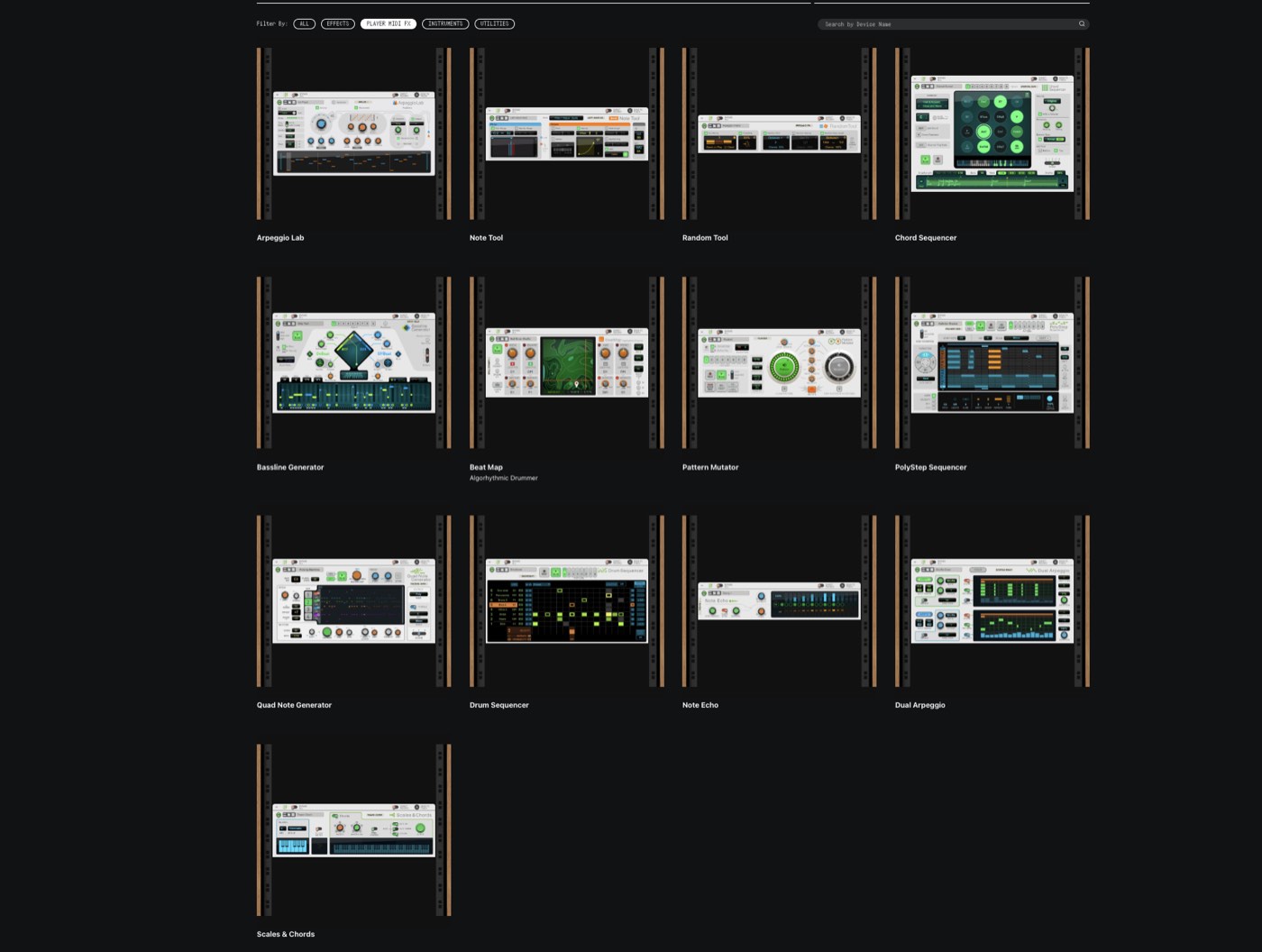
Why I picked it: Players are a device class built for one job: they process, filter, and generate MIDI notes from the notes you feed them. The Player lineup now counts 9 devices, including Chord Sequencer, Bassline Generator, Beat Map, Pattern Mutator, and Quad Note Generator. And because the whole Rack loads as a plugin, this is the one entry on the list you can run inside Ableton, Logic, FL Studio, or Cubase.
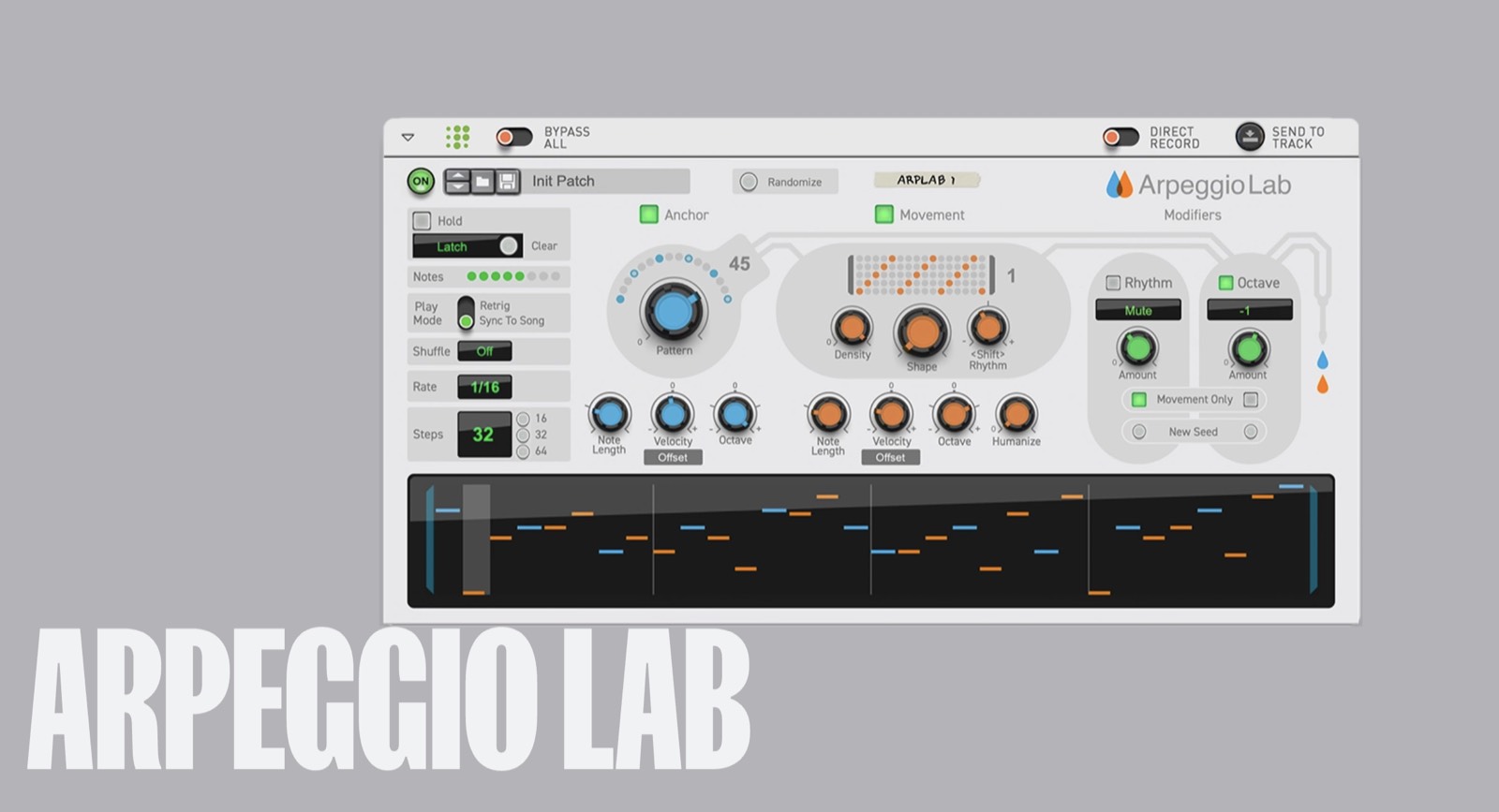
The standout device is Arpeggio Lab. It splits your chord into two roles: an Anchor pattern holding down a sparse pulse from up to 3 chord notes, and a Movement pattern dancing around it. A Rhythm Modifier mutes or doubles notes, an Octave Modifier shifts registers, and 80+ patches cover ambient beds to glitch patterns. It comes bundled with the Reason Rack and Reason+.
Standout features:
- 9 Player MIDI FX devices, stackable in series so a chord device feeds an arpeggiator
- Arpeggio Lab’s Anchor plus Movement system with a randomize function
- Pattern Mutator warps pitch, timing, note order, and velocity of existing patterns
- The Rack plugin runs in any DAW on its own license, separate from the full Reason DAW
Here is Arpeggio Lab in action inside the Reason Rack:
What is missing: the Rack still carries the full Reason environment, which feels heavy when you want one small MIDI device. And the €159 one-time price sits above the plugin picks further down this list, so it costs more than a single chord tool.
Best for: producers in any DAW who want the deepest rule-based MIDI toolkit in one plugin.
Verdict: the only generative MIDI suite on this list DAW-agnostic enough to recommend to everyone, and the reason it leads the group.
2. Ableton Live 12 MIDI Generators: best built-in generators
- Works in: Ableton Live 12
- Exports: MIDI directly into the clip you generate from
- Free option: 90-day Live trial
- Pricing: Live Intro $99, Standard $439, Suite $749
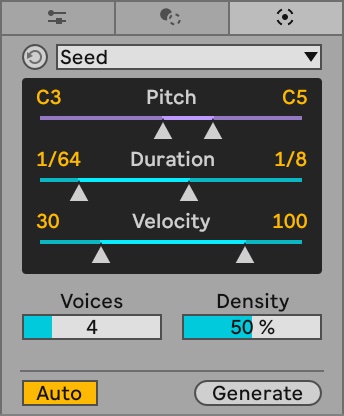
Why I picked it: Live 12 ships 5 generators in the MIDI Tools panel. Seed rolls random notes inside pitch, length, and velocity ranges you set. Stacks builds chords and progressions locked to a scale. Rhythm layers drum patterns and reads the pad names from your loaded Drum Rack. Shape draws monophonic melodies from contour templates. Euclidean spreads hits evenly across steps for up to 4 voices.
Sound on Sound’s review made the mechanism plain: these generate patterns from rules, probability, and randomization, with no models trained on musical data anywhere in the chain.
Standout features:
- 5 generators plus transformer tools (Arpeggiate, Strum, Ornament) in one panel
- Every generator writes straight into the MIDI clip, no drag step needed
- Max for Live opens the deeper generative rabbit hole when you outgrow the built-ins
What is missing: everything is monophonic-or-pattern scale work. There’s no chord-progression brain suggesting where to go next, which keeps Scaler 3 on this list.
Best for: Live 12 owners who haven’t opened the MIDI Tools panel yet.
Verdict: the best generators already included with a DAW license, and the fastest route from empty clip to usable pattern in this group.
3. Logic Pro Arpeggiator and Chord Trigger: best included MIDI FX on Mac
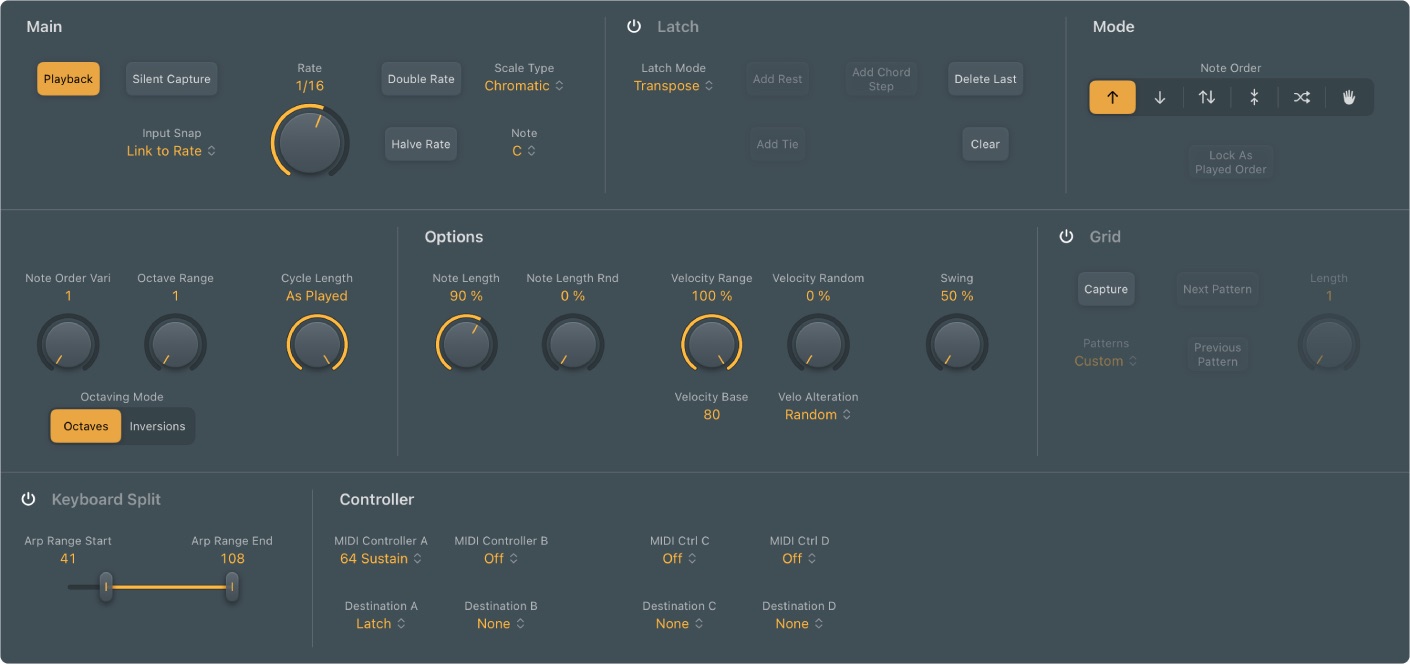
- Works in: Logic Pro on Mac
- Exports: MIDI (record the MIDI FX output to a track)
- Free option: 90-day Logic Pro trial
- Pricing: $199.99 one-time, MIDI FX included
Why I picked it: Logic’s Arpeggiator MIDI FX re-triggers a held chord as sequenced notes with pattern, rate, octave range, and swing controls. Chord Trigger maps full chords to single keys, so one finger plays voicings you’d need years of piano lessons to reach. Both are pure MIDI logic, both ship with the $199.99 license.
One line matters here. Apple markets Logic’s Session Players and Chord ID as AI, so those stay out of this roundup by my own test. The Arpeggiator and Chord Trigger predate all of it and contain no models.
Standout features:
- Arpeggiator with note-order patterns, chance settings, and keyboard splits
- Chord Trigger for single-key chord performance
- Both run live on the instrument channel, so you play them, not program them
What is missing: no progression generator and no melody generator. Logic gives you movement tools, not writing tools.
Best for: Mac producers who want arps and chord triggering without buying a plugin.
Verdict: the strongest zero-extra-cost entry for anyone already on Logic.
4. FL Studio Riff Machine: best seeded riff generator
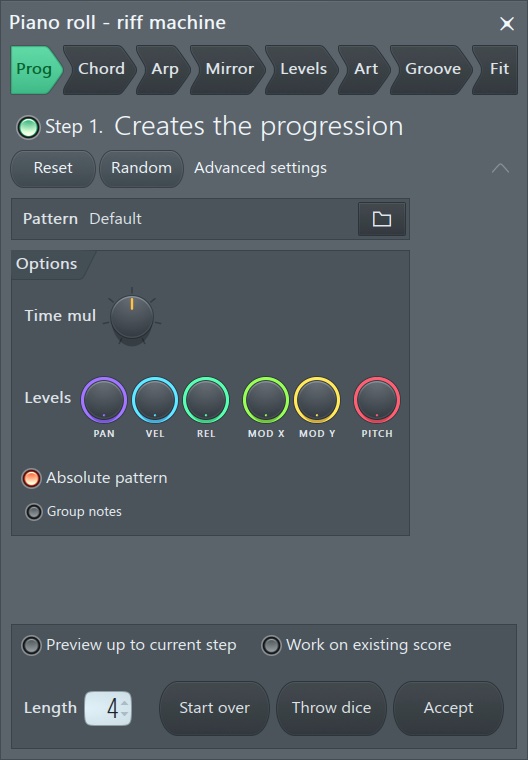
- Works in: FL Studio (Piano roll menu)
- Exports: MIDI, written into the Piano roll
- Free option: unlimited trial (saves need a license to reopen)
- Pricing: FL Studio from $99 (Fruity Edition)
Why I picked it: the Riff Machine is a 7-stage pipeline hiding in the Piano roll menu: Progression, Chords, Arpeggiator, Groove, Articulator, Levels, and Note Fit. Each stage toggles on or off, and a throw-dice button re-rolls the random seed. Set the length in bars, keep rolling until a riff catches your ear, then edit every note like any other Piano roll clip.
Standout features:
- 7 toggleable stages, from progression logic to velocity shaping
- Seeded randomness, so the same settings roll different riffs every throw
- Output lands as plain Piano roll notes with zero export friction
What is missing: the interface hasn’t changed in years, and there’s no scale intelligence beyond Note Fit. It generates starting points, not arrangements.
Best for: FL Studio producers stuck on a blank Piano roll.
Verdict: the fastest cure for pattern block inside FL, priced at nothing if you own the DAW.
5. Bitwig Note Grid: best build-your-own generator
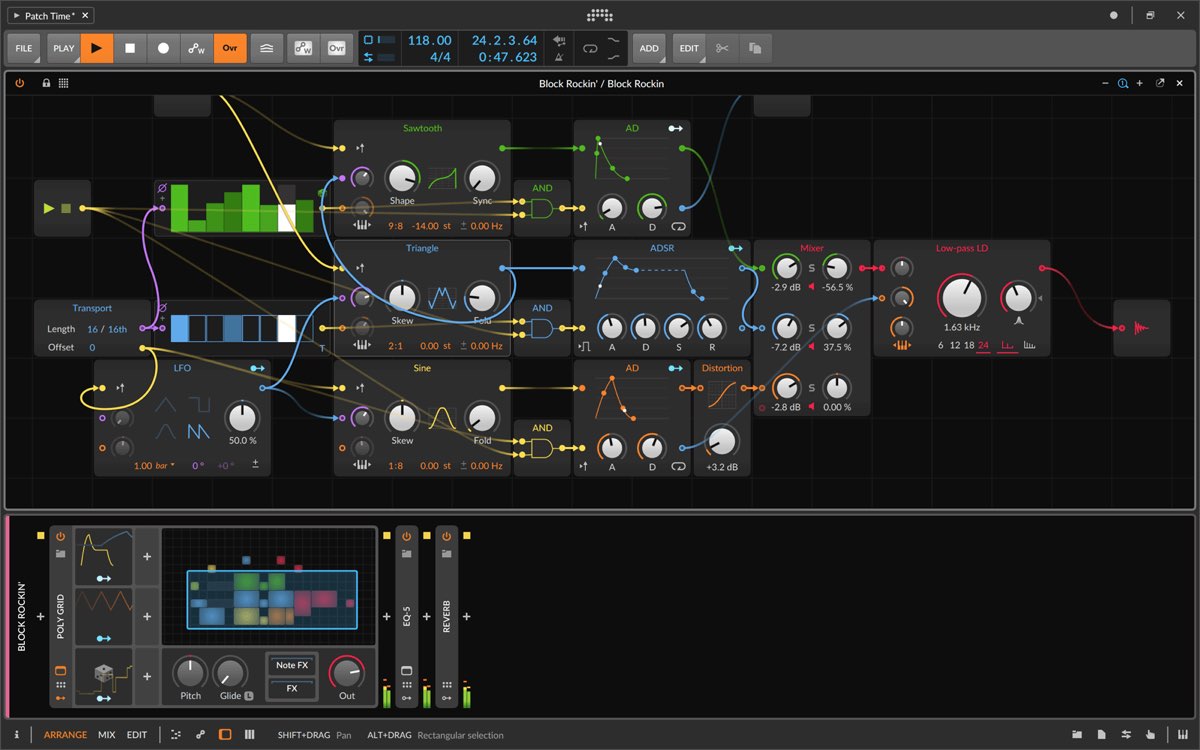
- Works in: Bitwig Studio
- Exports: MIDI/notes into the track
- Free option: 30-day trial
- Pricing: Bitwig Studio $399 (includes The Grid)
Why I picked it: The Grid is Bitwig’s modular environment with 231 modules, and Note Grid is its note-generating face. Patch a clock into a probability gate, quantize a random voltage to a scale, and you’ve built a generator no one else owns. This is the software equivalent of the Eurorack entry below, minus the cable spaghetti.
A generative sequencing patch takes about 10 minutes to build from scratch once you know the modules.
Standout features:
- 231 Grid modules: sequencers, sample-and-hold, probability, quantizers, logic
- Patches run per-track and save as presets you can reuse
- The closest software gets to modular hardware thinking
What is missing: the learning curve is the steepest on this list. Nothing generates until you patch it, and $399 is a full-DAW price for what starts as an empty canvas.
Best for: producers who want to design the rules, not choose from presets.
Verdict: the deepest generative system here, rated for people willing to earn it.
The best chord generator plugins without AI
A chord generator plugin adds the writing brain your DAW’s tools skip: progressions, voicings, and scale logic. All 3 picks run in any DAW and output plain MIDI.
6. Scaler 3: best chord generator plugin overall
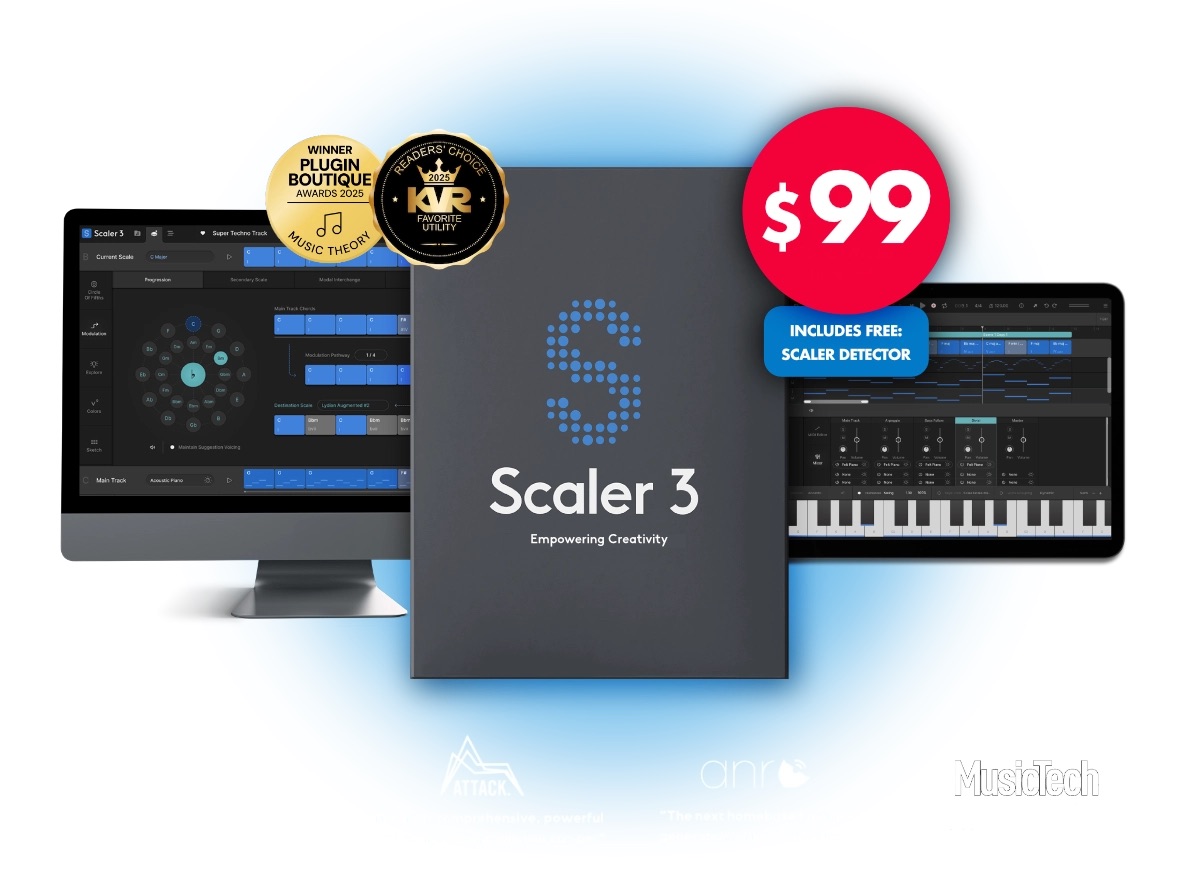
- Works in: VST, VST3, AU, AAX, and standalone (macOS 10.14+, Windows 8+)
- Exports: MIDI, drag progressions and performances into any track
- Free option: none (Scaler Detector, the $9 detection tool, is free for Scaler 3 owners)
- Pricing: $99, upgrade from Scaler 1 or 2 for $39
Why I picked it: Scaler 3 detects chords, keys, and scales from both MIDI and audio, then suggests progressions and voicings inside the detected key. Play a hummed idea in, and it names the harmony and offers where to go next. Performances turn block chords into strums, arps, and rhythmic phrases, all from theory rules, no model in sight.
Scaler 2 stays on sale at a lower price, and the main version difference is workflow: Scaler 3 adds a redesigned interface, audio detection improvements, and a built-in sketch pad for arranging sections.
Standout features:
- Chord and key detection from audio, from MIDI, or live from your playing
- Performance engine with strums, arps, and phrase styles per chord
- Sketch pad for building full progressions into song sections
What is missing: no free tier, and the feature depth means the first hour feels like a theory lesson.
Best for: producers who want theory guidance while keeping every note decision.
Verdict: the most complete chord progression generator plugin on the market, AI or not.
7. Captain Plugins Epic: best songwriting suite for beginners
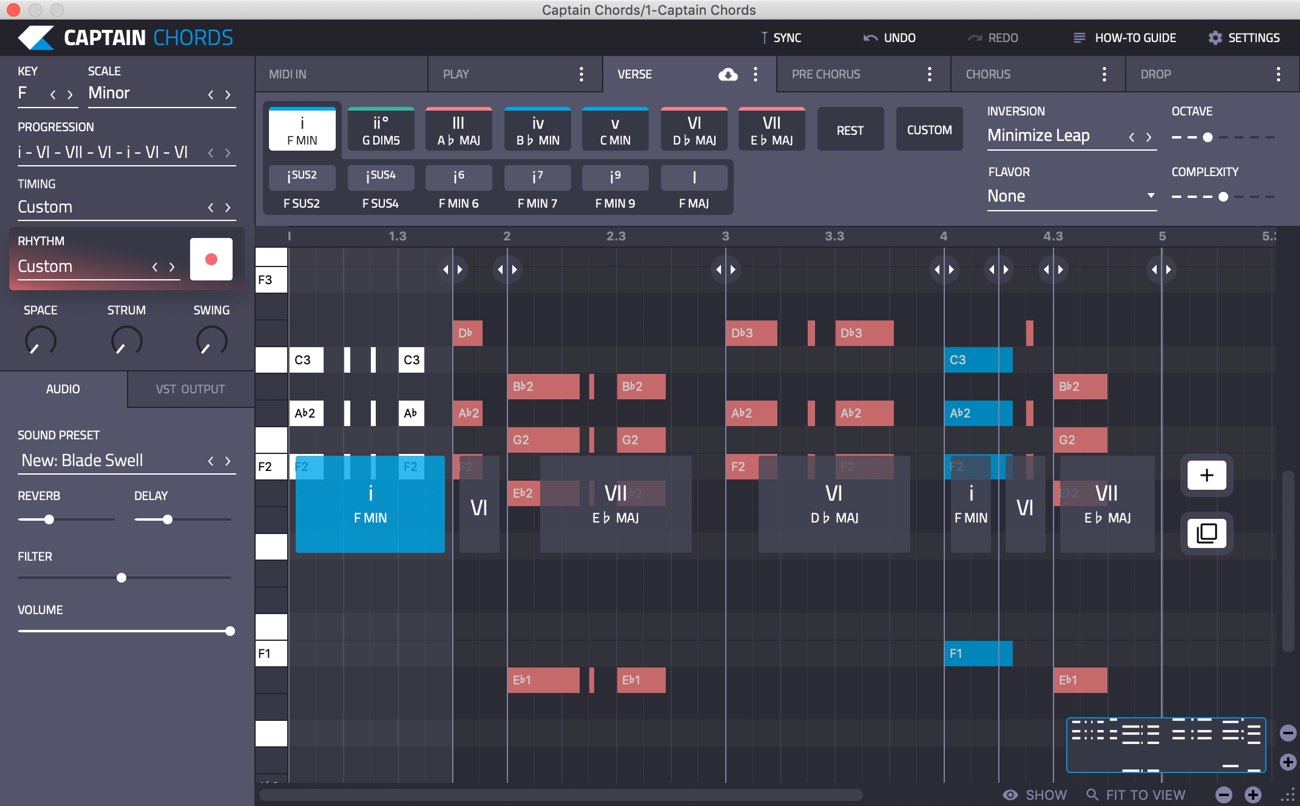
- Works in: VST and AU DAWs
- Exports: MIDI, drag from plugin to DAW
- Free option: none
- Pricing: $99 one-time for the full Epic suite
Why I picked it: Captain Plugins Epic bundles 5 connected plugins: Chords, Melody, Deep (basslines), Beat, and Play. Pick a key and scale in Captain Chords, and every sibling plugin writes inside it. The suite reached version 7 and still gets updates, and Mixed In Key charges once, no subscription.
If you want a similar chords-to-melodies transformer for less, ChordPotion from FeelYourSound does one slice of this for $52 and lets you design your own generator modules.
Standout features:
- 5 plugins sharing one key, so bass, melody, and chords never clash
- Chord suggestions ranked inside the chosen scale, with voicing and rhythm presets
- One-time $99 price across the whole suite
What is missing: the suggestion engine favors safe, pop-shaped progressions. Producers hunting strange harmony will outgrow it.
Best for: beginners who want a full song skeleton without reading a theory book.
Verdict: the friendliest complete songwriting toolkit in the group.
8. Xfer Cthulhu: best budget chord and arp plugin
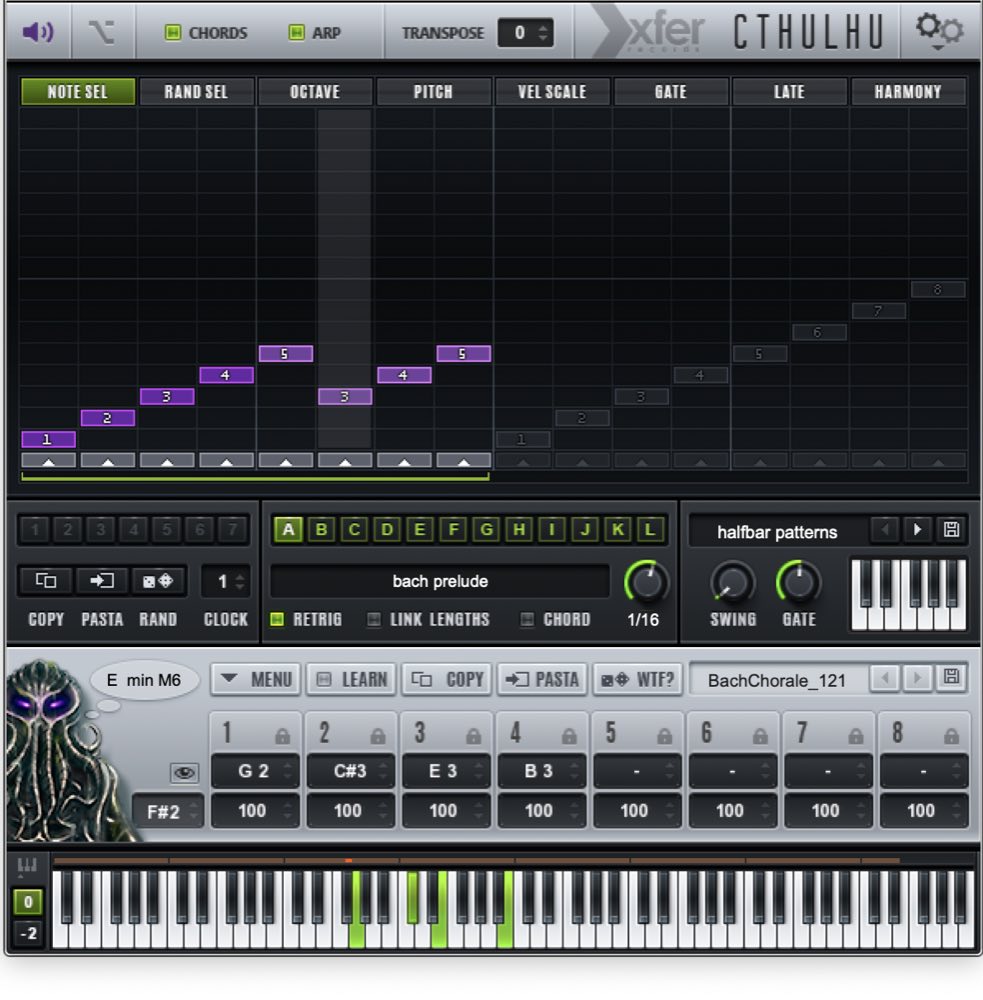
- Works in: VST, AU, AAX in all major DAWs
- Exports: MIDI output routed to any instrument
- Free option: free demo with no time limit
- Pricing: $39.99
Why I picked it: Cthulhu comes from Steve Duda, the developer behind Serum, and it has held a place in producer folklore for a decade. One half memorizes chords: 150+ factory presets map full progressions to single keys. The other half is a pattern arpeggiator with ties, velocity sequencing, intelligent transpose, and a chord-arp mode nothing else quite matches.
Standout features:
- 150+ chord preset banks, one-finger progression playing
- Pattern arpeggiator with per-step ties, duration, and velocity lanes
- $39.99 with a demo you can run forever
What is missing: no scale detection and no progression suggestions. Cthulhu plays what you feed it and never offers an opinion.
Best for: producers who want maximum chord-and-arp output per dollar.
Verdict: the best value on this list, 10 years old and still uncontested at its price.
Eurorack random sequencers: generative hardware with zero AI
Hardware settled the generative question decades before software. Every hardware synth arpeggiator since the early 80s has generated patterns from pure logic, and Eurorack turned randomness itself into an instrument.
9. Turing Machine and Marbles: best hands-on generative hardware

- Works in: any Eurorack modular system
- Exports: CV and gates (MIDI via a CV-to-MIDI interface)
- Free option: none
- Pricing: varies by clone and kit, both circuits are open source
Why I picked it: these two circuits define hardware generative music. The Turing Machine by Music Thing Modular is a shift register wired into a random looping sequencer. You can’t program it. You set a probability knob, and it either locks a melody into a loop, mutates it one note at a time, or dissolves into new randomness. Mutable Instruments’ Marbles does the same dance with more control: random gates on one side, quantized random voltages on the other, and a Déjà Vu knob to freeze and replay what chance produced.
Mutable Instruments shut down in 2022, and both designs live on as open-source hardware. After Later Audio builds Alan (a compact Turing Machine) and Pachinko (a micro Marbles), and Turing Machine DIY kits remain a classic first solder project.
Standout features:
- Turing Machine: lockable, mutating random loops from a 1960s chip design
- Marbles: repeatable randomness with scale quantizing and a Déjà Vu control
- Both open source, cloned widely, and immune to software subscriptions
What is missing: you need a Eurorack case, a quantizer helps, and getting the output into a DAW as MIDI takes an interface. This entry costs the most patience per note.
Best for: producers who want generative music as a physical performance.
Verdict: the purest expression of rules-and-chance music you can put your hands on.
How to choose a generative music tool
Start from where your notes need to land, then work backward:
- Your DAW first. Live 12, Logic, FL, and Bitwig owners have generators installed already. Test those before spending.
- Cross-DAW needs. If you move between DAWs, only the Reason Rack Players and the 3 plugins travel with you.
- Writing help vs movement help. Scaler 3 and Captain suggest what to play. Arpeggiators and Riff Machine rearrange what you already played.
- Control depth. Bitwig Note Grid and Eurorack give total rule design. Preset-driven tools trade depth for speed.
- Budget. Cthulhu at $39.99 undercuts everything with a purchase price. Built-in tools cost nothing extra.
- MIDI out, always. Every pick here exports MIDI or CV. Hold any future purchase to the same bar.
Recap: which generative music tool fits your setup
- Any DAW, deepest toolkit: Reason 14 Players via the Rack plugin (€159 paid once).
- Already on Live 12: the built-in MIDI Generators, free with your license.
- Chord writing with theory guidance: Scaler 3 ($99).
- Tightest budget: Xfer Cthulhu ($39.99) or whatever your DAW already includes.
- Hands-on hardware: a Turing Machine or Marbles clone in a Eurorack case.
Start with the generator your DAW already ships
You don’t need to spend anything today. Live 12, Logic, FL Studio, and Bitwig owners already have rule-based generators installed, and those free tools are enough to learn whether generative workflows fit how you write.
I started with arpeggiators on hardware synths, and the pattern still holds: the built-in tool teaches you what you want, then the paid tool delivers it. Paid gets you 3 things the built-ins skip: cross-DAW portability (Reason Rack, €159), chord and scale intelligence (Scaler 3, $99), and one-finger performance workflows (Cthulhu, $39.99).
Open your DAW’s MIDI generator tonight, feed it a chord progression you already like, and keep the 2 bars it gets right.
Frequently asked questions
Can you generate music without AI?
Yes. Rule-based tools like arpeggiators, chord generators, and random sequencers have generated music since the 1960s. They use music theory, probability, and randomization instead of trained models. Reason 14 Players, Ableton Live 12 MIDI Generators, and Scaler 3 all generate MIDI without any AI.
Is generative music the same as AI-generated music?
No. Generative music comes from rules and chance, a tradition Brian Eno named in 1996 and Terry Riley started with In C in 1964. AI-generated music comes from models trained on existing recordings. A Eurorack random sequencer generates music but contains no AI.
How do Reason 14 Players generate MIDI in other DAWs?
The Reason Rack Plugin loads as a VST3, AU, or AAX instrument in any DAW. Player devices like Arpeggio Lab, Chord Sequencer, and Bassline Generator sit inside the Rack and process or generate MIDI notes in real time from the notes you play. You can buy the Rack plugin outright for €159, or subscribe from €6.58 a month billed annually.
Are Ableton Live 12's MIDI Generators AI?
No. The 5 MIDI Generators (Seed, Stacks, Rhythm, Shape, Euclidean) build patterns from rules, probability settings, and randomization. No model was trained on existing music. Ableton documents them as MIDI Tools, separate from any machine learning feature.
Do random Eurorack sequencers like Marbles count as AI?
No. Marbles generates random gates and quantized voltages from analog and digital circuits. The Turing Machine uses a shift register, a chip design from the 1960s. Neither contains a trained model. Randomness follows dice logic, while AI follows patterns learned from training data.
About the author

Covering AI music tools, industry shifts, and news for music creators and professionals. Twice-weekly newsletter at aimusicpreneur.com.
