ARIA boss Annabelle Herd rejects Scott Farquhar's call to weaken AI copyright law
My stack My fav 6 tools for AI music after testing 70+
-
 ElevenMusic · Music generation
 -
 Moises · Stem separation
 -
 Controlla · Voice swap & cloning
 -
 Cryo Mix · Mixing + mastering
 -
 Neural Frames · Music videos
 -
 ONCE · Distribution
Some links are affiliate links — I earn a commission at no cost to you. Every tool here is one I run myself and truly believe in. This stack is proven.
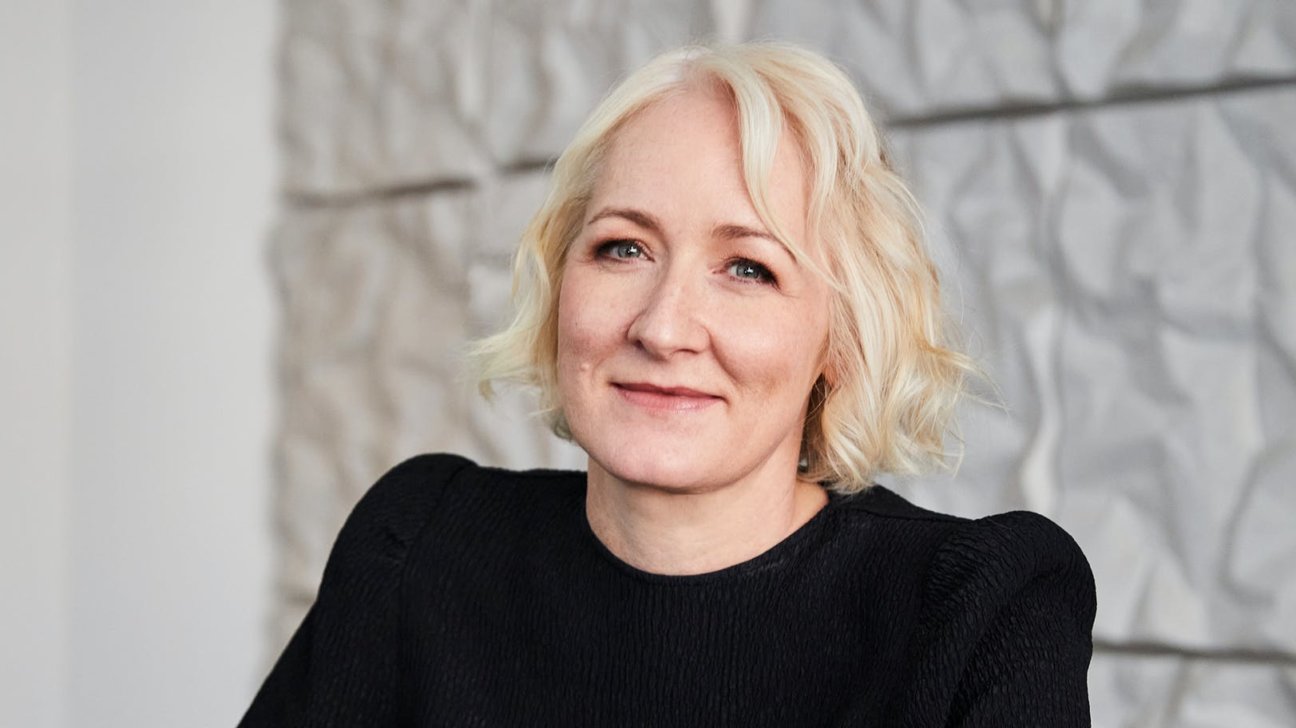
ARIA boss Annabelle Herd has rejected a fresh call to loosen Australia’s copyright law for AI, and she named the person who made it. The target is Scott Farquhar, co-founder of Atlassian and now chair of the Tech Council of Australia, who used the AFR AI Summit to push for reform aimed at the music industry.
Farquhar’s argument was the one tech groups keep making: that Australian copyright blocks AI from being built at home. Herd’s reply was that the claim does not hold up.
The pitch for reform
Farquhar told the summit that the law makes training in Australia almost impossible. “If I train in Australia, I need to cut a deal with every single recording artist in the entire world, because of the way our copyright laws work,” he said.
He has made versions of this case before, framing the AI copyright fight as a debate that has been misunderstood. The Tech Council represents the companies that would gain the most from a training exception, a point Herd went straight at.
Herd says licensing already scales
ARIA’s counter is that music is one of the most licensed products on earth, and the plumbing to clear it already exists. Herd said the industry “is built on global licensing deals done efficiently and at scale.”
Then she put a number on it. “You could license around 80% of the world’s sound recordings to train AI globally, including in Australia, with four deals: one with each major record label, and one with Merlin,” she said. The message: the friction Farquhar describes is a choice not to pay, not a legal wall.
Mr Farquhar, you do not decide how to monetise or use an artist's music for AI. That is the prerogative of the artist and copyright owner.
A fight Australia keeps having
This is not a one-off spat. ARIA and the artists’ rights body PPCA have urged the Productivity Commission to rule out a new fair-dealing exception for AI training, and the Albanese government has so far sided with creators over the tech lobby.
Herd tied the stakes to a number of her own: a creative and media sector worth about $67 billion a year. Her line was that a country with one of the world’s great creative cultures will not rewrite its copyright laws on the advice of the people who profit most from dismantling them. APRA AMCOS has gone further, calling the tech sector’s framing a lobbying narrative that has been debunked.
Why this reaches past Australia
The same argument is running in every market at once. The UK government recently reversed course on letting AI firms train on copyrighted music without permission, and the US label lawsuits against Suno and Udio are testing the same question in court. Australia is one front in a global fight over who sets the price of training data.
For working musicians, the test is simple. Does a proposal move toward consent and payment, or away from it? Farquhar’s version moves away. The licensing model Herd describes, already proven by the major-label deals taking shape, moves toward it.
Frequently asked questions
What did Scott Farquhar say about AI and copyright in Australia?
At the AFR AI Summit, Tech Council of Australia chair Scott Farquhar called for copyright reform, arguing that training AI in Australia would force a company to cut a deal with every recording artist in the world. He framed the current law as a barrier to AI development.
How did ARIA's Annabelle Herd respond to Scott Farquhar?
ARIA CEO Annabelle Herd rejected the claim, saying the music industry already runs on global licensing at scale. She said four deals, one with each major label and one with Merlin, would cover about 80% of the world's recordings, and told Farquhar that artists, not tech firms, decide how their music is used.
Has Australia's government backed an AI copyright exception for tech firms?
Tech industry groups want a text-and-data-mining or fair-dealing exception that would let AI companies train on copyrighted work without permission. ARIA, PPCA and APRA AMCOS oppose any such carve-out, and the Albanese government has so far sided with creators.
Why does ARIA say AI firms could license music without new copyright laws?
ARIA argues they can. Herd said most of the world's recorded music could be cleared for AI training through a handful of catalogue-wide deals, which is how streaming and radio licensing already work, so the law does not need to be rewritten to enable training.
About the author

Covering AI music tools, industry shifts, and news for music creators and professionals. Twice-weekly newsletter at aimusicpreneur.com.