Björn Ulvaeus says AI deals should pay for training data, not chase every output
My stack My fav 6 tools for AI music after testing 70+
-
 ElevenMusic · Music generation
 -
 Moises · Stem separation
 -
 Controlla · Voice swap & cloning
 -
 Cryo Mix · Mixing + mastering
 -
 Neural Frames · Music videos
 -
 ONCE · Distribution
Some links are affiliate links — I earn a commission at no cost to you. Every tool here is one I run myself and truly believe in. This stack is proven.
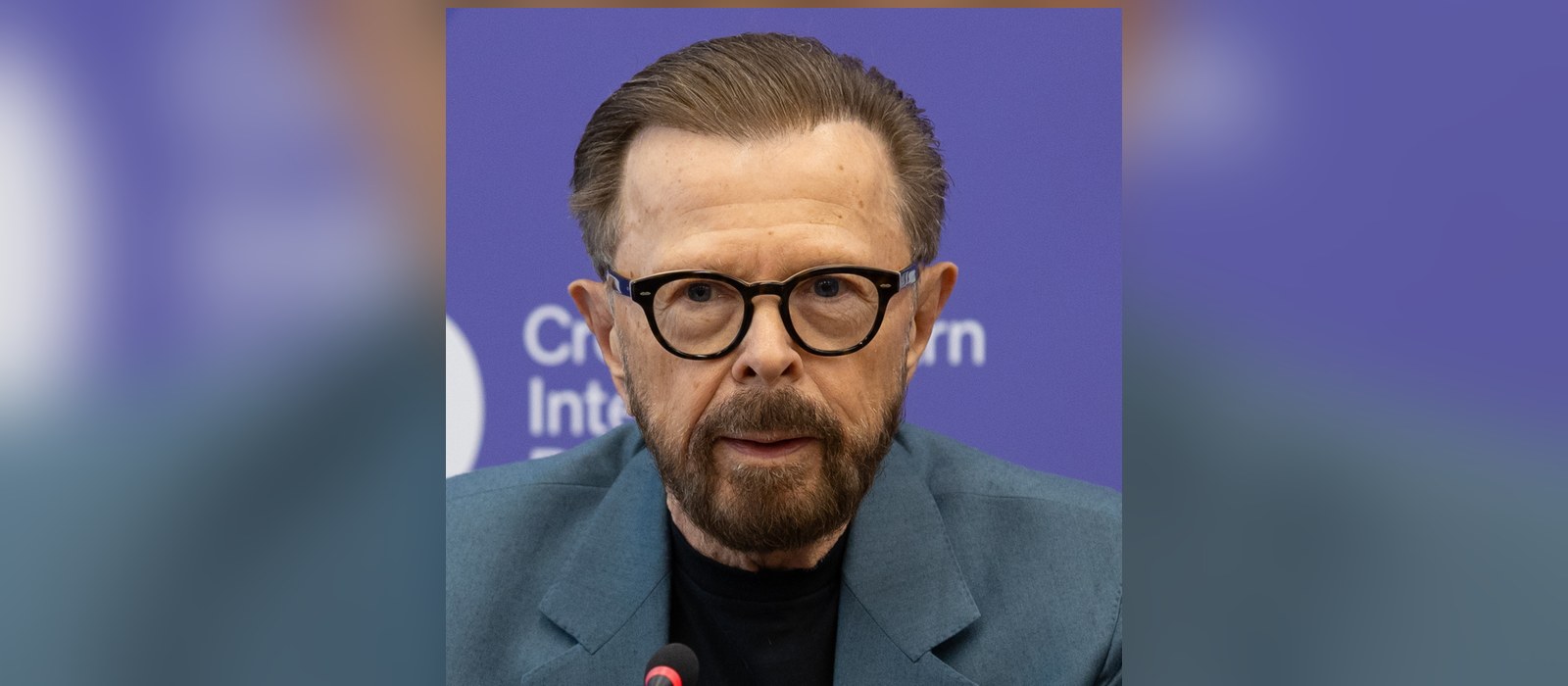
Björn Ulvaeus used the opening keynote of the United Nations’ AI for Good Summit in Geneva to tell the music industry it is licensing the wrong end of AI. The CISAC president and ABBA co-founder said the money should attach to the music that trained the model, not to the songs coming out of it.
It is his most detailed speech on AI and creators to date, and it lands while the majors are signing output-focused deals with the same companies they sued.
Why Ulvaeus calls output tracing the wrong question
Ulvaeus cautioned against building licensing around the outputs of generative music models, and he was direct about why.
“I think it misunderstands how these models work,” he said. “What comes out isn’t a copy of any one song. It is a new synthesis built from everything the model has learned.”
His conclusion follows from the technical claim. If no single output traces cleanly back to a single song, then chasing outputs is chasing a ghost.
For me, tracing the output was always the wrong question. The right question is much simpler. It is about the training. Our works went in. We should be paid for what went in, not for every output that comes out the other end, but for the raw material that made the machine what it is.
Ulvaeus wants AI training licensed the way Spotify was
The mechanism he proposed is not new. He argues the industry already solved a version of this problem once.
“We’ve solved problems like this before. When Spotify emerged, we didn’t try to measure the value of every individual listen before paying creators. We licensed the catalog. A percentage of the platform’s revenue flowed back collectively to rights holders. AI can work the same way,” he said.
Applied to AI, a share of subscription revenue would flow back to the creators whose work trained the system, administered collectively rather than song by song.
“Managed collectively, just as collective licensing has worked for more than a century. The infrastructure already exists. The principle is already established,” Ulvaeus continued.
The line aimed at the majors
The sharpest moment was about who currently gets paid.
“What is missing is the political will to require it for everyone, not just those powerful enough to sue,” Ulvaeus said.
Read against the last 9 months, it is a pointed sentence. Universal and Warner sued Suno and Udio, then settled and licensed. Independent artists and session players, who could not fund that fight, have gone to court to ask where their share went. Ulvaeus is arguing the ability to litigate should not be the thing determining whether a creator gets compensated.
He closed on the trade itself. “You have built remarkable things. You could not have built them without us. That makes us partners. We deserve a place at the table. We deserve a share of the harvest.”
What Ulvaeus’s proposal would need to actually work
A collective licence for training data needs a rate, a collection body, and a way to establish whose music is in the dataset. None of those exist yet for AI.
The rate question is the hard one. Ulvaeus points at the Spotify precedent, but the streaming rate took years of negotiation and litigation to settle, and independent artists still argue it landed too low.
The transparency question is close behind. Collective licensing pays out against known usage data, and AI companies have not disclosed what they trained on. Ulvaeus is proposing to pay for the inputs, which only works when someone can say what the inputs were.
Ulvaeus has been making a version of this case for a while. In CISAC’s annual report he said creators are “not in the room” as AI laws take shape. The Geneva speech is the same argument with a mechanism attached.
Frequently asked questions
What did Björn Ulvaeus say at the 2026 AI for Good Summit?
Ulvaeus delivered the opening keynote in Geneva, arguing that AI licensing should compensate creators for the music used to train models rather than attempting to trace every generated output. He proposed a collective licensing model funded by a share of AI subscription revenue.
Why does Björn Ulvaeus think tracing AI outputs is the wrong approach?
Ulvaeus says output tracing misunderstands how the models work. In his words, what comes out is not a copy of any single song but a new synthesis built from everything the model learned, which makes the training stage the point where payment should attach.
What is Björn Ulvaeus's role at CISAC?
Ulvaeus is president of CISAC, the international confederation of authors' and composers' societies, and a co-founder of ABBA. He has used the role to push for creator representation in AI copyright policy.
What would collective licensing for AI training look like?
Ulvaeus proposes that a percentage of AI platform subscription revenue flow back to the creators whose work trained the systems, administered collectively rather than track by track. He argues the collecting-society infrastructure to do this already exists.
About the author
Covering AI music tools, industry shifts, and news for music creators and professionals. Twice-weekly newsletter at aimusicpreneur.com.