The AI Music Briefing #13: Munich ruled AI music training needs a license, and named stream-ripping as the reason
The week of July 27–31, 2026, when the license question got two opposite answers three days apart: GEMA won in Munich, a Delhi judge called ChatGPT training private research, and 11 music companies wrote chart rules without defining the phrase they turn on.
My stack My fav 6 tools for AI music after testing 70+
-
 ElevenMusic · Music generation
 -
 Moises · Stem separation
 -
 Controlla · Voice swap & cloning
 -
 Cryo Mix · Mixing + mastering
 -
 Neural Frames · Music videos
 -
 ONCE · Distribution
Some links are affiliate links — I earn a commission at no cost to you. Every tool here is one I run myself and truly believe in. This stack is proven.
Issue #13 · the week of July 27–31, 2026 · ~7 min read. The Friday read for music industry professionals working at the intersection of AI and the traditional music business. Curated by Christopher Wieduwilt.
GEMA beat Suno in Munich. Delhi ruled the other way.
The license question got 2 opposite answers, 3 days apart.
GEMA won in Munich on July 31, Europe’s first ruling saying AI training on music needs a license. On July 28, a Delhi judge called OpenAI’s ChatGPT training “purely private” research and refused ANI an injunction. In between, 11 music companies wrote chart rules demanding “substantially human made” recordings, and IFPI switched them on a day later. Nobody defined the phrase. Munich won on where the training data came from. Everyone else tried to judge the finished audio.
What’s in store:
- Top Story: GEMA wins, and stream-ripping is the finding to pin up
- 11 companies wrote AI chart rules and defined nothing
- HYBE liquidates the $35M AI voice company it bought in 2023
High Signal News: the labels’ chart rules, Delhi’s training exception, and HYBE’s $35M write-off
11 music companies wrote AI chart rules, and IFPI switched them on 1 day later
All 3 majors plus Believe, BMG, Concord, HYBE and 4 more published 6 chart-eligibility principles on July 29. A recording must be “substantially human made” and built with authorised AI services. IFPI applied the framework to its MENA, Southeast Asia, South Africa and Latin American charts the next day, with ARIA, SNEP and Circle Chart queued behind it.

Nobody defined “substantially human made”. SIQA has run a 3-tier definition since January, and 48.4% of AI creators sit in the tier the labels left blank.
A Delhi judge ruled ChatGPT training legal under a private research exception
Judge Amit Bansal refused news agency ANI an injunction against OpenAI, finding the training fell inside India’s private research exception. Stored content sat “in a closed space without access to the public,” he wrote. India has no text and data mining exception, so the argument ran through an existing research carve-out instead.
Lucas Keller and Oak Felder sued SoundPatrol, the detection firm working with UMG and Sony
Milk & Honey founder Lucas Keller and 2-time Grammy winner Oak Felder filed in Los Angeles on July 28, alleging they designed SoundPatrol’s copyright checker and were paid nothing for it. SoundPatrol announced a “first-of-a-kind collaboration” with Universal and Sony in September 2025 to detect infringement in AI music. Five claims, jury demanded.
Suno faces 2 class actions over the breach that exposed 55.3 million users
Two proposed class actions target how Suno stored the data, not the theft. One filed July 24 in Massachusetts alleges Suno held records in a “negligent and/or reckless manner” and says the risk “was a known risk” to the company. Suno stayed quiet for 9 months until 404 Media reported the November 2025 incident.
A judge bound Donald Passman to Anthropic’s $1.5B settlement for about $5,000
Judge Araceli Martínez-Olguín denied Passman’s late opt-out in the same order approving the deal. Anthropic trained Claude on 10 editions of All You Need to Know About the Music Business, the reference book that has sold over half a million copies since 1991.
Class settlements price a catalog by the class, not by the work. If you hold high-value IP, the opt-out window is the whole negotiation.
HYBE is liquidating Supertone, the AI voice company it put $35M into
Shareholders resolved to dissolve Supertone on July 15 and a liquidator now runs the wind-down, per a July 23 regulatory filing. The company posted $1.6 million in revenue last year against a $10.5 million operating loss. HYBE signed the chart principles 6 days later.

Spotify won’t label AI music, so fans built SoullessMusic and SlopTracker
Two volunteer databases now flag AI acts on Spotify with confidence scores, listener counts and payout estimates. SoullessMusic lists 232 AI artists across 823 analysed songs. SlopTracker counts 42 and puts their earnings near $2.13 million. Same platform, 5x apart, because each picked its own threshold and no standard exists for either to follow.
AI Music Lawsuit Tracker
GEMA v. Suno: decided, with revenue disclosure and damages ordered
GEMA v. Suno: Decided. GEMA won on July 31, 2026. Suno must disclose revenues and pay damages. The judgment is not final and Suno can appeal.
This week: The Munich Regional Court’s 42nd Civil Chamber ruled storing songs in the model infringes the reproduction right and serving outputs infringes the making-available right. Judge Elke Schwager called Suno’s stream-ripping of the works undisputed.
RIAA v. Suno: Munich has no binding effect in Boston
RIAA v. Suno: Partly settled. Warner settled in November 2025. Sony and Universal are still litigating and want the case expanded to 61,026 recordings.
This week: No change this week. Munich has no binding effect in Boston, and dispositive motions stay set for April 9, 2027.
RIAA v. Udio: Sony alone still litigating over 30,117 recordings
RIAA v. Udio: Mostly settled. Sony alone is still litigating and filed a second suit in July over 30,117 recordings the first ruling had barred.
This week: No change this week.
AFM v. Warner & Universal: the union swaps defendants to kill the wrong-defendant argument
AFM v. Warner & Universal: Live. The union says the majors owe session players a cut of their Suno and Udio licensing money.
This week: The AFM filed a first amended complaint, dropping Warner Music Group Corp. for Warner Records and Atlantic to kill Warner’s wrong-defendant argument, and building its “new use” claim around Udio’s upcoming Starstruck service.
→ Full case files and timelines
Top Story: Munich ruled AI music training needs a license, and named stream-ripping as the reason
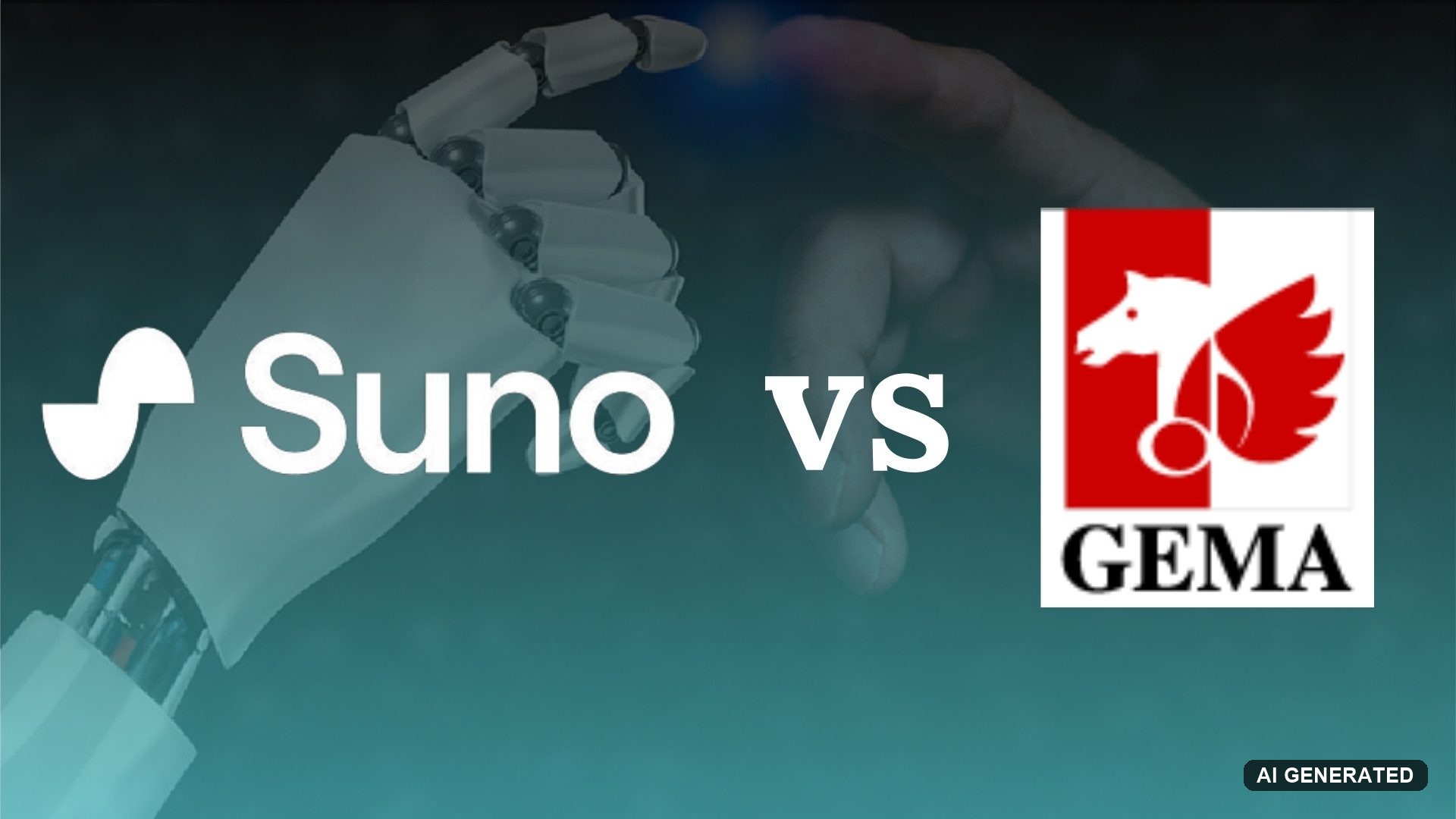
Judge Elke Schwager of the Munich Regional Court ruled on July 31, 2026 that Suno infringed the copyrights of songwriters GEMA represents, siding with the collecting society on virtually all points. It is the first European ruling saying AI companies need a license to train on music.
The court found 2 violations. Storing protected songs inside Suno’s model breaks the reproduction right, and serving outputs built on them breaks the right of making works available to the public. Suno must disclose its revenues to GEMA and pay damages, with the amount set once GEMA sees the numbers.
Schwager went further after reading it out. It was undisputed, she said, that Suno used the works in training and pulled them off the internet by stream-ripping.
- The test catalog was small and famous on purpose: “Atemlos durch die Nacht”, “Forever Young”, “Big in Japan”, “Mambo No. 5”, “Daddy Cool” and “Rasputin”.
- At the March hearing GEMA played the originals and Suno’s outputs back to back in the courtroom, and the melodies matched.
The same chamber ruled in November 2025 that OpenAI violated copyright by memorising song lyrics in ChatGPT. Schwager read the EU’s text and data mining exception narrowly then, and narrowly again now. Courts in other EU states have a precedent to cite. GEMA planned for the moment: 7 days before the verdict it launched PLAI, 178,000 cleared files sold as a licensed training set.
The use of the works in training and the stream-ripping of them from the internet were undisputed, Judge Elke Schwager, presiding judge of the 42nd Civil Chamber, said after reading the verdict at the Munich Regional Court.
What’s still unclear is the damages number. GEMA sees Suno’s revenues first, and whatever comes out of that becomes the reference price for a European training license. The judgment is not final, Suno can appeal, and the company had not commented by publication.
Nothing changes at the prompt box. Suno stays available in Germany, and this case was always about payment. The pressure lands downstream, in subscription prices and in the guardrails licensed models add against outputs sitting close to protected songs. Every unlicensed catalog inside a training set got more expensive this morning.
Music Intelligence: music MCP servers, SIQA’s 48.4%, and the input-versus-output problem
Three music MCP servers launched in a single day
Artist Growth, Pica and Crate all shipped MCP servers on July 29, the third straight week of music MCP launches. Artist Growth’s targets labels, management, venues and agencies, and works with Claude, ChatGPT and Gemini on artist itineraries, run-of-show documents and daily digest reports. All admin work. The first music jobs getting wired to a chatbot are tour ops and release ops, and none of them are songwriting. My MCP primer explains the standard.
48.4% of AI creators sit in the tier the labels left blank
The 11-company framework wants recordings “substantially human made” and stops there. SIQA has charted AI music since January with a 3-tier classification, and in its Q1 2026 data across 1,551 verified tracks, 48.4% of creators land in the AI-assisted tier. That’s the band the label rules leave undefined. Read plainly, the framework would exclude most artists charting on the only AI chart already running.
Inputs are checkable, outputs are not
Munich won its case on where Suno’s training files came from, a fact with a paper trail. Everything else this week tried to judge the finished audio and came up short: the chart rules with no test, 2 trackers 5x apart on the same platform, and D’Addario posting proof its guitar demo was human that 2 YouTubers pulled apart on camera. The detection industry is pointed at the wrong end of the pipe.
My Take: GEMA won songwriters the choice, not the cheque

Everyone will read the Munich verdict as songwriters getting paid. I want to be honest about the size of the cheque.
Consent is the right call. Suno trained on GEMA’s writers without asking, a court said so, and Suno should pay. I’m all for it. What I won’t do is pretend the payout is life-changing. GEMA still has to see Suno’s revenues, then split whatever lands across a membership of hundreds of thousands. We’re talking streaming money, if it reaches you at all.
What GEMA won is the choice. A songwriter gets to decide whether their catalog feeds a model, and until this morning nobody in Europe had it. I’d take the choice over the cheque, and I’d take it at this price.
So opt in if you want to. Read the terms first. And set your expectations by your last streaming statement, because that’s the neighbourhood this money lives in.
One thing to do this weekend: run one of your own released tracks through AudioAuditor
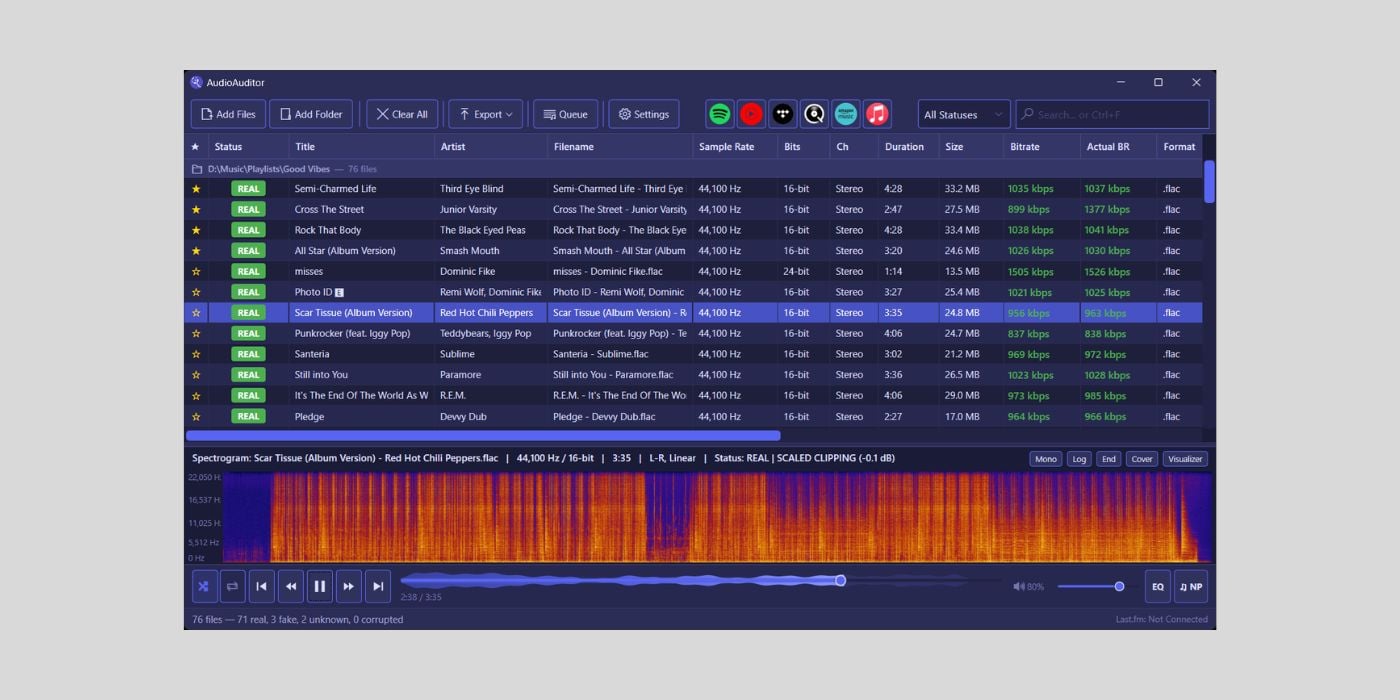
Download AudioAuditor, the free open-source analyser released this week, and point it at a song you made. It runs 10 checks locally, AI detection among them.
Two volunteer sites are already scoring Spotify catalogs with no shared standard, and the charts now carry a rule nobody defined. Find out what a machine says about your work before a database says it for you. 10 minutes.
About The AI Music Briefing
The AI Music Briefing is a weekly Friday read for music industry professionals working at the intersection of AI and the traditional music business. Curated and written by Christopher Wieduwilt, founder of The AI Musicpreneur. Browse every issue of the briefing.
Got a tip, a story, or a partnership idea? Reach out any time. Every message lands directly in my inbox.
Always rooting for you,
Christopher
About the author
Covering AI music tools, industry shifts, and news for music creators and professionals. Twice-weekly newsletter at aimusicpreneur.com.