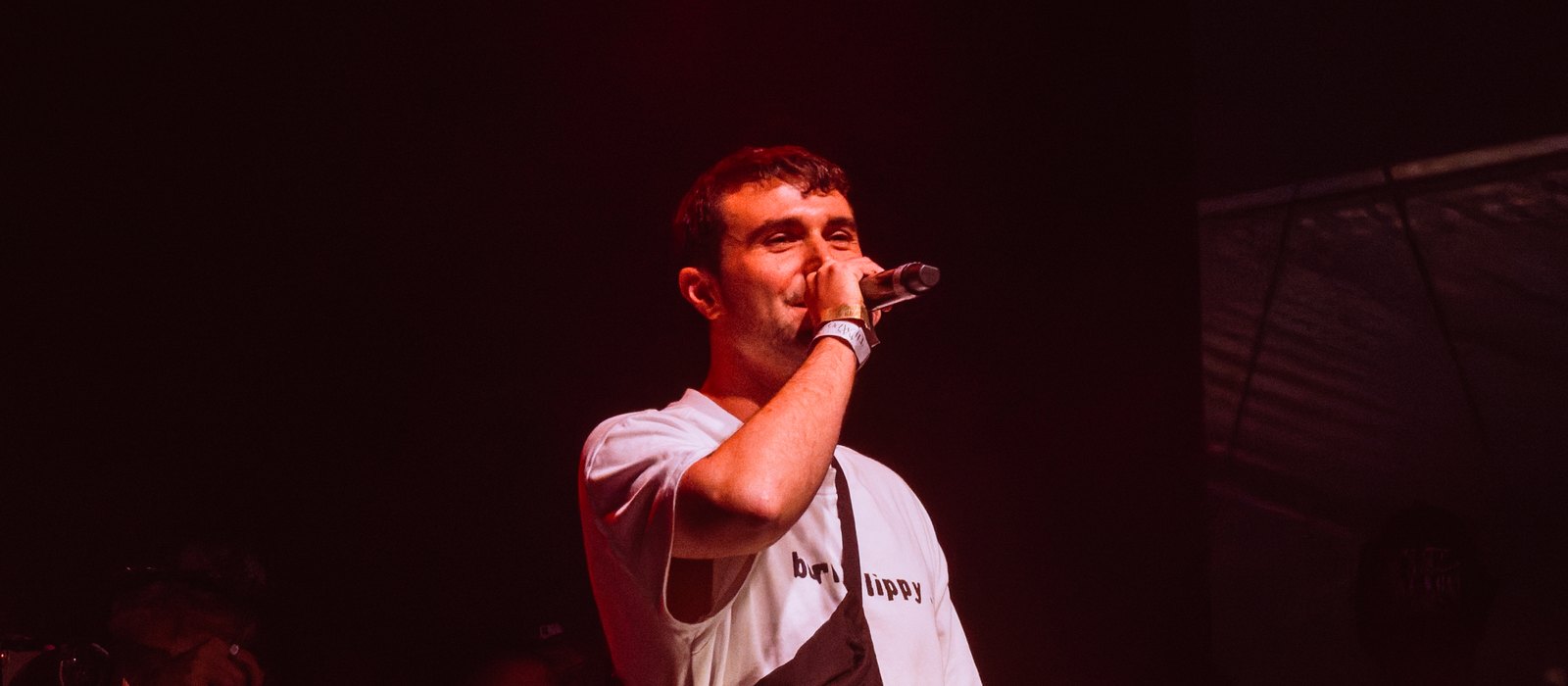
Kenyan gospel duo Wapendwa Muziki say they paid KSh 40,000 for Suno, and that it only makes their demos

My stack My fav 6 tools for AI music after testing 70+
-
 ElevenMusic · Music generation
-
 Moises · Stem separation
-
 Controlla · Voice swap & cloning
-
 Cryo Mix · Mixing + mastering
-
 Neural Frames · Music videos
-
 ONCE · Distribution
Some links are affiliate links — I earn a commission at no cost to you. Every tool here is one I run myself and truly believe in. This stack is proven.

Kenyan gospel duo Wapendwa Muziki sang a melody into Suno live on Obinna Show Live, typed “acoustic R&B with Afropop” into the prompt and pressed Create. Then Mesh told host Oga Obinna what the app costs him: “Nimeilipia sana, like 40K a year,” as Mpasho quoted him. Nimeilipia sana is Swahili for “I’ve paid a lot for it.”
That’s 40,000 Kenyan shillings, about $308. The clip set off a backlash in Kenya, and on November 5 the couple explained what Suno does for them: it makes the demo, and they write the song.
Wapendwa Muziki are Meshack “Mesh” Mpendwa and Nina Mpendwa, a married couple. Their YouTube channel has 681,000 subscribers, 247 million views and 894 videos since it opened in July 2016. Their biggest video, “Amefanya Mungu”, has 31.9 million views on its own.
What Wapendwa Muziki showed on Obinna Show Live on November 2, 2026
The interview streamed on the Obinna TV Extra YouTube channel on November 2 under the title “Ni Mungu Tu”, and it runs 3 hours and 17 minutes. It had 208,129 views when I checked on November 5.
About 55 minutes in, Obinna asks the question straight: “Are you using AI to write music?” Mesh says no.
Then he explains what changed. They used to record an idea on the phone and then go back and forth with their producer over every chord.
“But nowadays I just record it. Let me show you an example,” he says. Obinna asks which app. “Suno.”
That’s when the 40K comes up. At the Central Bank of Kenya’s indicative rate of KSh 129.96 to the dollar on October 27, 2026, KSh 40,000 works out to about $308. He didn’t say which plan he’s on.
So they made one on air. The couple sang a line about God opening the way and Obinna TV being their new studio, filled the prompt with “acoustic R&B with Afropop” and rumba, and hit Create.
As the track came back, Mesh said: “We’ve done this for Kama Ndoto.” That’s their 2026 single, with 5.5 million views on YouTube.
The demo came back in under 20 seconds. The questions online took longer.
How Wapendwa Muziki say Suno fits between their lyrics and their producer
The couple answered the criticism in a follow-up video, which K24 Digital reported on November 5. Mesh started with the old method. Whenever an idea came to them away from the studio, they recorded it on their phones, and those recordings often ended up without a name, because you don’t always know a song’s title the day you hum it.
Then came the producer sessions. The couple “would record their ideas and repeatedly engage producers to help them achieve the sounds, chords and arrangements they had envisioned,” Mpasho reported from the interview.
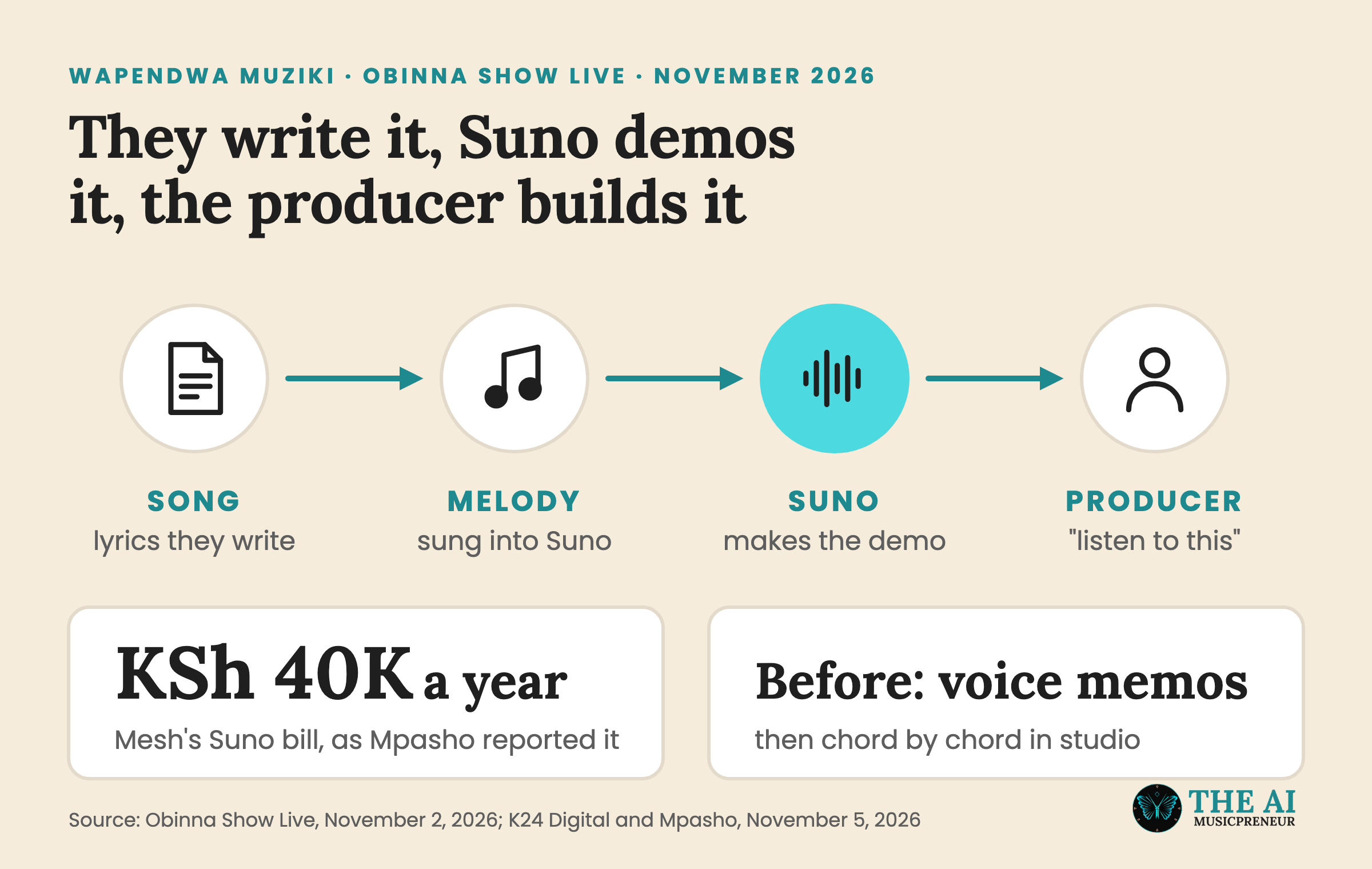
Now Suno sits in the middle. They write the song and the lyrics, decide the progression, and then tell Suno the melody, the length and the tempo they want. Mesh put the whole thing in one line, half in Swahili and half in English:
“So in short, tunapata song tunaandika, then Suno AI inacreate demo, then hiyo demo ndio tutaenda nayo kwa producer wetu tumwambie ebu sikia hii.”
In English (my translation): “We get a song and write it, then Suno AI creates a demo, and that demo is what we take to our producer to tell him, listen to this.”
He also said where the songs come from in the first place. “We have been getting our songs from God directly; all our songs are inspired by the Bible,” Mesh said, per K24.
Suno AI will not make you a talented person; AI is only for the creative ones.
Their host had his own answer for the critics.
Why Wapendwa Muziki’s Suno demos drew a backlash, and how Oga Obinna answered it
According to K24, the revelation “sparked questions about the role of artificial intelligence in creating gospel music, with some critics questioning the duo’s decision to use the technology.” Mpasho described a debate among music lovers, especially viewers who had assumed the duo recorded entirely the conventional studio way.
Obinna answered in a video on Thursday, November 5, as K24 Digital reported. “Kenyans always like to find reasons to downplay greatness. If they see something great, they’ll always find a way to say hapana,” he said.
Hapana is Swahili for no.
He told critics to watch the full interview before judging: “If you watch the video, you’ll see exactly how he’s singing.” Then came a dare: “Sasa wewe, si uandike yako na AI tuone?” Roughly: so why don’t you write yours with AI, and let’s see.
He also pointed to his own record with them. “Even us when we recorded the song we did with Wapendwa Muziki, I posted the videos on social media how we created it,” Obinna said.
That song is “Hakuna Wa Kufanana”, credited to Oga@DTop x Wapendwa Muziki, which Obinna TV posted on March 14, 2025. It has 4.06 million views.
Which other artists have said Suno is part of how they make music?
Wapendwa Muziki aren’t the first artists to put Suno at one step of the process and say so in public. Kid Rock used Suno for the choir arrangements and some orchestrations on Halfway 2 Jesus. He also defended the AI choir to Bill Maher by pointing to the drum machine.
Luke Bryan’s story was about a demo too. He denied AI wrote his single, and said the writers had cloned his voice on the demo instead.
Gospel is also where AI music is growing fastest. It went from 8.1% of AI music releases in Q1 2026 to 14.0% at mid-year in SIQA’s data, as I covered in gospel’s jump in AI music.
Kenyan music itself has been put through these models. A 2026 study by Kirui and Owoaje had Suno and Udio make 10 tracks each and found they failed to reproduce Kenyan Benga melodies, as cited in a University of Johannesburg paper on African musical traditions.
In Wapendwa Muziki’s telling, Suno’s job ends at the demo. What fans hear next still goes through their producer.
Frequently asked questions
Who are the Kenyan gospel duo Wapendwa Muziki?
Wapendwa Muziki are Meshack 'Mesh' Mpendwa and Nina Mpendwa, a married couple from Kenya who sing gospel music. Their YouTube channel opened in July 2016 and had 681,000 subscribers and 247 million views on November 5, 2026.
Did Wapendwa Muziki say which Suno plan they pay for?
No. Mesh only said he had paid a lot for it, like 40K, and Mpasho reported that as a KSh 40,000 yearly subscription. Suno's Pro plan costs $96 a year on annual billing and Premier costs $288, while KSh 40,000 was about $308 at the Central Bank of Kenya's late October 2026 rate.
Which song did Oga Obinna record with Wapendwa Muziki?
'Hakuna Wa Kufanana', credited to Oga@DTop x Wapendwa Muziki, which Obinna TV posted on YouTube on March 14, 2025. It had about 4.06 million views by November 2026, and Obinna says he posted videos of how they made it.
Where can you watch Wapendwa Muziki's Obinna Show Live interview from November 2026?
On the Obinna TV Extra YouTube channel, under the title 'Ni Mungu Tu - Wapendwa Muziki'. The livestream ran on November 2, 2026 and lasts 3 hours and 17 minutes, and the Suno demo starts about 55 minutes in.
About the author
Covering AI music tools, industry shifts, and news for music creators and professionals. Twice-weekly newsletter at aimusicpreneur.com.