AI music generators are sidelining African musical traditions, a University of Johannesburg study argues
My stack My fav 6 tools for AI music after testing 70+
-
 ElevenMusic · Music generation
 -
 Moises · Stem separation
 -
 Controlla · Voice swap & cloning
 -
 Cryo Mix · Mixing + mastering
 -
 Neural Frames · Music videos
 -
 ONCE · Distribution
Some links are affiliate links — I earn a commission at no cost to you. Every tool here is one I run myself and truly believe in. This stack is proven.
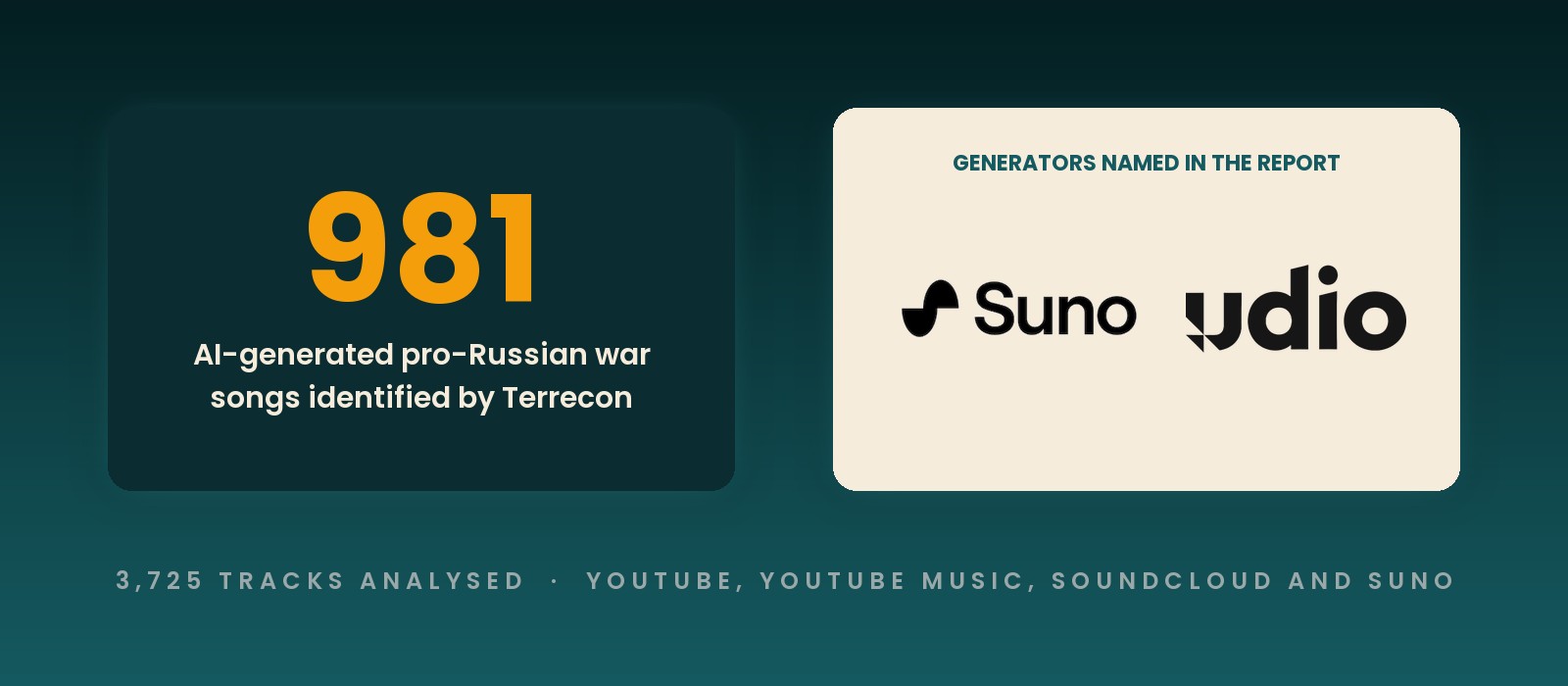
Suno and Udio each made 10 tracks of Kenyan Benga for a 2026 study. Neither got the melodies right.
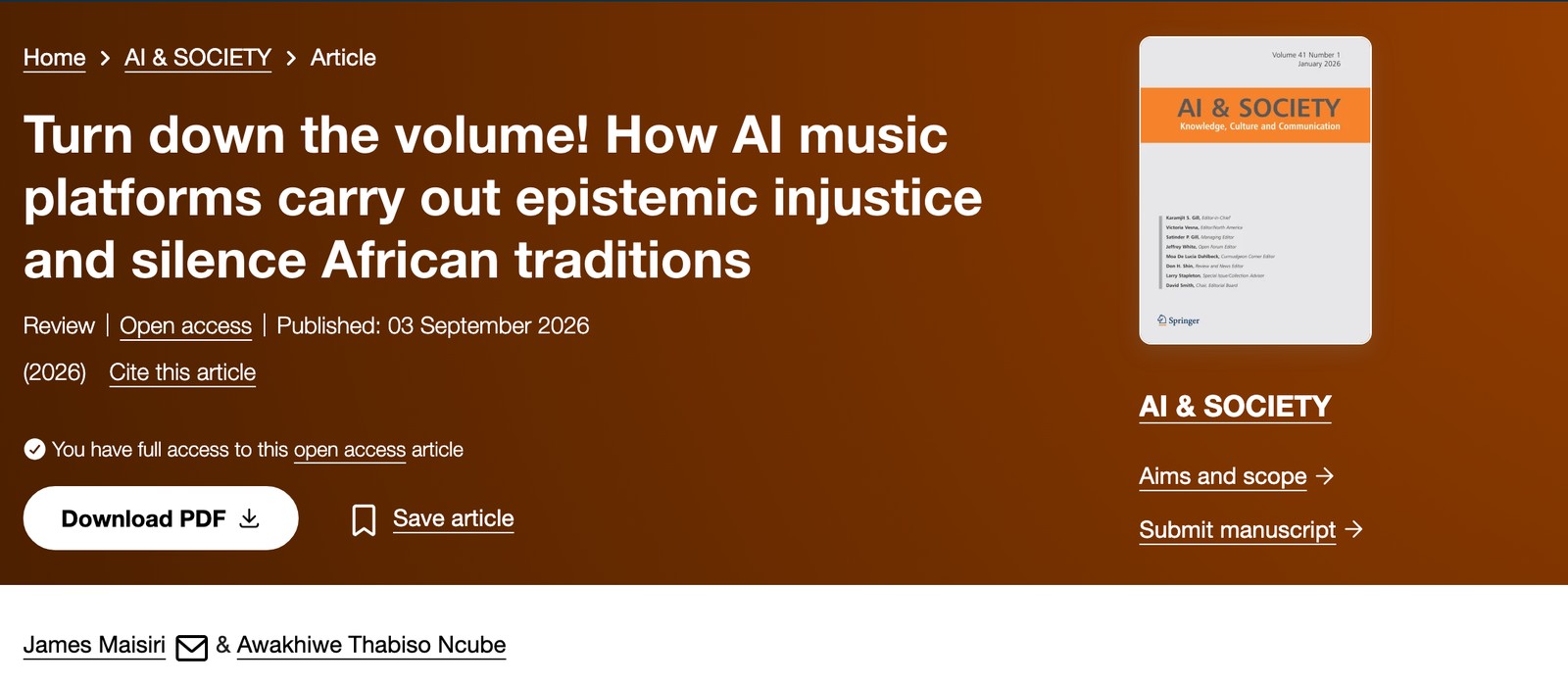
That finding sits at the center of a new paper in AI & Society by James Maisiri and Awakhiwe Thabiso Ncube of the University of Johannesburg, published September 3, 2026. Their argument: AI music generators trained mostly on Western music erase the knowledge stored in African musical traditions.
They call it epistemic injustice, and they mean it as a warning to everyone building or using these tools.
What the University of Johannesburg study argues about AI music and African traditions
The term comes from philosopher Miranda Fricker. Epistemic injustice is being wronged as someone who knows things, either because your knowledge can’t be represented or because nobody takes it seriously.
The authors say AI music does both. On the first, the paper describes generators merging many genres “into a generalised African sound of simplified, flattened polyrhythms, indigenous instruments, and microtonal scales.” On the second, Western practice becomes the default the models are built around, and everything else becomes a deviation.
That matters because, for many African communities, music “cannot be reduced merely to entertainment but is an important repository of Indigenous knowledge,” the authors write. Songs carry values, rituals and history.
African artists can skip the tools, they concede. But algorithmic recommendations, playlists and market incentives create what they call a “soft” indirect compulsion to adopt them anyway.
One caveat they state themselves: this is an integrative literature review, not new fieldwork. The Benga test comes from Kirui and Owoaje in African Musicology Online.
How much African music is in AI music training data
The data gap behind the paper has been measured. Researchers at Mohamed bin Zayed University of Artificial Intelligence reviewed more than one million hours of AI music datasets for their Missing Melodies study.
Music from the Global North made up about 86% of the dataset hours. African and Central Asian music each came in under 1%. These are research datasets, not the commercial training sets behind Suno or Udio, so they show the pattern rather than measure any one product.
It’s the same gap Anghami’s COO described for Arabic music in August, and it sits on top of the copyright blind spots African musicians flagged in April.
The paper’s fixes, in its own order:
- Public documentation of the data each AI music system was trained on.
- Independent audits and standard benchmarks for how AI represents non-Western music.
- Community-consent protocols, including restrictions on certain musical forms.
- Collective licensing and benefit sharing that pay communal authorship, not just individual owners.
- Capacity for African communities to train their own AI systems.
Frequently asked questions
What does epistemic injustice mean in the University of Johannesburg AI music study?
The authors use philosopher Miranda Fricker's term for being wronged in your capacity as a knower. They argue AI music generators misrepresent African musical knowledge, flattening distinct traditions into a generalised African sound, and discredit it by treating Western musical practice as the default.
Can Suno and Udio reproduce Kenyan Benga music?
Not accurately, according to a 2026 study by Kirui and Owoaje that the AI & Society paper cites. Suno and Udio each produced 10 tracks, and sonic analysis plus interviews with music experts found they failed to reproduce Benga melodies.
How much African music is in AI music research datasets?
The Missing Melodies review by researchers at Mohamed bin Zayed University of Artificial Intelligence counted 27.5 hours of African music across more than one million hours of AI music datasets, against 6,128 hours of European music. That puts African music under 1% of the data.
What fixes does the AI & Society study propose for AI music and African traditions?
Public documentation of training data, independent audits and benchmarks for non-Western music, community-consent protocols, collective licensing that pays communal authorship, and capacity for African communities to train their own AI music systems.
About the author

Covering AI music tools, industry shifts, and news for music creators and professionals. Twice-weekly newsletter at aimusicpreneur.com.