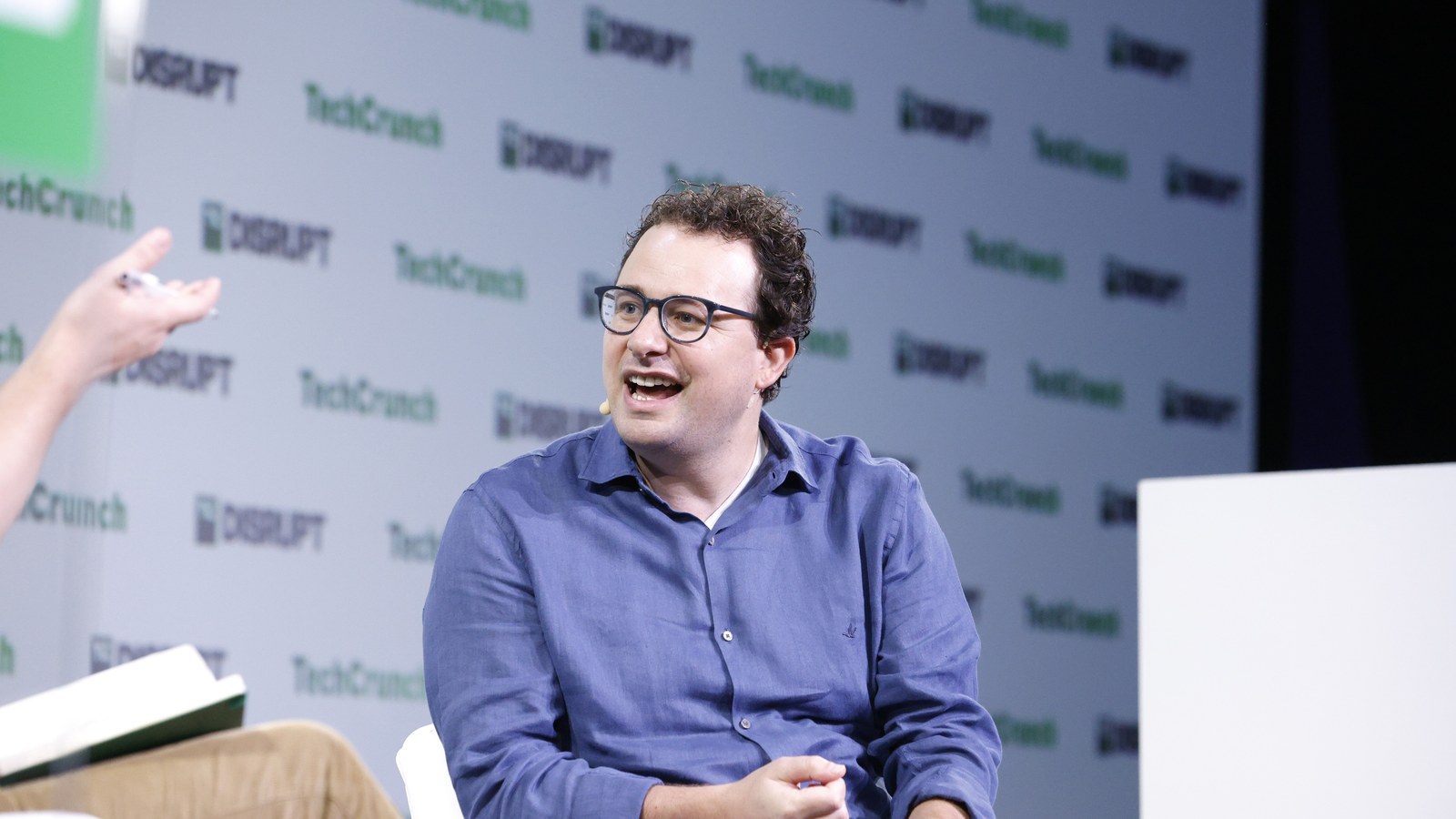
Judge Lee drops the direct infringement claim against Dario Amodei, saying 'every CEO for any small startup would be liable'

My stack My fav 6 tools for AI music after testing 70+
-
 ElevenMusic · Music generation
-
 Moises · Stem separation
-
 Controlla · Voice swap & cloning
-
 Cryo Mix · Mixing + mastering
-
 Neural Frames · Music videos
-
 ONCE · Distribution
Some links are affiliate links — I earn a commission at no cost to you. Every tool here is one I run myself and truly believe in. This stack is proven.
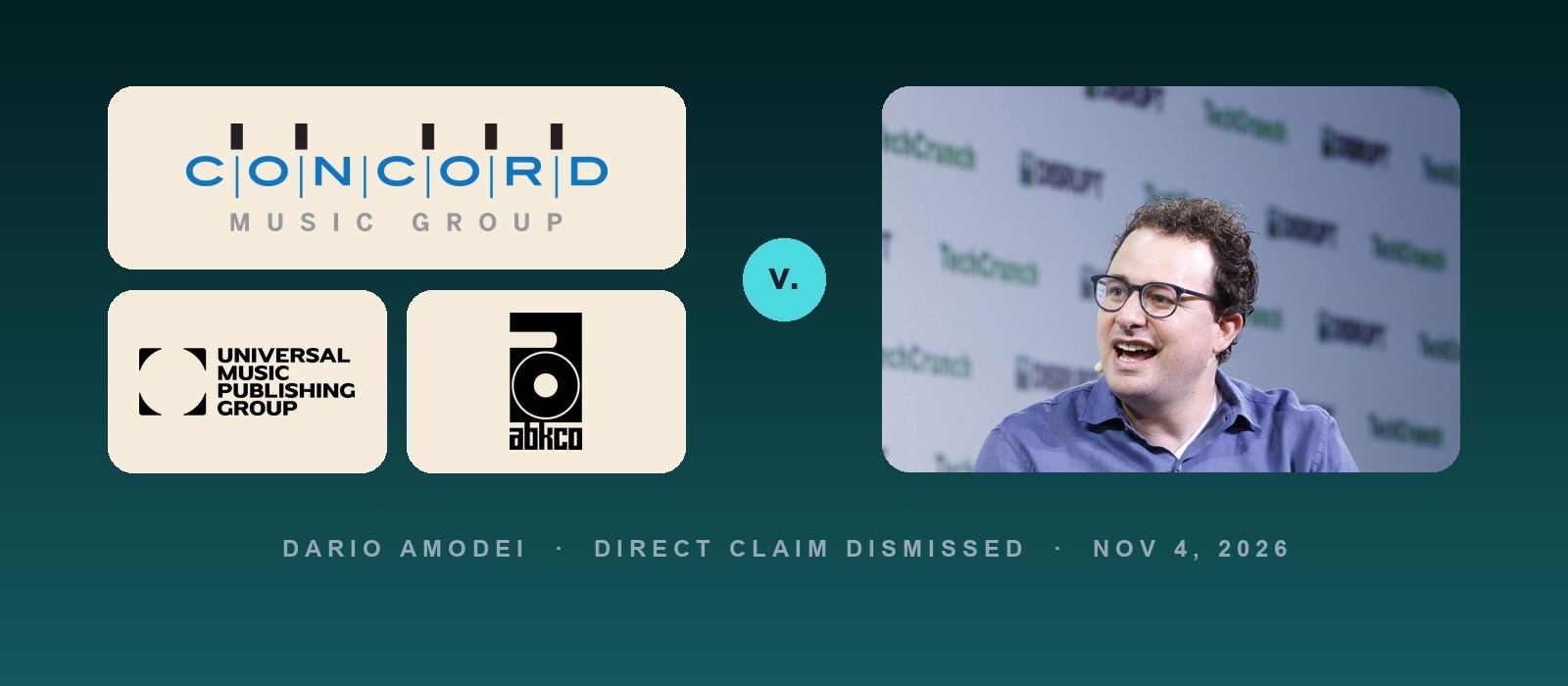
Dario Amodei is no longer accused of directly infringing the music publishers’ copyrights, at least for now. On November 4, 2026, Judge Eumi K. Lee dismissed the direct infringement claim against the Anthropic co-founder and CEO in the publishers’ 2026 case, with leave to amend.
“Every CEO for any small startup would be liable under the analysis here,” Lee said of the publishers’ argument at the hearing in San Jose, as Courthouse News reported.
Amodei isn’t out of the case. The contributory infringement claim against him wasn’t part of his motion, and it stays. Anthropic’s own motion to dismiss is still undecided, and the judge pushed the publishers hard on the 20,517 works their complaint lists.
Why Judge Lee dismissed the direct infringement claim against Dario Amodei
This is the second lyrics case Concord, Universal Music Publishing Group, ABKCO and other publishers have brought against Anthropic. The first, from 2023, is about Claude reproducing lyrics. This one, filed in January 2026, alleges Anthropic got lyrics and sheet music by torrenting them from pirate libraries, and it seeks more than $3 billion.
The complaint names Amodei and co-founder Benjamin Mann personally. In early August, Amodei filed his own motion to drop the direct infringement count against him.
His argument, per Unite.AI’s summary of the filings, was that the complaint attributes the actual downloads to Mann and other Anthropic employees. Saying Amodei directed, approved or knew about them describes a different kind of liability, not copying by him personally.
The publishers’ lawyer, Nicholas Hailey, disagreed: “Just because Amodei didn’t click download on his own computer doesn’t mean he isn’t directly liable.” Lee wasn’t convinced. According to Courthouse News, she said the publishers had failed to show how Amodei committed direct infringement by approving the use of pirated material.
Every CEO for any small startup would be liable under the analysis here.
So what’s the difference between the claim that’s gone and the one that stays?
Direct vs contributory copyright infringement: why Dario Amodei is still in the Concord case
Direct infringement means you made the copy yourself. You clicked download, you ran the scanner, you hit save.
Contributory infringement means someone else made the copy, and you knew about it and helped it happen, by causing it, encouraging it or materially contributing to it. It’s the difference between the person who shoplifts and the person who drives the getaway car. Both can be liable, under different rules.
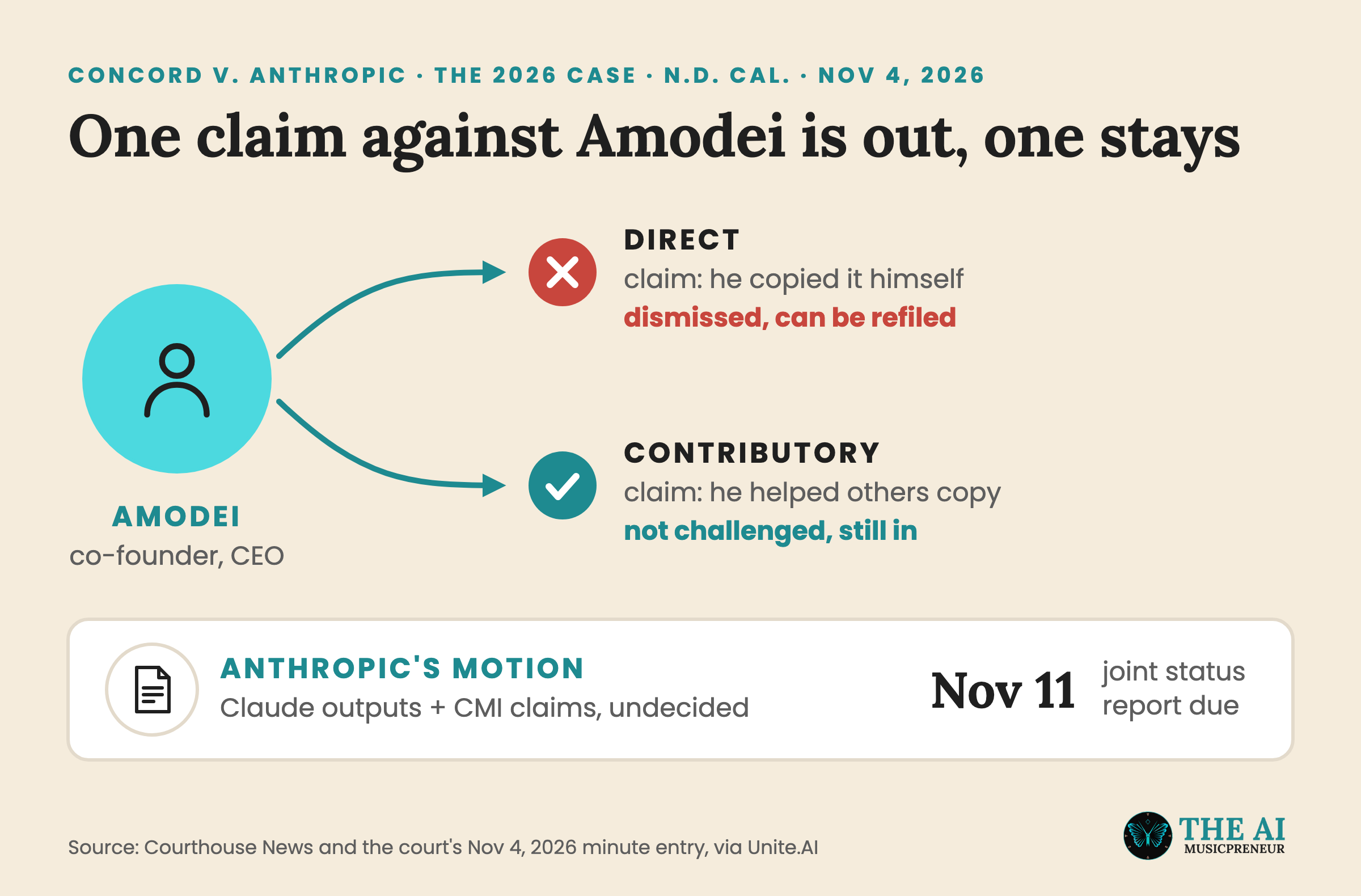
Amodei’s motion only went after the first one. Hailey pointed out at the hearing that Amodei may still be on the hook for secondary infringement, which Anthropic hasn’t challenged. Contributory infringement is a form of secondary liability.
Amodei had also asked for dismissal with prejudice, which would have closed the direct claim for good. Leave to amend means the publishers can come back with more facts and try again.
The same theory shows up in another case too. Sony Music Publishing and Warner Chappell sued Anthropic on August 28, 2026, naming Amodei and Mann on direct and contributory infringement by torrenting.
The Amodei ruling was the clean part of the hearing. Anthropic’s motion was not.
Why Judge Lee called the publishers’ 20,517-work list against Anthropic “oddly specific”
Anthropic’s own motion, filed the same day as Amodei’s, asks Lee to throw out the part of the direct infringement claim based on Claude’s outputs, plus the entire DMCA claim about stripping copyright management information (CMI). That’s the title, songwriter and owner data that travels with a work.
Lee tentatively ruled from the bench to deny it before hearing argument, Courthouse News reported. Then Anthropic’s lead counsel, Sonal Mehta, made her case: “The heart of the issue is the inadequacy of the allegations.”
Mehta said the complaint gives no detail on how or why those 20,517 works were picked, and doesn’t take the claims from “possible to plausible.” She also said it ignores the “enhanced guardrails” that stop Claude reproducing lyrics, and that the guardrails on newer Claude models don’t include material from the pirated libraries.
Hailey answered that the publishers don’t have to prove a fact to state a claim, and can’t see exactly how Anthropic copied every work before discovery. He said Claude memorized the material and can recall it when a user prompts it. In their August 31 opposition, the publishers argued that the records of users’ prompts and Claude’s answers sit with Anthropic.
Lee wanted to know where the 20,517 number came from. She said she couldn’t go on “information and belief” alone, which is the legal phrase for claims a plaintiff believes are true but hasn’t confirmed yet. After the argument, she asked for more briefing instead of ruling.
What happens next in Concord v. Anthropic after the November 4, 2026 hearing
The court’s minute entry orders both sides to meet and decide whether to handle Anthropic’s motion with more briefing or with an amended complaint. They have to file a joint status report by November 11, 2026, according to the docket as summarized by Unite.AI.
Here’s what’s open:
- Anthropic’s motion on Claude’s outputs and the DMCA claim is undecided, with the November 11 report setting the next step.
- The publishers can refile the direct infringement claim against Amodei with new facts.
- The contributory claim against Amodei, and the claims against Mann and Anthropic over the torrenting, weren’t touched by this ruling.
- In the 2023 case, Lee still hasn’t ruled on the fair use summary judgment motions she heard on October 21.
Discovery fights are running alongside, including the one over the songbooks Anthropic scanned. Anthropic also listed these suits as risks in its IPO filing on October 26.
I log every filing on the Concord v. Anthropic tracker. The next date to watch is November 11, when both sides tell Lee how they want to fight over that 20,517-work list.
Frequently asked questions
Who argued for Anthropic and the music publishers at the November 4, 2026 hearing?
Sonal Mehta argued as Anthropic's lead counsel. Nicholas Hailey argued for the music publishers, who include Concord, Capitol CMG, Universal Music entities and ABKCO entities, according to Courthouse News.
What does 'leave to amend' mean in Judge Lee's ruling on Dario Amodei?
It means the claim is dismissed for now, but the publishers can file a revised complaint with more facts and try again. Amodei had asked for dismissal with prejudice, which would have ended the direct infringement claim against him for good.
Does Judge Lee's November 4, 2026 ruling on Dario Amodei carry over to the Sony Music Publishing and Warner Chappell lawsuit against Anthropic?
No. The ruling was made in the Concord publishers' 2026 case. Sony Music Publishing and Warner Chappell filed their own suit on August 28, 2026, which names Amodei and Benjamin Mann on direct and contributory infringement by torrenting, and a ruling in one case does not decide the other.
Does the November 4, 2026 ruling change the claims against Anthropic co-founder Benjamin Mann?
No ruling on Mann was reported. The motion Judge Lee granted was Amodei's own, and his argument was that the complaint attributes the downloads to Mann and other Anthropic employees rather than to Amodei personally.
About the author
Covering AI music tools, industry shifts, and news for music creators and professionals. Twice-weekly newsletter at aimusicpreneur.com.