FL Studio maker Image-Line says generative AI feeds beginners into real music-making
My stack My fav 6 tools for AI music after testing 70+
-
 ElevenMusic · Music generation
 -
 Moises · Stem separation
 -
 Controlla · Voice swap & cloning
 -
 Cryo Mix · Mixing + mastering
 -
 Neural Frames · Music videos
 -
 ONCE · Distribution
Some links are affiliate links — I earn a commission at no cost to you. Every tool here is one I run myself and truly believe in. This stack is proven.
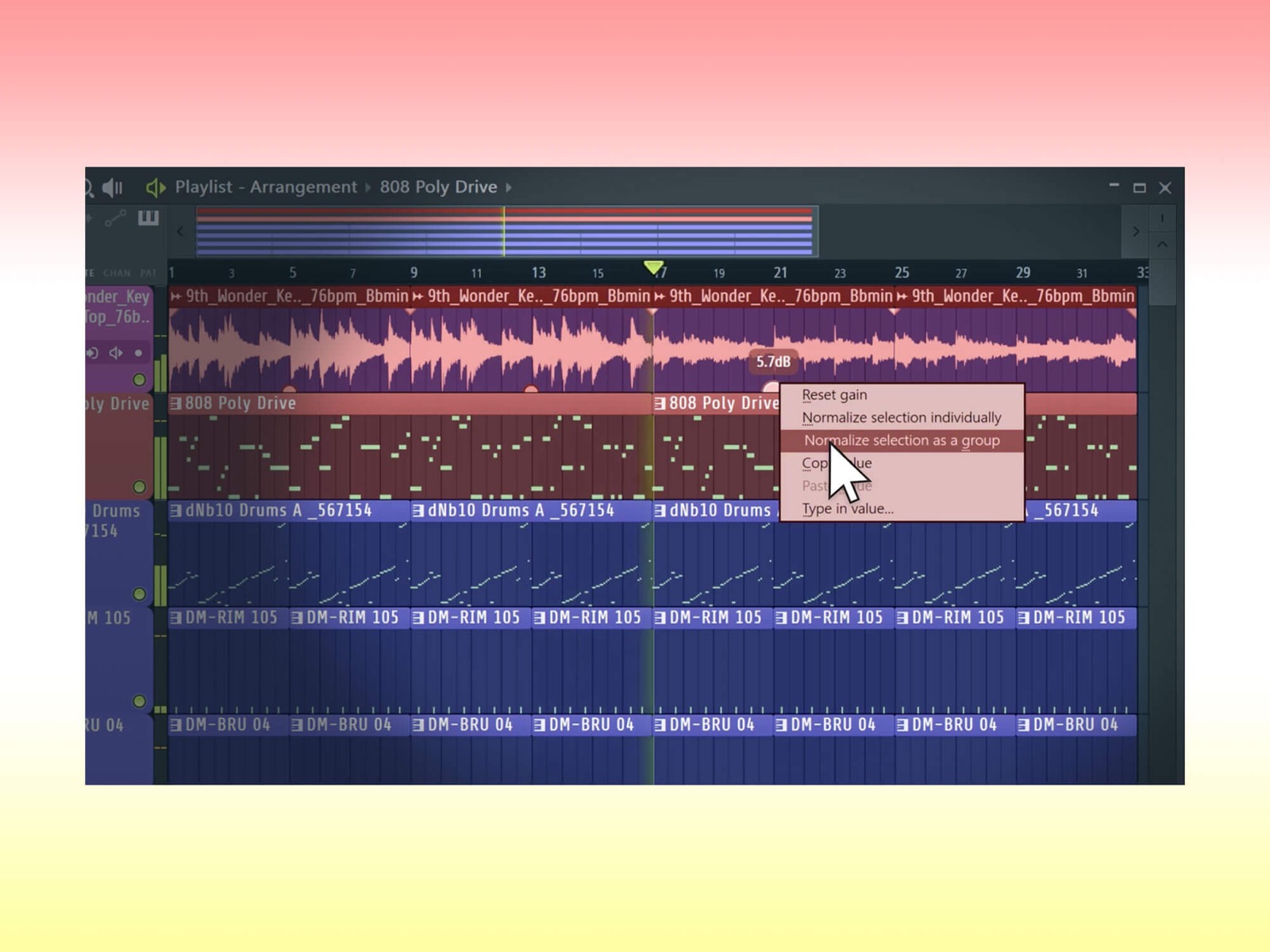
The company behind one of the most used DAWs on the planet just took a position most DAW makers avoid. Robert Linke, chief product and technology officer at Image-Line, said on the Music Ally Focus podcast on September 4, 2026 that generative AI tools pull complete beginners into music-making instead of pushing them away from it. Image-Line makes FL Studio, the DAW that started life as Fruity Loops.
His claim is specific. A prompt tool gives somebody their first song, that person runs into the wall of what prompting can do, and then they go download a DAW.
“It gets a lot more people around the planet in touch with interacting with music in a more creative way,” Linke said.
The ceiling is the part that does the work
Linke’s argument is not that prompting is deep. It is that prompting is a door.
“Nowadays, you basically just can prompt your idea, which might not be the most creative thing you’ve ever done, but it might be the very first time you actually create a piece of music,” he said. “And that leads a lot of people to go further downstream.”
Then he named the mechanism, which is the interesting half:
They also see 'there's only so much I can do here. I can only interact with a generative platform so much' and they would go the next step and then download FL Studio, for example, and try to get into music-making.
Linke called the whole effect “a net benefit of generative AI: that it just enables so many more people to think about their relationship to music as one they can participate in a creative way with”.
A DAW (digital audio workstation) is the software you record, arrange and mix in. FL Studio has carried AI features for about two years now, including the Gopher assistant in the 2026 release, so Image-Line is not talking about a technology it has kept at arm’s length.
Why a DAW company saying this is unusual
Most of the loud voices in this argument have a reason to pick a side, and the sides are predictable. Generative platforms say prompting is enough. Traditional gear and software companies mostly say nothing, or say it quietly, because their customers are the people most annoyed by AI music.
Image-Line sells to that exact audience. Beat makers, bedroom producers, people who bought FL Studio because they wanted the faders. Telling them that Suno is a feeder for the craft is not the safe line to take.
It is also a claim with a real counterweight. More than half of Deezer’s daily uploads are now fully AI-generated, and most of that never becomes anybody’s first step toward anything. Linke is describing the fraction of people who get curious, not the volume that gets dumped onto streaming.
I can’t verify how big that fraction is. Image-Line didn’t publish a download number tied to it, and I’d want one before treating the funnel as measured rather than observed.
What actually happens when someone hits the prompt ceiling
The path Linke describes is real, and it has gotten shorter, because the generative tools themselves keep adding the controls people were leaving to find.
Suno is the clearest example. In the last year it added personas for keeping a consistent voice and sound across tracks, models a user can shape around their own music, and Suno Studio, which is a working session environment rather than a prompt box. Somebody who starts on a Suno prompt can now go a long way before the ceiling shows up at all.
That cuts both ways for Linke’s argument. The ceiling still exists, and it always will, because control has levels and a prompt tool only exposes some of them. But the ceiling is higher than it was when he started making the case, so the moment where somebody goes looking for a DAW arrives later, and some people never reach it.
Frequently asked questions
What did Image-Line's Robert Linke say about generative AI and FL Studio?
Linke, chief product and technology officer at Image-Line, said prompt-based generative tools often give a person the first piece of music they ever make. He argued that people then hit the limits of a generative platform and download a DAW like FL Studio to go further. He called this a net benefit of generative AI.
Which company makes FL Studio?
Image-Line, a Belgian software company. FL Studio was originally released as Fruity Loops, and it is one of the most widely used digital audio workstations for beat-driven production.
Do AI music generators like Suno actually teach you music production?
They teach arrangement instincts and taste before they teach technique. Prompting builds an ear for what works, but mixing, sound design and automation still live in a DAW. Linke's argument is that hitting the ceiling of a prompt tool is what pushes people to learn the deeper controls.
What AI features does FL Studio have in 2026?
FL Studio 2026 ships an AI assistant called Gopher that can perform in-session tasks, alongside chord detection and other machine-learning helpers. Image-Line has been adding AI features for roughly two years.
About the author

Covering AI music tools, industry shifts, and news for music creators and professionals. Twice-weekly newsletter at aimusicpreneur.com.