Tidal bans fully AI-generated music from December 9, but it reaches about 1% of music subscribers

Black Friday deal · ends Nov 30 My #1 AI music video tool is up to 50% off until Nov 30
Music videos made with Neural Frames
- 50% off when you go yearly
- 25% off monthly plans and credit top-ups
Back to full price after Nov 30. Affiliate link: I earn a commission at no cost to you.
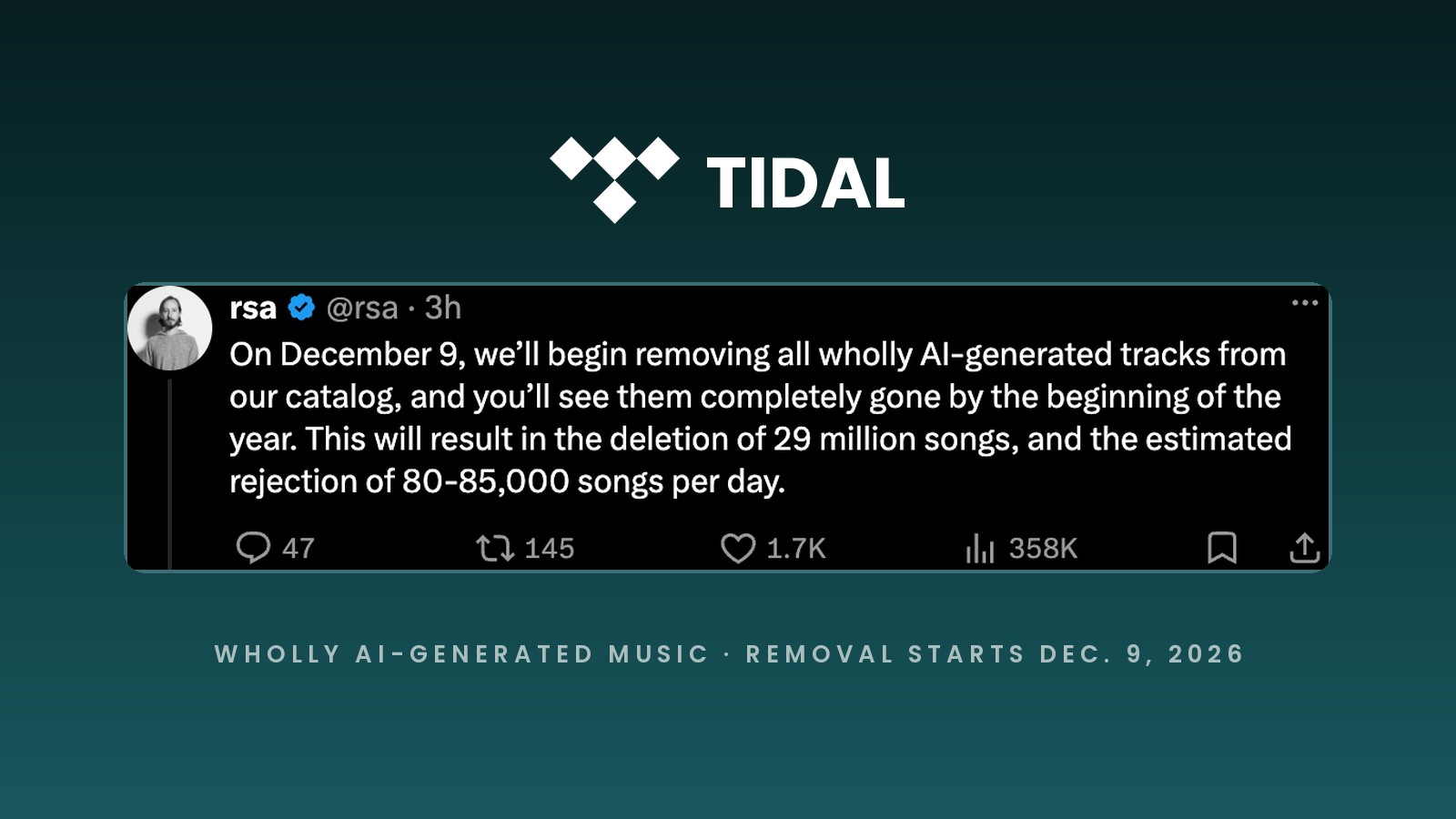
Tidal is deleting 29 million AI songs. From December 9, 2026, the streaming service rejects every wholly AI-generated track a distributor sends it, and the ones already in its catalog will be gone by early 2027, Robert Andersen, Tidal lead at owner Block, wrote on X on November 24.
So if you release songs that are fully generated in Suno or a similar tool, they won’t go live on Tidal after December 9, and the ones already up will disappear. Songs where AI only helped stay up.
Big number. But Tidal is a small platform, and the bigger question for your releases is whether anyone else follows.
What Tidal’s December 9, 2026 ban removes, and what stays up
Tidal checks two things. First the distributor’s metadata: if it says a track was “generated solely using AI tools,” Tidal rejects the delivery. Then the audio itself, using detection from Ircam Amplify, the commercial arm of the French research institute IRCAM, as Music Business Worldwide reported.
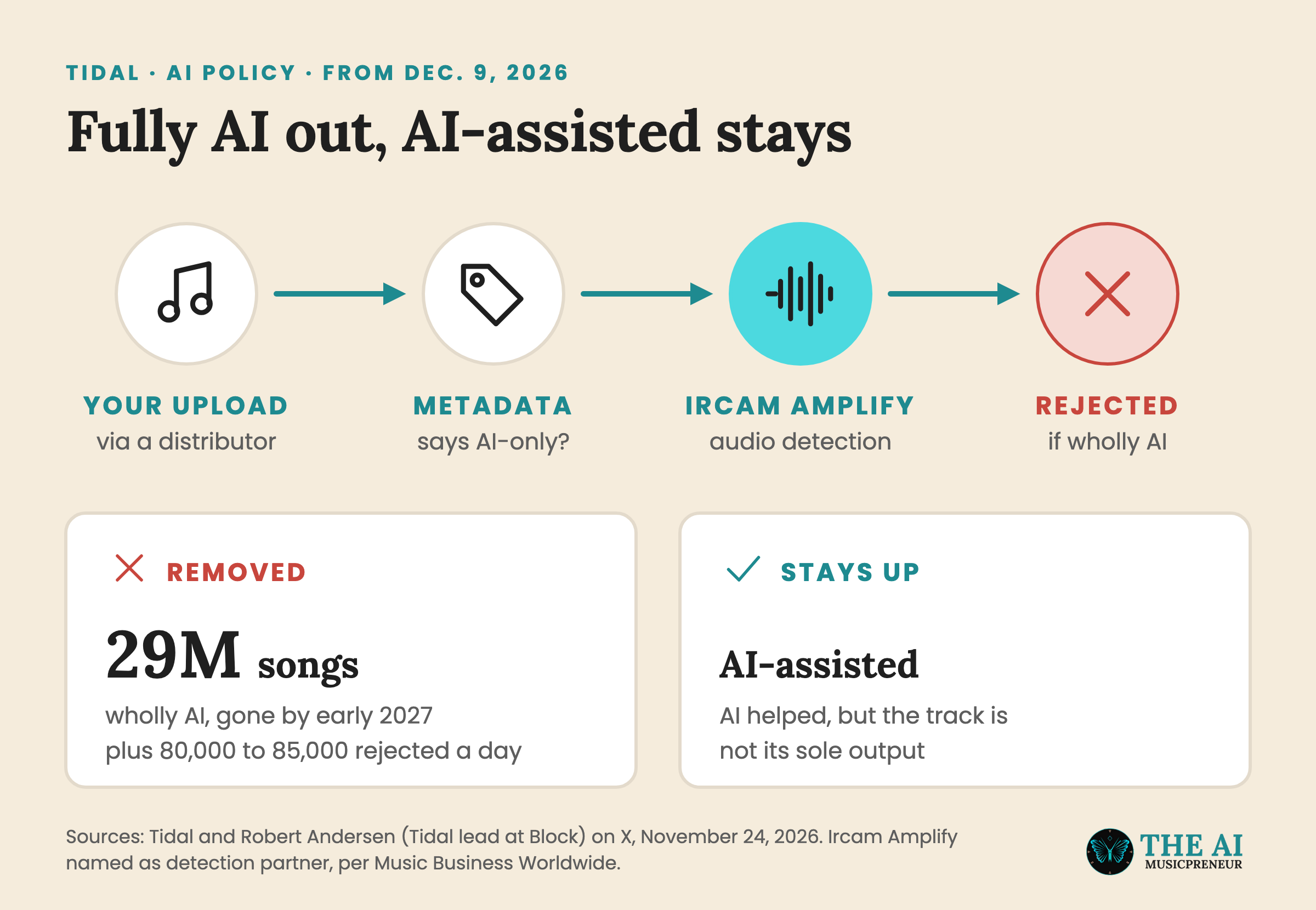
The line Tidal draws is “wholly”. Tracks “assisted by AI tools, but not the sole outputs, will be allowed on the platform,” the company said. In practice, that’s mostly a Suno question: Tidal says 94% of the tracks carrying its AI badge come from Suno.
Impersonation is a separate fight. Tidal says it has already taken down more than 65,000 tracks for suspected impersonation of artist names, and Billboard puts the figure at 66,000.
This is step 2 of a policy Tidal started in the summer, when it stopped paying royalties on fully AI-generated tracks and labelled them from July 15. So fully AI songs on Tidal haven’t earned anything there for months.
Why Tidal says 96% of its AI songs never got a stream
Tidal’s case for the ban is that nobody was listening. It says about 27 million tracks in its catalog carry its AI tag, 6.3% of everything on the service, and 96% of them got zero streams in the last 3 months. That’s Tidal’s count of tagged tracks. Andersen’s 29 million is the number he expects the removal to delete.

The uploads kept climbing anyway. 43% of all tracks distributed to Tidal in the last 90 days were wholly AI-generated, and on November 6 it was more than 60% of the day’s deliveries, according to the figures Tidal shared with Digital Music News. Demonetizing the tracks in July didn’t slow that down.
How much of the streaming market Tidal’s AI ban reaches
Here’s the part the headlines skip. Block doesn’t publish a Tidal subscriber number, and outside estimates range from about 3.5 million to 10 million (none of them verified). Even the top of that range is about 1% of the 921.6 million paid music subscribers MIDiA Research counted at the end of 2025.
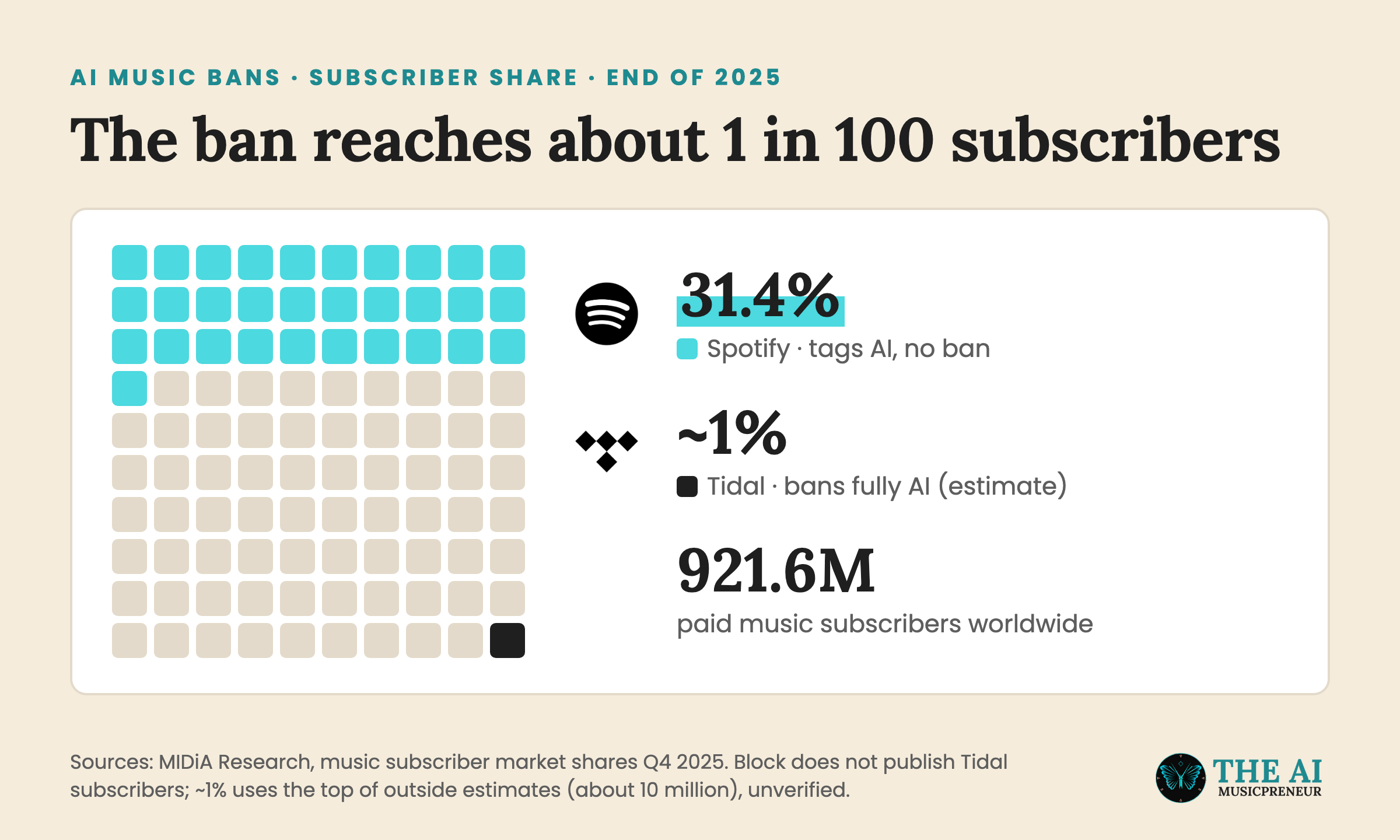
Billboard calls Tidal the first streaming service to ban AI songs outright. It joins Bandcamp and iHeartRadio. And Tidal wants company.
We are the first DSP to do so, and we encourage our peers to follow suit.
That last line is the one that could cost you money, because most of your streams don’t come from Tidal.
Why Spotify, not Tidal, decides what happens to your AI songs
Spotify holds 31.4% of all music subscribers, by far the biggest share, according to MIDiA. And on Spotify, AI music stays up. It tags AI artists with an AI Persona badge and keeps them out of its recommendations by default, but it doesn’t delete the songs.
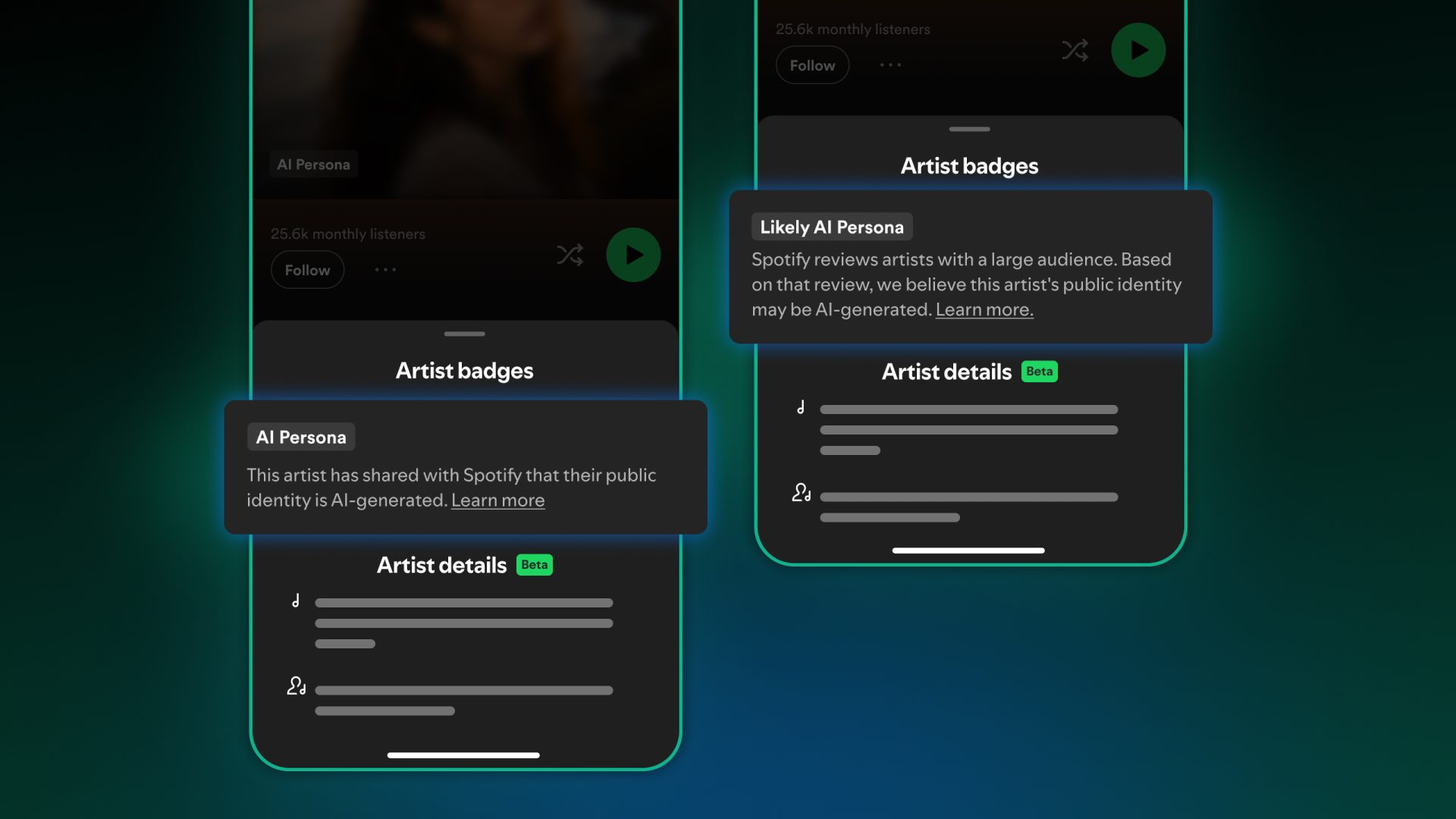
Spotify also has reasons to keep it that way. Antony Demekhin, co-founder and CEO of Tuney, argues that AI music “is starting to dilute the royalty pool,” and that this is good for Spotify “because they want to shrink their major label payouts as those are the most expensive rates they pay out,” in a LinkedIn post. That’s his reading, not something Spotify has said.
Spotify is also building AI into its own product. It plans to launch an AI covers and remixes tool in early 2027, the Financial Times reported on October 30. Spotify does go after volume, though. It says it deleted more than 75 million spammy tracks and took 50 million AI slop and spam tracks out of recommendations in 2026, without banning AI music as a category.
Frequently asked questions
When will Tidal start deleting wholly AI-generated songs from its catalog?
Tidal starts rejecting and removing wholly AI-generated tracks on December 9, 2026. Robert Andersen, Tidal lead at Block, wrote on X that the existing ones will be completely gone by the beginning of 2027, which deletes 29 million songs.
Will Tidal remove songs I made with help from AI tools under its December 2026 ban?
No, not if AI only assisted. Tidal says tracks that were assisted by AI tools but are not the sole outputs of those tools are still allowed. The ban targets tracks that are wholly AI-generated, which Tidal says are mostly Suno outputs.
How does Tidal detect wholly AI-generated tracks for its December 2026 ban?
Tidal uses two checks. It rejects deliveries whose distributor metadata says the track was generated solely with AI tools, and it uses audio detection from Ircam Amplify, the commercial arm of the French research institute IRCAM.
Which music platforms have banned fully AI-generated songs as of November 2026?
Billboard lists Tidal as the first streaming service to ban fully AI-generated songs outright, joining Bandcamp and iHeartRadio. Spotify, Deezer and Apple Music label or limit AI music but do not remove it.
About the author
Covering AI music tools, industry shifts, and news for music creators and professionals. Twice-weekly newsletter at aimusicpreneur.com.