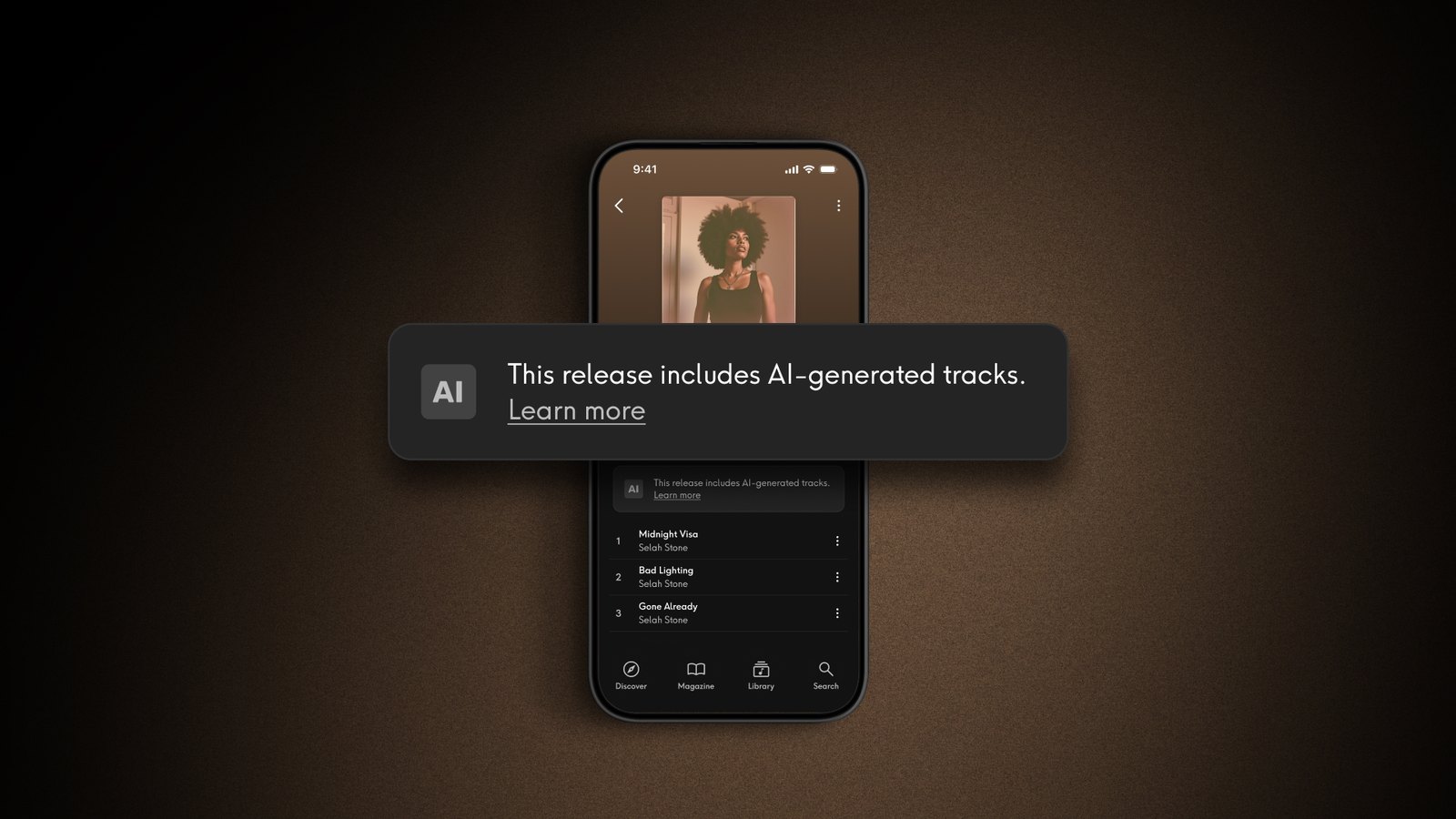
Spotify took 50 million AI slop and spam tracks out of recommendations in 2026, on top of 75 million it removed
My stack My fav 6 tools for AI music after testing 70+
-
 ElevenMusic · Music generation
-
 Moises · Stem separation
-
 Controlla · Voice swap & cloning
-
 Cryo Mix · Mixing + mastering
-
 Neural Frames · Music videos
-
 ONCE · Distribution
Some links are affiliate links — I earn a commission at no cost to you. Every tool here is one I run myself and truly believe in. This stack is proven.
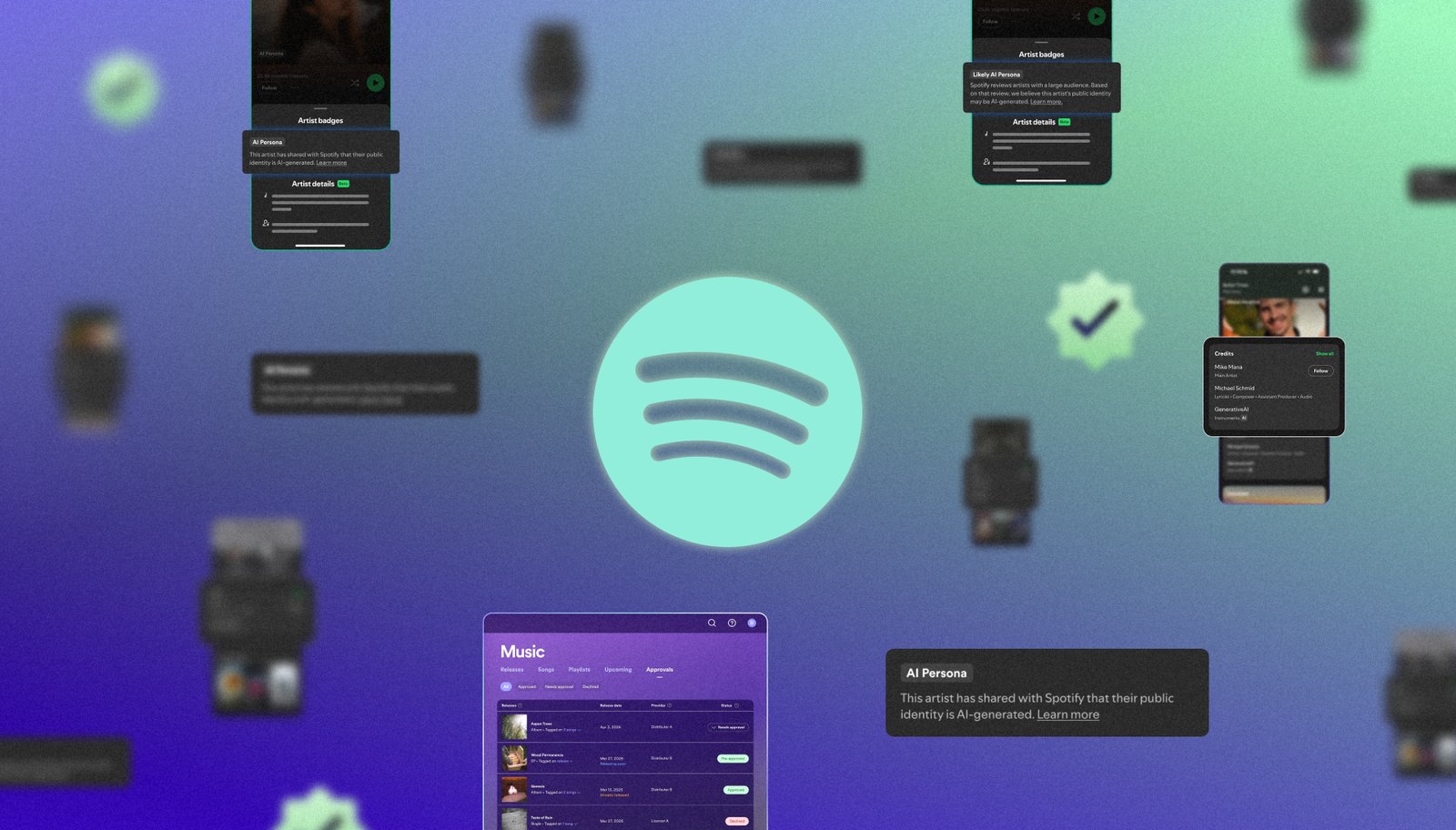
Spotify says it has taken more than 50 million slop and spam tracks out of its recommendations in 2026. That’s on top of more than 75 million “spammy tracks” it deleted from the platform altogether.
Both numbers come from Spotify’s one-year update, published on October 20, 2026, about a year after it laid out its plan to fight AI spam and impersonation.
The two numbers got mixed up in a lot of the coverage, so here’s what each one actually counts.
What Spotify’s 50 million and 75 million track figures each count
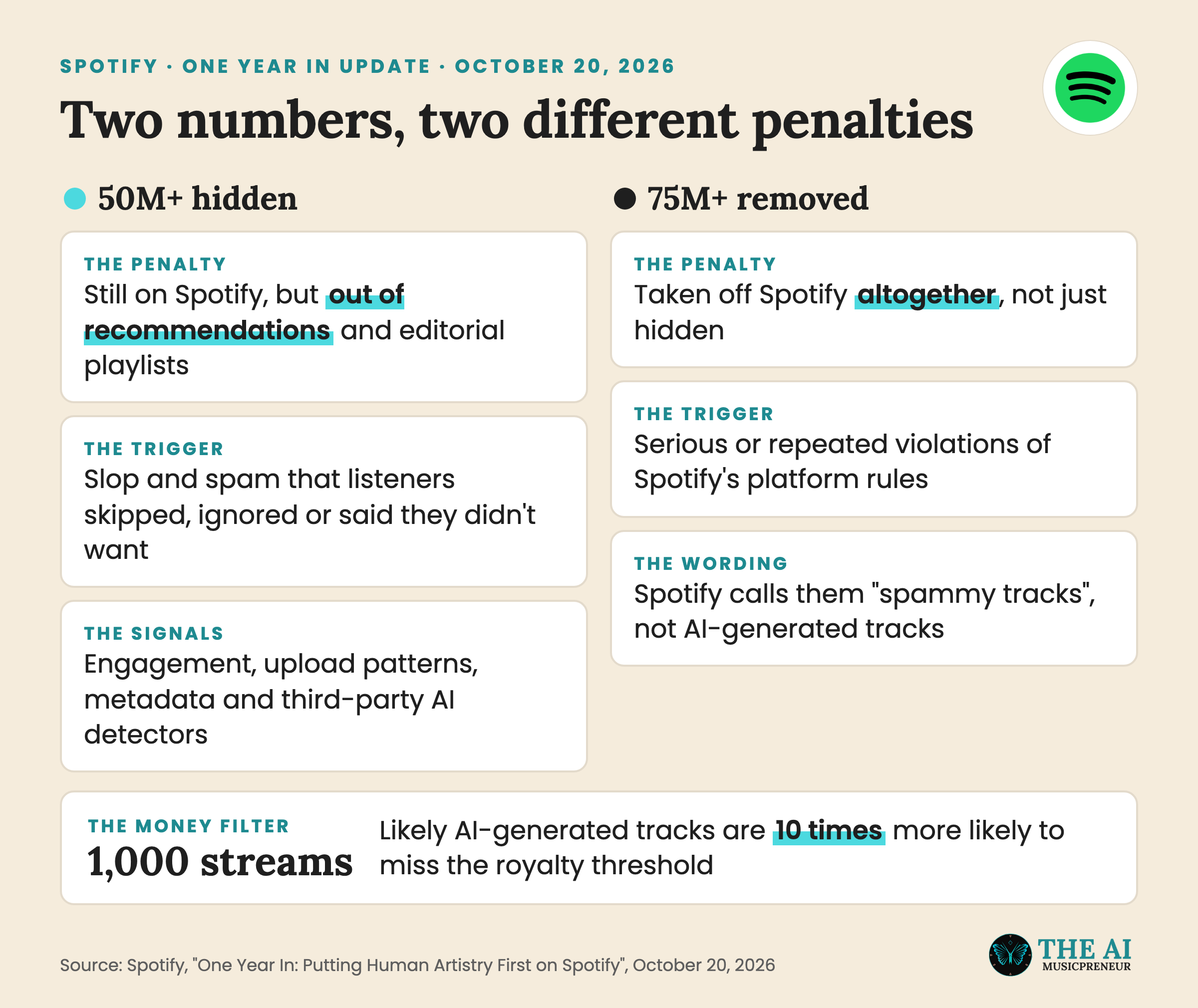
The 50 million tracks are still on Spotify. You can search for them and play them, but they no longer surface in Spotify’s recommendations, and Spotify’s editors won’t put them on playlists either.
The 75 million are gone. Spotify removed them for “serious or repeated violations” of its rules, and the post calls them “spammy tracks”, not AI-generated tracks.
That second detail is where the headlines slipped. Rolling Stone’s headline called all 75 million “AI-generated slop or spam”. Spotify’s post never says how many of the deleted tracks were made with AI.
So which tracks end up in the hidden pile in the first place?
How Spotify decides a track is AI slop or spam
Spotify started with listener behaviour. Earlier in 2026 it looked at the tracks people skipped, ignored or said they didn’t want to hear, and found those were “consistently” tracks it had already identified as slop or spam.
Over the past 6 months it changed its recommendation system to push those tracks out and surface more music by human artists. Spotify says listener complaints about slop in recommendations have dropped “markedly” since then.
No single signal makes the call. Spotify combines 4 of them:
- Listener engagement and feedback, including what people skip.
- Upload patterns, such as one account pushing out huge batches at once.
- Metadata, the titles, artist names and credits attached to a track.
- Results from several third-party AI detection tools.
Spotify is upfront that detectors alone won’t cut it.
AI detection technology in particular has limitations, and it will only get harder as generative AI evolves.
That’s why it also hunts for spam tactics: mass uploads, duplicates, SEO manipulation, spammy playlist networks and artificially short tracks.
Why Spotify’s 1,000-stream royalty threshold catches AI-generated tracks
Since 2024, a track on Spotify needs 1,000 streams in 12 months before it earns any royalties. Spotify now calls that rule its “first line of defense” against AI-generated content.
Its numbers back that up: tracks with a high probability of being AI-generated are 10 times more likely to fall below the threshold. Spotify says that makes it harder for bad actors to “syphon royalties away from real artists by generating music at scale”.
An account that uploads 10,000 generated tracks at 40 plays each racks up 400,000 streams and earns nothing, because not one of those tracks clears 1,000.
Spotify’s AI labels and artist tools, one year after the September 2025 plan
Spotify also listed 4 tools it has rolled out since that plan:
- AI Credits launched in April 2026, and artists now submit tens of thousands a day, showing which roles and instruments used AI.
- Verified by Spotify now covers more than 300,000 artists, and more than 70% of them are independent.
- AI Persona badges sit on thousands of profiles, and those artists stay out of recommendations by default unless a listener follows them.
- Artist Profile Protection lets artists approve releases before they land on their profile. Thousands joined the beta, and it opens to everyone by the end of 2026.
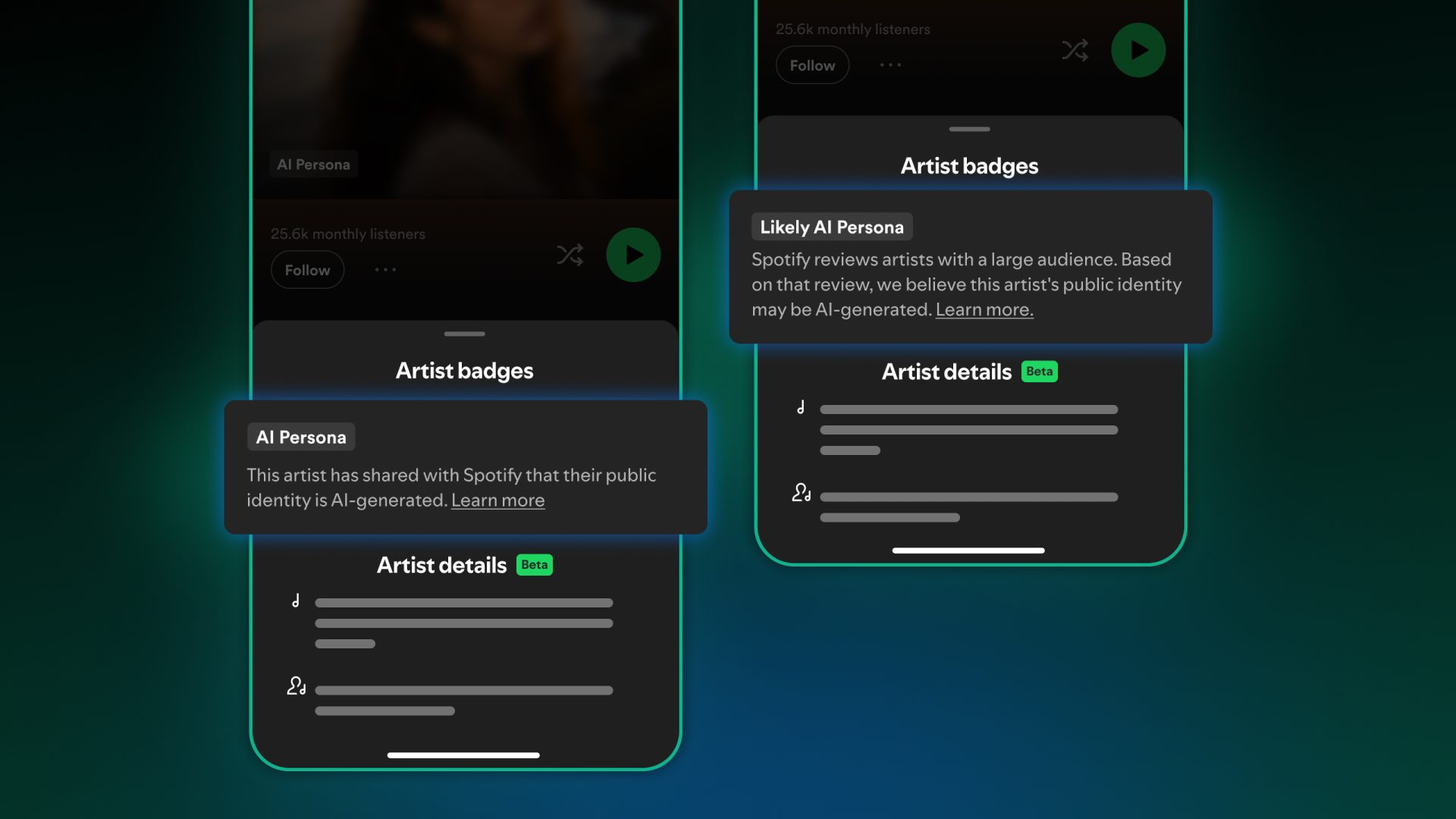
That last one closes the gap that let a fake Bridgit Mendler EP sit on her official profile for a week. It also answers part of what Duke’s researchers found in Release Radar earlier this month, where 9 undisclosed AI artists got recommended.
Spotify ended its post with “This work isn’t finished. AI moves fast, and bad actors adapt just as fast.” The same day, it signed Believe and TuneCore to its AI remix tool, the licensed side of the same AI push.
Frequently asked questions
Do Spotify's editors add AI slop or spam tracks to editorial playlists?
No. Spotify says its editors hold the same standard as its recommendation system and don't program content identified as slop or spam. The policy was restated in Spotify's one-year update on October 20, 2026.
When will Spotify's Artist Profile Protection be available to every artist?
Spotify says Artist Profile Protection will open to all artists by the end of 2026. Thousands of artists joined the beta, which lets them review releases that list them as an artist before those releases appear on their Spotify profile.
How many artists have the Verified by Spotify badge as of October 2026?
More than 300,000 artists carry the Verified by Spotify badge, according to Spotify's October 20, 2026 update. Spotify says they account for more than 99% of what listeners search for, and more than 70% of them are independent artists.
Where can listeners see AI Credits on Spotify?
AI Credits show up in Song Credits, inside the Now Playing view of the Spotify mobile app. Spotify launched AI Credits in April 2026 and says artists now submit tens of thousands of them every day, marking which roles and instruments were made with AI.
About the author

Covering AI music tools, industry shifts, and news for music creators and professionals. Twice-weekly newsletter at aimusicpreneur.com.