Australia's AI committee backs copyright 'certainty' for AI training, and ARIA calls it a concession to foreign AI companies

Black Friday deal · ends Nov 30 My #1 AI music video tool is up to 50% off until Nov 30
Music videos made with Neural Frames
- 50% off when you go yearly
- 25% off monthly plans and credit top-ups
Back to full price after Nov 30. Affiliate link: I earn a commission at no cost to you.
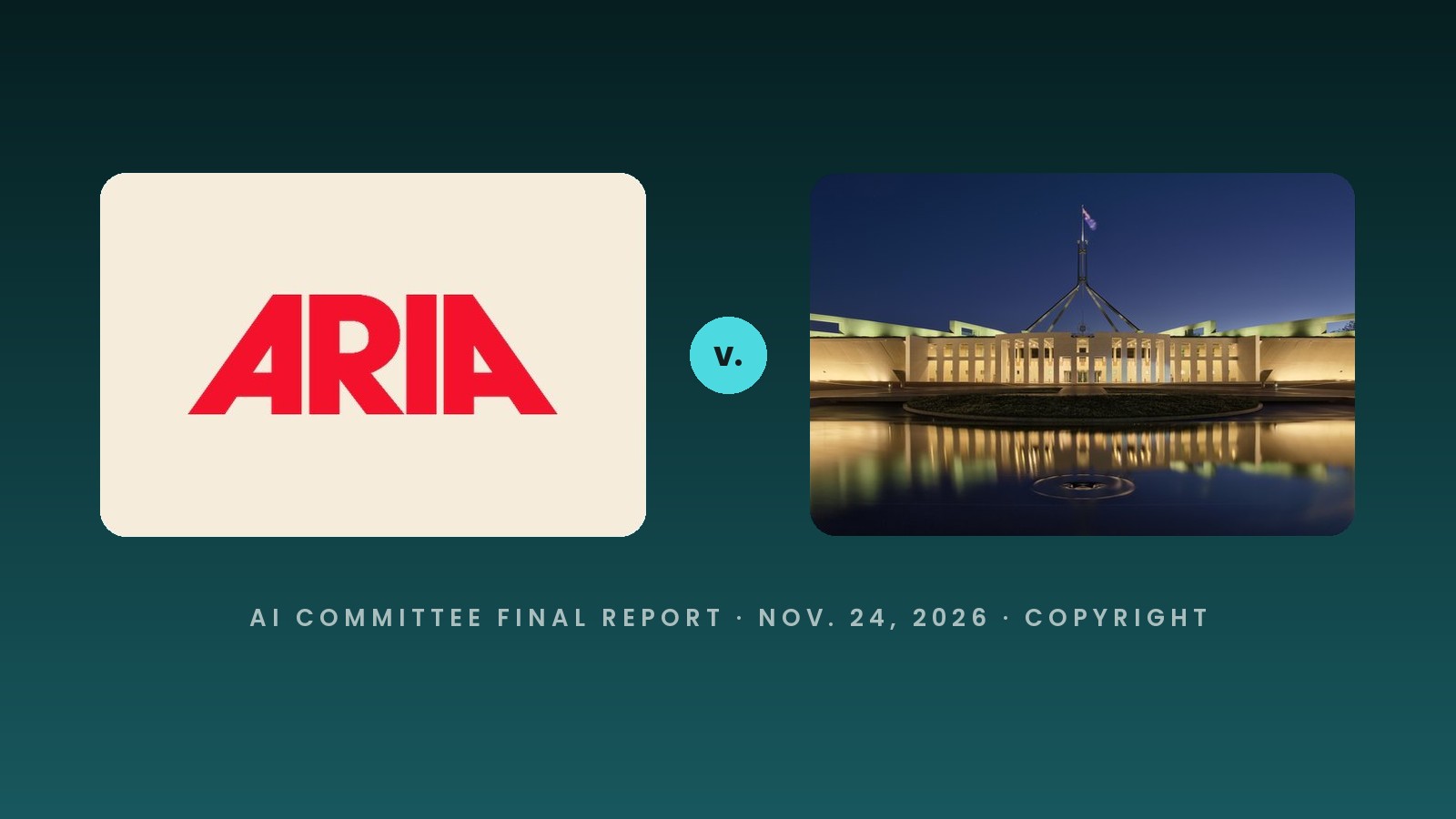
46 recommendations. That’s what Australia’s Joint Select Committee on Artificial Intelligence handed the government on November 24, 2026, and the one the music industry cares about is copyright. The committee wants a new way for creators to get paid when AI companies train on their work in Australia, ABC News reports.
The music industry says that’s the wrong fix. ARIA, the body for Australia’s record labels, says current copyright law already makes AI companies ask and pay, and that changing it hands AI firms a cheaper deal dressed up as help for creators.
What the Joint Select Committee on Artificial Intelligence recommended on copyright
The report asks the government to “strengthen Australia’s copyright protections, including creating a mechanism to make it easier and fairer for Australian rights holders and creators to be paid by AI companies training frontier and other large language models in Australia,” as quoted by The Music Network. It also wants individual creators paid, transparency about training data, and strong penalties for breaking the rules.
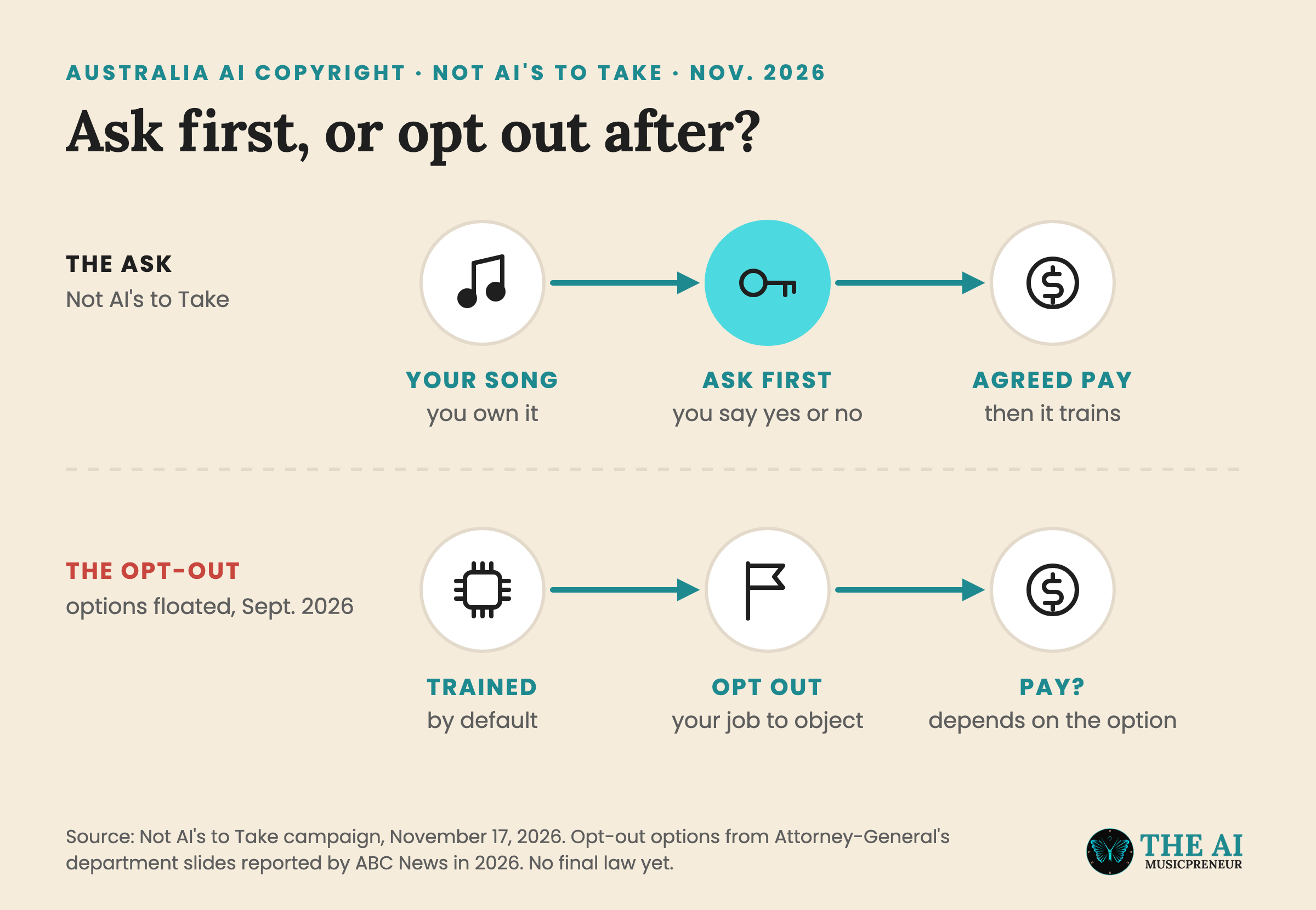
The same report says those changes should give AI companies “the certainty necessary to train their AI models” in Australia, and that’s the part the music industry reads as a warning. The government has ruled out a new copyright exception for AI training. But ministers are expected to propose a statutory licence instead, CMU reports: AI companies copy content in bulk and pay into a central pot that gets shared out, probably with an opt-out for rights holders. The report’s wording could be used to justify that.
Committee chair Jo Briskey, a Labor MP, defended it in plain terms. “We need to see them have control, and we need to see them be paid. That is not happening right now,” she told the ABC.
How ARIA, APRA AMCOS and Senator David Pocock answered the AI committee report
ARIA CEO Annabelle Herd rejected the starting point. Australian law already lets rights holders sue an AI company that trains there without a licence, she said in a statement quoted by CMU, and “those rights ensure AI companies must come to the table, ask permission and pay an agreed fee.”
Proposing to weaken the very right that gives creators commercial control and leverage and calling it additional protection is gaslighting.
APRA AMCOS, the songwriters’ collecting society, welcomed the committee’s view that training on Australian work without permission or agreed payment is wrong, CMU reports. But CEO Dean Ormston said AI companies won’t engage with the licences APRA already offers, and that the inquiries are “managing a delay by some of the richest companies in the world that could have settled this at any point by taking out a licence.”
Then there’s the committee’s own dissenter. Independent ACT Senator David Pocock wrote a separate report. He wants politicians to leave copyright law alone, enforce what exists and help licensing deals, with a 3-year freeze on any changes to test whether current law can make AI companies pay, according to the ABC. He told the ABC the committee relied on “evidence from big tech”, and broke with it over copyright, energy and an “overly optimistic” view of AI.
Why the Australian AI copyright fight reaches songwriters outside Australia
More than 7,000 creators, including Kate Bush and Grace Jones, have signed a statement organised by Fairly Trained founder Ed Newton-Rex. It says their work must only be used to train AI in Australia “with our explicit permission.”
The reason non-Australians care is the “weakest link” problem IFPI’s Victoria Oakley warned about earlier this month: one country with a cheap training route exposes music from everywhere. ARIA has already argued the opposite case with numbers, counting 27 AI licensing deals it says prove licensing works without new law.
The next date is the government’s draft legislation, which the ABC expects early in 2027, covering data centres, AI safety and a copyright proposal.
Frequently asked questions
How many recommendations did Australia's Joint Select Committee on Artificial Intelligence make in its final report?
46. The committee, chaired by Labor MP Jo Briskey with Liberal Senator Jonno Duniam as deputy, tabled its final report on November 24, 2026. It covers copyright, AI safety and data centre licensing.
What does the AI committee's November 2026 report recommend on copyright?
It asks the government to strengthen Australia's copyright protections, including a mechanism that makes it easier and fairer for rights holders and creators to be paid by AI companies training models in Australia. It also wants individual creators paid, transparency about training data and strong penalties for breaches.
Why did Senator David Pocock write his own report on the AI committee's findings?
Pocock broke with the committee over copyright, energy and what he called an overly optimistic view of AI's benefits. He wants politicians to leave copyright law alone, enforce existing protections and help licensing deals, with a 3-year freeze on any copyright changes.
When will Australia's government release draft AI copyright laws?
ABC News reports the federal government is expected to release draft legislation covering data centre standards, AI safety and a copyright proposal early in 2027, likely as a series of bills.
About the author
Covering AI music tools, industry shifts, and news for music creators and professionals. Twice-weekly newsletter at aimusicpreneur.com.