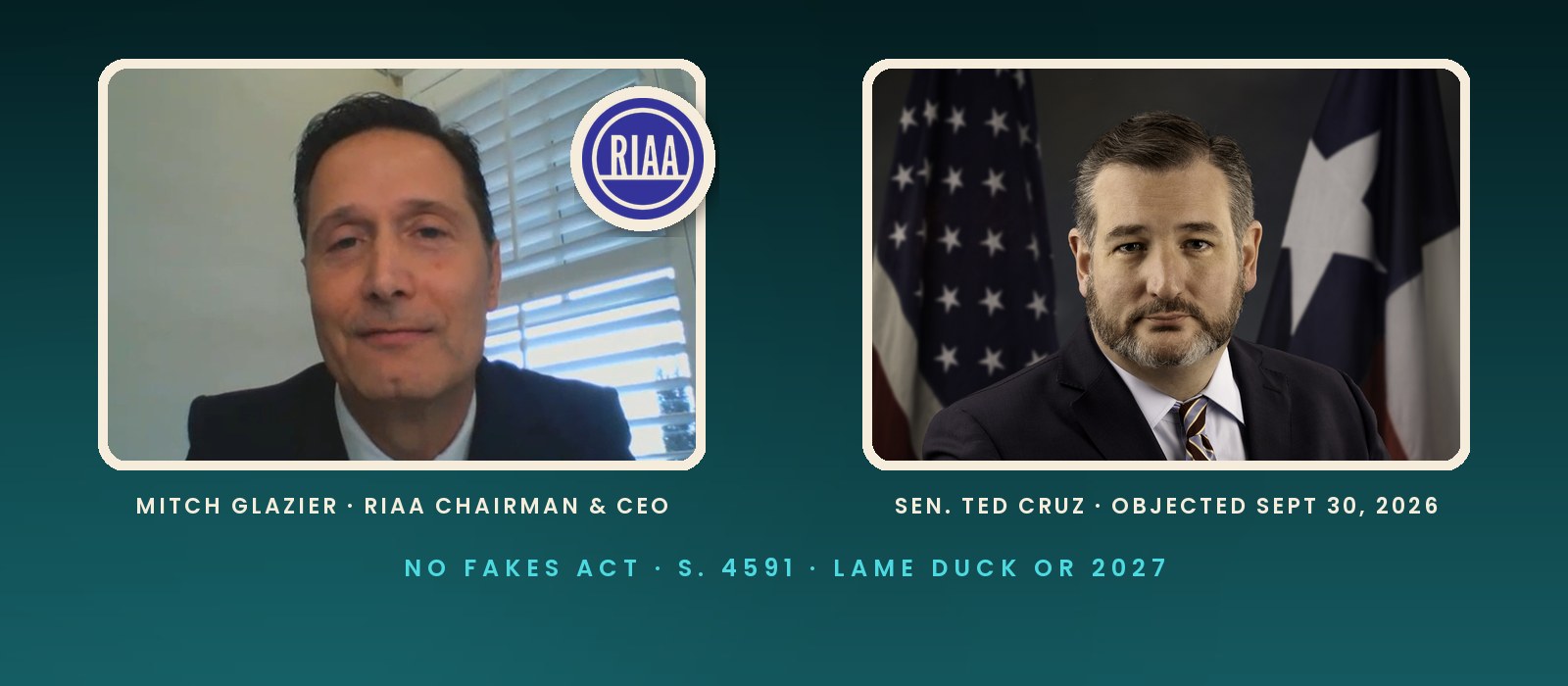
RIAA CEO Mitch Glazier on Decoder: why the labels say Suno's AI songs substitute for human music

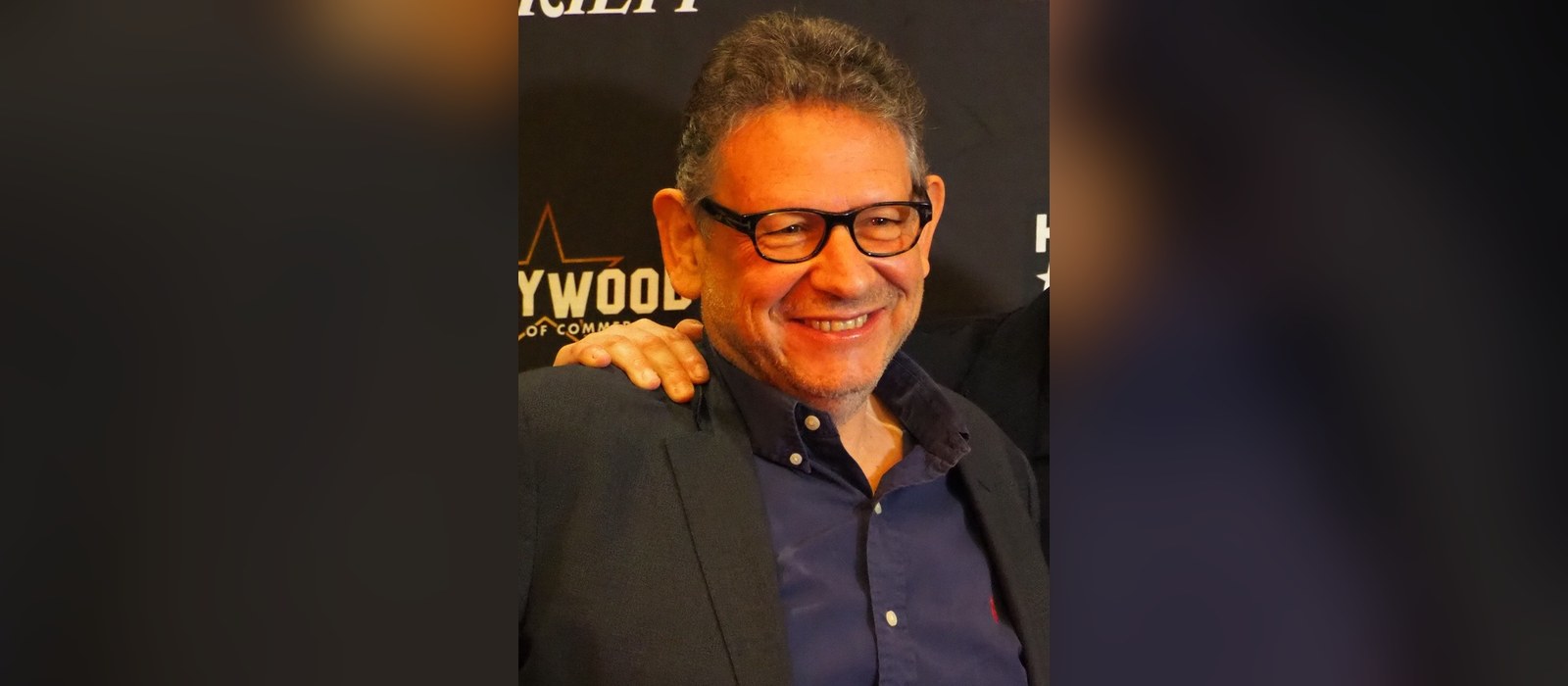
SIQA Summit, LA, 12th November 2026 Ozzy Osbourne's former bassist is sharing a stage with Suno. I'm moderating:
Blasko
Bassist (Ozzy Osbourne, Rob Zombie)

Sam Berger
Artist Partnerships at Suno

RoccStar
Grammy Award-winning producer and songwriter

Drake Murphy
A&R at PlayPulse / Create Music Group

Janie Jennings
Founder, Creative's Flow Ecosystem

Chris Wieduwilt
Moderator
Limited capacity only
RIAA chairman and CEO Mitch Glazier says Suno’s songs don’t just learn from human music, they replace it. He told Nilay Patel on The Verge’s Decoder, published November 9, 2026, that this “substitution” is the core of the labels’ fair use case against Suno.
Glazier also said labels for fully AI-generated music have to start at the distributor, not on Spotify. And he said AI detection already works well for songs made entirely by AI.
He was open about the size of the fight, too. The RIAA has 46 people, and its lobbying team is 3 of them.
Mitch Glazier on Suno: why “substitution” is the RIAA’s fair use argument
Fair use is the defence AI companies lean on when they train on copyrighted songs without a licence. US courts weigh 4 factors, and Glazier said the RIAA is fighting on the 4th one: does the new use hurt the market for the original work?
His answer for Suno is yes. “If what you’re creating substitutes for something else, it’s probably not fair use. That’s what we’re arguing in our case against Suno,” Glazier said. “You’re basically creating music that is competing on the same platform right next to human-made music; you can click on either one, and you’re paying the same subscription fee.”
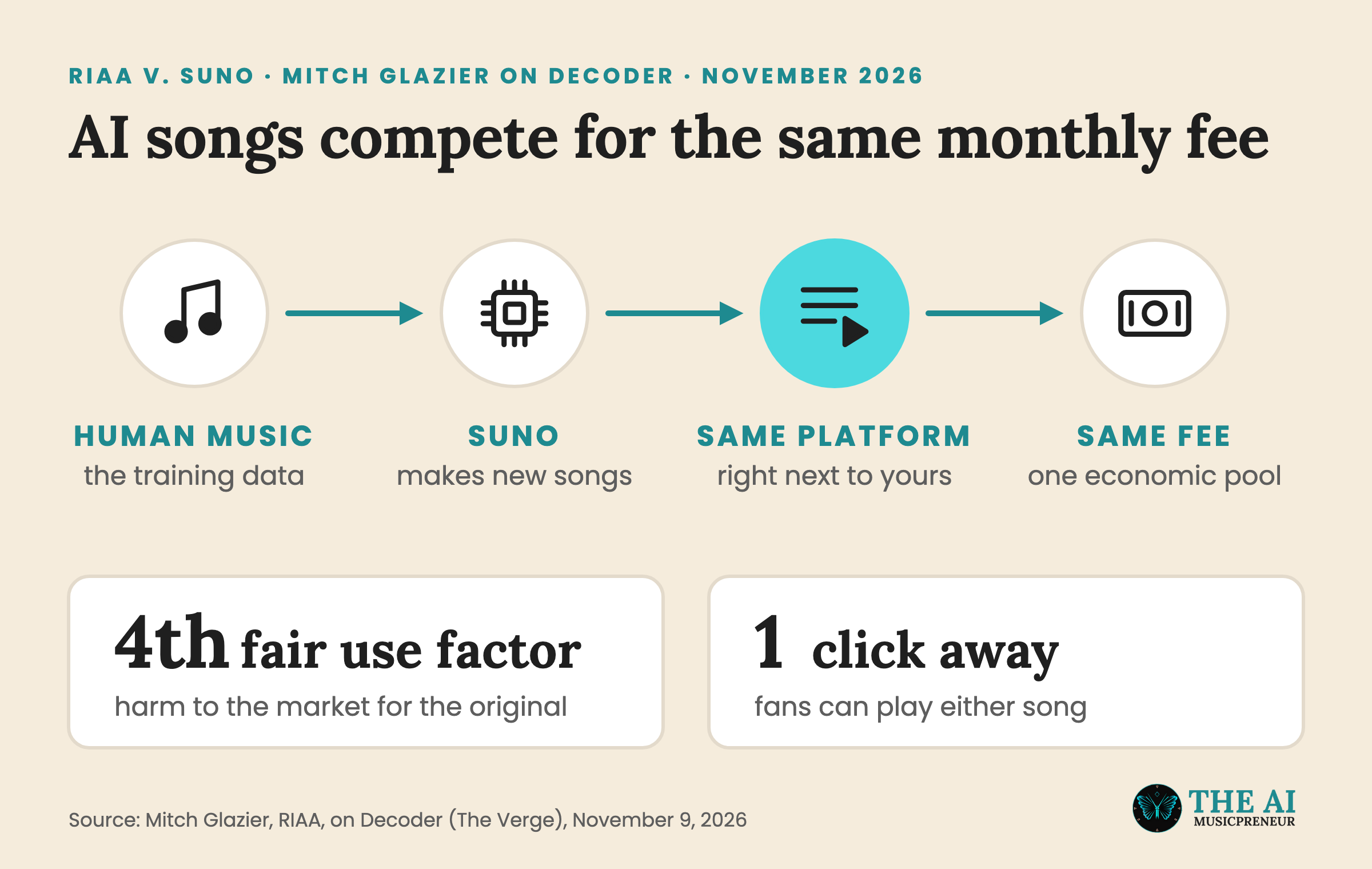
He set that against Google’s old search wins. A search result is an index, Glazier said, so it “doesn’t substitute for the work, but it could lead you to the work.” A Suno song sits on the same playlist as yours and takes the same click.
Glazier called the case “precedent-setting” and said its goal is “to show that it is not fair use to train on music.” Warner settled with Suno in a licensing deal in November 2025, and Sony and Universal are still fighting. I track every filing in the RIAA v. Suno case tracker.
Nobody on the creative side of the equation thinks that it's right that Suno will be making all the money from all of the music that has been created in the past.
A court win is one path. Glazier said licensing deals are the other.
Mitch Glazier on AI licensing deals: “it’s about dilution”
Glazier said he isn’t told the terms of the labels’ AI deals, because the RIAA represents competing companies. But he said he’d imagine the licensing deals are “about dilution”, keeping AI songs from swamping the human catalogue on streaming apps.
He pointed to a rumour about Udio’s deal, where “a walled garden had to be built” so fans could make music inside Udio’s own app without downloading it to other platforms. “I don’t know if that’ll work,” he added. “I’m not a business person; I’m a policy person.”
The other half of his answer was labelling, which he called “an immediate solution for the marketplace for now.”
Why Mitch Glazier says AI music labels have to start at the distributor
Patel’s challenge was practical: a bedroom producer uploading to DistroKid won’t fill in a labelling field, and metadata gets lost when a beat goes back and forth over iMessage.
Glazier’s answer was to look at where fully AI-made songs enter the system. “The record labels are not tagging and putting generative AI up on Spotify,” he said. “That’s somebody going to a music generator, downloading it, and putting it up through DistroKid. So your gateway is DistroKid, TuneCore. It’s the distributors.”
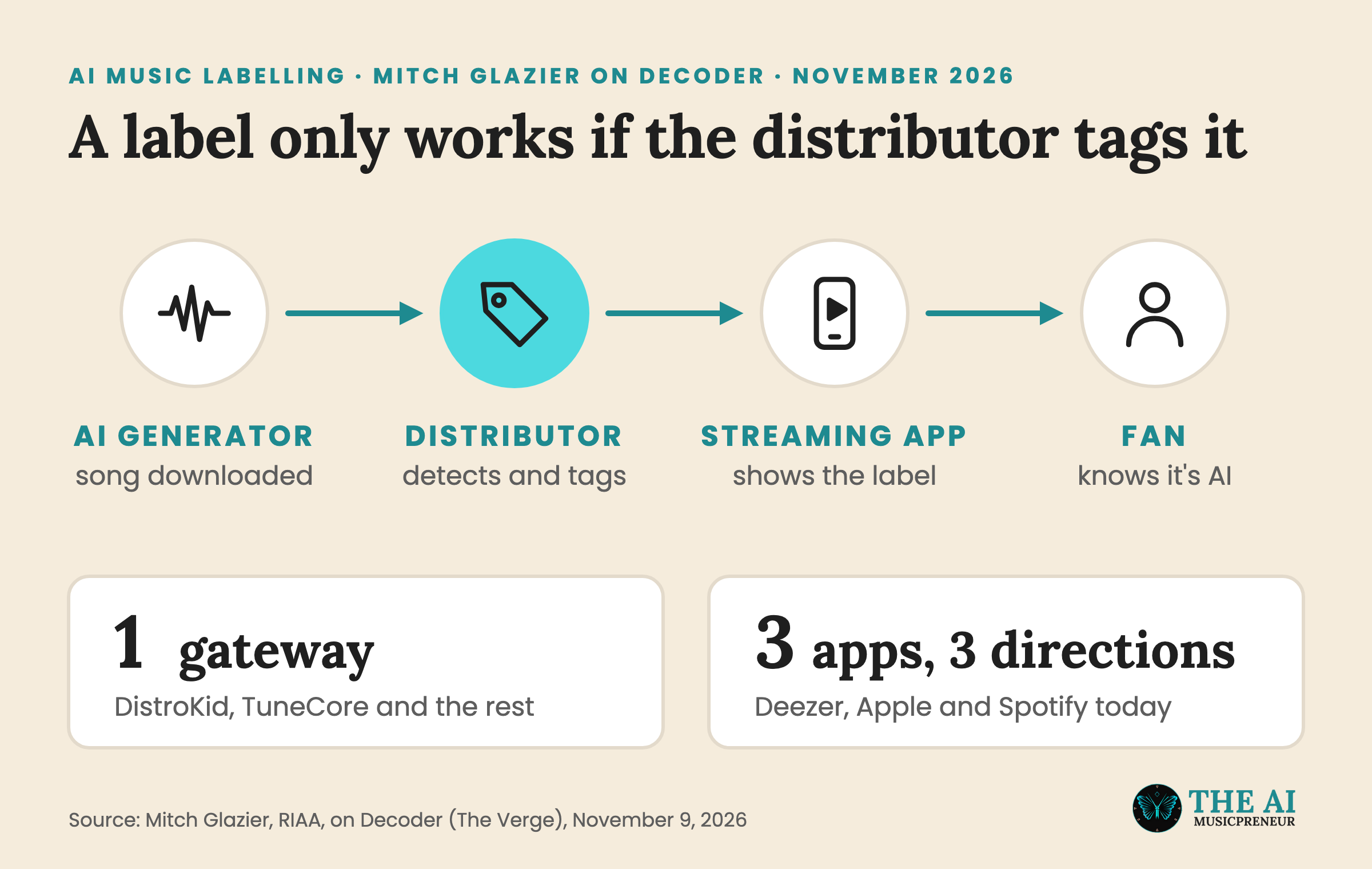
He said standards bodies like DDEX can align the metadata fields, and C2PA offers a model for provenance. But the distributors have to play along, because “Deezer’s going in one direction, Apple’s going in another direction, Spotify’s going in another direction.”
On detection, Glazier said the tech already works for songs made entirely by AI. The RIAA’s tech team tests detection tools and only shares the results with the company that sent them in. He named Deezer’s AI detector as the example, saying it labels fully generated tracks with “a very low false positive rate.”
What the label itself could look like is already on paper. The RIAA and IFPI proposed two tags, AI and ai, for fully generated and AI-assisted music.
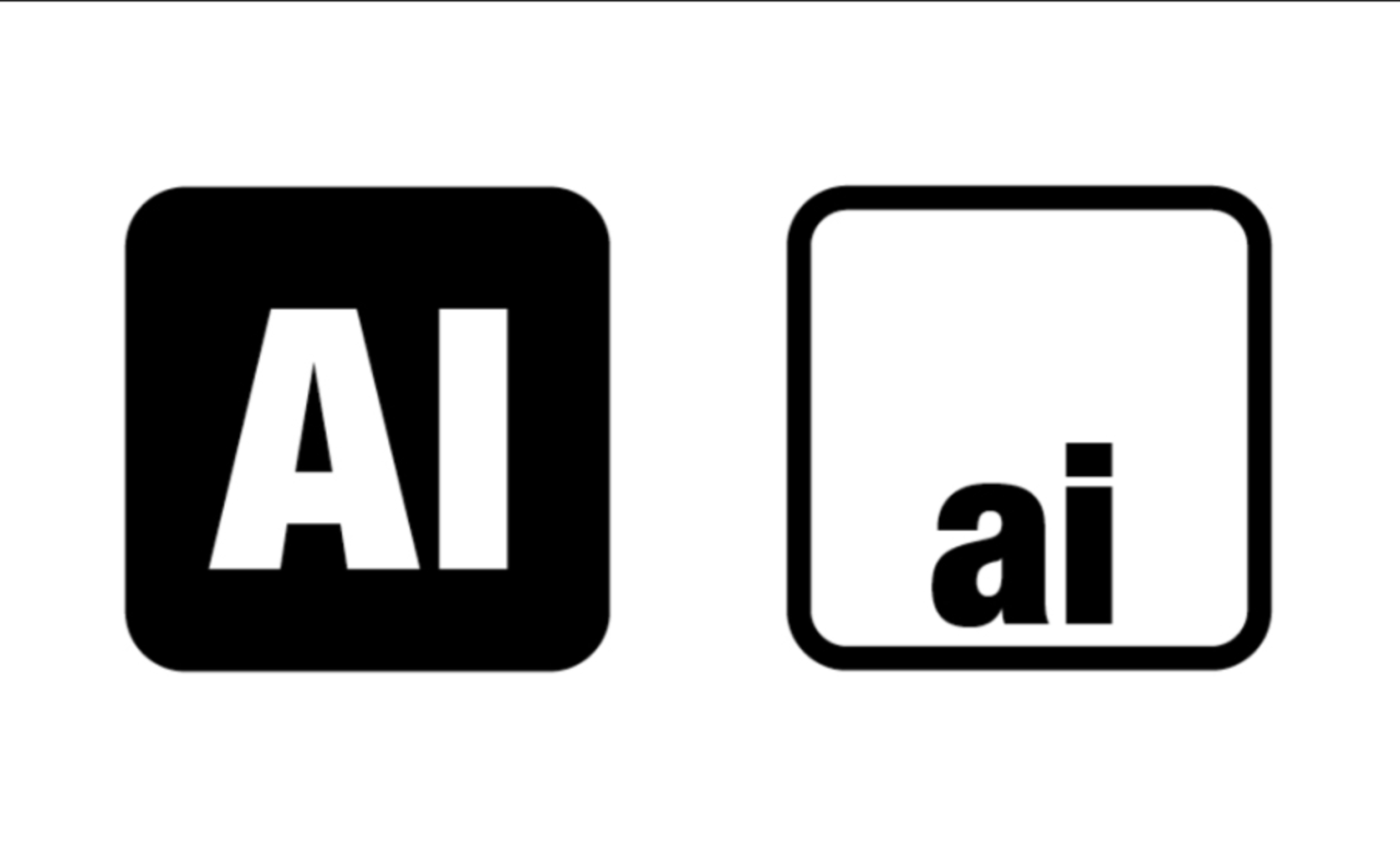
Glazier compared the goal to the parental advisory sticker, a label that became “a culturally known thing.”
Mitch Glazier on Spotify’s AI credits: “They need to do it at the track level”
Glazier said Spotify only discloses AI use in a song’s credits. “Well, how many people look at the credits?” he asked. “They need to do it at the track level. They’re not there yet.”
He gave Spotify credit for one step, labelling AI personas, which he called “the highest on the dupe scale.” He also said 90% of the recordings on Spotify earn 10% of the revenue, because most tracks get fewer than 100 plays.
The pressure, in his view, comes from 2 places at once. Fans pay $9.99 to $15.99 a month and don’t want to feel deceived by an AI recommendation. And laws in other markets are forcing labels, which makes it cheaper to label everywhere than to geo-block.
His example was California. Glazier said its transparency law is the reason Suno has had to add a machine-readable “This is AI-generated” watermark since August, and that Suno does it worldwide. That lines up with the audio watermarking Suno announced on August 6. He also expects Apple and Spotify to push each other, after Apple Music’s Made With AI labels.
Mitch Glazier on Google and YouTube: “you can win the case but lose the business”
Patel pushed Glazier on Google, saying YouTube licenses music while Google’s AI side treats training as fair use. Patel said AI companies, Google included, scraped YouTube to train their models.
Glazier answered with the YouTube story. YouTube won its legal fights over uploads, but still built Content ID and signed licences, because music drives the platform. “It was the first time that everybody realized that you can win the case but lose the business,” he said, and added: “I think this applies to AI too.”
The Suno case, he said, is there “to make sure that the rights are secured, so then every company knows that you are not allowed to make reproductions of other people’s music without consent or compensation.” He also pointed to the risk section in Anthropic’s IPO filing, which I covered when it named 5 music publisher lawsuits.
Google’s own training is already in court, where it argues that YouTube uploaders licensed their music for AI training.
Mitch Glazier on AI deepfakes and the NO FAKES Act takedown process
Patel opened this part with a wave of deepfakes he’d seen on Instagram: celebrities, Lewis Hamilton and Darth Vader dropped into a Drake video. Who gets to take that down?
Glazier said the first problem is that the right doesn’t exist yet. “None of us right now has a right to our own voice or likeness under federal law,” he said. State right-of-publicity laws mostly cover ads and endorsements.
The fix he has pushed for 3 years is a new intellectual property right, “much closer to trademark than to copyright”, with a simple takedown on the platforms. Patel warned it could be abused like DMCA copyright strikes. Glazier said the answer is “hurdles on both sides”, plus a fast court order step so a judge, not the platform, decides questions like parody and news.
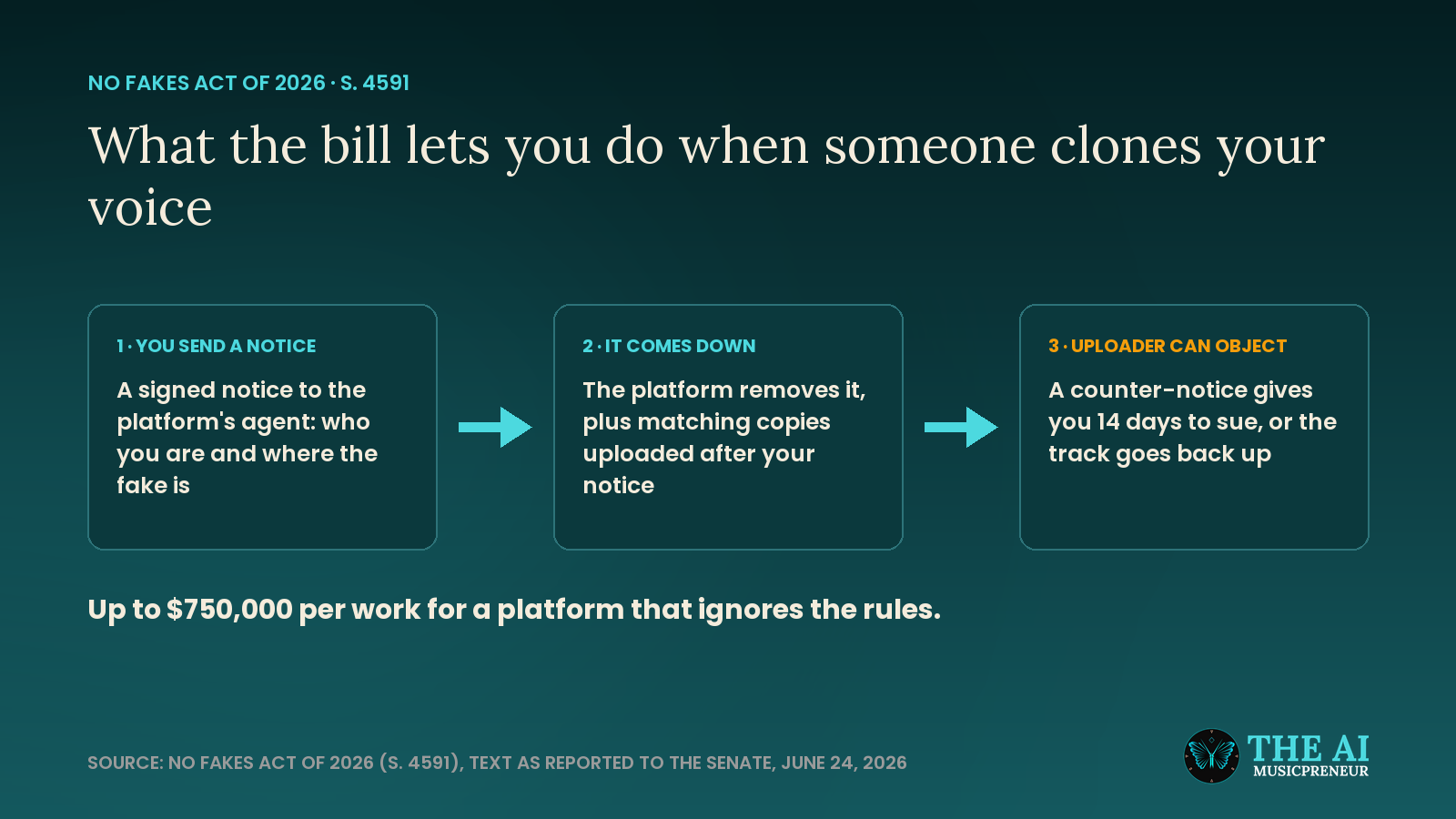
He said OpenAI, YouTube and Public Knowledge were all at the table this time, and that nobody is thrilled on any side, but they see it as progress. The bill’s status after Ted Cruz’s objection is in my earlier piece on Glazier and the NO FAKES Act.
Glazier closed the hour on the industry’s track record of change: “Nobody goes from wax cylinders to AI in a hundred years.”
Frequently asked questions
How many people work at the RIAA, according to Mitch Glazier?
Glazier told Decoder on November 9, 2026 that the entire RIAA is 46 people, split into content protection, communications and research, public policy and industry relations, and legal affairs. He said the lobbying team is 3 people.
Who helped shape the NO FAKES Act takedown process, according to Mitch Glazier?
Glazier said First Amendment scholars worked on the takedown process, and that OpenAI, YouTube and Public Knowledge were at the table. He said nobody is thrilled with the result on any side, but that they see it as progress.
Does the RIAA certify gold and platinum records for AI-generated songs?
Glazier said the RIAA certifies albums released by record companies and hasn't yet run into a fully machine-made release. He said 1,500 streams still equal one unit, and that he expects the RIAA to require those streams to be human streams.
Does the RIAA test AI music detection tools?
Yes. Glazier said the RIAA's tech team tests AI detection technology and shares the results only with the company that submitted it. He said the tools do a good job on fully generated AI music, but can't yet measure smaller amounts of AI in a song.
Which law does Mitch Glazier say made Suno add a machine-readable AI label?
Glazier said California's transparency law is the reason Suno has had to add a machine-readable watermark saying a song is AI-generated, as of August 2026. He said Suno applies it worldwide, not only in California.
About the author
Covering AI music tools, industry shifts, and news for music creators and professionals. Twice-weekly newsletter at aimusicpreneur.com.