Songscription is signing publishing deals before anyone sues it, starting with Spirit Music Group
My stack My fav 6 tools for AI music after testing 70+
-
 ElevenMusic · Music generation
 -
 Moises · Stem separation
 -
 Controlla · Voice swap & cloning
 -
 Cryo Mix · Mixing + mastering
 -
 Neural Frames · Music videos
 -
 ONCE · Distribution
Some links are affiliate links — I earn a commission at no cost to you. Every tool here is one I run myself and truly believe in. This stack is proven.
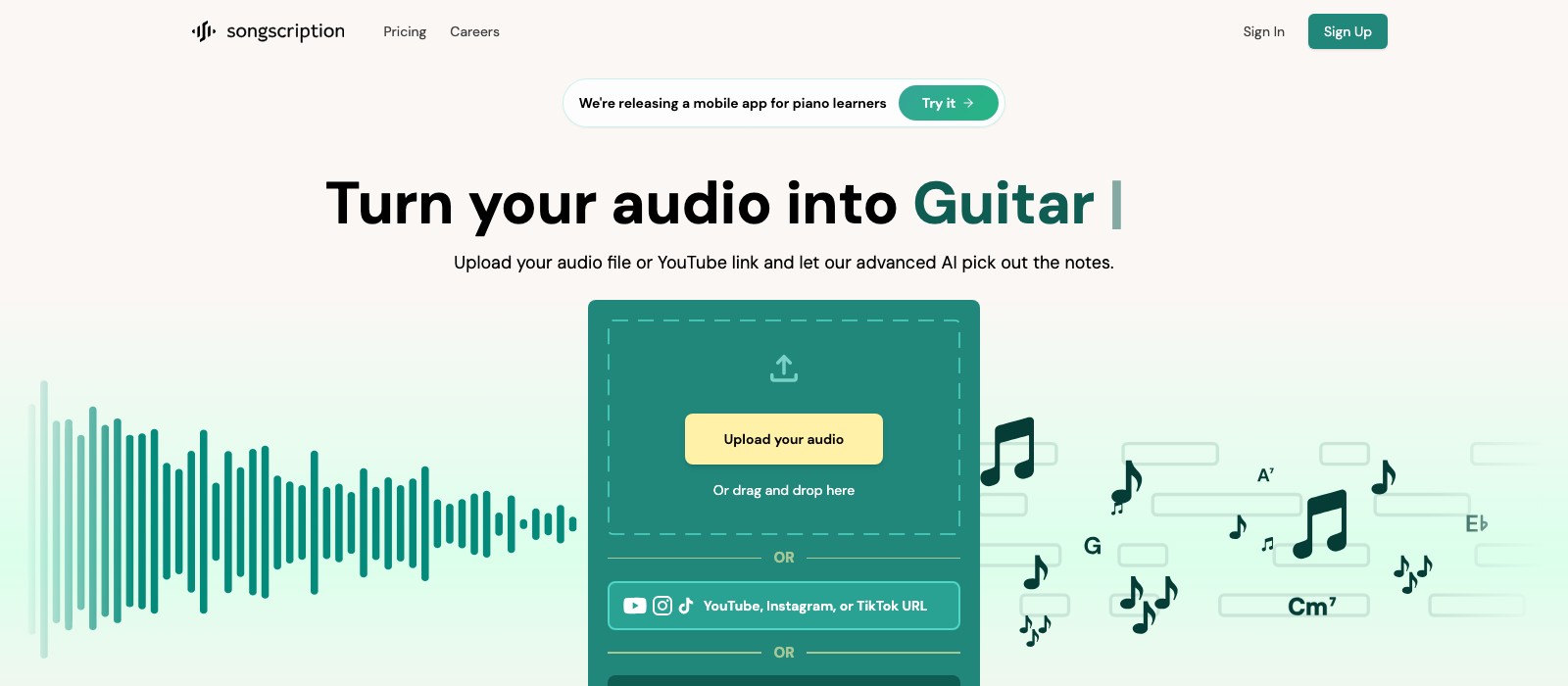
Songscription has been signing licensing deals with independent music publishers, and the first public one is with Spirit Music Group. CEO Andrew Carlins told Music Ally that more are expected in the coming weeks.
Songscription takes an audio file, a recording or a YouTube link and turns it into sheet music, guitar tabs and MIDI. It raised $5M in November 2025 with more than 150,000 users. Carlins says usage has grown by more than 20% month-on-month since.
Why publishers would rather license Songscription than fight it
Carlins says the reception has been warm, and he offers a reason that has nothing to do with goodwill.
If almost every song ever written exists only as a recording, then written notation is a market nobody has served. Publishers own the compositions. A tool that turns their catalog into sheet music is opening a revenue line they do not currently collect on.
Carlins puts it this way: publishers “understand how Songscription can stand to empower artists and songwriters in their creativity workflows, and expand access to written notation for musicians of all levels.”
Then he says the part that matters more.
They seem more keen to license us than some other AI services.
What Songscription decided in 2025 that Suno did not
TechCrunch profiled Songscription in July 2025 and flagged the copyright grey area around automatic transcription. Turning someone’s copyrighted composition into readable notation is a derivative use, and a derivative use needs permission from whoever owns the song.
By that November the company had hired music-tech veteran Elizabeth Moody as an adviser and was saying publicly that it wanted publisher deals.
Compare that with the companies currently in court. Suno scraped first and is buying licences now, one lawsuit at a time. Carlins says the early choice was easy: “we understand we need to work alongside the industry.”
I have no way to check how many publishers have actually signed, or on what terms. One name is public. The rest is Carlins describing his own pipeline.
What Songscription can do now that it could not a year ago
The product has picked up several things since the raise.
- Chord recognition
- Transcripts that simplify “down to whatever skill level you’re playing at, beginner included”
- A text-based notation editor driven by an AI chat interface
In beta: aligning lyrics to the music, and exporting transcripts as lead sheets or duets.
Most of the people using it are not professional arrangers. Carlins describes the typical user as a songwriter or creator “getting their work written down for the first time”, which is a different job from transcribing somebody else’s record.
Why Songscription is now called Play Anything
The company rebranded to Play Anything, which is now the parent name over two products.
Songscription stays pointed at creators and songwriters. The second product, Anything Piano, is aimed at people learning to play, after the company noticed that many Songscription users were learning piano or hunting for structured practice.
Anything Piano takes any recording and builds a simplified piano tutorial with guided fingerings, then listens through the microphone while you play and scores your accuracy. You can drill one hand at a time. It is live on the App Store for iPhone and iPad, with a waitlist for Android and web.
That split tells you where the money is expected to come from. Transcription brings songwriters in. Learning apps are what people pay for every month.
Frequently asked questions
Which publishers has Songscription signed a licensing deal with?
Spirit Music Group is the only deal Songscription has made public so far. CEO Andrew Carlins told Music Ally the company has signed several independent publishers and expects more to be announced in the coming weeks.
What does Songscription actually do?
It takes an audio file, a recording or a YouTube link and produces sheet music, guitar tabs and MIDI from it. Recent additions include chord recognition, transcripts that can be simplified to a chosen playing level, and a notation editor driven by an AI chat interface.
Why did Songscription rebrand to Play Anything?
Play Anything is now the parent brand covering two products. Songscription stays as the platform for creators and songwriters, and Anything Piano serves people learning to play. Carlins says the name covers the wider mission of helping people play the songs they love.
What is Anything Piano and where can you get it?
Anything Piano turns any recording into an interactive piano tutorial with guided fingerings, then listens to you play and gives feedback on accuracy. It is on the App Store for iPhone and iPad, with a waitlist for Android and web.
About the author

Covering AI music tools, industry shifts, and news for music creators and professionals. Twice-weekly newsletter at aimusicpreneur.com.