Trump's Justice Department told a court AI training is fair use, and music's cases run on the same question
My stack My fav 6 tools for AI music after testing 70+
-
 ElevenMusic · Music generation
 -
 Moises · Stem separation
 -
 Controlla · Voice swap & cloning
 -
 Cryo Mix · Mixing + mastering
 -
 Neural Frames · Music videos
 -
 ONCE · Distribution
Some links are affiliate links — I earn a commission at no cost to you. Every tool here is one I run myself and truly believe in. This stack is proven.
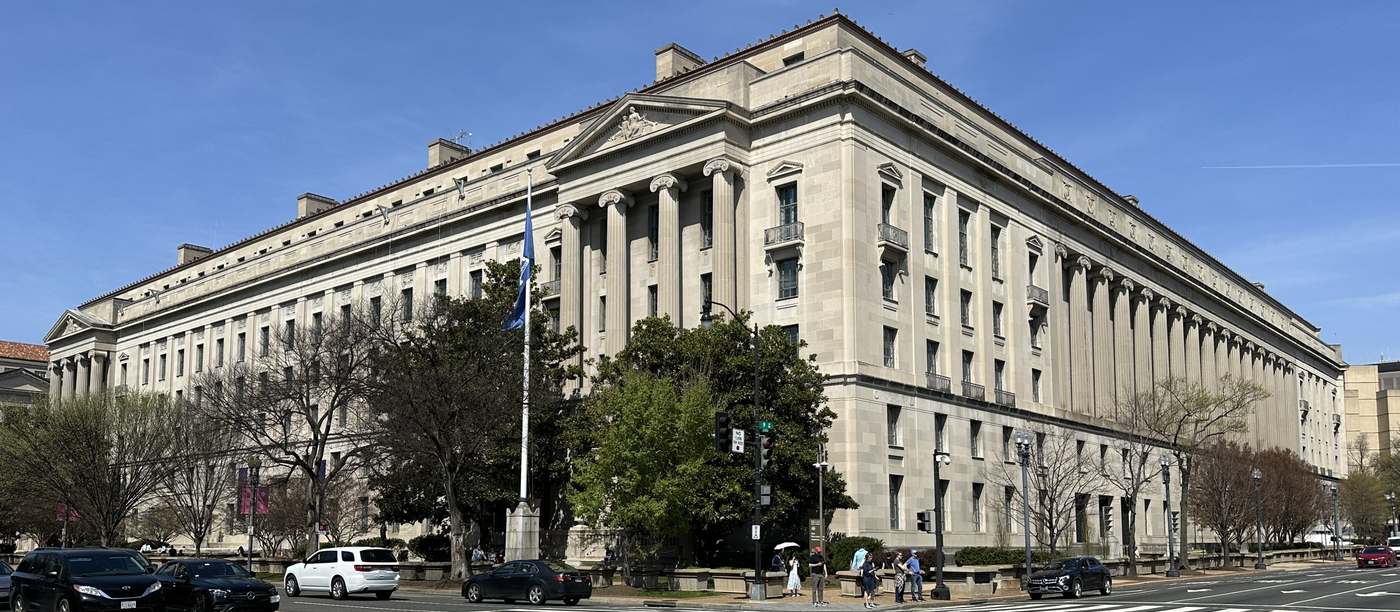
The US government has now taken a side in the AI copyright fight, and it isn’t the songwriters’ side. On September 1 the Department of Justice filed a 20-page document in the New York Times case against OpenAI and Microsoft, telling the court that training a model on copyrighted text is not infringement.
It’s the first time Washington has stepped into any of the copyright cases piled up against AI companies. Those cases include the ones brought against Suno, Udio and Anthropic by the biggest music companies in the world.
What a statement of interest is, and why this one carries weight
A statement of interest is how the US government tells a court what it thinks, in a case it isn’t a party to. It’s an opinion, not an order. Judge Sidney Stein can read it and set it aside.
The weight comes from who signed it. Associate Attorney General Stanley Woodward put his name on the filing, which makes it the position of the Justice Department rather than one lawyer’s view.
The United States has a strong interest in this Court rejecting any argument that training LLMs on copyrighted texts violates copyright law.
The two fair use arguments the DOJ made, in plain language
Fair use is the exception in US copyright law that lets you reuse someone’s work without asking. Courts mostly decide it on two questions, and the DOJ took a swing at both.
The first is how much the new use changes the original. The brief argues that copying text to train a system like ChatGPT is a use of a different kind or character
, and calls it extraordinarily transformative
.
The second is whether the new use eats the market for the original. Here the DOJ argues a training copy is not a substitute, because training does not reveal anything to the public at all
. The model reads the article. Nobody else gets to.
The whole thing rests on Donald Trump’s own AI policy. The filing cites two executive orders, from January 2025 and June 2026, and quotes the National Policy Framework for Artificial Intelligence published in March, which says training on copyrighted material does not by itself break copyright law.
Why a text case lands on Suno, Udio and Anthropic
Nothing in this filing is about music. It’s a newspaper suing over news articles, and the DOJ was careful to talk about text.
The problem is that every music AI case runs on the same test. Udio’s answer to Sony Music is a fair use argument. Suno’s defense is a fair use argument. The publisher claims against Anthropic exist to defeat one.
So a judge in a music case now has a document from the United States government arguing that the copying at the front of the pipeline is legal. That is not binding on anyone. It is also not nothing.
Music Business Worldwide called it the first Washington intervention in the AI copyright docket. Digital Music News noted the DOJ has now doubled down on a position it first put in writing in March.
The gap the DOJ filing leaves wide open
There’s one thing the brief doesn’t touch, and it’s the thing music’s newest cases are built on.
The DOJ argument covers the copy made during training. It says nothing about what a model produces afterwards. That distinction is exactly why SOCAN sued Suno over outputs the very next day, and why Jason Isbell and David Lowery filed an identity case with no copyright claim in it at all.
Plaintiffs read the same signals everyone else does. When the front of the pipeline gets harder to attack, the claims move to the back of it.
What this changes for you if you write or record music
Practically, nothing changed on September 1. No court ruled, no royalty rate moved, no license got signed.
What changed is the odds on one argument. If you have been waiting for the training question to get settled in artists’ favour before deciding how to handle AI in your own work, the wait just got longer and the outcome less certain.
The claims with the clearest path right now are the ones about outputs and identity, not training. Keep your registrations current at your PRO, keep your name and voice documented, and treat the AI-use disclosure field at your distributor as something you fill in properly rather than skip.
Frequently asked questions
What did the Justice Department say about AI training in the New York Times case against OpenAI?
It said the United States has a strong interest in the court rejecting any argument that training large language models on copyrighted texts violates copyright law. It called the copying involved in training extraordinarily transformative, and argued a training copy does not substitute for the original because training does not reveal anything to the public.
Does the DOJ statement of interest in NYT v. OpenAI apply to AI music training?
Not directly. The filing is about text, and it was made in a case brought by a newspaper over news articles. The reason it matters for music is that the lawsuits against Suno, Udio and Anthropic all turn on the same fair use test, so a judge weighing music training now has a filing from the US government arguing one side of it.
Who signed the DOJ statement of interest filed in the OpenAI case?
Associate Attorney General Stanley Woodward. The 20-page document is titled Statement of Interest of the United States and was filed on September 1, 2026 in the Southern District of New York.
Can Judge Sidney Stein ignore the DOJ statement of interest in the OpenAI case?
Yes. A statement of interest lets the government put its view in front of a court, but it carries no binding force. Judge Stein can adopt it, reject it, or leave it out of his reasoning entirely.
Which Trump AI policies does the DOJ fair use filing rely on?
It cites two executive orders, one from January 2025 and one from June 2026, and quotes the National Policy Framework for Artificial Intelligence published in March 2026. That framework states that training AI models on copyrighted material does not, on its own, violate copyright laws.
About the author

Covering AI music tools, industry shifts, and news for music creators and professionals. Twice-weekly newsletter at aimusicpreneur.com.