ARIA's Annabelle Herd tells Australian MPs that OpenAI and Anthropic want to train AI without following copyright law
My stack My fav 6 tools for AI music after testing 70+
-
 ElevenMusic · Music generation
 -
 Moises · Stem separation
 -
 Controlla · Voice swap & cloning
 -
 Cryo Mix · Mixing + mastering
 -
 Neural Frames · Music videos
 -
 ONCE · Distribution
Some links are affiliate links — I earn a commission at no cost to you. Every tool here is one I run myself and truly believe in. This stack is proven.
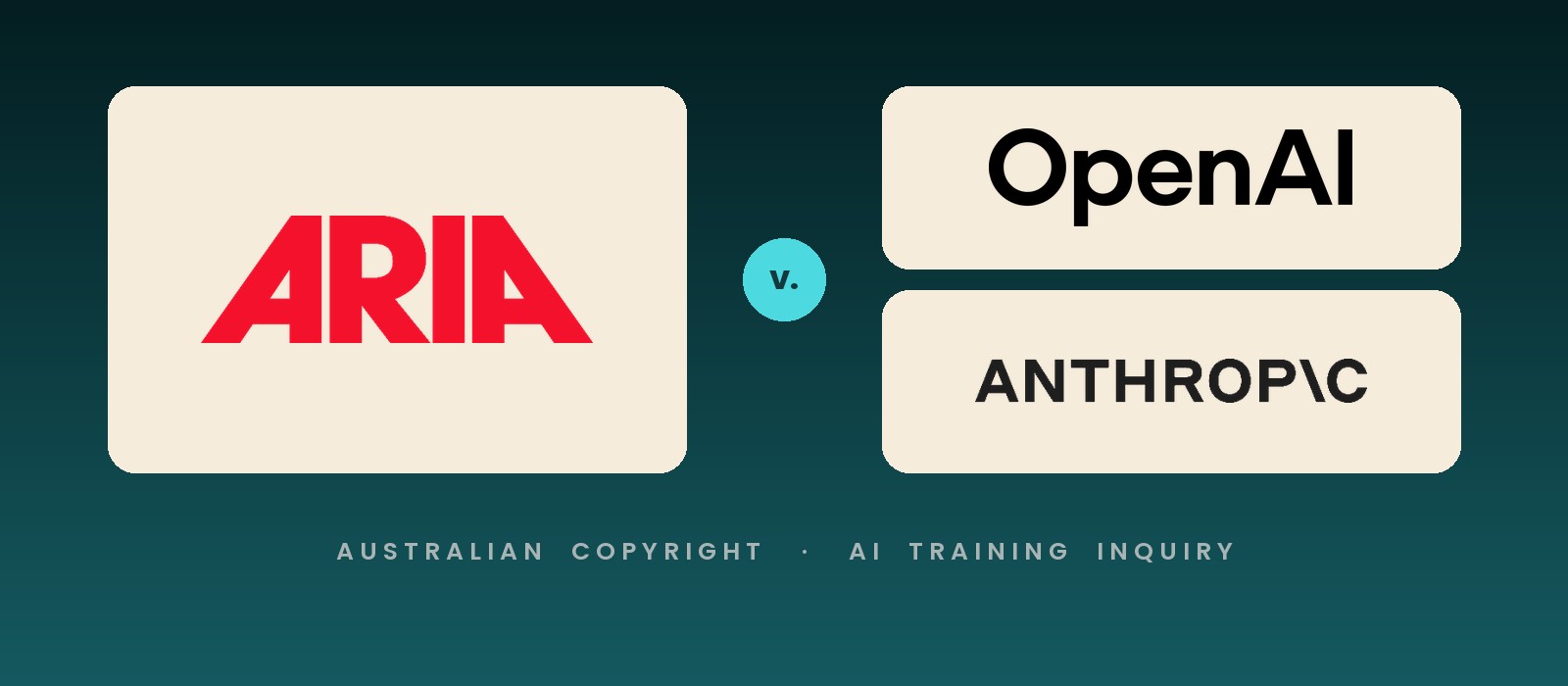
4 deals. That’s what ARIA CEO Annabelle Herd says it takes to license 90% of the world’s sound recordings for AI: one with each major label, and one with Merlin for the independents.
She made that point to Australia’s Joint Select Committee on Artificial Intelligence, in testimony ARIA published on October 6, 2026. Her target was OpenAI and Anthropic, which she said want to train frontier AI models in Australia without following its copyright laws.
“There is clearly no market failure,” Herd told the committee, “just two foreign companies, each valued at over U$1 trillion, asking Government for a free ride.”
What OpenAI and Anthropic asked Australia’s AI inquiry for
Some background first. In October 2025, the Australian government said it would not add a text and data mining exception to its copyright law.
A text and data mining exception is a carve-out that lets a company copy work to train AI without asking the owner. Without one, AI companies need permission from rights holders to train on Australian material.
Both companies accepted that decision in their submissions to the committee, but asked for room around it, The Next Web reported, citing Reuters:
- Anthropic proposed a “narrow form of conditional approval” for training, and said it would accept conditions such as investment or support for Australian creators.
- OpenAI asked for a framework that lets models learn from publicly available material while giving rights holders ways to engage.
Both tied the request to their data centre plans. OpenAI has a deal with NextDC for a Sydney site, and Anthropic was named as a partner in a Queensland project.
Herd’s answer was that the law is already simple. “If you can’t rely on a fair dealing exception, you can’t copy,” she said, so the companies should ask to license the music instead.
You don't address a systemic problem of mass piracy by changing the law to legalise that piracy on an ongoing basis.
Music Ally also quoted her call for the companies to “come to the negotiating table, not to the Prime Minister’s office.” It’s the same line ARIA took in June, when Herd rejected Scott Farquhar’s call to loosen the law.
Why Annabelle Herd says Australia’s AI copyright law affects songs from every country
This is the part that reaches past Australia. Under a principle called national treatment, Australia protects overseas works under its own law the same way other countries protect Australian works.
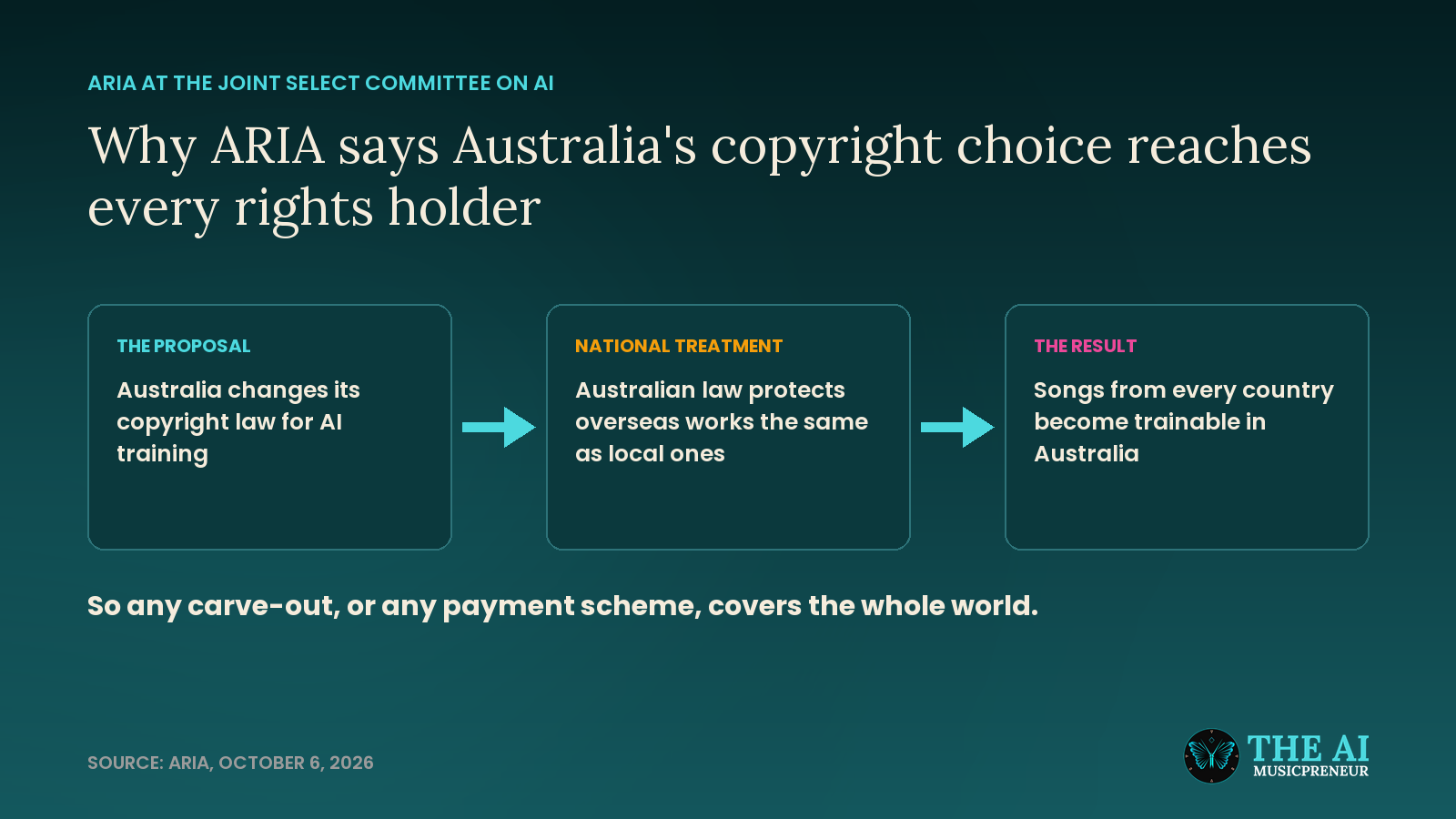
So a carve-out written for OpenAI and Anthropic wouldn’t only cover Australian songs. It would cover yours, wherever you live, and ARIA notes that any compensation fund would have to pay overseas rights holders too.
Herd also linked it to the US courts. “If we go down a path and declare that there’s no licensing market,” she said, “then that will assist them in their US lawsuits.”
That matters because US fair use cases look at whether AI training harms a market for licensing the work. The first US appeals ruling on that question, Thomson Reuters v. ROSS, rejected fair use only last week.
Anthropic has said it respects the process the Prime Minister set out for Australia’s AI framework, Forbes Australia reported. Anthony Albanese himself said in July that AI training without artist control is theft, weeks after Australia’s music bodies called unlicensed AI training the largest IP theft in the industry’s history.
The committee reports in November. That’s when you’ll know whether Australia’s copyright law, and the protection it gives songs from every country, stays as it is.
Frequently asked questions
What did ARIA CEO Annabelle Herd tell Australia's Joint Select Committee on Artificial Intelligence?
Herd said OpenAI and Anthropic want Australia to let them train frontier AI models there without following its copyright laws. She told the committee the companies should come to the negotiating table instead of the Prime Minister's office, and that the plan would make Australia a pariah for rights holders globally.
What did OpenAI and Anthropic ask Australia's Joint Select Committee on Artificial Intelligence for?
In their submissions, Anthropic proposed a narrow form of conditional approval for AI training, tied to conditions such as investment or support for Australian creators. OpenAI asked for a framework that lets models learn from publicly available material while offering rights holders ways to engage.
What does national treatment mean for AI training under Australian copyright law?
Under national treatment, Australia protects overseas works under Australian law the same way it protects local works. So any change that lets AI companies train without a license would apply to music from every country, and any compensation scheme would have to pay overseas rights holders too.
When will Australia's Joint Select Committee on Artificial Intelligence report?
The committee is due to deliver its report in November 2026. Parliament set it up in August 2026, and the Australian government has said broader AI and data centre rules will follow in 2027.
About the author

Covering AI music tools, industry shifts, and news for music creators and professionals. Twice-weekly newsletter at aimusicpreneur.com.