Questlove sees AI as a parallel to sampling, and says AI companies should pay for what they train on
My stack My fav 6 tools for AI music after testing 70+
-
 ElevenMusic · Music generation
 -
 Moises · Stem separation
 -
 Controlla · Voice swap & cloning
 -
 Cryo Mix · Mixing + mastering
 -
 Neural Frames · Music videos
 -
 ONCE · Distribution
Some links are affiliate links — I earn a commission at no cost to you. Every tool here is one I run myself and truly believe in. This stack is proven.
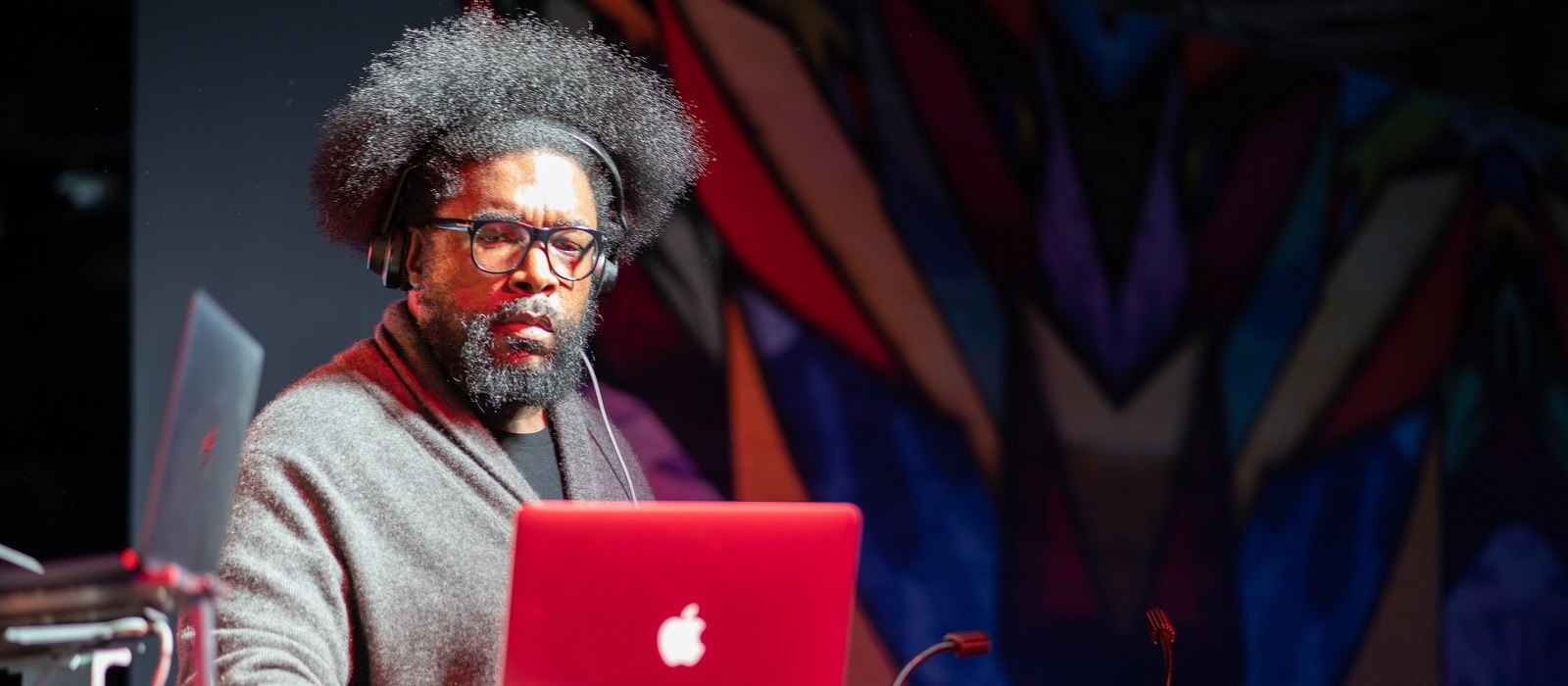
“I see AI as a parallel to sampling culture.”
That’s Questlove, on the latest episode of Billboard On the Record, published September 30, 2026. He spent most of it walking Billboard’s Kristin Robinson through the history of sampling, from Public Enemy to the lawsuit that ended its free-for-all.
Then she asked about AI. He gave 2 answers: he won’t sample AI-made music yet, and the companies building it should disclose what they trained on and pay for it.
What Questlove said about AI and sampling on Billboard On the Record
Robinson brought up Metro Boomin’s “BBL Drizzy” beat from May 2024, which sampled an AI-generated song by the comedian King Willonius. Robinson wrote at the time that it could signal the future of sampling.
Her question: what about producers making a Motown-like AI song, then chopping it up to avoid rights issues?
“From a sonic standpoint, I’m not there yet,” Questlove said. “I’m sensitive to digital distortion. It might be interesting for three seconds while you’re scrolling through social media, but I would never play it in concert or sample it.”
He gave it time, though. “Ten years from now, when [AI music models are] on version 7.0 or whatever, they may perfect it. But I see AI as a parallel to sampling culture.”
He framed the debate as “AI or no AI?”, with one side saying it’s going to happen anyway and the other asking, “Why are you taking intellectual property and reskilling it?”
AI sampling is already a product. Suno’s v6, out September 9, samples and rebuilds a beat in one workflow, and Engram launched a $770 offline AI sampler on Kickstarter on September 26.
What Questlove wants from AI companies: disclosure and pay
The Billboard excerpt ends on what AI companies owe the music they learn from.
I believe there should be compensation. If you're building an AI system, you should be transparent about the material used to build the platform, and there should be compensation for it.
He added that he’s “not anti-technology”, and that he loves sampling, CGI and other digital inventions. “But the way money is distributed, from the creator to the engineer, producer, label and publisher, has to become fair.”
The same week, 2 other developments touched the same question. On September 30, the indie publisher bodies IMPF and IMPEL published 7 principles for AI licensing, including payment for past use and attribution. A day earlier, a US appeals court rejected a fair use defence for AI training in Thomson Reuters v. ROSS.
He’s also not the first to make the sampling comparison this year. Universal Music chief Lucian Grainge likened responsible AI to the arrival of sampling in June.
Why the Biz Markie lawsuit ended sampling’s Wild West
Questlove dates the turn to one record: Public Enemy’s It Takes a Nation of Millions to Hold Us Back, released in June 1988. “Every song was crammed with samples, some had seven, some had 20,” he said.
“Between 1988 and 1991, it was the Wild West. No one was policing us.” The Beastie Boys put out Paul’s Boutique and De La Soul put out 3 Feet High and Rising.
Then Gilbert O’Sullivan sued Biz Markie over a sample of “Alone Again (Naturally)”. In Grand Upright Music v. Warner Bros. Records, a New York federal court ruled in 1991 that sampling without permission is copyright infringement. From then on, samples had to be cleared with the owners first.
Questlove calls it “a strange case”, because Biz was paying homage to a Cold Crush Brothers routine built on the song. And he points out that rock borrowed just as heavily, naming Led Zeppelin’s history with records from the 1930s. “The difference is that when hip-hop did it, people sued us.”
Questlove on catalogue owners: “highway cops with radar”
Robinson asked about investors buying old catalogues and paying producers to rework them through samples, interpolations and covers.
Questlove said some new owners act “like highway cops with radar, saying: ‘I dare you to use this. We paid millions for this catalog.’” Others now say, “We have a plentiful catalog. Come use our work.”
He’s in a producers’ thread he compared to the 1992 Olympic Dream Team, with Just Blaze, DJ Premier, 9th Wonder and others. When someone offered them whole catalogues to sample, he said, “I laughed.”
The full episode goes deeper into sampling history, from the Fairlight and Marley Marl to Prince’s “1999”:
Frequently asked questions
Who interviewed Questlove for Billboard On the Record in September 2026?
Billboard's Kristin Robinson. The video podcast episode and an edited Q&A were published on September 30, 2026, while his Earth, Wind & Fire documentary is streaming on HBO Max.
Who does Questlove credit with pushing sampling forward before Public Enemy?
He named Trevor Horn, who had access to a Fairlight when, in his words, you needed $100,000 to be a Fairlight operator. Then Marley Marl, who took a snare from one record and a kick from another, and Paul C, who pushed the SP-1200 further and mentored Large Professor, Q-Tip, DJ Premier and Pete Rock.
Which Prince song changed how Questlove heard production?
1999. He said he first heard it while shopping for school clothes in September 1982 and froze in the changing room, because Prince made primitive-sounding electronics feel human.
Which album made sampling click for Questlove?
Public Enemy's It Takes a Nation of Millions to Hold Us Back, released in June 1988. He said every song was crammed with samples, some with 7 and some with 20, and it made his father's 3,000-record collection come alive.
Which producers are in Questlove's producer group chat?
Questlove described a producers' thread that he compared to the 1992 Olympic Dream Team, naming Just Blaze, DJ Premier and 9th Wonder among many others. He said they laughed when someone offered them whole catalogues to sample.
About the author

Covering AI music tools, industry shifts, and news for music creators and professionals. Twice-weekly newsletter at aimusicpreneur.com.