Neutune CEO Lee Jong-pil says the tech to trace AI songs back to their sources is settled, and rights holder consent is the slow part
My stack My fav 6 tools for AI music after testing 70+
-
 ElevenMusic · Music generation
 -
 Moises · Stem separation
 -
 Controlla · Voice swap & cloning
 -
 Cryo Mix · Mixing + mastering
 -
 Neural Frames · Music videos
 -
 ONCE · Distribution
Some links are affiliate links — I earn a commission at no cost to you. Every tool here is one I run myself and truly believe in. This stack is proven.
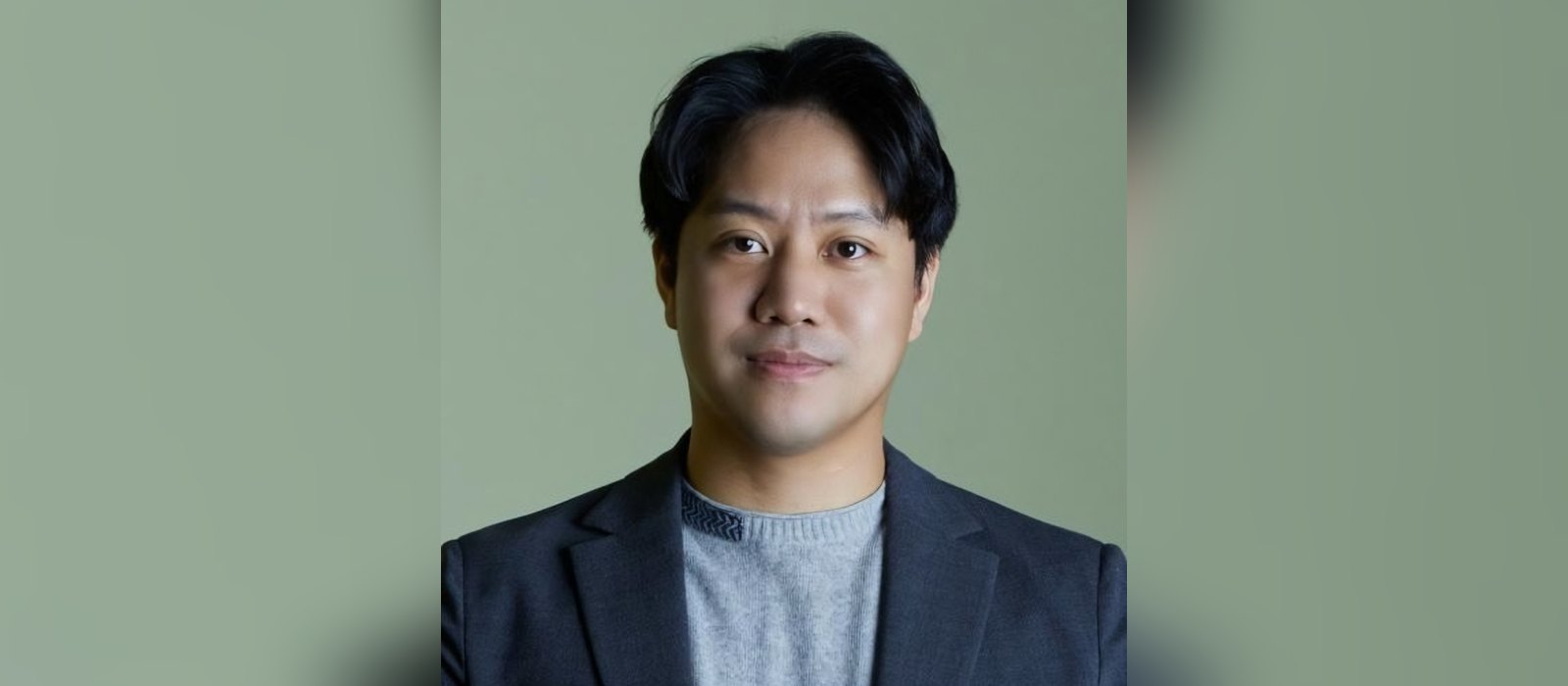
Lee Jong-pil, CEO of Seoul startup Neutune, says you can already trace an AI song back to the recordings it used. What’s slow is getting the people who own them to say yes.
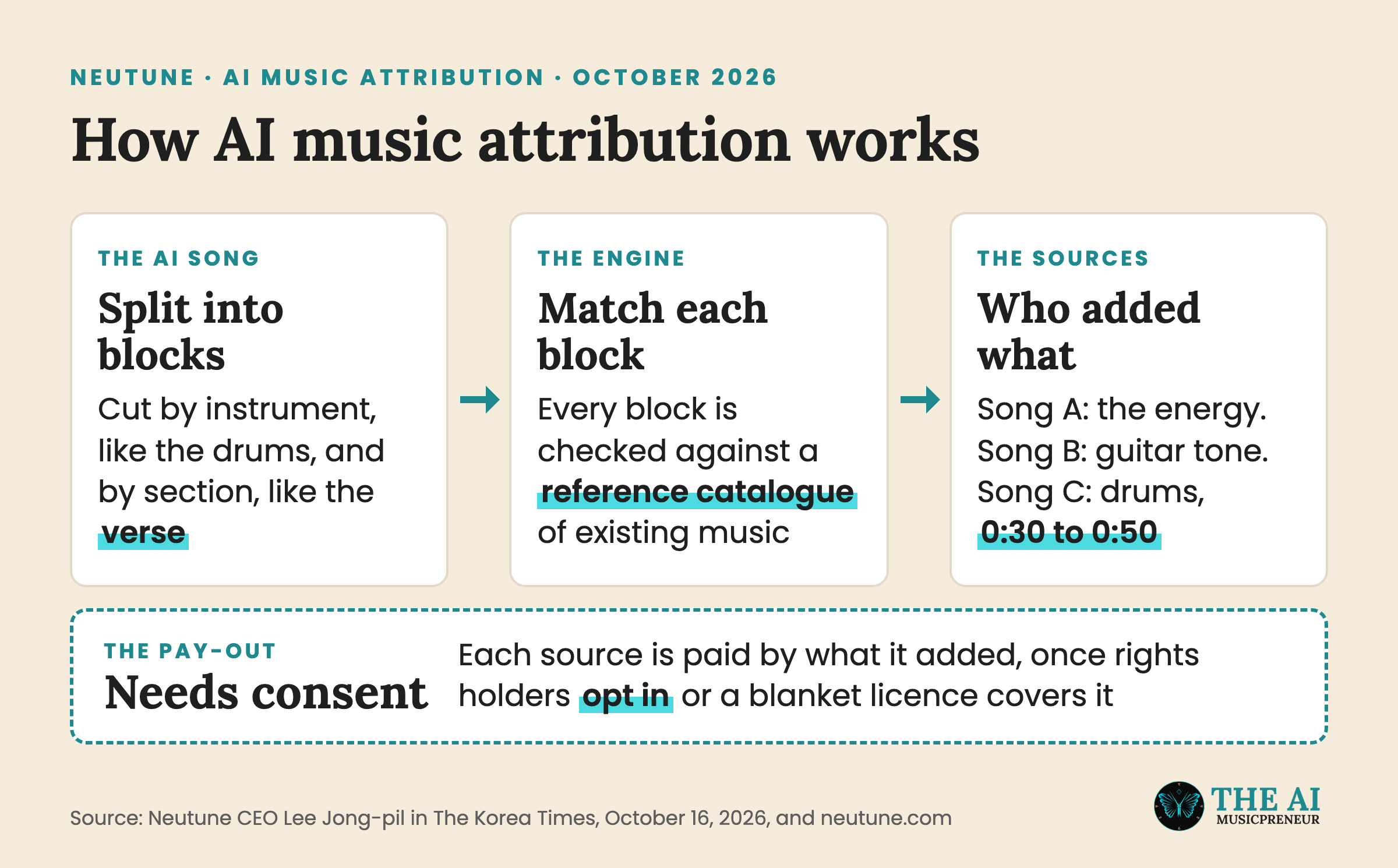
Researchers from KAIST’s Graduate School of Culture Technology founded Neutune in 2020 to build AI attribution tech. Lee told The Korea Times that when AI makes a new song, you can work out which recordings went into it: one source might lend its explosive energy, another its guitar tone, and a third its drum pattern, taken from between the 30- and 50-second marks.
“In my view, the technology is already settled,” Lee said in the October 8, 2026 interview, published October 16. “The slow part is getting consent from rights holders, and it can’t help but be slow.”
What is AI music attribution?
AI music attribution is tech that takes an AI-generated song and works out which existing recordings it drew on, and how much each one contributed. That second part is what makes paying people possible.
Streaming has a formula for this: a song gets played, counted and paid. AI songs have nothing like it, so for now platforms keep fully AI-generated tracks out of royalty payments, The Korea Times notes.
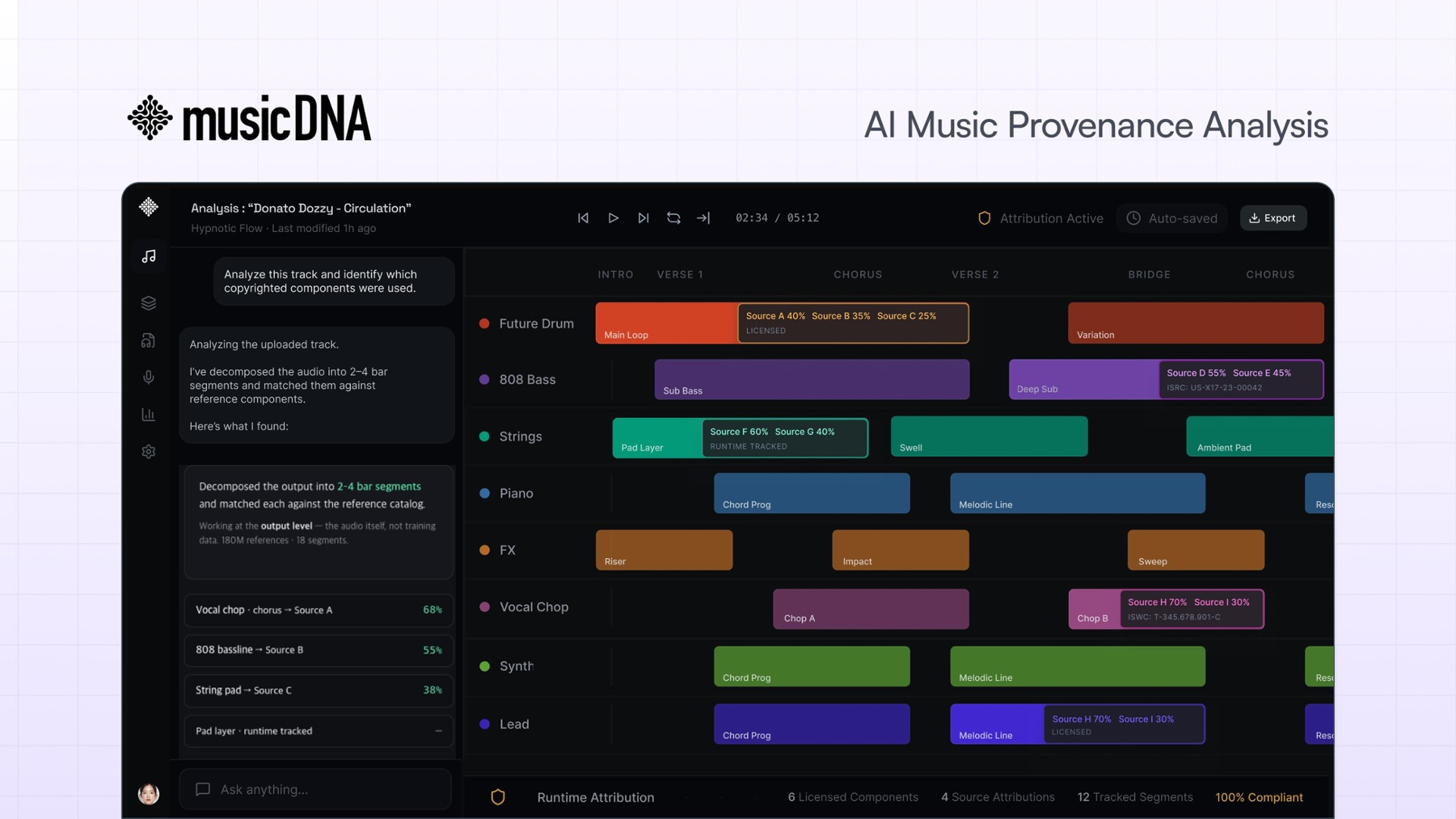
Attribution can happen while a track is made or after it’s finished. GasLab’s Digital Notary logs which opt-in artists shaped a track as it’s generated, and Sureel, which Warner Music bought in June, traces how AI models use artists’ work. Neutune does both: its MixAudio remix app logs sources during the remix, and Music DNA checks finished audio.
How Neutune’s Music DNA splits a song into blocks
Neutune cuts a song into what it calls blocks: by instrument, like bass and drums, and by section, like the intro and verse.
“If all we can say about a newly generated song is that songs A, B and C were used in its making, accurate settlement isn’t possible,” Lee said.
According to Neutune’s website, Music DNA matches each block, typically 2 to 4 or 8 to 16 bars, against a reference database of musical works and reports how much each source contributed. Neutune doesn’t publish an accuracy figure, so for now that’s the company’s own description.
Lee admits one gap: rights to a singer’s voice and likeness are harder to measure than copyright in the music. He expects that to be sorted out around next year.
Why Lee Jong-pil says rights holder consent is the slow part
Lee compares the consent problem to the move from CDs to downloads, when rights built around physical records had to be renegotiated with creators. AI needs the same, he says: an opt-in or blanket licensing framework.
Label deals with AI companies mostly cover whether a song trained a model or got remixed, Lee noted. Checking whether a finished track copies existing works needs separate monitoring, the way Shazam identifies songs, and that’s the market Music DNA goes after.
He also blames the training data fight for composers hiding their AI use. Lee points at platforms like Suno, which labels sued over its training data (Warner has since settled with Suno), and compares using them to running a cracked copy of Microsoft Word. Nobody admits that proudly.
I don't think the issue is AI versus humans. It's legal AI versus illegal AI.
So Lee sees asking composers to declare AI use as a stopgap, until music software writes how a track was made into the file itself, as already happens with images.
Neutune, KOMCA and Korea’s missing rules for AI royalties
In August, KOMCA introduced Korea’s first standards for registering AI-assisted songs, then withdrew them 22 days later.
Korea’s major streaming platforms don’t ask distributors about AI use either, and AI-assisted tracks have still climbed Melon’s charts, like the Suno song that hit No. 89 in September.
Neutune says it has worked with KOMCA and the Korean Copyright Office on attribution, and lists SM Entertainment founder Lee Soo-man, InterVest and Kakao Ventures as backers.
Lee’s bigger bet is a K-pop “remix market in which fans can use artists’ work through a platform,” sharing revenue or paying for it.
“I just want to do well with K-pop,” Lee said.
Frequently asked questions
What is Neutune's MixAudio?
MixAudio is Neutune's consumer app for remixing tracks from a licensed catalogue with AI. Neutune says every stem, vocal, melody and lyric used in a remix is recorded as it's made, and rights holders are paid by actual component usage. An earlier version of MixAudio generated 1.3 million tracks across 220 countries, according to Neutune.
Who has invested in Neutune?
Neutune's website lists Lee Soo-man, founder of SM Entertainment and A2O Entertainment, the Korean venture capital firm InterVest and Kakao Ventures as backers. Neither Neutune's site nor The Korea Times gives a funding amount.
What is the International Standard Sound Block Code (ISBC)?
ISBC is an identifier Neutune proposes for the smallest meaningful parts of a song, such as a few bars of a bassline. Neutune says it connects ISRC, the code for a recording, and ISWC, the code for a composition, at the component level, and that it is designed in alignment with DDEX standards.
Can Neutune's Music DNA detect AI voice cloning?
Neutune lists voice-cloning detection among Music DNA's applications. But CEO Lee Jong-pil told The Korea Times that rights tied to a person, such as a singer's voice and likeness, are harder to protect and measure than copyright in the music itself, and he expects that area to be sorted out around next year.
Does Neutune's Music DNA keep the audio it analyses?
No, according to Neutune. The audio enters the system, embeddings are extracted and the original file is discarded, so no central audio storage is needed. Music DNA is available through an API.
About the author

Covering AI music tools, industry shifts, and news for music creators and professionals. Twice-weekly newsletter at aimusicpreneur.com.