KOMCA pulled its AI music registration rules 22 days after they took effect
My stack My fav 6 tools for AI music after testing 70+
-
 ElevenMusic · Music generation
 -
 Moises · Stem separation
 -
 Controlla · Voice swap & cloning
 -
 Cryo Mix · Mixing + mastering
 -
 Neural Frames · Music videos
 -
 ONCE · Distribution
Some links are affiliate links — I earn a commission at no cost to you. Every tool here is one I run myself and truly believe in. This stack is proven.
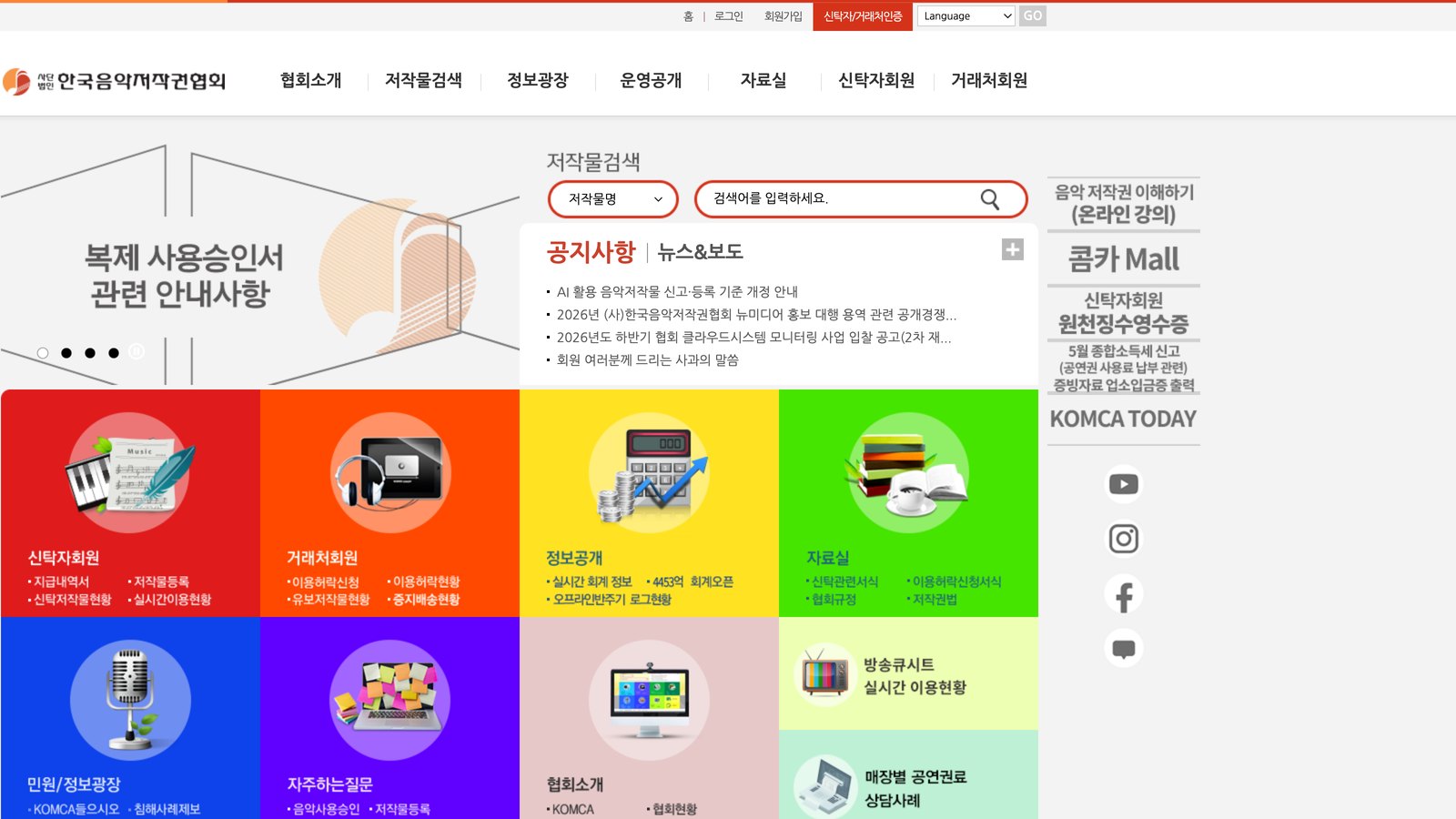
The Korea Music Copyright Association voted on August 25 to withdraw the AI music registration rules it started applying on August 3. Its board resolved at the 8th meeting of the year to pull the amendments to both the regulations on reporting and registering musical works and the music copyright trust contract terms, Star Today reported.
KOMCA is the collecting society for the world’s seventh-largest music market, the Korean equivalent of ASCAP or BMI. Its rules decide whether a song can collect royalties at all. Three weeks ago it became the first body in Korea to open registration to AI-assisted music. Now the rule is gone and the question goes to parliament.
Why Korea’s culture ministry letter stopped KOMCA’s AI registration rules
The withdrawn standard let a creator register the human-authored part of a song when a person had played a substantive and leading role in writing, composing or arranging it. Prompt-only outputs, called “click tracks” in the Korean press, stayed out. KOMCA built the rule on overseas policy trends, findings from the national audit board, member requests, and roughly 3 years of work by its internal AI committee.
Lawmakers read the sequencing differently. Rep. Kim Jae-won of the Rebuilding Korea Party cancelled a joint policy seminar and held a press conference on August 10, arguing no legislature, ministry or social consensus had yet settled how much AI output counts as a work, so a trust body should not decide it first. The Ministry of Culture, Sports and Tourism followed with a formal letter on August 18 recommending consultation across the whole arts sector.
What KOMCA’s withdrawal changes for anyone registering AI-assisted music in Korea
Registration of AI-assisted work is off the table again while the legislative process runs. The floor KOMCA set stays where it was: a song generated 100% by AI, with no substantive human creative contribution, is not registrable, and KOMCA says screening, monitoring, investigation and follow-up action continue under existing law.
One detail from the 22-day run is worth keeping. KOMCA says the announcement itself triggered voluntary declarations of fully AI works, corrections of rights ownership, and voluntary returns of royalties already collected on AI output. A rule nobody enforced yet still moved money back.
The rule amendment is withdrawn, but setting standards for AI-assisted works is a task that can no longer be postponed.
Korea and Australia moved in opposite directions in the same 24 hours. ARIA wrote its AI line into an enforceable chart code on August 25. KOMCA took its line back out of the rulebook on the same day, and for the same underlying reason: neither country’s law says where the line sits.
Frequently asked questions
Why did KOMCA withdraw its AI music registration rules in August 2026?
KOMCA's board decided the copyrightability of AI-assisted music and the scope of rights attached to it should be settled through public debate involving the National Assembly, the government and the wider music industry, rather than by one collecting society's internal rules. Lawmakers had objected on those grounds, and the culture ministry formally recommended broader consultation on August 18, 2026.
Does KOMCA's withdrawal mean fully AI-generated songs can be registered in South Korea?
No. KOMCA drew that line explicitly in its August 25 announcement. Works generated entirely by AI without substantive human creative contribution remain outside registration, and KOMCA says its screening, monitoring and investigation of false filings continues within existing law.
What role did Korea's Ministry of Culture, Sports and Tourism play in KOMCA's decision?
The ministry sent KOMCA an official letter on August 18, 2026 recommending that the question be opened to public discussion across the cultural and arts sector. KOMCA cited that letter, alongside the National Assembly's objections, as the reason its board withdrew the rule change a week later.
Who is Rep. Kim Jae-won and why did he oppose KOMCA's AI music rules?
Kim Jae-won is a National Assembly member for the Rebuilding Korea Party. He cancelled a joint policy seminar with KOMCA and held a press conference on August 10, 2026 arguing that neither the law, the institutions, nor social consensus had settled how much AI output counts as a work, so a single trust organisation should not decide it first through its own rules.
About the author

Covering AI music tools, industry shifts, and news for music creators and professionals. Twice-weekly newsletter at aimusicpreneur.com.