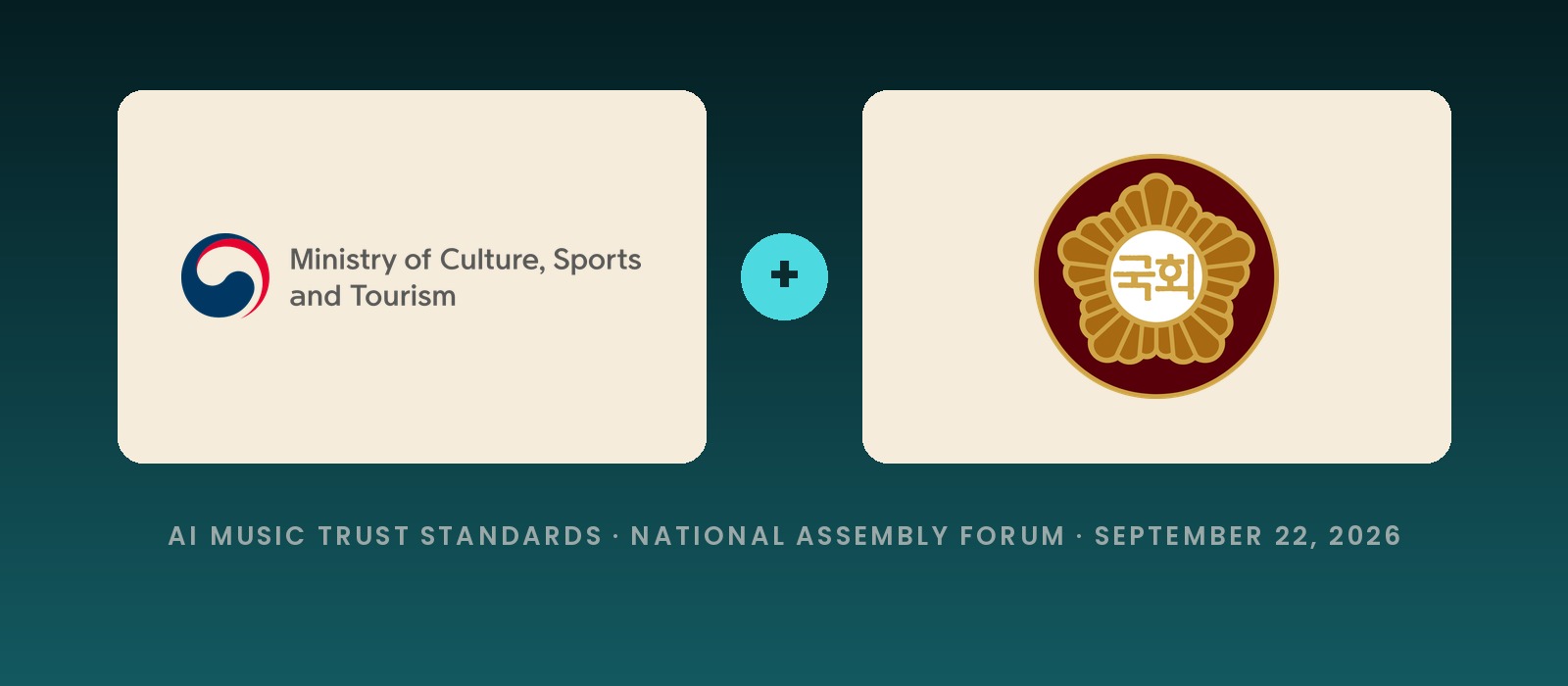
KOMCA opens copyright registration to AI-assisted music, and asks for your prompt logs
My stack My fav 6 tools for AI music after testing 70+
-
 ElevenMusic · Music generation
 -
 Moises · Stem separation
 -
 Controlla · Voice swap & cloning
 -
 Cryo Mix · Mixing + mastering
 -
 Neural Frames · Music videos
 -
 ONCE · Distribution
Some links are affiliate links — I earn a commission at no cost to you. Every tool here is one I run myself and truly believe in. This stack is proven.
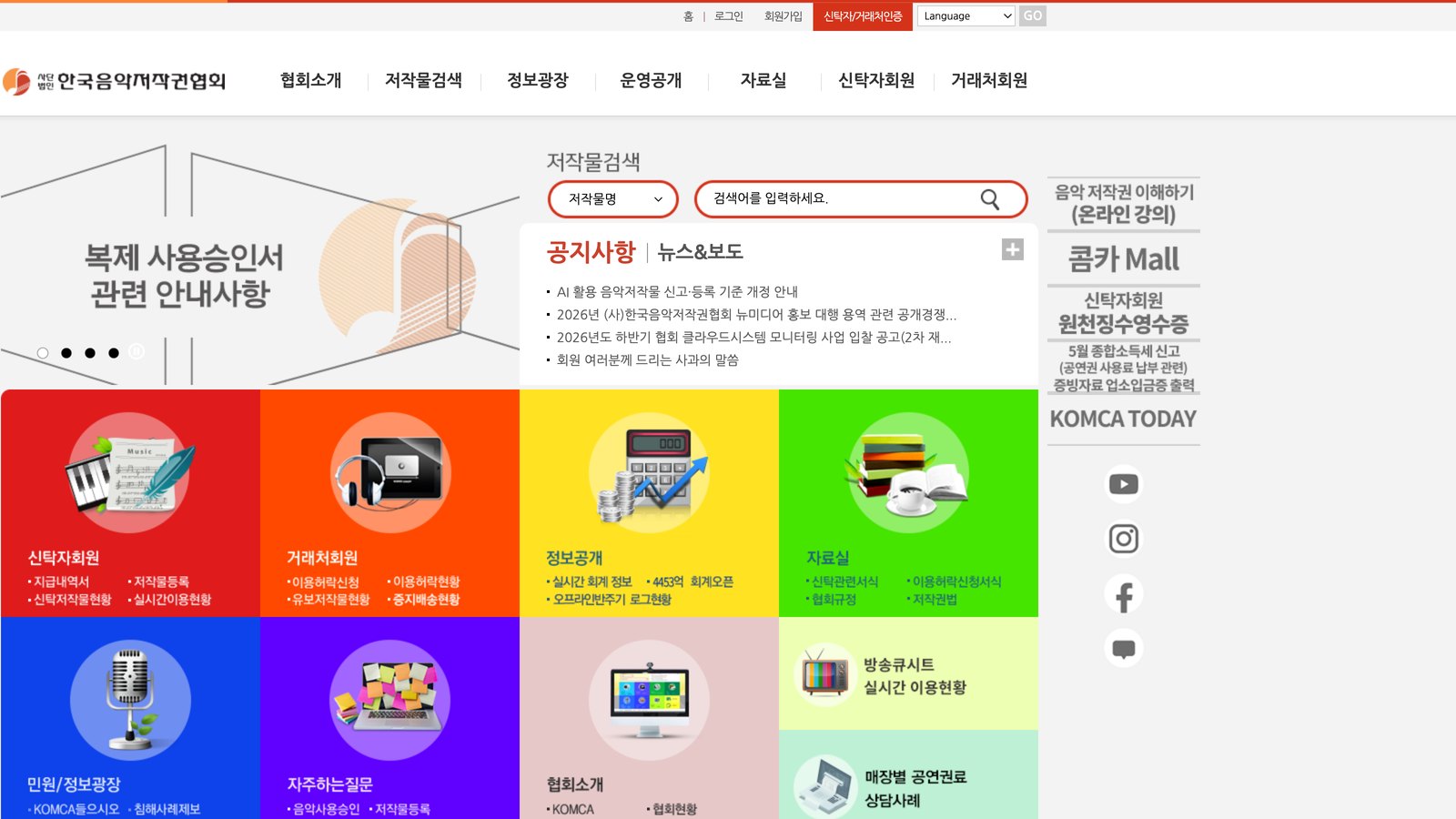
The Korea Music Copyright Association announced on August 3, 2026 that creators can now register songs made with AI, as long as they played a “substantial and leading role” in writing the lyrics, composing, or arranging the work. Songs generated entirely by AI from simple text prompts stay ineligible. The revision reverses KOMCA’s earlier position, which withheld registration from AI-assisted works over copyright disputes and the absence of clear standards.
“The purpose of the revision is to formally recognise AI-assisted creative practices while safeguarding the rights of human creators,” KOMCA said in a statement reported by The Straits Times. This is Korea’s first codified standard for registering AI-assisted music, and it pulls those works into the existing copyright system rather than leaving them in limbo.
What KOMCA counts as a substantial and leading human role
The test is about creative decisions, not tool avoidance. A producer can use AI to generate ideas, melodies, or arrangements, and still register the result. What they have to show is that the key creative calls were made by a person.
Proving it is where the rule gets teeth. Applicants must name the AI tools they used, explain how those tools entered the process, and certify the accuracy of what they filed. When KOMCA wants more, it can ask for DAW project files, editing histories, sheet music, prompt records, and AI generation logs. Get it wrong and the consequences stack: suspended royalty payments, repayment of anything improperly received, and termination of the trust agreement. For intentional misconduct or gross negligence, KOMCA plans contractual penalties of up to three times the improperly collected royalties.
Why KOMCA’s evidence list is the part worth copying
Most AI music policy so far has been written as a principle and left as a principle. The chart eligibility rules the major labels proposed say tracks should be substantially human-made, and IFPI’s July 30 framework says the same thing for its official charts. Neither one tells you what a human is supposed to hand over to prove it.
KOMCA does. A prompt log and a DAW session file are things you either kept or didn’t, and the practical consequence is immediate: start your project archive now. Save session files with their edit history, keep prompt records alongside the bounce, and note which tool did what at which stage. If you release in Korea through KOMCA, this is already the standard. Australia’s ARIA chart rules are pointed the same direction, and the documentation burden travels with you.
Frequently asked questions
What is KOMCA's new rule for registering AI-assisted music?
The Korea Music Copyright Association announced on August 3, 2026 that it will register songs developed with artificial intelligence when the creator played a substantial and leading role in writing the lyrics, composing, or arranging the work. KOMCA said the revision formally recognizes AI-assisted creative practices while safeguarding the rights of human creators.
Can a song generated entirely by AI be registered with KOMCA?
No. Songs generated entirely by AI through simple text prompts remain ineligible for registration with the Korea Music Copyright Association. The human contribution has to be substantial and leading, not incidental.
What evidence does KOMCA require to register an AI-assisted song?
Applicants must identify which AI tools they used, explain how those tools fit into the creative process, and certify that the information is accurate. If KOMCA needs further verification, it may request supporting materials including DAW project files, editing histories, sheet music, prompt records and AI generation logs.
What penalties does KOMCA apply for falsely registering AI-generated music?
Works later found to have been created entirely by AI or registered using false information can face suspended royalty payments, repayment of improperly received royalties, and termination of trust agreements. KOMCA also plans contractual penalties of up to three times the improperly received royalties in cases of intentional misconduct or gross negligence.
About the author

Covering AI music tools, industry shifts, and news for music creators and professionals. Twice-weekly newsletter at aimusicpreneur.com.