Max Richter says AI music systems were built on stolen data, and that composers should get a royalty

SIQA Summit, LA, 12th November 2026 Ozzy Osbourne's former bassist is sharing a stage with Suno. I'm moderating:
Blasko
Bassist (Ozzy Osbourne, Rob Zombie)

Sam Berger
Artist Partnerships at Suno

RoccStar
Grammy Award-winning producer and songwriter

Drake Murphy
A&R at PlayPulse / Create Music Group

Janie Jennings
Founder, Creative's Flow Ecosystem

Chris Wieduwilt
Moderator
Limited capacity only
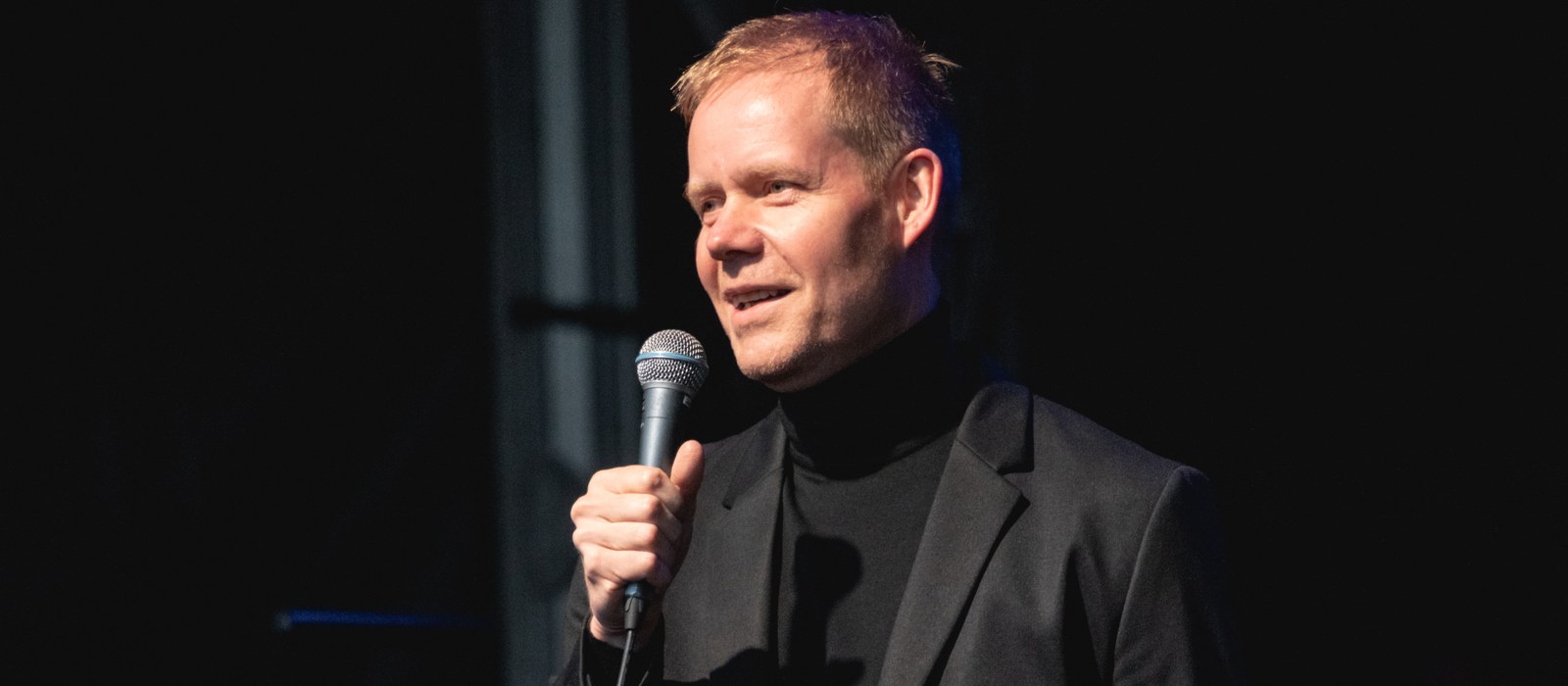
Max Richter has more than 4 billion streams, and he says the AI systems behind generated music were built on stolen data.
“That’s not an exaggeration, it just was,” the composer told Mishal Husain on The Mishal Husain Show, which Bloomberg published on November 6, 2026.
Richter doesn’t think you can undo that now. So he wants a royalty built into AI music systems, paid to the composer of whatever a track is derived from.
Here’s the AI part of the conversation, which starts at 30:59:
Why Max Richter calls AI in music “a solution looking for a problem”
Richter has no problem with technology in music. He built his own synthesizers early on, and he points out that the orchestra kept growing from the 18th century because composers wanted a bigger palette.
He’s also happy to call AI systems extraordinary in medical research, science and mathematics, and he names DeepMind’s AlphaFold as the proof.
Creative work is where he stops. “I see AI in creative works as a solution looking for a problem,” he said.
I don't really think that anyone has ever said, 'Oh, the human race has run out of musical ideas. We need to outsource our creativity to an automated system.' I just don't see the utility.
Max Richter on AI training: too late to stop, so pay a royalty
Richter’s problem with how these systems were built is blunt. “The sum total of musical output of humanity has been hoovered up,” he said, and he called it “an act of enclosure”. Enclosure is the old word for fencing off land that everyone used to share.
Husain asked if it’s still possible to put guardrails around music. “I think it’s too late for that because all of this happened three, four, five years ago,” he said.
His fix is a payment. “If somebody uses an AI system and they make a track which is derived from a source work, an existing work, that composer of the existing work should get a royalty,” he said. “It’s completely possible to do it.”
Some companies are already building that part. GasLab, for one, says it credits and pays the artists behind every track.
How Max Richter compares AI licensing deals to early streaming
Husain put it to him that labels are making deals with AI music companies and the artists aren’t part of that.
“There have been some attempts to include artists in the conversation, but not on equitable terms,” Richter said. “Artists aren’t part of the conversation fundamentally.”
He says it feels “eerily similar” to when Spotify and Apple Music arrived. Back then, “the labels made deals with the DSPs essentially without any input from the artists”. DSPs are the streaming services. “And similar thing is happening right now,” he said.
Some of the newer deals do give you a choice, like Suno’s partnership with Believe and TuneCore, which is opt-in. And Richter isn’t alone in going after the people running AI: last month Brian Eno called AI’s owners “some of the worst people” to be in charge of it.
What Max Richter says AI tracks do to the next generation of composers
Husain asked what happens to “the next Max Richter”. His answer was the royalty pool.
Streaming money sits in one pot, and every stream takes its share of it. So the more tracks competing for that pot, the smaller the slice for human artists. Richter says “millions of AI generated tracks” are being uploaded.
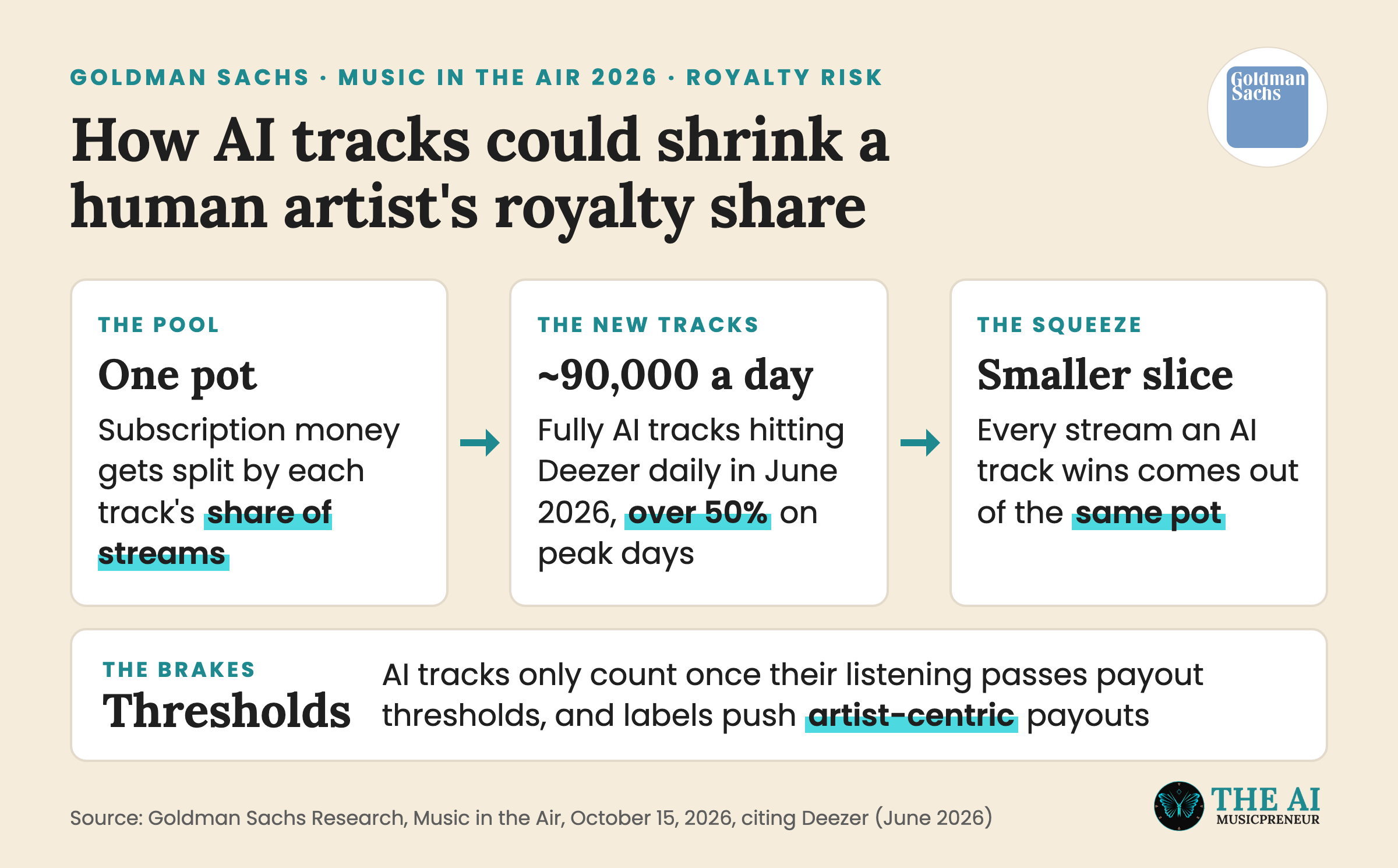
The upload numbers back him up, with one caveat. Deezer reported close to 90,000 fully AI tracks a day in June 2026, more than 50% of its new uploads. But those tracks still pull a small fraction of actual streams on Deezer.
Richter’s fear is where this ends up. “In the future, it’s very likely that the only people who can afford to make music, be artists are people with other incomes,” he said. Making music would be “a hobby or it’ll be something which rich people can do”.
Why Max Richter says AI music will degrade listeners’ taste
The last AI question was about the music itself. Richter says these systems are predictive and only work from existing data. “You’re sort of putting existing works into a blender and then taking them out in the combination requested,” he said.
“It’s going to have a sort of degrading effect on taste,” he said. “People will get used to it.” Husain summed that up as “hotel lobby type music”. “In a way, yeah,” Richter said.
His new album While the Flood Rages comes from his score for a ballet inspired by Margaret Atwood’s MaddAddam books, so this isn’t only an interview topic for him. Technological change is part of what the record is about.
Frequently asked questions
Where did Max Richter make his comments about AI music?
On The Mishal Husain Show from Bloomberg, published November 6, 2026. The AI section of the 40-minute conversation starts at 30:59.
What is Max Richter's album While the Flood Rages based on?
It comes from his score for a ballet inspired by Margaret Atwood's MaddAddam trilogy of books. Mishal Husain said part of the album is about technological change.
Which AI project does Max Richter praise?
DeepMind's AlphaFold, which he called really transformative on a global level. Richter says AI systems are extraordinary in medical research, scientific research and mathematics.
How many streams does Max Richter's catalog have?
More than 4 billion, according to Bloomberg. His work includes an 8-hour album based on the science of sleep and the Oscar-nominated score for the film Hamnet.
About the author
Covering AI music tools, industry shifts, and news for music creators and professionals. Twice-weekly newsletter at aimusicpreneur.com.