Suno signs Believe and TuneCore, 4 months after Believe blocked its tracks
My stack My fav 6 tools for AI music after testing 70+
-
 ElevenMusic · Music generation
 -
 Moises · Stem separation
 -
 Controlla · Voice swap & cloning
 -
 Cryo Mix · Mixing + mastering
 -
 Neural Frames · Music videos
 -
 ONCE · Distribution
Some links are affiliate links — I earn a commission at no cost to you. Every tool here is one I run myself and truly believe in. This stack is proven.
Believe and Suno announced a global strategic partnership on September 8, 2026, four months after Believe started blocking Suno tracks from distribution. Participating repertoire from Believe and TuneCore goes into the new music models Suno is building with industry partners, artists opt in rather than being included by default, and a source close to the deal told Billboard the compensation takes the form of a revenue share. Believe confirmed the global scope to Music Business Worldwide.
What the Suno and Believe deal covers
Two things move in this agreement, and they move in opposite directions.
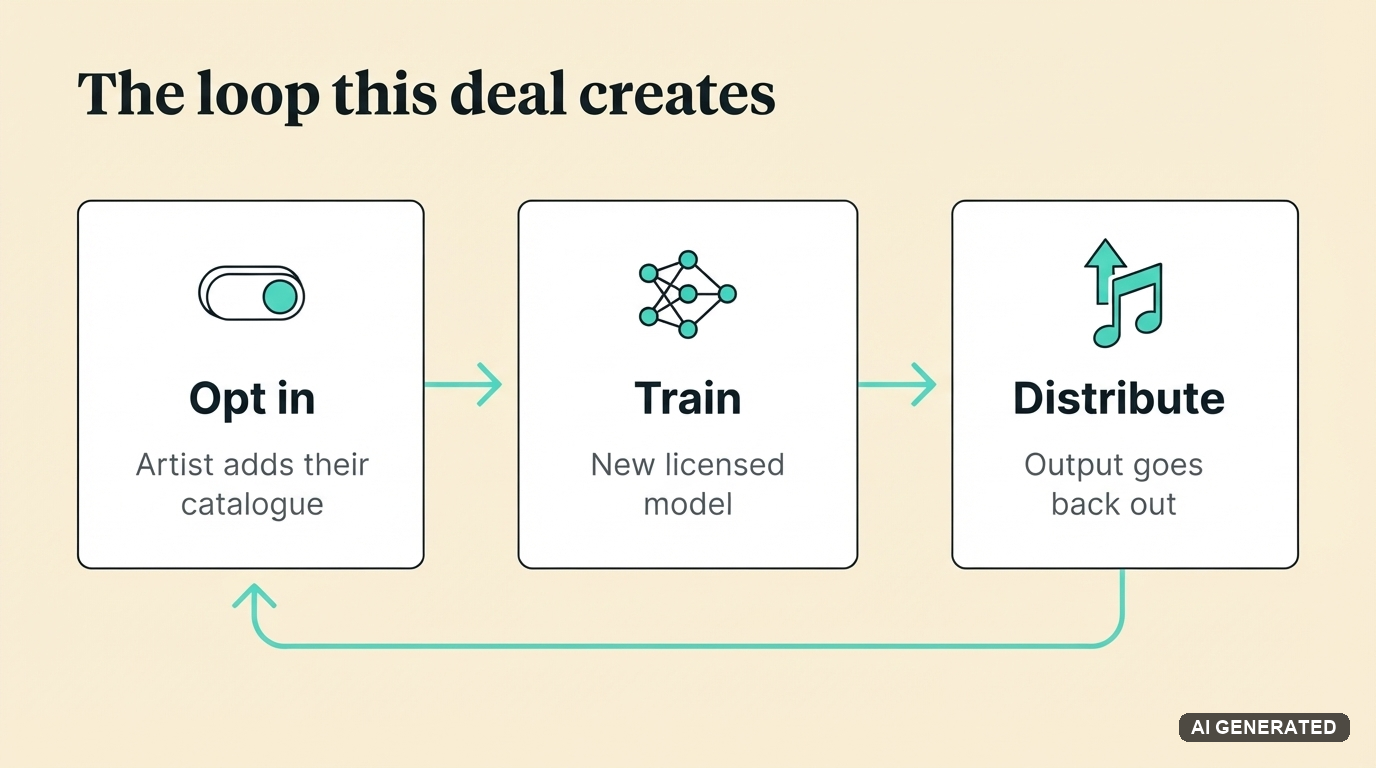
Music from opted-in Believe and TuneCore artists and labels goes into Suno’s new models. Then tracks made on that new model become eligible to distribute through Believe and TuneCore, which is where a distributor’s incentive sits: a new pipeline of releases coming back through its own pipes.
The limit is worth reading twice. The announcement refers only to Suno’s new industry partner model. Songs made on the current models Suno has said it will retire are not covered, so nothing about today’s Suno output changes at TuneCore yet.
It now gives them a meaningful choice over how they can participate, protect their rights and enables them to share the value created by innovative responsible AI technologies.
Why Believe blocked Suno in April and signed it in September
On April 30, 2026, Believe started automatically blocking distribution of tracks made on platforms it classified as unlicensed, and Suno went into that bucket. The company’s language at the time was blunt: it was screening out AI tracks made through what it called pirate studios.
The companies frame the reversal as earned. Their statement says the change “reflects the progress achieved in recent months for artists,” pointing at Suno’s training protections, its transparency tools and its download limits.
Suno confirmed those caps in August and they took effect on September 3: 20 song downloads a month for Pro subscribers, 60 for Premier, and no cap for anyone working inside Suno Studio.
Suno’s third partnership, after Warner Music Group and BMG
Believe joins a short list, and the pattern across it is consistent: settle or license, then supply the model.

Warner Music Group settled its copyright lawsuit against Suno in November 2025 in what both sides called a first-of-its-kind partnership, and Suno picked up the concert-discovery platform Songkick from Warner in the same deal.
BMG followed on August 12, 2026, covering recordings and publishing.
Universal Music Group and Sony Music are still suing. So are a growing list of others: Jason Isbell and David Lowery’s identity-rights class action, SOCAN, and the Latin label Gerencia 360 all filed in the past few weeks. Suno is signing partners and collecting lawsuits at the same time.
What a TuneCore artist should weigh before opting in
This is the first of these deals that lands on self-releasing artists directly. TuneCore is where a lot of bedroom releases live, so the opt-in box will show up in front of people with no lawyer and no label.
Three questions worth answering before you tick it.
- What is the revenue share, and is it per stream, per generation, or a pool split by catalogue size? Neither company has published a rate, and “share of value created” is not a number.
- Can you opt back out, and does that pull your music out of a model that has already trained on it? Training is hard to reverse, so the exit terms matter more than the entry terms.
- Does opting in change anything about your own releases on Spotify and Apple Music, both of which now label AI-assisted tracks?
The upside is concrete: a distribution route for Suno output that was closed on April 30 reopens, and the artists whose music trained the model get paid something rather than nothing. The terms are the part still missing, and they are the part that decides whether this is a revenue line or a permission slip.
Frequently asked questions
What does the Suno and Believe partnership cover?
The deal covers participating repertoire from Believe and TuneCore. Music from artists and labels who opt in will be included in the new music models Suno is building with industry partners, and tracks created on that new model become eligible to distribute through Believe and TuneCore. Believe confirmed to Music Business Worldwide that the partnership is global.
How are Believe and TuneCore artists paid under the Suno deal?
Participation is opt-in, and the companies say artists who consent will be compensated and have their rights protected. A source close to the matter told Billboard that the compensation takes the form of a revenue share. Neither company has published the rate.
Does the Suno and Believe deal cover songs made on Suno's older models?
No. The announcement refers only to output from Suno's new industry partner model. Tracks made on Suno's existing models, which the company has said will be retired when the new models launch, are not covered by the distribution change.
Why did Believe block Suno tracks in April 2026?
On April 30, 2026, Believe began automatically blocking distribution of tracks made on platforms it classified as unlicensed, and it placed Suno in that category. Suno held no licensing agreement with Believe at the time and was facing copyright litigation from major labels.
Which music companies has Suno signed licensing partnerships with?
Believe is the third. Warner Music Group settled its copyright lawsuit and signed a first-of-its-kind deal in November 2025, which also saw Suno acquire the concert-discovery platform Songkick. BMG followed on August 12, 2026. Universal Music Group and Sony Music are still pursuing their claims.
About the author

Covering AI music tools, industry shifts, and news for music creators and professionals. Twice-weekly newsletter at aimusicpreneur.com.