NewJeans' contracts let ADOR license AI voice clones of the members after 2029, The New York Times reports

SIQA Summit, LA, 12th November 2026 Ozzy Osbourne's former bassist is sharing a stage with Suno. I'm moderating:
Blasko
Bassist (Ozzy Osbourne, Rob Zombie)

Sam Berger
Artist Partnerships at Suno
RoccStar
Grammy Award-winning producer and songwriter
Drake Murphy
A&R at PlayPulse / Create Music Group

Janie Jennings
Founder, Creative's Flow Ecosystem

Chris Wieduwilt
Moderator
Limited capacity only
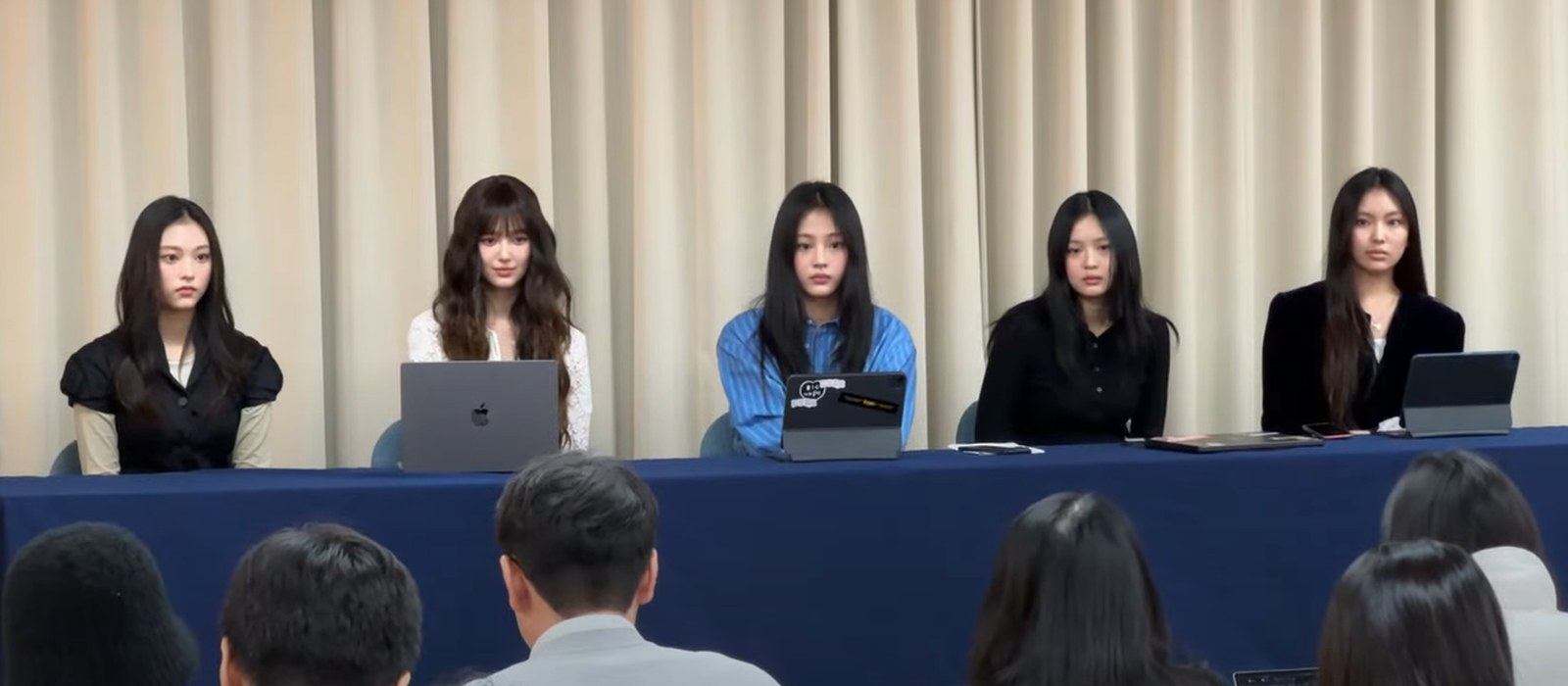
The contracts NewJeans signed as teenagers let their label keep using their voices after the deal ends, and that reaches AI “voice clones or chatbots”.
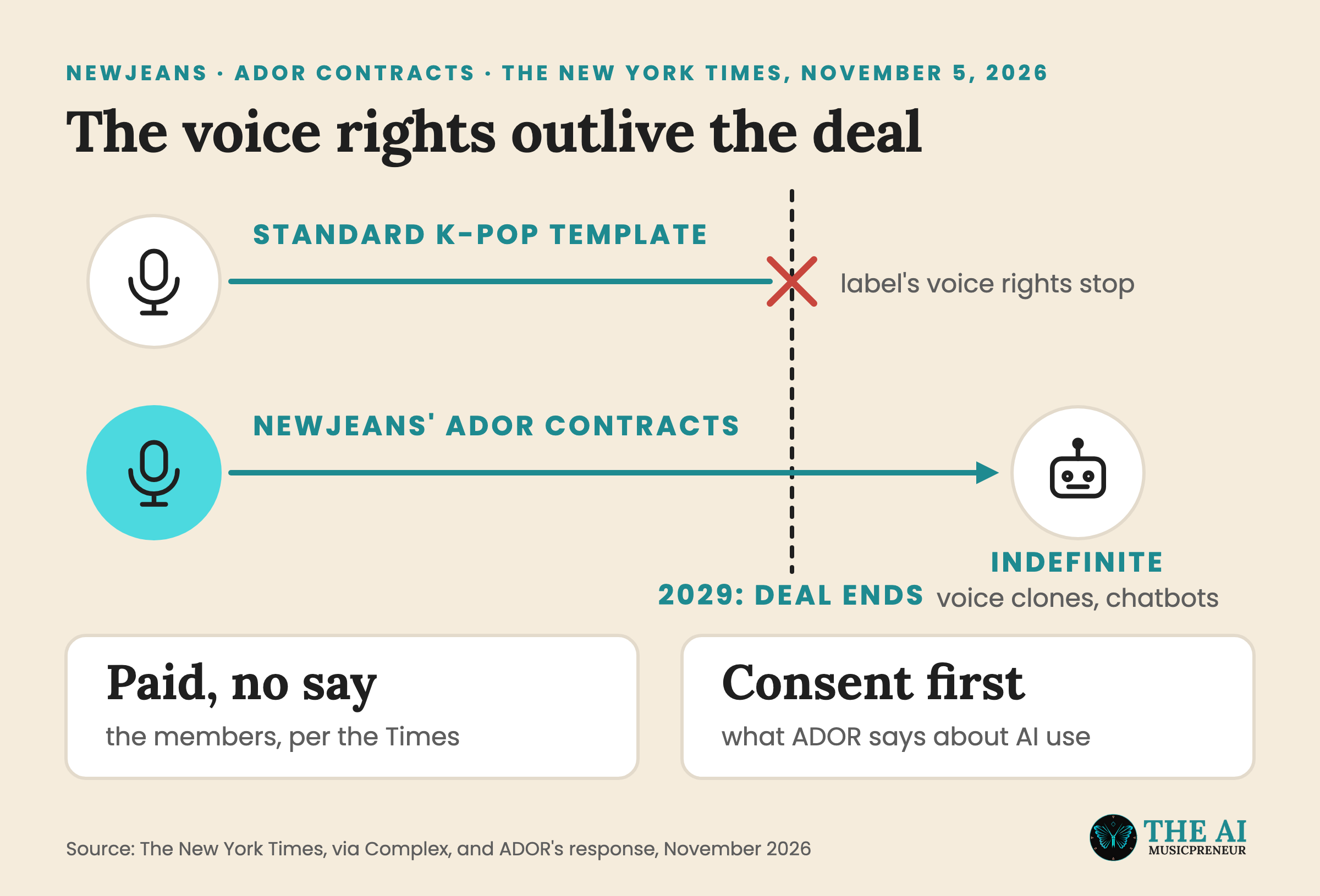
The New York Times obtained and published the agreements on November 5, 2026, Complex reports. The deals with ADOR, a HYBE subsidiary, run to 2029. After that, ADOR could still use and license the members’ voices indefinitely. The members would get paid, but they’d have no say in how their voices are used.
ADOR pushes back on that. It says AI-generated content can only be used with an individual artist’s consent.
What NewJeans’ ADOR contracts say about AI voices after 2029
South Korea has a standard K-pop contract template. Under it, a label’s rights to an artist’s name, image and voice end when the contract ends.
ADOR’s deals reportedly keep going after expiry, and they cover the members’ names, photographs, likenesses, handwriting and voices.
A voice clone is software trained on someone’s voice so it can generate new lines that sound like them. So in plain words: if these clauses hold, ADOR could license a NewJeans voice clone to another company years after the deals end, and all the members could do is collect the payment.
That’s a big if. Legal experts told the Times it’s unclear whether those clauses would hold up in court. Lawyer Jong-eon Roh said the contracts restrict artists’ freedom to a degree rarely seen even in major-label deals.
Which leaves the question of what ADOR says it will actually do with those rights.
How ADOR and HYBE answered the New York Times report
ADOR’s position is that AI-generated content needs an individual artist’s consent, and that it has no intention of using artists’ intellectual property without authorisation.
Nothing in the reporting shows ADOR has built a NewJeans voice clone either. IBTimes UK points out that the clause isn’t evidence the agency has created, or plans to create, AI versions of the members.
HYBE says the contracts are legal, were negotiated in good faith and match industry standards.
So right now there are 2 versions on the table: the contract wording the Times published, and a company statement that puts consent first. The coverage I’ve read doesn’t say where that consent requirement is written down.
What else the New York Times found in the NewJeans contracts
The 5 members were between 14 and 17 when they signed in April 2022. The voice clause is one part of what they signed, according to SBS and Complex:
- ADOR can keep selling and repackaging NewJeans music after 2029 while paying the members less.
- Leaving early can carry big penalties, worked out from average monthly sales over the previous 2 years, and ADOR can pursue more damages on top.
- The exclusive contracts left out the template’s protections for minors on health, education, sleep and rest. ADOR says separate youth agreements covered those.
- Grounds for breach included an “insincere attitude” and “inappropriate romantic relationships”.
- When one member’s mother asked for changes in January 2022, ADOR’s vice president replied that “it may be best to reconsider the contract itself”.
The fight is still running. A court upheld the contracts through 2029, several members went back to ADOR, and ADOR terminated Danielle Marsh’s contract and sued for about $22 million, mostly in exit fees.
If you try to escape Hybe's control, this is the price you will pay.
HYBE’s AI voice history and the clause to check in your own deal
HYBE knows this territory. It put about $35 million into AI voice company Supertone before liquidating it in July 2026.
K-pop is also getting used to acts that aren’t on stage in person: 10 of the 45 idol groups that debuted in 2026 are virtual, according to critic Lim Hee-yun.
And remember, these contracts date from April 2022, about 7 months before ChatGPT launched.
US law won’t settle this for you yet. The NO FAKES Act, the bill meant to give you a federal right over your voice, still isn’t law and just lost 3 of its 4 lead Senate sponsors.
So if you’re signing a label, distribution or management deal, find the clause on your name, image and voice and check when it ends. (I’m not a lawyer, so get one to read it.)
Frequently asked questions
When do NewJeans' contracts with ADOR end?
They run until 2029, and a South Korean court upheld them through that date. The voice clause reported by The New York Times would carry on after that.
How old were the NewJeans members when they signed with ADOR in April 2022?
They were between 14 and 17. The Times reports that the exclusive contracts left out the standard protections for minors on health, education, sleep and rest. ADOR says separate youth agreements covered those.
How much is ADOR suing Danielle Marsh for?
About $22 million, mostly in exit fees, according to Complex. ADOR terminated Marsh's contract after a court upheld the deals.
Has ADOR made an AI version of NewJeans?
Nothing in the reporting says so. IBTimes UK notes the clause isn't evidence that ADOR has created, or plans to create, AI versions of the members, and ADOR says it won't use artists' intellectual property without authorisation.
About the author
Covering AI music tools, industry shifts, and news for music creators and professionals. Twice-weekly newsletter at aimusicpreneur.com.