10 of the 45 K-pop idol groups that debuted in 2026 are virtual, says critic Lim Hee-yun

My stack My fav 6 tools for AI music after testing 70+
-
 ElevenMusic · Music generation
-
 Moises · Stem separation
-
 Controlla · Voice swap & cloning
-
 Cryo Mix · Mixing + mastering
-
 Neural Frames · Music videos
-
 ONCE · Distribution
Some links are affiliate links — I earn a commission at no cost to you. Every tool here is one I run myself and truly believe in. This stack is proven.
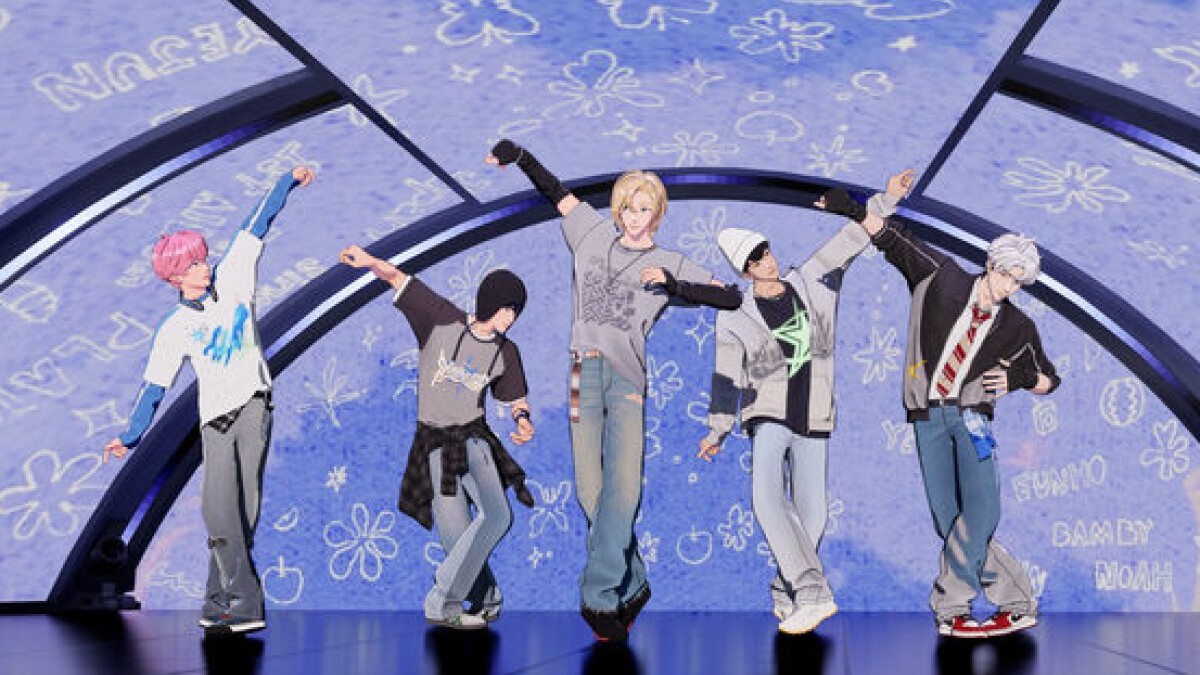
10 of the 45 K-pop idol groups that debuted in Korea between January and September 2026 are virtual, according to music critic Lim Hee-yun. That’s about 1 in 5 groups, and he says about a quarter of new solo acts are virtual too.
Lim shared the count at the 2026 Seoul Music Forum in western Seoul on November 1. Korea JoongAng Daily rounded it up to “one in four K-pop acts now virtual”, and Music Ally picked it up on November 3.
Last week I wrote about muuo:23, the AI-generated boy group K-pop fans called “AI slop”. This number puts that backlash in context, with one caveat up front: the 10 groups are “virtual in some significant form”, and that isn’t the same thing as AI-made.
What Lim Hee-yun counted at the 2026 Seoul Music Forum
The Record Label Industry Association of Korea has hosted the Seoul Music Forum since 2015. This year’s edition ran on November 1 and 2 under the theme “Independent, Connected, Global: The Next Chapter for Music Labels”, with the rise of AI in music as one of its big topics.
Lim has covered Korean pop for over 15 years, including for the newspaper Dong-A Ilbo, and he has judged both the Korean Music Awards and MAMA. He did the research with Josh Jordan, founder of the Manila-based consultancy Crosscurrent. Jordan published the exact wording in an October 20 essay on Crosscurrent’s Substack: 10 of the 45 new idol groups “were virtual in some significant form, alongside a quarter of all solo acts.”
Lim was careful about what the number proves. “Given how [these acts] all debuted only this year, not all of them are popular, but the fact that one out of four new is [not human] has major significance for the future,” he said on the panel, per JoongAng Daily.
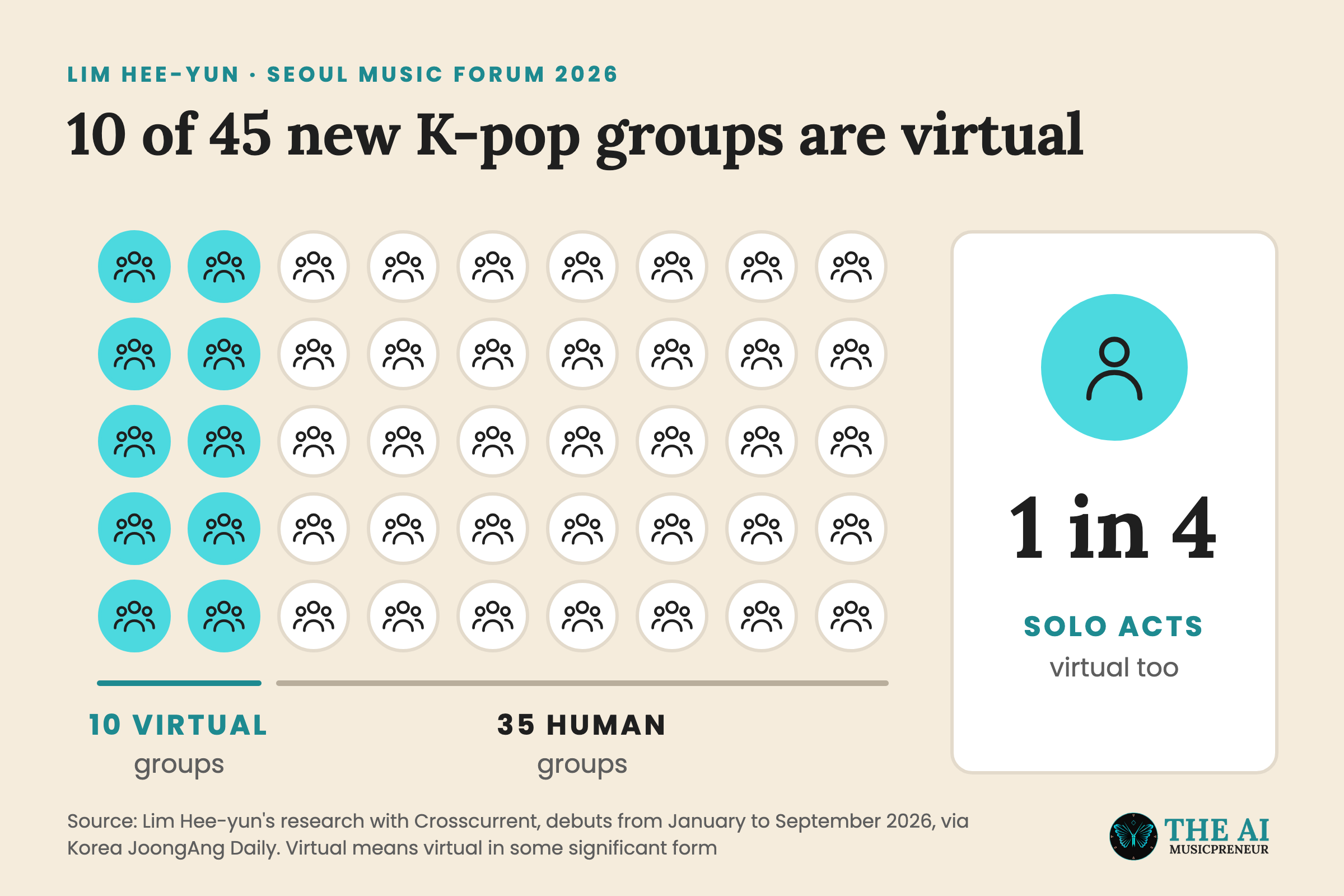
Neither source lists the 10 groups. For a sense of who they could be, The Korea Times named 3 virtual debuts from the first half of the year: OWIS on March 23, B:DAWN on May 6 and MiiWAN in June. All 3 are five-member groups, and none of them is close to the act everyone measures them against.
Are PLAVE’s members real people? How K-pop’s biggest virtual group works
PLAVE is a five-member boy group from the tech startup VLAST, and it debuted in March 2023. The members, Yejun, Noah, Bamby, Eunho and Hamin, look like anime characters. Underneath, they’re real performers whose movements and faces drive the avatars in real time, and whose identities have never been officially revealed.
That setup takes years to build. VLAST runs its own production system, Virtual Slate, which syncs motion capture, audio and Unreal Engine rendering in one workflow, per The Korea Times. It’s why PLAVE can livestream, do TV interviews and play concerts live instead of releasing pre-made clips.
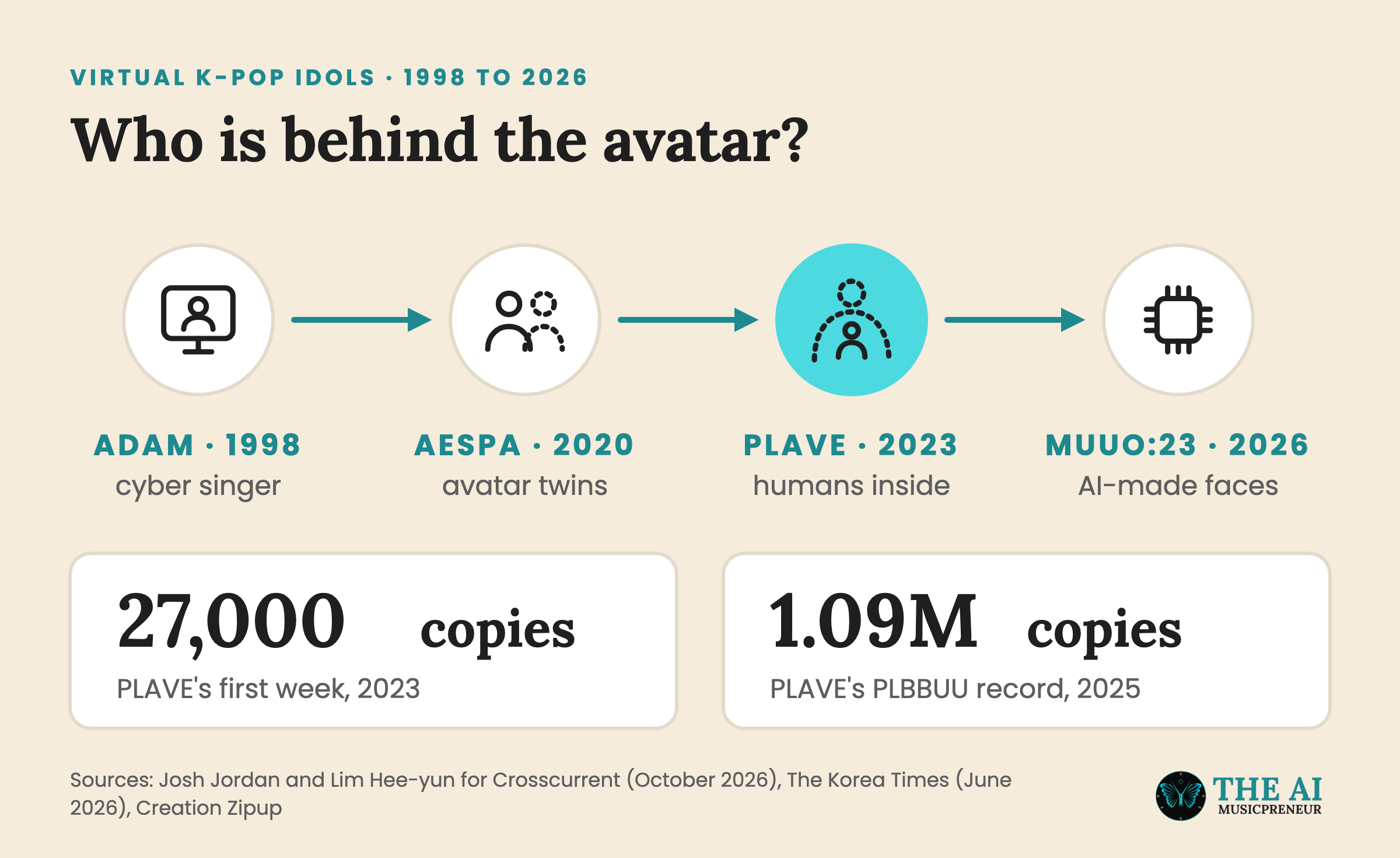
The results are bigger than any virtual act before it. PLAVE sold 27,000 copies in its first week in 2023, then more than 1.03 million in the first week of “Caligo Pt. 1” in February 2025, and the single album “PLBBUU” set a new record with 1.09 million later that year.
It sold out KSPO Dome and Gocheok Sky Dome in Seoul on its 2025 Asia tour, and back in March 2024 it became the first virtual group to win a music show, on Show Champion.
Lim’s explanation is that PLAVE gives fans both halves of the idol promise. The avatar is the perfect, never-ageing star, and the person inside (in Korean, the bonche, the person beneath the avatar) is someone to love. Even the glitches and singing mistakes have become fan favourites, because they show there’s a human in there.
K-pop has already been virtual for so long. The technology just hadn't caught up yet.
From Adam to muuo:23: 4 ways K-pop has built a virtual idol
Lim’s point is that K-pop has tried this before, more than once, and each attempt put the human in a different place. Crosscurrent traces it through 3 moments, and muuo:23 adds a fourth:
- Adam, 1998: a fully virtual “cyber singer” whose debut album sold more than 200,000 copies. The technology was so expensive that his team couldn’t make enough content to keep fans engaged.
- aespa, 2020: SM Entertainment gave each human member an avatar twin, an “ae”. The humans kept the fan relationships, and the twins faded into the background.
- PLAVE, 2023: the avatar and the human became one act, with the performer inside the character.
- muuo:23, 2026: Creation Zipup’s 5 members are AI-generated, while humans make the music, the choreography and the videos.
That last step is the one fans pushed back on. When muuo:23 released its pre-debut single on October 14, some fans on X held up PLAVE as the virtual group they accept, because there’s a person behind each PLAVE character. There isn’t one behind muuo:23’s faces.
Solo acts are moving the same way. The AI agent artist RŌSIEN, with human-written songs and an AI voice, debuted on August 19 and got an SBS Inkigayo stage on October 25. Jordan’s essay also points to SLIKT, an AI-created performer living in an AI-generated world that fans help shape.
muuo:23 can’t be one of Lim’s 10, though. His window closed at the end of September, and so far muuo:23 has only released a pre-debut single.
What the 2026 virtual K-pop boom means for AI artists outside Korea
Jordan’s keynote at the forum made the case that Gen Z in Asia is looking for human connection inside artificial worlds. His essay puts it more bluntly: “As perfection becomes cheaper, imperfection becomes more valuable.”
Tinko Georgiev, founding growth architect of the Shanghai company CRxAI, went further on the same panel. “There’s going to be so much content that the copyrighted content itself is never going to generate the revenues that it [has generated] now or in the last 50, 60 years,” he said. His suggestion was for artists to use tech and digital platforms to grow fan engagement and offer more local interactions.
Honestly, that’s the lesson I’d take if you’re building an AI artist project in Europe or the US. The avatar is now the cheap part.
PLAVE’s members write their own songs, sing with their own voices and livestream everyday stuff like cooking and board games, and The Korea Times credits that mix of tech, music and fan contact for taking a 27,000-copy debut to million-sellers. I saw the same thing with avatar concerts and with China’s AI singer Yuri: the tech works, and the open question is whether fans show up.
The Korea Times puts the virtual idol market at about $2 billion in 2026 and projects $22.6 billion by 2035. It doesn’t name the source of that forecast, so I wouldn’t plan around it.
The 10 of 45 count stops in September, before muuo:23’s pre-debut single. A full-year count will look different, and I’d love to see the next one split by who’s actually behind the avatar.
Frequently asked questions
How many virtual K-pop idol groups debuted in 2026?
Music critic Lim Hee-yun counted 10 virtual groups among the 45 K-pop idol groups that debuted in Korea between January and September 2026, about 22%. He also found that about a quarter of new solo acts were virtual. He shared the figures at the 2026 Seoul Music Forum on November 1.
Are PLAVE's members real people?
Yes. PLAVE's 5 members, Yejun, Noah, Bamby, Eunho and Hamin, are human performers whose movements and expressions drive their avatars in real time through motion capture. Their real identities have never been officially revealed. The members sing with their own voices and write their own songs and choreography.
How does the virtual K-pop group PLAVE perform live?
PLAVE's agency VLAST built its own production system, Virtual Slate, which syncs motion capture, audio and Unreal Engine rendering in one workflow, according to The Korea Times. The avatars copy the performers as they move, so PLAVE can livestream, give TV interviews and play arena concerts in real time.
What is the difference between PLAVE and muuo:23?
PLAVE's avatars are performed by real people who sing, dance and talk to fans live. muuo:23's 5 members are AI-generated, while humans make its music, choreography and videos. When K-pop fans criticised muuo:23 in October 2026, some pointed to PLAVE as the virtual group they accept.
About the author
Covering AI music tools, industry shifts, and news for music creators and professionals. Twice-weekly newsletter at aimusicpreneur.com.