
AI for musicians: the 5 skills that beat any tool in 2026
My stack My fav 6 tools for AI music after testing 70+
-
 ElevenMusic · Music generation
 -
 Moises · Stem separation
 -
 Controlla · Voice swap & cloning
 -
 Cryo Mix · Mixing + mastering
 -
 Neural Frames · Music videos
 -
 ONCE · Distribution
Some links are affiliate links — I earn a commission at no cost to you. Every tool here is one I run myself and truly believe in. This stack is proven.
Every week a new AI music tool promises the results the last one didn’t. A better model, a cleaner voice, a smarter mix. Musicians keep switching, and the songs keep landing on nobody.
Here is the part the tool pages leave out. AI for musicians is not a tool problem anymore. Everyone can open the same apps tonight. The gap between a track that connects and the millions that vanish is the person steering it.
The data backs the split. Luminate’s 2026 Midyear Report found the top AI-assisted song sat at #282 globally, and no AI track cracked the Top 250. Cheap generation raised the floor. It never touched the ceiling.
Then look at who actually earns. The top AI artists on Spotify pulled in real money last year, and every one of them had a human making the calls. The tool was never the deciding factor.
So the skill set moved. These are the 5 skills that decide your results in 2026, in the order they matter.
1. Taste: picking the one AI generation worth keeping
You generate 20 versions of a hook. They all sound fine. Taste is deciding which one deserves to exist, and it stayed scarce while generation got cheap.
Samuel Smith is the clearest example I have covered. The 49-year-old London musician lost his guitar playing to Parkinson’s, so he hummed melodies into his phone, ran them through Suno and Udio, and sometimes cut 150 attempts to land one demo he would keep. That is not the machine being brilliant. That is a human with taste throwing away 149 versions until one is right.
The tool is identical for everyone. The difference between a track that connects and a million that vanish is the person steering it.
Nothing about that changed when the machine got faster. It got harder, because now everyone starts with a decent-sounding song and the deciding still falls to you.
2. Audio input: why a hummed reference beats a text prompt
Type “dark emotional trap beat” into a generator and you get the average of every dark emotional trap beat online. Average in, average out.
The stronger skill is audio input. Record a guitar lick, tap the rhythm on your table, or hum the melody into your phone, then upload it and let the generation build around your idea. One audio reference carries phrasing and groove no paragraph of adjectives can. Suno built the audio-upload feature that pulled in Timbaland, who told Rolling Stone he now spends around 10 hours a day feeding it his own beats and ideas.
Singers who play no instrument always needed a layer between the voice and the record. Michael Jackson beatboxed and sang every part into a tape recorder for studio musicians. If you write strong lyrics and can hum the idea, audio input is that layer now. Text still has a job, for structure, instrumentation, and what to leave out.
3. Auditioning AI tools before you pay for them
A tool trends, the fear of missing it kicks in, you subscribe, and it renews quietly for months. The skill is running a tryout before money moves: give the tool one job, feed every candidate the same input on the free tier, and compare the outputs side by side.
Two weeks ago I tested 9 generative music tools in one sitting. Same job, same input, and the results ran from keeper to unusable. The landing pages told me none of that. The tryout did.
4. Finishing: the human 20 percent listeners remember
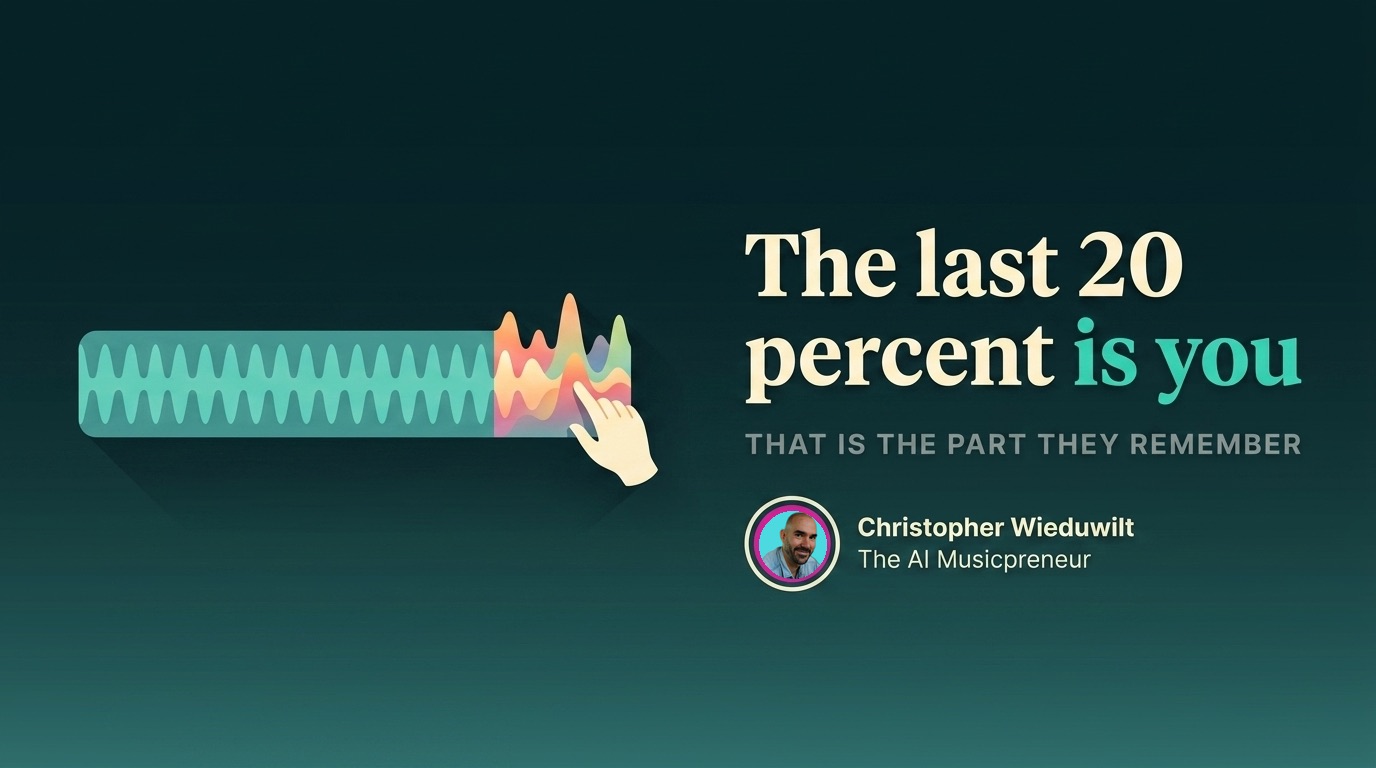
The generation sounds huge for 8 bars. Then bar 9 repeats bar 1, and listeners clock it as AI in 10 seconds.
Finishing is the human pass at the end: cut the dead bars, re-sing the hook, swap a stem, ride the faders by hand. The AI tracks earning real money are hybrids. Papaoutai, the highest-charting AI-assisted song in Luminate’s midyear data, is credited to three human acts and pulled 210.7 million streams outside the U.S. Human hands stayed on the output the whole way.
5. Owning the audience you earn
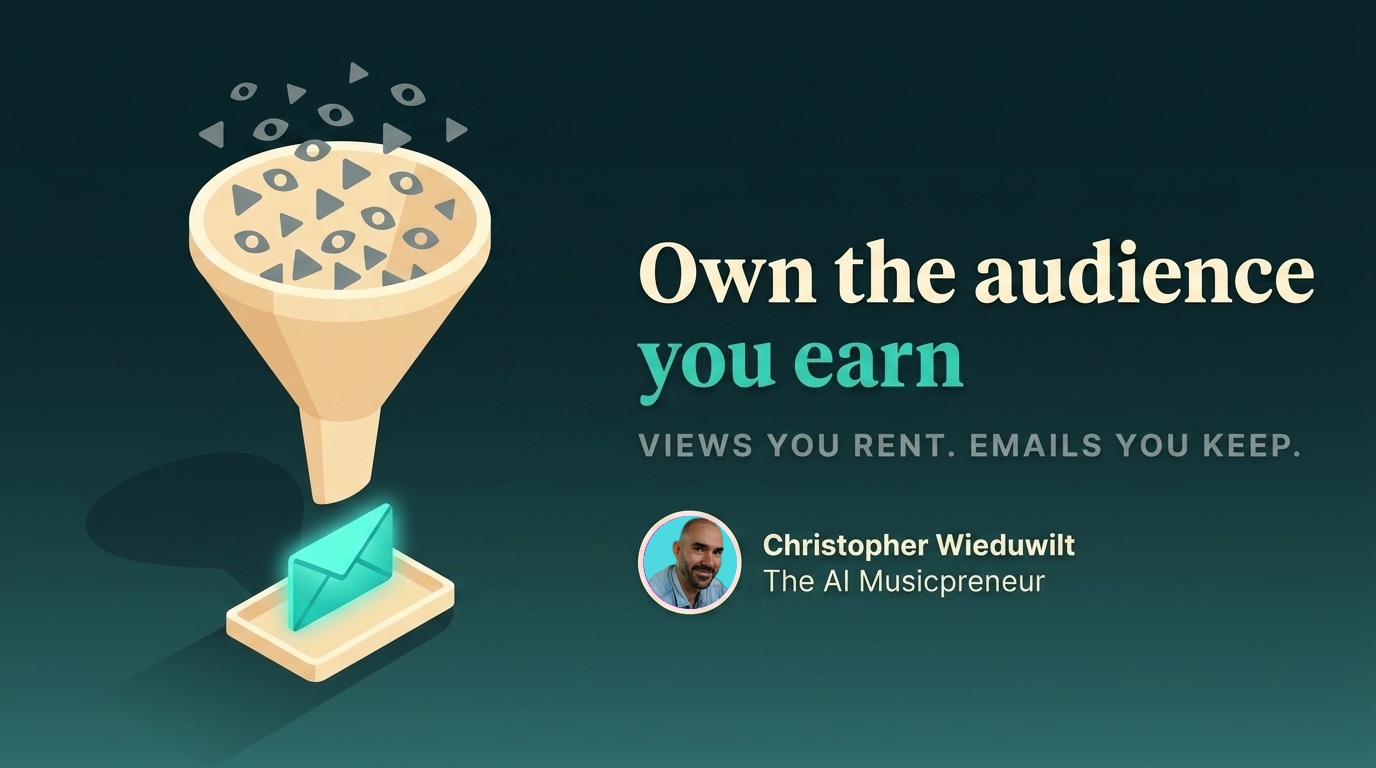
A clip does 40,000 views. A week later the follow-up reaches 400 people. Every one of those viewers is gone unless the algorithm feels generous again.
The last skill is funnel thinking: every piece of attention gets offered a trade, something free in exchange for an email address. Views you rent. Emails you keep. My 30-day launch plan is the tool-by-tool version of this, and the math favors it. One fan buying a $20 release direct on EVEN equals roughly 5,000 streams at typical payout rates.
Will AI replace musicians? Only when you stop deciding
The honest counterpoint is that some tools really do sound like they replace you. Press generate, accept the first output, ship it, and the software did the work. Whether AI replaces musicians comes down to one choice: how much of your taste you hand over.
The same app is a cockpit or a black box depending on that choice. A tool becomes a replacement the moment you stop making the calls, the melody, the mix, the keeper. Keep those calls, and it stays an instrument. What replaces you is the decision to stop deciding, not the software.
What to build first as a musician in 2026
Pick one skill and drill it this week. If you make the music, start with taste: play your last 3 generations, keep 1, delete 2, and notice how hard the deleting is. If you sell the music, start with the trade: write one sentence offering a free thing for an email, and point every post at it.
The tools will keep changing by Christmas. These skills compound.
Frequently asked questions
What AI skills do musicians need in 2026?
Five durable ones: taste (choosing the best generation), audio input (steering AI with a hummed or played reference), tool evaluation (testing on the free tier before paying), finishing (human edits on the output), and audience ownership (turning attention into an email list). All five outlast any single model.
Which AI is best for musicians?
The best AI for a musician is the one you can steer, not the one with the longest feature list. Test two tools on the same input on their free tiers, compare quality, editability, export format, and rights, then pay for the one that fixes your slowest step.
How do I stop AI music from sounding generic?
Upload an audio reference instead of describing the sound in words. A hummed melody, a tapped rhythm, or a recorded guitar lick carries phrasing and groove a text prompt cannot. Use text only for structure, instrumentation, and what to leave out.
Do you still need production skills to use AI music tools?
Yes. AI raises the floor so everyone starts with a decent-sounding song, but the finishing, arrangement, and taste decisions still separate a track that connects from one that vanishes. The tracks earning real money keep humans on those calls.
How did Xania Monet make money with AI music?
Telisha Jones wrote the lyrics from years of her own poetry and used AI for the vocal performance. The project earned $64,027 on Spotify and led to a reported multimillion-dollar deal with Hallwood Media.
About the author

Covering AI music tools, industry shifts, and news for music creators and professionals. Twice-weekly newsletter at aimusicpreneur.com.